







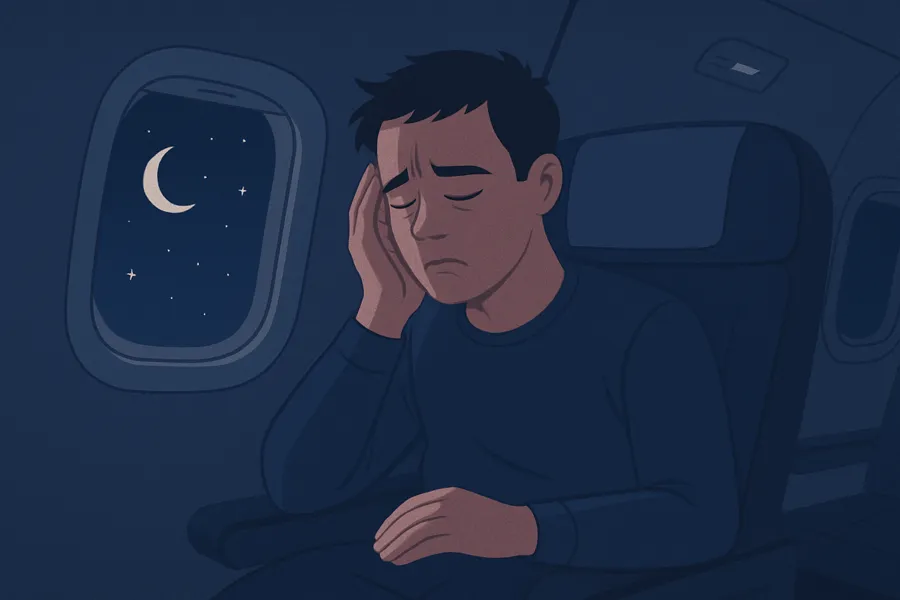
Passengers find it difficult to sleep on a plane for a variety of reasons, such as cabin pressure and oxygen levels, circadian rhythm, seat design, and limited legroom. In some cases, humidity levels can drop as low as 5% in the cabin, especially in business class, causing passengers to become dehydrated and contributing to jet lag. To make it more likely that you’ll fall asleep, consider bringing items on board that can help, such as an eye mask and noise-canceling earplugs.
The Science Behind Why Sleep Gets Interrupted on Planes
It’s normal to think you’re the odd one out who can’t nap during a flight, but there’s some science behind why you might be struggling. Between your circadian rhythm and the oxygen levels in the cabin, even with your best efforts, you’ll always be up against these challenges.
Your Circadian Rhythm
Your circadian rhythm is that little internal clock that tells you when to sleep and when to wake up. But up in the air, it can get completely messed up because you lose track of what time it is. Those time zone changes mean it might look bright outside while it’s actually 1 am back home for you. Add in the awful cabin lighting, the person snoring beside you, and it’s no wonder you’re not getting any sleep.
Cabin Pressure and Oxygen
When you’re cruising through the sky between 30,000 and 42,000 feet, the oxygen levels in the air are much lower, even though some is being pumped into the cabin. That lack of natural oxygen can drain your energy and make you feel exhausted, but with all the noise, lights, and movement around you, actually falling asleep is another story.
Aircraft Cabin Conditions
Aircraft cabins are uncomfortable enough as it is when you’re awake, but trying to sleep? That’s a whole other story. Think of all the distractions, flashing lights, crying babies, the old dude behind you kicking your seat, and the constant roar of the engines. And if the flight hits turbulence, you’re screwed. Unfortunately, these are some of the things you have to endure if you want to fly, but they can make sleeping nearly impossible.
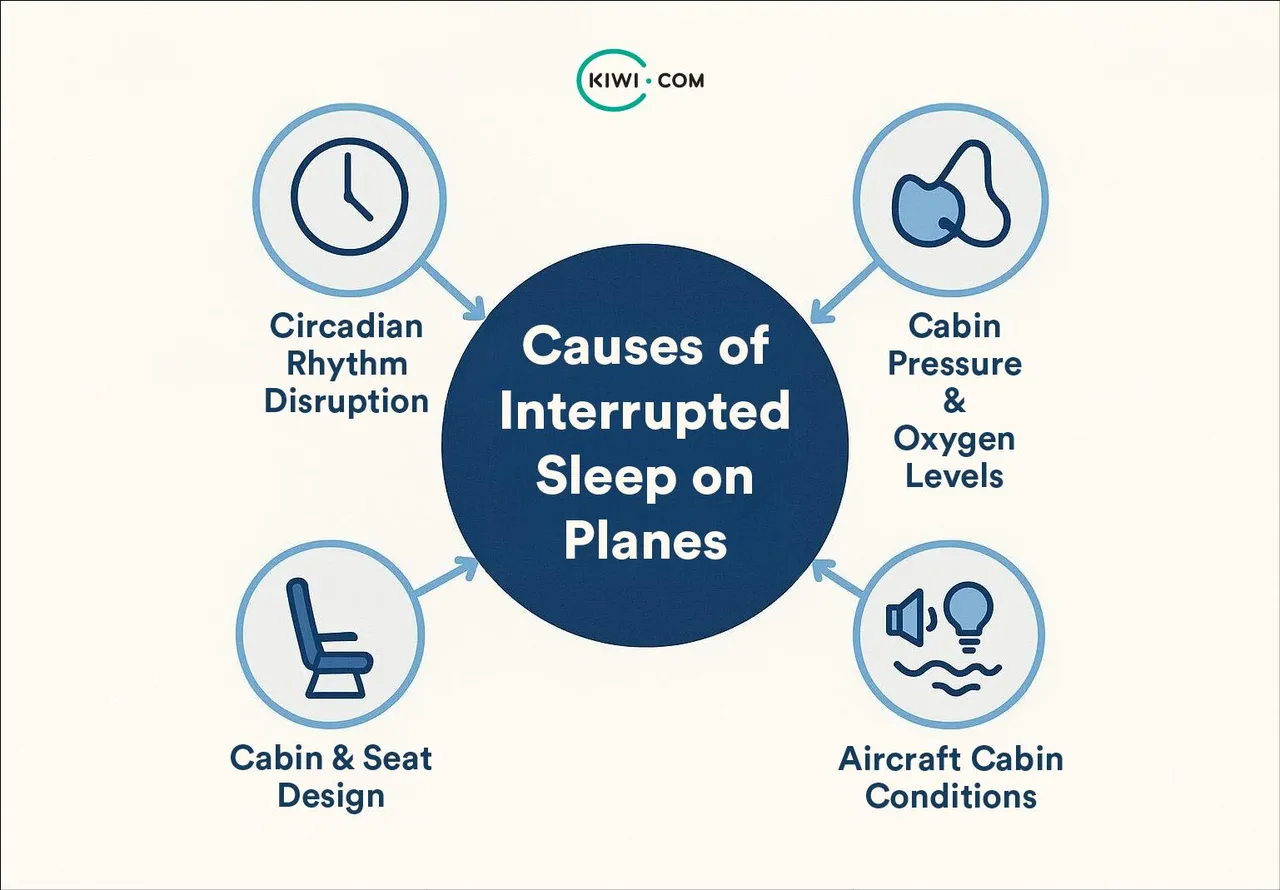
Why getting quality sleep on planes is harder than you think © Kiwi.com
Why a Cabin’s Design Makes It Difficult to Sleep
It’s not only the act of flying that disrupts sleep, but the science also shows that the cabin’s design has a part to play in why you’re not getting any shut-eye. Nobody is meant to sleep sitting upright. Our bodies link sleep with lying down under a blanket, not sitting with our necks flopping around. So when you’re seated straight and trying hard to fall asleep, it’s almost impossible because your body isn’t built for that.
The Way Seats Are Made
Let’s be honest, aircraft seats are made with basic materials, offer minimal recline, and provide little to no proper neck support, so how can you expect a good night’s rest? You can try as hard as you want, but if that seat is giving you some pain, forget about it.
Minimal Legroom
The one thing we all cry out for more of on a plane is legroom, but because airlines want to cram as many seats as possible into the cabin, it’s just not realistic. Those who are tall, like myself, know what it’s like to struggle when your knees are crunched up on a 12-hour flight. After a while, your legs start cramping, and you have nowhere to go, so you just sit there and endure it.
In recent years, some airlines have made a conscious effort to give passengers more legroom. Interestingly, one of the main standouts is JetBlue , a budget airline that provides more favorable conditions than some full-service carriers.
Strategies for Catching a Few Hours of Sleep in the Air
After all these years of flying, you’re probably saying to yourself, ‘Well, to heck with it, that’s just how it is.’ But try following some of these strategies for sleeping on a plane, and you might be able to get more rest than you think.
Consider a Seat Upgrade
Airlines charge extra for better seats, it’s just a fact. If you’re willing to splash a little bit more, you’ll be able to secure yourself an emergency row seat or even something in premium economy. These options often have much better legroom, so you can stretch out and have more freedom, increasing the likelihood of you falling asleep.
Use a Neck Pillow
Yeah, a neck pillow can be a nuisance to carry around, especially when travelling for extended periods, but they can come in handy when trying to snooze when flying. Cushions like these support your neck, keeping it stable so it doesn’t tilt forward and leave you with stiffness or pain when you wake up.
Make sure to invest in a good one that works for you and fits appropriately. I can’t tell you how many of these I’ve gone through that I end up chucking away because it ends up hurting me in the long run. Shop around and actually take the time to use it, rather than buying the cheapest one online. You’ll be surprised how effective some of them can be.
Say No-No to Alcohol and Coffee
Free alcohol and coffee might sound tempting when you’re bored in the sky, but these are stimulants that have a significant impact on sleep. Sure, it’s a way to kill some time, but instead, avoid them and try to prioritize rest.
Some will rightly argue that alcohol makes you drowsy and causes you to nod off, but the quality of this type of sleep is usually poor, and when you wake up, you’ll be dehydrated. As for coffee, that’s only going to make you all buzzy and jittery before you eventually crash and get a groggy headache. Just stay clear of both to be safe.
Bring an Eye Mask and Noise Canceling Earplugs
A solid eye mask will protect you from the constant flickering of cabin lights. Likewise, a pair of noise-canceling earplugs blocks out the sound, letting you rest in peace. Whenever you’re tired, just put on the mask, pop in the earplugs, and hopefully, you’ll eventually fall asleep (fingers crossed).
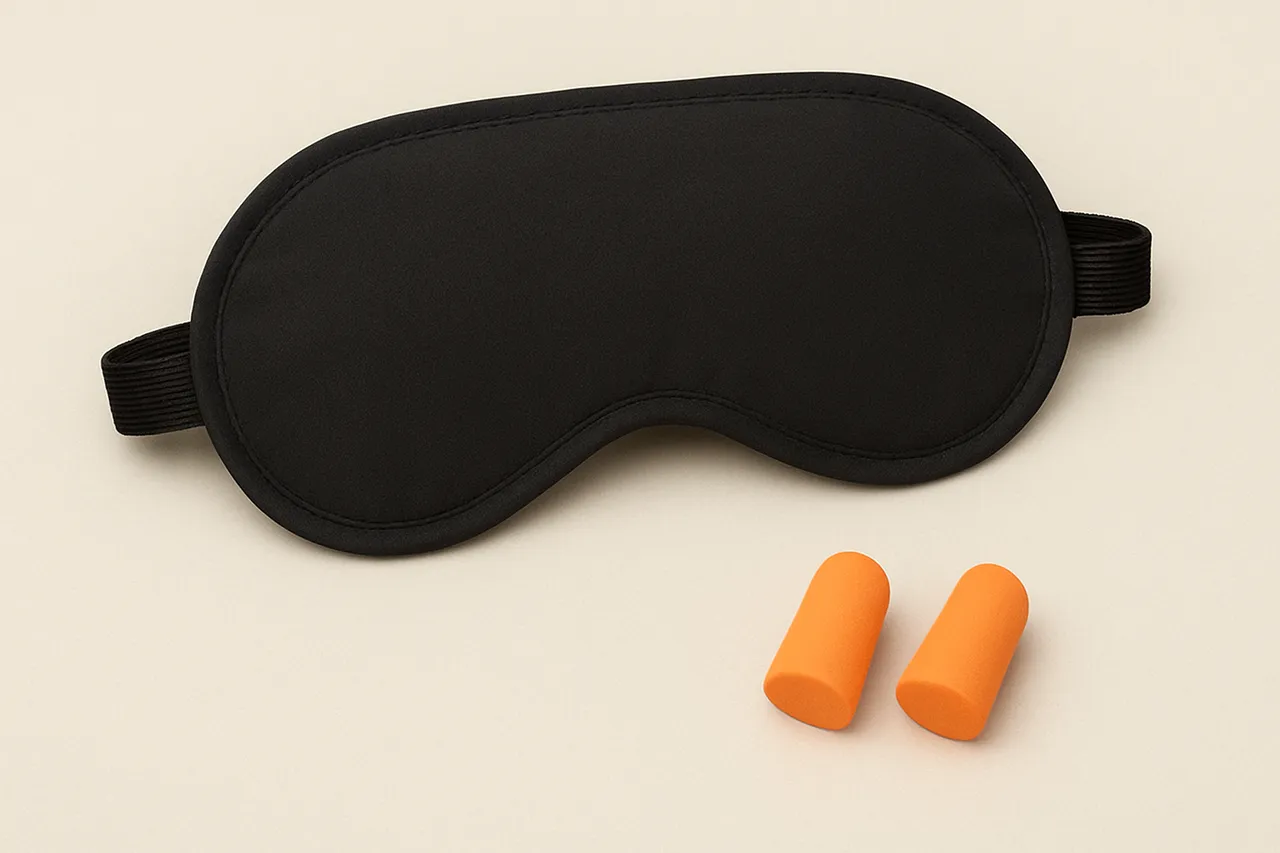
An eye mask and earplugs can be your best allies for in-flight rest © Kiwi.com
Sleeping on a Plane Is Hard, but It Doesn’t Have to Be!
Stress no more about wondering why you’re the odd one out who’s not sleeping on a plane. We’ve provided you with the science and facts to support why you’re finding it challenging. But don’t let it dictate your flight. Follow some of the strategies we’ve listed here, and you’ll increase your chance of getting them forty winks. Another helpful thing to do is make peace with the fact that you may not fall asleep. That way, you’ll at least enjoy the flight a bit more rather than stressing yourself out.
Frequently Asked Questions About Sleeping on Planes
Why do you still feel exhausted after sleeping on a plane?
Even though many people can sleep on a plane, you can still feel exhausted due to environmental factors like low oxygen, dehydration, and poor-quality sleep, which contribute to jet lag. For example, someone might get five hours of sleep on a 13-hour flight, but because their circadian rhythm is disrupted, they may not feel rested. However, people who are used to sleeping on planes may not experience this.
Are there any products designed to help passengers sleep on planes?
There are a handful of products that passengers can use, like neck pillows, noise-canceling earplugs, and eye masks. Trying a few of these items may improve the likelihood of falling asleep. However, be aware that what might work for one person may not be beneficial to another.
Can humidity levels interfere with sleep on a plane?
Yes, humidity levels are a significant reason why many people struggle to sleep on planes. Cabin humidity can sometimes drop to as low as 5%, which can cause dehydration if you’re accustomed to an environment with humidity levels of 30% to 60%. To counter this, make sure to stay well hydrated throughout your flight.
What can I do before flying to improve my sleep on the plane?
Passengers can adopt several strategies to enhance their chances of getting a good night’s sleep on a plane, including avoiding caffeine and alcohol, exercising the day before, and adjusting their sleep schedule. It’s also important to keep in mind that the time of day of your flight and landing can affect sleep, so these strategies may not always be fully effective.