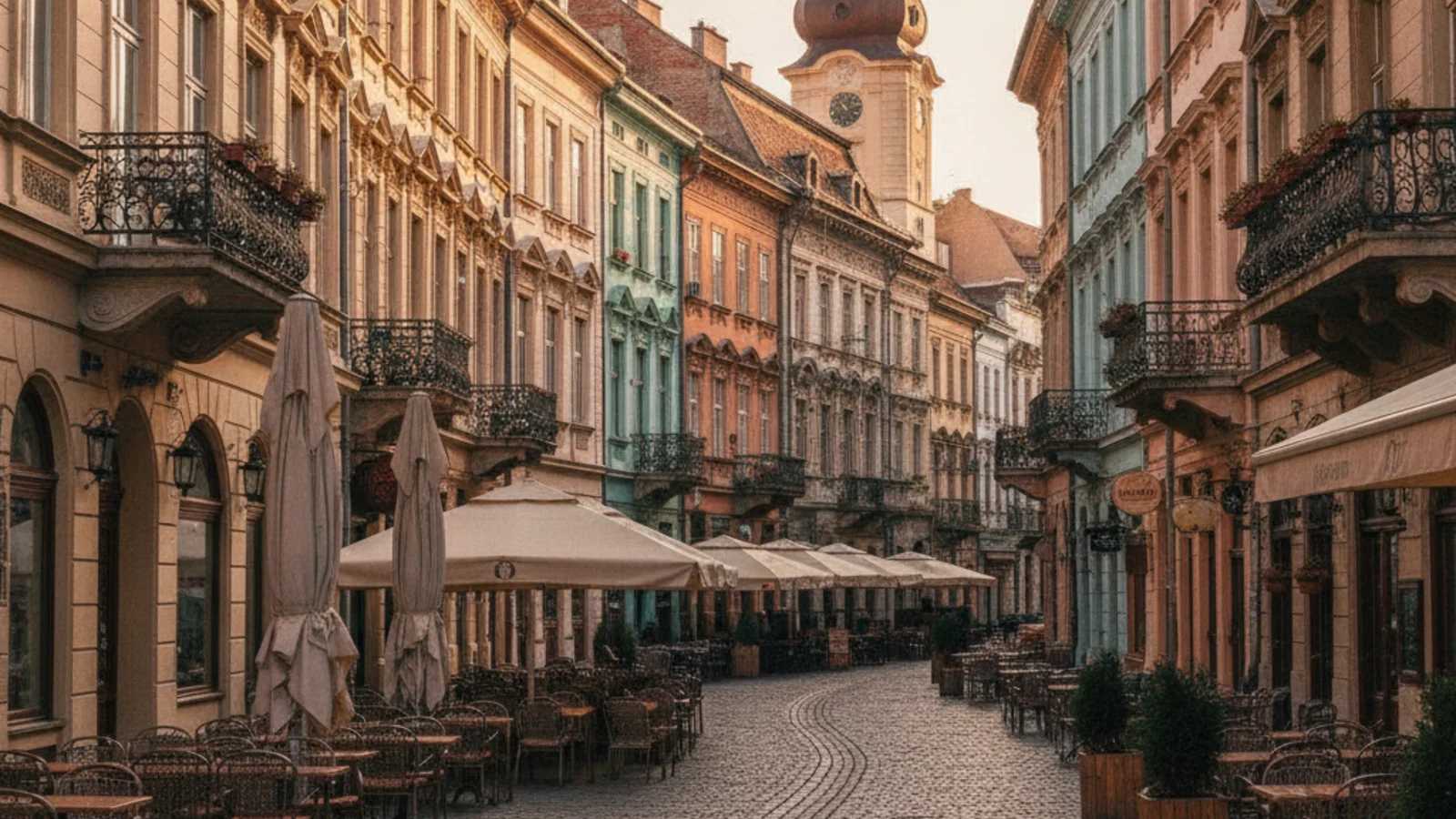







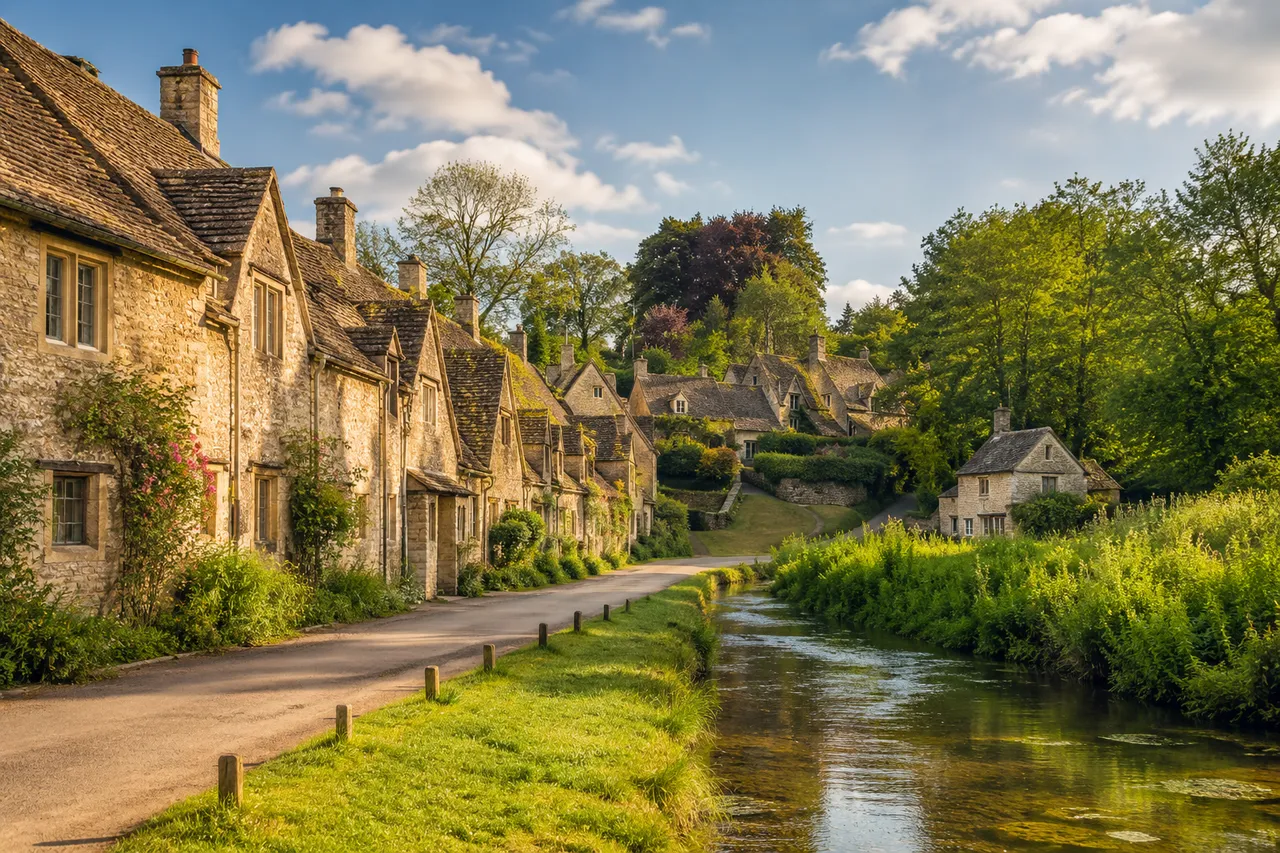
The Cotswolds span over 800 square miles across southwest and west-central England. What makes the Cotswolds truly unique is how seamlessly human history has been integrated into the natural environment. An incredible 4,000 miles of historic dry stone walls crisscross the landscape. Where stone walls don’t divide the fields, thick, tangled hedgerows of native hawthorn, hazel, and blackthorn line the narrow country lanes. Be sure to arrive at popular villages before 9:30 a.m. or after 4:00 p.m. to avoid the crowds.
The Cotswold Way: The Full Hike
If you are looking for a true hiking holiday, the Cotswold Way National Trail is the gold standard. It stretches 102 miles (164 km) from the historic market town of Chipping Campden all the way south to the Roman city of Bath.
Walking the full trail from Chipping Campden to Bath over 10 days is the ideal pace. It averages roughly 10 miles a day, giving you plenty of time to enjoy long pub lunches, photograph the villages, and tackle the climbs without feeling rushed.
A 10-Day Itinerary
Day 1: Chipping Campden to Broadway (~6 miles / 10 km)
Highlights: The official start at Chipping Campden Town Hall, climbing Dover’s Hill, and the panoramic views from Broadway Tower.
Day 2: Broadway to Winchcombe (~12 miles / 19 km)
Highlights: Walking through Stanton (often voted the prettiest village in England), the Stanway Estate, and the quiet ruins of Hailes Abbey.
Day 3: Winchcombe to Dowdeswell / Seven Springs (~11 miles / 18 km)
Highlights: Exploring Belas Knap, a remarkably preserved Neolithic chambered long barrow dating back over 5,000 years, and traversing Cleeve Common, the highest point on the entire trail.
Day 4: Dowdeswell to Birdlip (~10 miles / 16 km)
Highlights: The bizarre limestone rock pillar on Leckhampton Hill known as the “Devil’s Chimney” and looking down into Crickley Hill Country Park.
Day 5: Birdlip to Painswick (~9 miles / 14 km)
Highlights: Passing the Roman Villa ruins at Witcombe, standing atop the incredibly steep Cooper’s Hill (the famous site of the annual extreme Cheese Rolling event), and arriving in historic Painswick.
Day 6: Painswick to King’s Stanley (~9.5 miles / 15 km)
Highlights: Sweeping vistas across the wide Severn Valley from Haresfield Beacon, followed by a shaded walk through the Standish Woods.
Day 7: King’s Stanley to Wotton-under-Edge (~15 miles / 24 km)
Highlights: A long but beautiful day passing through the historic textile town of Dursley, climbing the open grasslands of Stinchcombe Hill, and hiking past the towering Tyndale Monument.
Day 8: Wotton-under-Edge to Old Sodbury (~10 miles / 16 km)
Highlights: Walking past the Somerset Monument, following quiet streams, and entering the vast ramparts of the Iron Age Hill Fort at Sodbury.
Day 9: Old Sodbury to Cold Ashton (~9 miles / 14.5 km)
Highlights: Passing directly through the expansive grounds of Dyrham Park (a magnificent National Trust estate with roaming herds of deer) and viewing the grand architecture of Cold Ashton.
Day 10: Cold Ashton to Bath Abbey (~10 miles / 16 km)
Highlights: Passing the historic Civil War battlefield at Lansdown, catching your first panoramic glance of Bath from the hills, and descending into the center of the city to cross the final finish stone at Bath Abbey.
The Cotswold Way: The Best 3-Day Section
If you only have a long weekend, you’ll want the highest concentration of scenery, history, and classic villages. The absolute best three-day stretch is the “Northern Highlight” Section (Days 1, 2, and 3 of the full trail).
Day 1: Chipping Campden to Broadway (~6 miles / 9.6 km)
The Route
Difficulty: Moderate. Start at the historic high street of Chipping Campden. Hike up onto the escarpment at Dover’s Hill, follow the high ridge to Broadway Tower, and descend the grassy hill directly into Broadway village.
Day 2: Broadway to Winchcombe (~12 miles / 19 km)
The Route
Difficulty: Demanding. Head south out of Broadway, dropping into Stanton, a village frozen in time with thatch-roof cottages. Pass the Jacobean architecture of Stanway, climb the hills for a spectacular vista, and walk past the peaceful 13th-century ruins of Hailes Abbey into Winchcombe.
Day 3: The Cleeve Hill Finale (~6 miles / 10 km)
The Route
Difficulty: Moderate to Challenging. Head out of Winchcombe through the Sudeley Castle estate. Make a steady climb up to Belas Knap, then continue up onto the wild, windswept grasslands of Cleeve Hill for the panoramic view.
Logistics Note
From Cleeve Hill, you can catch a quick 10-minute local bus or taxi down into Cheltenham Spa station, which connects directly back to London or up toward the northern Cotswolds.
Comparison at a Glance
| Feature | 10-Day Thru-Hike | 3-Day Northern Section |
|---|---|---|
| Total Distance | 102 miles (164 km) | ~24 miles (38 km) |
| Time Investment | A full 1.5-week active holiday | A perfect Friday–Sunday long weekend |
| Vibe | Immense sense of journey; changing landscapes from wild hills to Regency architecture. | The “postcard” Cotswolds; the highest density of thatched villages and towers. |
| Logistics | Best handled by a baggage transfer company to move your luggage from hotel to hotel daily. | Easy to do with a simple light daypack; easily accessible via rail. |
Best Bite-Sized Sections & Day Walks
You don’t have to hike for a week to experience the best of the region. These shorter sections offer the highest reward for scenery and classic village charm.
Chipping Campden to Broadway Tower (~6 miles / 10 km one-way)
The Highlight
You’ll climb out of Chipping Campden up to Dover’s Hill for expansive views, then continue along the ridge to Broadway Tower, a striking 18th-century Gothic folly that sits at one of the highest points in the region.
The Slaughters & Bourton-on-the-Water Circular (~5 miles / 8 km loop)
The Highlight
If you want less climbing and more idyllic riverside walking, this flat loop takes you through Lower Slaughter and Upper Slaughter—two incredibly peaceful villages largely untouched by time—before looping into Bourton-on-the-Water.
Winchcombe to Belas Knap (~5 miles / 8 km loop)
The Highlight
Walking out of the ancient Saxon capital of Winchcombe, you’ll pass the 15th-century Sudeley Castle before climbing up to Belas Knap.
Practical Tips for the Trail
The Public Footpath Rule
Much of the trail cuts directly through private farmland. You’ll pass through kissing gates and over wooden stiles. Always stick to the marked paths and close gates behind you to keep livestock secure.
Footwear
Leave the heavy, rigid mountaineering boots at home. A sturdy pair of waterproof trail runners or lightweight hiking boots will easily handle the packed dirt, grass, and occasional mud.
Navigation
The Cotswold Way is incredibly well-marked with acorns and yellow arrows, but downloading an offline map (like AllTrails or OS Maps) is a smart backup for local circular routes.
Beyond the Cotswolds Way
If you want to expand your trip or return for a driving tour, the region offers many spectacular, historic, and unique sights worth visiting.
The Postcard Villages
Arlington Row, Bibury
This may be the most photographed street in England. Originally built in 1380 as a monastic wool store, these honey-colored limestone structures were converted into weaver cottages in the 17th century. The shallow River Coln flows right past them, adding to the fairytale atmosphere.
Castle Combe
Located in the southern Cotswolds, this village is also often called “the prettiest village in England.” It has a strict ban on modern attachments like overhead wires and TV dishes, so that walking down its main street feels like stepping directly into a medieval time capsule.
Market Towns & Historic Sights
Bourton-on-the-Water
Known as the “Venice of the Cotswolds,” this bustling town features a series of low, elegant 18th-century stone bridges arching over the crystal-clear River Windrush. It is also home to a famous Model Village—a highly detailed 1:9-scale replica of the town itself built entirely out of local limestone.
Stow-on-the-Wold
Situated 800 feet up, at the convergence of seven major roads, this was the historical heart of the Cotswold wool trade. Don’t miss St. Edward’s Church, where the heavy wooden north door is flanked by two ancient, towering yew trees that look straight out of a fantasy novel.
Chedworth Roman Villa
For a complete shift in history, visit one of the grandest Roman villas in Britain. Tucked in a quiet valley, it features remarkably preserved 4th-century mosaic floors, extensive underfloor heating systems (hypocausts), and an on-site museum.
Palaces, Castles & Grand Estates
Blenheim Palace
Situated on the eastern edge in Woodstock, this colossal Baroque masterpiece is a UNESCO World Heritage Site and the birthplace of Sir Winston Churchill. Its scale is breathtaking, complete with sprawling formal gardens, a massive lake, and landscapes designed by Capability Brown.
Sudeley Castle
Located right in Winchcombe, this beautiful castle has played a pivotal role in English history for over 1,000 years. It is the resting place of Queen Katherine Parr (the last wife of King Henry VIII), who is buried in the elegant 15th-century church on the grounds.
Getting Around in the Costwolds
If You Drive
Having a car gives you ultimate freedom to explore deep into the quietest valleys. However, the country lanes are narrow and parking in major hubs like Bourton-on-the-Water can be highly congested.
Tip
Arrive at popular villages before 9:30 a.m. or after 4:00 p.m. to avoid the crowds, and be prepared to reverse down a single-track lane if you meet a tractor!
If You Go Car-Free
It is incredibly peaceful to skip the driving stress. Stick to the northern Cotswolds, which features much better infrastructure. You can take a direct train from London Paddington to mainline stations like Moreton-in-Marsh or Charlbury, and use the reliable local bus routes (like the 801 Pulhams Bus) to hop between villages.
Tip
Don’t pick a remote village as your lodging base, or you will find yourself stranded. Stay in a town with a railway station and converging bus lines, such as Moreton-in-Marsh.
Mix Famous Hubs with “Secret” Villages
While the beautiful villages are famous for a reason, the true soul of the Cotswolds lies in the sleepy, untouched hamlets where tour buses can’t fit. Balance your itinerary by pairing them up:
- After visiting busy Bibury, escape to The Slaughters (Upper Slaughter and Lower Slaughter), twin villages connected by a tranquil riverside path.
- Swap the crowds of Broadway for Stanton or Snowshill, which sit quietly tucked into the folds of the hills and feel completely frozen in time.
Experience a Historic Country Pub
The British country pub is an extension of the living room in rural communities. To get the most authentic atmosphere:
- Look for historic coaching inns featuring low timber beams, stone flagstone floors, and roaring open fireplaces (like the 17th-century The Wild Rabbit in Kingham or The Mount Inn in Stanton).
- Order regional specialties, such as locally brewed ales, local cider, and farm-to-table dishes featuring Gloucester Old Spot pork or Hereford beef.
Tip
If you are visiting during a weekend or peak summer season, always book your dinner tables weeks in advance. These independent pubs are highly popular with both locals and travelers.
The Best Time to Visit
The Shoulder Seasons: May and September (The Sweet Spot)
If you want the perfect balance of good weather, active landscapes, and manageable crowds, aim for late spring or early autumn.
May
The countryside completely wakes up. The rolling hills turn a vivid green, bluebells carpet the woodlands, and lambs are out in the fields. May is also packed with famous, eccentric local events, such as the chaotic Cooper’s Hill Cheese Rolling (May 25, 2026).
September
The summer rush clears out and the weather stays reliably warm and dry. The trees begin turning brilliant shades of red and gold, making it the best time of year for long-distance walking along the Cotswold Way.
2. Summer: June to August (Best Weather & Peak Crowds)
Summer brings the highest temperatures—averaging around 22°C (72°F)—and the longest daylight hours, but it requires the most planning.
The Vibe
Everything is in full bloom. It is the premier time to visit the region’s manicured estates like Blenheim Palace or Hidcote Gardens, when the roses peak. You also get the quintessential British experience of sitting in a historic pub garden until the sun goes down at 10:00 p.m.
But this is peak international tourism season. Narrow village streets in hotspots like Bourton-on-the-Water and Castle Combe get highly congested with tour buses, and accommodation must be booked months in advance.
Winter: December (Festive Charm)
While January and February are generally cold, wet, and quiet, December turns the Cotswolds into a winter postcard.
The Vibe
The honey-colored stone cottages look incredibly cozy dusted with frost or light snow. Villages like Chipping Campden and Broadway put up beautiful, twinkling holiday displays, and there are excellent local Christmas markets.
Planning a Cotswolds Trip? Read These Essential FAQs Before You Go
What are the Cotswolds?
The Cotswolds is a rural, picturesque region in south-central England known for its rolling limestone hills and postcard-perfect historic villages. Covering approximately 800 square miles across five counties, it is the largest designated National Landscape in England. The region is famous for its golden-yellow limestone buildings, charming cottages, historic churches, dry-stone walls, grand manor houses, and magnificent “wool churches” funded by the area’s wealthy medieval wool merchants.
What’s so great about the Cotswolds?
The Cotswolds combines stunning natural scenery, remarkable architecture, and exceptional food and drink experiences. Visitors can explore the 102-mile (164 km) Cotswold Way National Trail, discover iconic villages such as Bibury and Castle Combe, visit market towns like Bourton-on-the-Water, and tour historic landmarks including Blenheim Palace. For a more enjoyable experience, arrive at the most popular villages before 9:30 a.m. or after 4:00 p.m. to avoid peak crowds.
When is the best time to visit the Cotswolds?
May and September are generally considered the best months to visit, offering pleasant weather, vibrant landscapes, and fewer crowds. June through August provides the warmest temperatures and blooming countryside, but it is also the busiest tourism season, with higher accommodation prices and more visitors throughout the region.
Can I see the Cotswolds without a car?
Yes. Travelers can take direct trains from London Paddington to stations such as Moreton-in-Marsh or Charlbury and use local bus services, including the 801 Pulhams route, to reach surrounding villages. Moreton-in-Marsh is an excellent base thanks to its railway connections and bus links. However, public transport is best suited to a slower-paced itinerary, so avoid trying to visit too many villages in a single day.
If I want to hike the Cotswold Way, what should I bring?
Most hikers do not need heavy mountaineering boots. Waterproof trail runners or lightweight hiking boots are usually ideal for the trail’s packed dirt paths, grassy sections, and occasional muddy stretches. It is also wise to download offline navigation apps such as AllTrails or OS Maps as a backup, although the Cotswold Way is exceptionally well marked with acorn symbols and yellow directional arrows.
Popular routes on Kiwi.com
- Cheap flights from London to Turkey
- Cheap flights from London to Barcelona
- Cheap flights from London to Japan
- Cheap flights from London to New York
- Cheap flights from New York to Paris
- Cheap flights to Spain
- Cheap flights to Italy
- Cheap flights to the United States
- Cheap flights to the United Kingdom
- Last minute flights
People Also Read


How to Travel Patagonia: A First-Timer's Guide to Chile & Argentina's Wild South


Where to stay in Palma de Mallorca: best areas for beaches, culture and nightlife