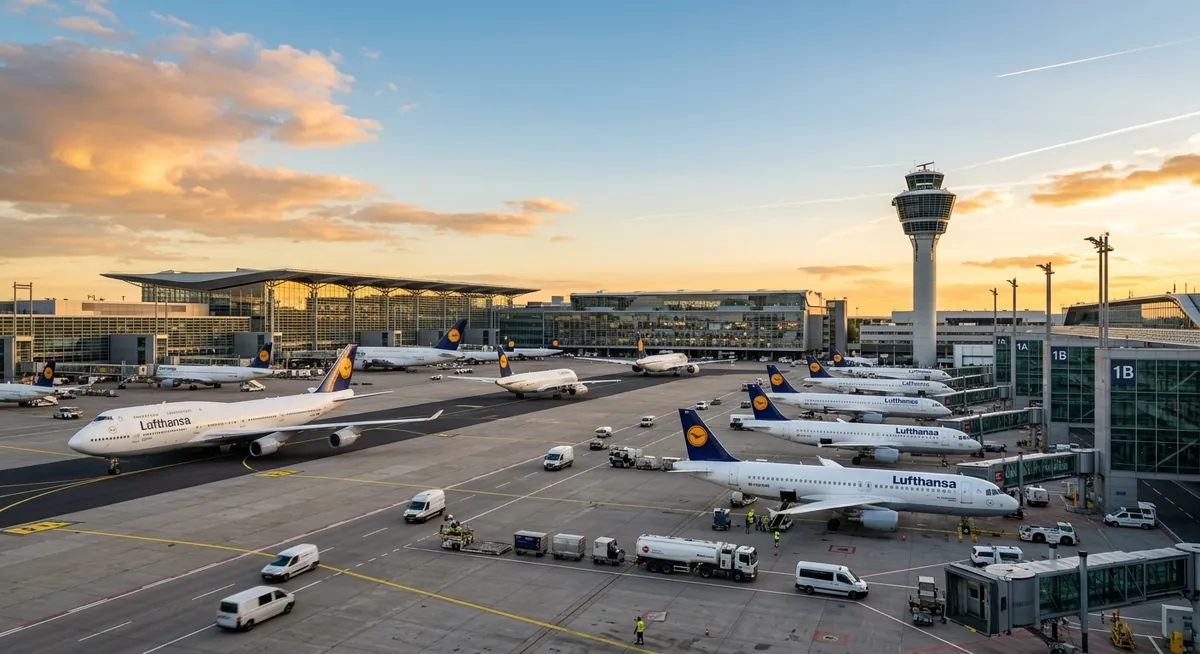







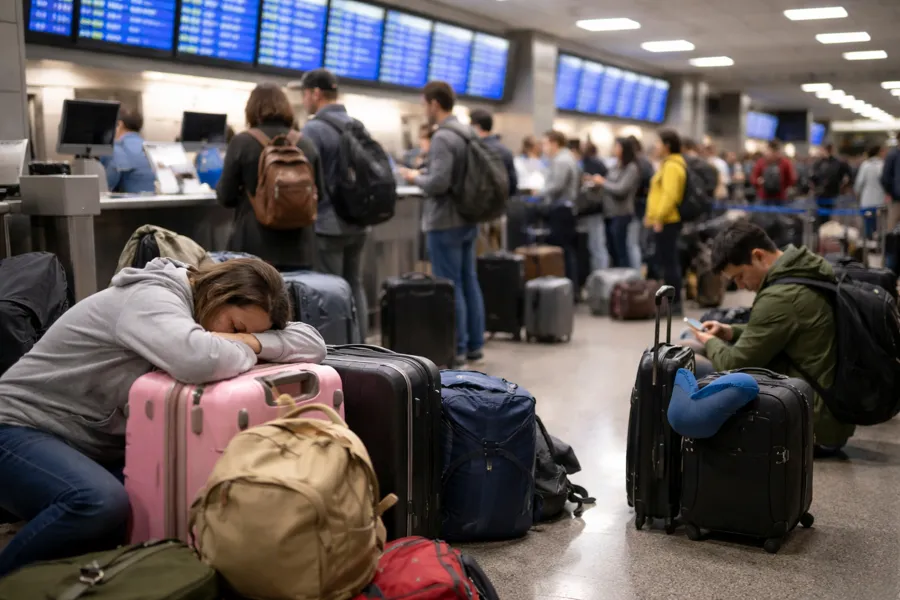
In case of a controllable overnight delay, most airlines are required by regulation or internal policy to provide hotel accommodation, meals and refreshments and transport to and from the hotel. In case of an uncontrollable overnight delay, the airline’s responsibility to its passengers depends on the region.
There are no general rules regarding what happens to your bags during an overnight delay. If the delay is short (e.g., 6 hours), airlines usually keep the bags and transfer them directly to your next flight. If the delay exceeds a certain threshold, many airlines require or allow you to collect your bags. United generally requires retrieval if the delay is over 12 hours, while American may store them up to 16 hours. Always keep critical items like medications and chargers in your carry-on.
When Airlines Are Required to Provide Hotels and Meals
Key Regulations by Region
European Union (EU 261) and UK Law
If your flight departs from the EU or UK, or arrives in the EU/UK on an EU/UK-based carrier, you are protected under EC 261 regulations.
- Meals and Refreshments: Required for delays of 2-4 hours, depending on the flight distance.
- Hotel Accommodation: Required if the delay or cancellation necessitates a stay of one or more nights, including transport to and from the hotel.
- Cause of Delay: These amenities (“right to care”) must be provided even if the delay is due to “extraordinary circumstances” (e.g., severe weather), although financial compensation is not required in those cases.
United States (U.S. DOT Rules and Airline Policies)
The U.S. Department of Transportation (DOT) does not federally mandate cash compensation for delays, but it does require airlines to adhere to their own customer service plans.
- Meals: Most major U.S. airlines voluntarily commit to providing meals or vouchers for delays of three hours or more when the cause is within their control (e.g., maintenance or staffing issues).
- Hotel Accommodation: Most major U.S. carriers (except Frontier ) guarantee complimentary hotel accommodation and transportation for overnight delays within their control.
- Cause of Delay: Airlines are generally not required to cover expenses for delays outside their control, such as weather or air traffic control issues.
- Pending Legislation: The Flight Delay and Cancellation Compensation Act (introduced in late 2025) is currently being considered to make these amenities mandatory under federal law.
Important Considerations
Controllable vs. Uncontrollable
The key factor in many regions (especially the US) is whether the delay was within the airline’s control. Mechanical issues and staffing problems are typically covered; extreme weather and air traffic control issues are not.
Ask for Amenities
Do not assume the airline will automatically provide vouchers. You may need to proactively ask airline staff at the airport desk for meal and hotel vouchers.
Keep Receipts
If the airline does not provide accommodation or meals, keep your receipts for “reasonable” expenses and submit them for reimbursement later. Luxury hotel stays or expensive meals are unlikely to be reimbursed.
Weather Delays vs Mechanical Issues and Passenger Rights
Weather Delays (Uncontrollable)
Airlines generally view extreme weather as an “extraordinary circumstance” beyond their control.
Meals & Hotels
In the U.S., airlines are not required to provide free meals or hotels for weather delays. In the EU/UK, however, you still have a “right to care” (meals and overnight accommodation) regardless of the cause.
Compensation
You are typically not entitled to additional cash compensation for weather-related delays in any major jurisdiction.
Refunds
If your flight is canceled or significantly delayed due to weather and you choose not to travel, you are entitled to a full refund for the unused portion of your ticket.
Mechanical Issues (Controllable)
Delays caused by airplane maintenance, crew scheduling, or technical faults are considered within the airline’s control.
Meals & Hotels
Most major airlines (especially in the US, EU, and Canada ) commit to providing meal vouchers and hotel accommodations for overnight delays caused by mechanical issues.
Compensation
- EU/UK: You may be eligible for between €250 and €600 if the delay at your final destination is 3 hours or more.
- United States: While there is no federal law requiring cash for delays, some airlines (like JetBlue) may issue travel credits or points as part of their Customers Bill of Rights.
Summary Comparison (2026)
| Feature | Weather Delay | Mechanical/Staffing Issue |
|---|---|---|
| Meals/Hotels (U.S.) | No (Usually) | Yes (Most major airlines) |
| Meals/Hotels (EU/UK) | Yes | Yes |
| Cash Compensation | No | Yes (EU, UK) |
| Right to Refund | Yes (if you don’t fly) | Yes (if you don’t fly) |
Pro Tip
Use the US DOT Airline Customer Service Dashboard to see what your airline has committed to providing for controllable delays. Always ask for vouchers at the airport, as they are rarely provided automatically.
How to Request Vouchers, Rebooking, or Refunds
Requesting Meal and Hotel Vouchers
Ask in Person First
Go immediately to the airline’s customer service desk at the airport to request physical or digital vouchers.
Check Your App/Email
Many airlines now issue “digital vouchers” directly via their mobile app or email during disruptions.
Self-Book if Necessary
If staff are overwhelmed and cannot help, you may book “reasonable” accommodation and meals yourself. Keep all itemized receipts to submit for reimbursement later.
Documentation
Request a written statement from the airline confirming the reason for the delay (e.g., “mechanical issue”) to support future claims.
Managing Rebooking
If your flight is significantly delayed or canceled, the airline must offer to rebook you on the next available flight.
Check for Automated Rebooking
Use the airline’s app or website to view your new itinerary. Some airlines may automatically rebook you.
Alternative Airlines
Ask the agent to rebook you on a partner airline or even a competitor if they have an interline agreement, which can sometimes get you home faster than waiting for the next same-carrier flight.
Verify Connections
Ensure that a new flight doesn’t add unreasonable connections; in the US, adding connections can qualify as a “significant change” entitled to a refund.
Requesting a Refund
When You Are Entitled
In the US, you are entitled to a full refund if your flight is significantly delayed (3+ hours domestic, 6+ hours international) and you choose not to travel.
Automatic Refunds
If you reject the offered rebooking or do not respond to an alternative flight offer, airlines must now issue a prompt automatic refund in your original form of payment (typically within 7 business days for credit cards).
Avoid Vouchers (Unless Preferred)
Airlines cannot force you to accept a travel voucher instead of a cash refund; you must “affirmatively choose” to accept a voucher.
Ancillary Fees
If you don’t fly, you are also entitled to a refund for any paid services not used, such as seat selection or Wi-Fi.
Useful Resources
- US Passengers: Use the DOT Airline Customer Service Dashboard to see specific commitments by your airline.
- EU/UK Passengers: Submit a claim using the Air Passenger Rights EU Complaints Form directly to the operating airline.
What Happens to Checked Bags During Overnight Delays
During an overnight delay, the status of your checked bags depends primarily on the airline’s policy, the length of the delay, and whether you are on a domestic or international itinerary.
Will you get your bags back?
There is no universal rule, but most airlines follow these general practices:
Short Overnight Delays
If the delay is short (e.g., arriving at 11:30 p.m. and departing at 5:30 a.m.), airlines typically keep the bags and transfer them directly to your next flight.
Long Delays (6–12+ hours)
Many airlines require or allow you to collect your bags if the delay exceeds a certain threshold. For example, United generally requires retrieval if the stay is over 12 hours, while American may store them up to 16 hours.
International Port of Entry
If you are entering the US from another country, you must collect your bags to clear customs, regardless of whether you have a connecting flight the next day.
Requesting “Short-Checking”
You can ask at the customer service desk to have your bags “short-checked” to your current airport so you can access them for the night, though agents may refuse if the bags are already deep in the system.
What if your bags are not available?
If the airline keeps your bags and you do not have access to essentials (toiletries, clean clothes), you have specific rights. Airlines must reimburse you for “reasonable” and “necessary” expenses incurred due to the delay.
Documentation
You must keep all itemized receipts for purchases made while waiting for your bags to file a claim later.
Summary of Bag Status
| Scenario | Typical Bag Location | Your Action |
|---|---|---|
| Short Delay (< 6 hrs) | Held by airline | Use items in your carry-on. |
| Long Delay (> 12 hrs) | Often sent to baggage claim | Verify if you need to recheck them in the morning. |
| International Arrival (U.S.) | Must be collected | Clear customs, then keep them or recheck them. |
| Separate Tickets | Must be collected | Pick them up and recheck them with the next airline. |
Pro-Tip
Always keep critical items like medications, chargers, and a change of clothes in your carry-on in case you cannot access your checked luggage during a sudden overnight stay.
Sleeping in the Airport vs Leaving for a Hotel
The decision to sleep in the airport or leave for a hotel during an overnight delay depends heavily on the circumstances: the cause of the delay, the airline’s policy, the airport’s comfort level, and your personal preferences.
Sleeping in the Airport
Pros
- Convenience: You are already there; no transportation is needed, making early morning departures stress-free.
- Cost Savings: It is free, which is essential if the airline is not paying for a hotel (e.g., in case of weather delay).
- Security: You minimize the risk of missing your flight or having your luggage misplaced during transit.
Cons
- Comfort: Airports are rarely comfortable (bright lights, cold, noisy seats with armrests).
- Safety/Security: While generally safe, you need to remain vigilant with your belongings.
- Hygiene: Limited options for showering and refreshing unless you have lounge access.
Leaving for a Hotel
Pros
- Comfort & Rest: A proper bed and quiet environment ensure you are rested for the next day’s travel.
- Amenities: Access to showers, private bathrooms, and room service.
- Peace of Mind: You get a clean, private space to relax away from the airport hustle.
Cons
- Cost: Hotels and transportation add expenses if the airline is not covering them.
- Logistics: Requires arranging transportation (shuttle, taxi) and managing luggage outside the terminal.
- Risk: Potential to oversleep or encounter traffic delays that cause you to miss the morning flight.
Recommendations
Check if the airline will provide a hotel voucher
If they will, take the hotel. A comfortable rest is worth the logistics. If the airline won’t pay, assess the airport’s comfort level and your departure time.
Prioritize safety and health
If the airport is uncomfortable or you need proper rest, it may be worth paying for a hotel yourself and keeping receipts for potential reimbursement requests later.
Travel Insurance Coverage for Overnight Disruptions
Travel insurance for overnight delays serves as a secondary layer of protection, particularly for costs not covered by airlines, such as disruptions due to weather or air traffic control.
Primary Coverage: Trip Delay Insurance
Trip delay insurance covers additional living expenses incurred when your flight is delayed by a specified duration (typically 6 to 12 hours) or requires an overnight stay.
Covered Expenses
Includes reasonable costs for hotel accommodation, meals, toiletries, medication, and transportation between the airport and hotel.
Coverage Limits
Policies often have a daily limit (e.g., $250 per day) and an overall maximum (e.g., $1,500 per trip).
Interline Agreements
If a delay causes you to miss a prepaid hotel night or excursion at your destination, trip delay insurance may also reimburse those non-refundable costs.
Secondary Coverage: Trip Interruption & Baggage Delay
Trip Interruption
If a delay causes you to miss more than half of your scheduled trip, it may be classified as an “interruption,” potentially allowing you to claim for the entire unused portion of the trip.
Baggage Delay
If your checked bags are delayed (typically for 12+ hours), many policies provide funds for essential items like clothing and toiletries.
Common Exclusions
Already Known Events
You cannot purchase insurance for a delay already publicly announced, such as a scheduled strike or a forecasted hurricane.
Airline Fault
Insurance is often secondary to airline obligations. You must typically attempt to get vouchers or refunds from the airline first.
Voluntary Changes
Costs from choosing a different flight for personal preference are not covered.
Filing a Claim
Obtain Written Proof
Ask the airline for a statement confirming the reason and duration of the delay.
Keep All Receipts
You must provide itemized receipts for every expense you wish to have reimbursed.
Document Communication
Inform the airline of your attempts to resolve the issue before using your insurance.
Premium Credit Cards
Check if your travel credit card (e.g., Chase Sapphire Reserve, AmEx Platinum) already includes built-in trip delay protection of up to $500 per person.
Overnight Airline Delays: What You Need to Know Fast
What are airlines required to provide to passengers in case of an overnight delay that was within their control?
In the EU and the UK, airlines must provide meals and refreshments, hotel accommodation, and transportation to and from the hotel. In the US, there is no legal mandate, but most airlines voluntarily offer meal vouchers for delays of three hours or more. Most major U.S. carriers, except Frontier, also guarantee complimentary hotel accommodations and transportation for overnight delays. Do not assume vouchers will be automatically issued. Always ask airline staff at the airport desk.
What are airlines required to provide to passengers in case of an overnight delay that is outside their control, such as severe weather?
In the UK and EU, airlines must still provide meals, refreshments, accommodation, and transport even when delays are caused by weather. In the US, airlines are not required to provide free meals or hotels for weather-related delays. Airlines such as American, Delta, and United clearly state in their 2026 customer service plans that hotels and meals are not provided for weather disruptions.
Can I ask for financial compensation in case of an overnight delay?
In the EU and the UK, passengers may be entitled to compensation ranging from €250 to €600 if they arrive at their final destination three hours or more late. In the US, there is no federal requirement for cash compensation, though some airlines like JetBlue may offer travel credits or points. Always keep receipts for any expenses incurred during an overnight delay.
What happens to my bags during an overnight delay?
There is no universal rule. For short delays, airlines typically keep bags and transfer them to the next flight. For longer delays, passengers may be required or allowed to collect their luggage. United generally requires retrieval if the delay exceeds 12 hours, while American may hold bags for up to 16 hours.
What are my rights if the delay is too long?
If your flight is significantly delayed or canceled, the airline must offer rebooking on the next available flight. You can ask to be rebooked on a partner or competing airline if interline agreements exist. In the US, adding unreasonable connections may qualify as a significant change, which can entitle you to a refund.
When am I entitled to a refund?
If your flight is canceled or significantly delayed and you choose not to travel, you are entitled to a full refund for the unused portion of your ticket. If you decline rebooking, airlines must issue a prompt automatic refund to your original form of payment. Airlines cannot require you to accept a travel voucher instead of cash.
Popular routes on Kiwi.com
- Cheap flights from London to Barcelona
- Cheap flights from London to New York
- Cheap flights from London to Asturias
- Cheap flights from London to Pattaya
- Cheap flights from London
- Cheap flights to Spain
- Cheap flights to Italy
- Cheap flights to Thailand
- Cheap flights to the United States
- Cheap flights to the United Kingdom
- Cheap flights from London Luton Airport
- Last minute flights
People Also Read



How to Travel Patagonia: A First-Timer's Guide to Chile & Argentina's Wild South