






Antalya rewards travellers who look beyond the obvious. Step away from the infinity pools, follow local buses instead of taxis, eat where menus are handwritten, and suddenly the Mediterranean becomes accessible in a way it rarely is.
From Airport To Old Town Without Overpaying
Antalya Airport sits about 13 km from the city centre, and while taxis are plentiful, they’re rarely the best-value move. Expect to pay around €20–25 to Kaleiçi or Konyaaltı — not outrageous, but unnecessary if you’re travelling light.
The real budget win is the AntRay tram. From both terminals, the T1A line takes you straight toward the city for around €1. The ride takes 35–45 minutes and drops you close to Old Town and major hubs. It’s clean, air-conditioned, and blissfully predictable.
Buses are even cheaper and run frequently, though they can be confusing if you don’t speak Turkish. If in doubt, stick to the tram — it’s the calmest introduction to the city and a gentle reminder that in Antalya, patience saves money.
Getting Around Like A Local (And Not Melting)
Antalya is spread out, but getting around is cheap and straightforward. Public buses and trams cost roughly €0.50–€1 per ride with an Antalyakart, which you can buy and top up at kiosks near major stops. One card works across all public transport.
For shorter hops, dolmuş minibuses are the local secret weapon. They follow fixed routes but stop anywhere you ask, cost pocket change, and feel like organised chaos in the best possible way. If you’re unsure where to get off, just say your destination — someone will help.
Walking is best early morning or after sunset. Midday sun is no joke, especially in summer, and this is not the place to power-walk at noon unless you enjoy feeling like a rotisserie chicken.
Budget Bliss: Antalya For Free (Or Almost)
Kaleiçi Old Town
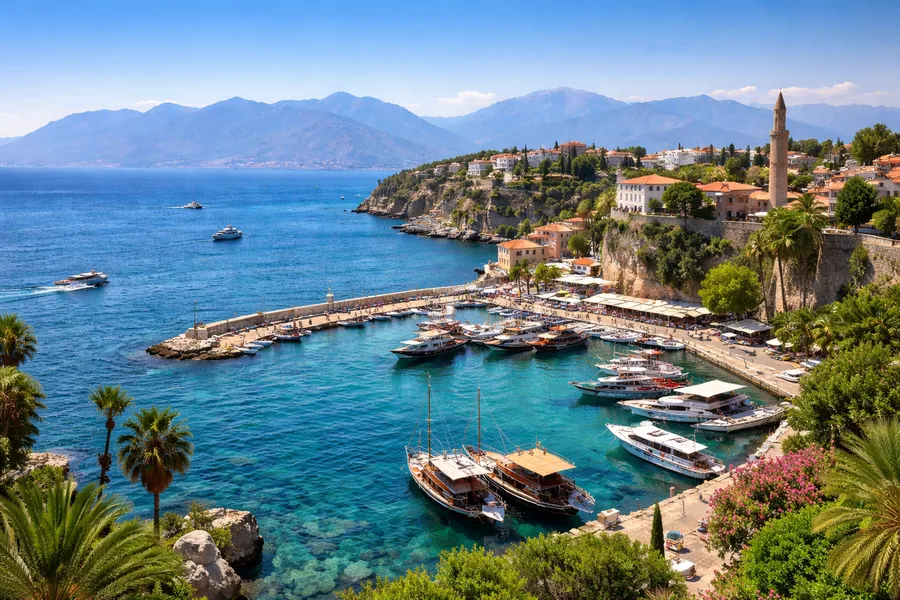
Antalya’s historic heart is a maze of narrow streets, Ottoman houses, and crumbling Roman walls — and wandering it costs nothing but time. Budget 1–2 hours to get lost properly. Highlights include Hadrian’s Gate, built in 130 AD, and the harbour, where wooden boats bob against ancient stone.
Pop into courtyards, peek into boutique hotels you’re not staying at, and sit on shaded steps watching cats rule the city. This is Antalya at its most atmospheric, and it asks nothing in return.
Konyaaltı Beach
Miles long, backed by mountains, and completely free. Konyaaltı is where locals swim, walk, and gather at sunset. Bring a towel and you’re set. Sunbeds are optional and cheap if you want them, but nobody will move you on if you don’t.
The water is clear, the views are cinematic, and the promenade is perfect for an evening stroll with an ice cream or tea. It’s resort-level scenery without the resort-level bill.
Düden Waterfalls
Yes, real waterfalls — inside the city. The Lower Düden Waterfall crashes directly into the Mediterranean, and access is free. Budget 30–45 minutes to wander the park, feel the spray, and watch rainbows form in the mist.
The upper falls are calmer, greener, and equally affordable. It’s proof that Antalya quietly delivers postcard moments without charging admission.
The Old Harbour & Cliffs
You don’t need a boat tour to enjoy Antalya’s coastline. Walk the cliff paths near Lara or the old harbour and you’ll get sweeping views of turquoise water and distant mountains for exactly zero euros.
Sunset here is unbeatable — especially when paired with a takeaway simit (Turkish sesame bread ring) and cold water from a corner shop.
Antalya Does Food Right (And Cheap)
Pide & Lahmacun
Think Turkish pizza — thin, crispy, and loaded with flavour. Lahmacun costs €1–2 and makes the perfect light lunch. Pide, boat-shaped and filled with cheese, meat, or vegetables, runs €3–5 and is filling enough to power you through a beach day.
Order with ayran (salty yoghurt drink) and you’ll eat like a local for the price of a coffee elsewhere.
Lokantas
Lokantas are the unsung heroes of Turkish cuisine. These no-nonsense eateries serve home-style dishes behind glass counters — stews, vegetables, rice, grilled meats — and you point at what you want.
A full plate with sides costs €4–7, portions are generous, and everything tastes like someone’s grandmother is quietly judging you from the kitchen. Go at lunchtime when dishes are freshest.
Street Food Staples
Simit vendors appear on every corner, selling warm, sesame-coated rings for about €0.50. Gözleme — thin flatbread stuffed with cheese, spinach, or potato — is cooked fresh and costs €2–3.
Doner kebabs are everywhere, but quality varies. Look for busy spots with locals — high turnover means better meat and better value.
Markets & Bakeries
Local markets overflow with seasonal fruit, olives, cheeses, and bread. You can build an entire picnic for under €5. Bakeries sell pastries for cents, and tea is often offered free or for symbolic change.
Eating well in Antalya isn’t about hunting trendy spots — it’s about trusting simple places that don’t try to impress.
Nightlife That Won’t Hurt Tomorrow
Meyhanes & Local Taverns
Skip flashy beach clubs and head to small taverns in Kaleiçi or residential neighbourhoods. Beer costs €2–3, local wine not much more. Tables spill into the street, conversations stretch late, and nobody rushes you.
Order a couple of meze plates to share and suddenly you’ve got dinner and drinks for less than a single cocktail at a resort bar.
Tea Gardens
Turkey runs on tea, and Antalya is no exception. Çay bahçesi tea gardens sit in parks, along the sea, and under trees. A glass of tea costs around €0.50 and buys you unlimited lingering.
This is nightlife for people who enjoy talking, watching, and existing slowly — which, after a day in the sun, feels exactly right.
Evening Walks
Antalya doesn’t need clubs to entertain you. Evening promenades along the beach or through Old Town are lively, social, and free. Street musicians appear, families stroll, and the air finally cools.
Sometimes the best night out is just a long walk and nowhere to be.
Off The Map: Antalya’s Quiet Wins
Karaalioğlu Park
Clifftop views, shaded paths, and benches overlooking the sea. It’s calm, green, and mostly ignored by tourists. Bring a book, sit under a palm tree, and let the city slow down around you.
Muratpaşa Neighbourhoods
Wander away from tourist zones and into everyday Antalya. Local bakeries, corner markets, kids playing football in the street — this is where prices drop and authenticity rises.
Early Morning Swims
Get to the beach before 9 am and you’ll share it mostly with locals doing laps and retirees floating peacefully. It’s cooler, quieter, and feels like you’ve discovered a secret — even though it’s been there all along.
Easy Escapes: Day Trips From Antalya
Antalya is a great base, but some of its best moments happen just beyond the city limits. The good news? You don’t need a car, a tour package, or a heroic budget to reach them. Buses are cheap, ruins are everywhere, and nature does most of the heavy lifting.
Perge & Aspendos (Ancient Hits, Zero Effort)
If you want maximum history with minimum logistics, start here. Perge, just 18 km east of Antalya, is an open-air lesson in Roman urban planning — wide colonnaded streets, bathhouses, a stadium, and enough ruins to make you feel impressively cultured by lunchtime. You can reach it easily by tram + short walk.
Pair it with Aspendos, home to one of the best-preserved Roman theatres in the world. It still hosts performances nearly 2,000 years after it was built, which feels mildly unfair to modern architecture. Buses run regularly, entry fees are reasonable, and you’ll be back in Antalya before dinner.
Termessos (Ruins With A View)
High in the Taurus Mountains, Termessos feels like an ancient city that actively tried not to be found. Reaching it requires a bit of effort — bus plus a hike — but the payoff is huge: dramatic ruins scattered across mountain slopes, pine forests, and an amphitheatre perched so high it feels like it might float away.
This is not a flip-flops trip. Bring proper shoes, water, and time. It’s quiet, powerful, and makes every other ruin feel slightly overexposed.
Phaselis (Ruins, But Make It A Beach Day)
Phaselis solves the eternal travel dilemma: culture or swimming? Here, you get both. Ancient ruins sit directly beside three beautiful bays, so you can explore Roman roads in the morning and swim in turquoise water by noon.
It’s about an hour from Antalya by bus or dolmuş, entry is affordable, and the atmosphere is relaxed rather than tour-bus frantic. Pack food, a towel, and give yourself permission to do absolutely nothing productive after lunch.
Olympos & Çıralı (Laid-Back And A Little Wild)
These neighbouring villages are where Antalya goes to exhale. Olympos mixes ruins with backpacker energy and jungle-like scenery, while Çıralı is calmer, greener, and perfect for slow beach walks.
Both are great for a long day out, but they also tempt you into staying overnight — which is how people accidentally extend their trips. If you go, don’t miss the Chimaera flames, where natural gas burns straight out of the mountainside after dark. It’s strange, ancient, and completely free.
Köprülü Canyon (Nature, Not Museums)
If you need a break from stones and columns, head inland to Köprülü Canyon National Park. The river is icy, the canyon dramatic, and the scenery refreshingly loud compared to city life. You can hike, picnic, or just stand on a bridge and admire water doing what water does best.
Rafting tours exist if you want adrenaline, but you don’t need to book anything to enjoy the park itself. Sometimes the best day trip is just air that smells different.
When To Go
Spring (Apr–May): Warm days, fewer crowds, perfect sightseeing Summer (Jun–Sep): Hot, busy, beach-focused — plan early mornings Autumn (Oct–Nov): Ideal weather, warm sea, better prices Winter (Dec–Feb): Mild, calm, great for city life and ruins
How Expensive Is Antalya?
Food: €1 simit, €2 lahmacun, €4–7 lokanta meal Drinks: tea €0.50, beer €2–3 Transport: public transport €0.50–1 per ride Accommodation: hostel €15–25, budget hotel €40–70
Why Antalya Works (Even On A Budget)
Antalya can be all-inclusive — or it can be all yours. The real magic lives outside the wristbands, where ancient stones warm in the sun and meals stretch longer than planned.
Travel here isn’t about upgrading your package.
It’s about downgrading the noise and realising how little you actually need.
Popular routes on Kiwi.com
- Cheap flights from London to Barcelona
- Cheap flights from London to New York
- Cheap flights from London to Asturias
- Cheap flights from London to Pattaya
- Cheap flights from London
- Cheap flights to Spain
- Cheap flights to Italy
- Cheap flights to Thailand
- Cheap flights to the United States
- Cheap flights to the United Kingdom
- Cheap flights from London Luton Airport
- Last minute flights
People Also Read


How to Travel Patagonia: A First-Timer's Guide to Chile & Argentina's Wild South