


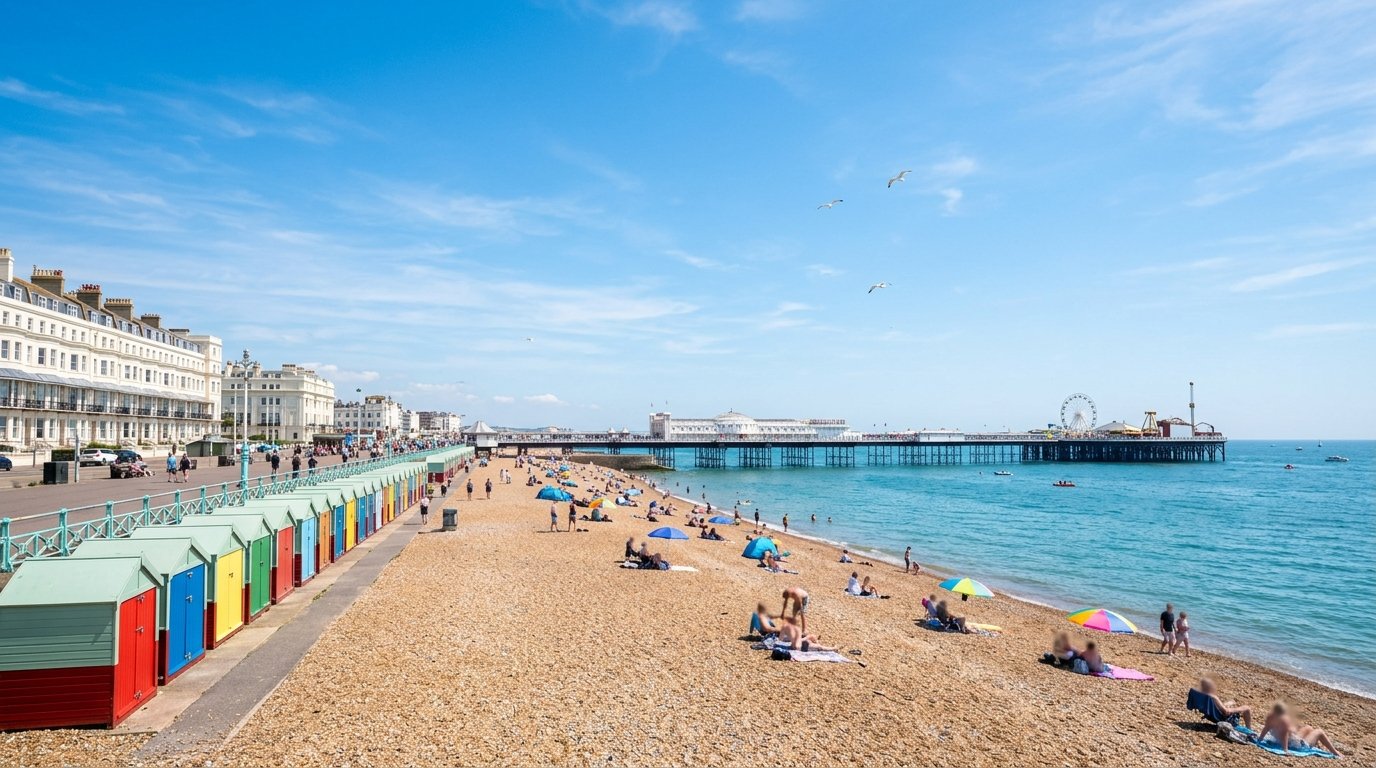
Brighton is widely known as “London by the Sea” — and for good reason. It not only serves as a coastal getaway for Londoners, but it has cosmopolitan energy, a vibrant nightlife and one of the most important arts scenes in the UK. It is also the unofficial “gay capital of the UK,” with a large and active LGBTQ+ community. But the city has something that London doesn’t have: an 8-mile (13-kilometer) shingle coastline and beach.
Enjoying Brighton doesn’t require a fortune. Everything in the city center is closely clustered, so you can visit the best sights and local food on foot without paying for transport.
Key takeaways
Fly via Gatwick, then take the train. Trains leave the South Terminal every 5 to 15 minutes during daytime hours, and a one-way ticket costs as little as £6 to £11.
A coach from London costs £4 to £6. Book a National Express coach in advance from London Victoria Coach Station and a one-way ticket costs £4 to £6.
Unlimited bus travel for £6.30 to £7.50. A City Saver ticket via the Brighton & Hove Buses App gets you unlimited daily travel; single fares start around £3.00.
Fish and chips from £9 to £14. At RYBKA, a sit-down medium cod or haddock with chips costs between £17.50 and £20.00; budget alternatives run £13.90 to £14.90.
The cheapest eateries cluster in two places. You'll find the most affordable food around the North Laine and Brighton Open Market.
Key takeaways
- To fly to Brighton, take the train from London’s Gatwick Airport. It leaves the South Terminal train station every 15 minutes and costs £6 to £11.
- If you’re in London already, take a National Express coach at London Victoria Coach Station. If you book in advance, a one-way ticket costs as little as £4 to £6.
- The local Brighton & Hove Buses are cheap, especially with a City Saver ticket, which offers unlimited daily travel for £6.30–£7.50.
- Enjoy Brighton’s iconic fish and chips at RYBKA; a medium meal goes for £17.50 to £20.00, with budget alternatives from £13.90.
- You’ll find the most affordable eateries around the North Laine and Brighton Open Market.
The best way to fly there is to take the train
You fly to Brighton by taking the train — that is, you fly into London’s Gatwick Airport, then take a train from the airport’s South Terminal directly to the city. Trains leave every 5 to 15 minutes during daytime hours. If you arrive at the North Terminal, an automated monorail shuttle will get you to the South Terminal train station in 2 minutes.
Find flights for this trip

Because Brighton is so close, a one-way train ticket costs as little as £6 to £11. In comparison, traveling from London’s other major airports takes much longer and is expensive.
If you’re already in London , take a National Express coach at London Victoria Coach Station. If you book in advance, a one-way ticket costs £4 to £6. To book a coach in advance, buy tickets directly through the official National Express or FlixBus websites or mobile apps.
If you prefer the train, you can leave from London Blackfriars, London Bridge, or Victoria stations to Brighton Station. The cheapest train fares are available during Super Off-Peak hours, which apply all day on weekends and between 10:00 a.m. and 3:30 p.m. and after 7:15 p.m. on weekdays.
See Brighton for free: walk
Enjoying Brighton is not a budget-buster. Because everything in the city center is cheek by jowl, you can experience the best sights and food on foot. If you don’t feel like walking, the local Brighton & Hove Buses network goes everywhere. Single fares start around £3.00, but purchasing a City Saver or day ticket via the Brighton & Hove Buses App gets you unlimited daily travel for £6.30–£7.50. (Paying by card is cheaper than cash!)
Brighton is a great cycling town and offers affordable bicycles and e-scooters through Beryl Bikes, which has docking bays all over the city. Pedal bikes cost 6p/minute on weekdays and 8p/minute on weekends plus a £1 unlock fee every time you hire a bike. If you plan to make multiple short trips throughout the day, check out the Minute Bundles and Weekend Passes Beryl offers, which do not charge an unlock fee.
Don’t drive into central Brighton. You don’t need a car, parking is expensive and road layouts are confusing. The bus or taxi will get you there faster.
What you should know
Many tourists confuse the Lanes and North Laine, which have different vibes. The Lanes is a maze of narrow alleyways packed with high-end antique shops, jewelry stores, and cozy, upscale cafes. North Laine is a bohemian sprawl of open-air streets that is the heart of Brighton’s alternative culture. Go here for vintage clothing, street art, and cheap eats.
Don’t expect soft sand on Brighton’s beach. It is entirely made of smooth shingle, so wear sturdy shoes and rent a deckchair for lounging. And watch out for the local seagulls if you’re eating fish and chips or an ice cream cone on the promenade. They’ll take it right out of your clutches.
Leave your intolerance at home. Brighton is the unofficial LGBTQ+ capital of the United Kingdom and prides itself on being a haven for counterculture and alternative lifestyles. Standing out is celebrated, whether through wild fashion, street art, or drag culture. Bringing rigid or judgmental attitudes into local pubs or spaces goes against the city’s ethos and will not make you any friends.
Yes, it’s called “London by the sea” for a reason, but don’t treat it as another borough of the capital. It is a distinct community with its own deep-rooted history, working-class roots, and identity. Treating it otherwise will not sit well with residents.
Note that traditional in-store tax-free shopping is no longer available in Great Britain. If you want to save the 20% VAT on a large purchase, ask the retailer to ship the items directly to your home address. But then you’re responsible for the shipping fees and any import duties your home country charges.
The sights that make Brighton brighter
The Royal Pavilion
This is Brighton’s absolute must-visit architectural marvel. Built as a seaside pleasure palace for King George IV, its exterior looks like an Indian Indo-Saracenic palace, while the interior is lavishly decorated in a Chinese-inspired style. It stands right in the center of the city and is impossible to miss.
Adult admission is a non-budget £21.50 at the door. But if you purchase your tickets in advance from the official Brighton & Hove Museums website , you receive a 5% discount. The entry ticket also grants you free return visits for an entire year.
Brighton Beach
This is the city’s communal living room, beloved by its residents. It is defined by its sweeping promenade, colorful beach huts, and historic Victorian arches that house local artist studios, bars, and clubs. The UK’s first official public nudist beach is located at the far eastern end, toward the Marina. If you want a deckchair because of the shingle, they cost from £3 to £8 per day per chair.
The Palace Pier
The Brighton Palace Pier stretches a third of a mile into the English Channel. This Victorian attraction offers classic arcade games and fairground rides. Entry used to be completely free, but a seasonal admission fee of £1 to £2 is now charged during peak hours (10 a.m. to 6 p.m. on weekdays, 10 a.m. to 8 p.m. on weekends).
Brighton i360
Located on Kings Road, this 162-meter futuristic observation tower features a giant glass viewing pod that offers panoramic views of the city, the South Downs hills, and the Sussex coastline. Adult tickets cost £20.50 when booking a specific timeslot; £25 when you just show up at the door. Consider this a splurge.
Brighton loves its arts and music
Brighton has one of the most important and thriving arts scenes in the UK , regularly described as the country’s leading creative and bohemian hub outside of London. The scene is defined by its progressive, community-driven spirit, massive open-access festivals, and a heavy blurring of lines between high art and grassroots street culture.
Held every May, Brighton Festival is the largest curated annual arts festival in England. Tickets start at around £30, with smaller or family events starting around £12. Running alongside it is Brighton Fringe, one of the largest open-access arts festivals in the world. Many performers offer pay-what-you-want (PWYW) options and many are free.
Much of the art is free. Street art is deeply woven into the city’s landscape. Walk down Trafalgar Street, Prince Albert Street, and the alleyways of North Laine to see massive, world-class street art murals for free. The Phoenix Art Space near the city center is the largest artist studio complex in the region. The main ground-floor contemporary art galleries are always free to enter.
Brighton’s LGBTQ+ culture and scene
Brighton’s world-famous LGBTQ+ district is centered in Kemptown, a lively, bohemian neighborhood directly east of the Brighton Palace Pier. The heartbeat of the district runs along St James’s Street and Marine Parade.
Kemptown is packed with a mix of historic gay pubs, massive dance clubs, community hubs, and queer-owned businesses. You’ll find legendary venues like Club Revenge , a multi-floor landmark gay nightclub, the lively Charles Street Tap, and cozy, community-focused traditional pubs like the Camelford Arms and The Actors.
The annual Brighton & Hove Pride LGBTQ+ Community Parade is the largest and most important in the UK and attracts 300,000 to 500,000 visitors. It traditionally takes place on the first Saturday of August — except for the next one, which is scheduled for Saturday, July 31, 2027, and kicks off the main weekend festival. Advance booking for accommodation and travel is essential.
Eating your way through Brighton
Brighton’s food scene perfectly captures its identity: part classic British seaside resort, part vibrant independent culinary hub. While it embraces global cuisines and has a legendary reputation for vegetarian and vegan food, there are local food traditions you should experience.
Traditional fish and chips
As a seaside town, fish and chips remains the city’s defining meal. Skip the fast-food kiosks directly next to the pier and head to established independent chippies.
RYBKA , at 41 Meeting House Lane, is considered one of the best fish and chips restaurants in Britain. A sit-down medium cod or haddock with chips costs between £17.50 and £20.00.
Excellent budget sit-down alternatives are Ramsbottom Fish & Chips Restaurant on Blatchington Road in Hove, where a medium cod or haddock with chips goes for £13.90, and Seagull Fish and Chips, on Sackville Road, which is known for its sustainable, light-battered fish, £14.70 to £14.90 for a full medium meal.
Fresh catch and local seafood
Because of Brighton’s position on the Sussex coast, locally caught seafood is highly celebrated.
For inexpensive fresh fish, try Sea Haze Brighton. They sell straight from the boat to the stall, meaning you are getting the absolute freshest catch of the day (like sea bass, scallops, or crab). Fresh oysters are £1.50 to £1.80 each, and small mixed seafood pots or casual snack bags start at just £3.00 to £5.00. Eat your food directly on the beach shingle (just watch out for the seagulls!).
And check out the Brighton Shellfish and Oyster Bar, a seafront walk-up window in the Fishing Quarter famous for its inexpensive oysters and fresh shellfish platters. Generous lobster, prawn or crab rolls range from £8.50 to £14, depending on supply.
The Brighton Smokehouse, in a charming redbrick arch on the seafront, focuses on fresh, house-smoked seafood. They serve incredible fresh prawns, mackerel, and sea bream sandwiches or massive mixed salads for under £15.00.
Money-saving tip: the midweek lunch deal
Many of Brighton’s sit-down restaurants offer sharp discounts if you eat between Monday and Thursday. For example, local favorites like Tonkotsu Brighton and The Big Bowl run highly economical lunch deals for £10 to £15 for a main dish or set menu combo.
Tempting day trips are just around the corner
Brighton is perfectly positioned for exploring Sussex and the South Coast, whether you are looking for ancient history, coastal hikes, or charming market towns. All are easily reachable by train, bus, or car.
If you want a mix of grand history, sweeping countryside views, and independent shopping, Arundel is a great choice. An off-peak roundtrip train ticket from Brighton costs between £15.00 and £18.00.
For a calm alternative to Brighton’s bustling energy, take the train to the pretty market town of Lewes. Off-peak roundtrip train tickets cost between £6.00 and £8.00.
If you want spectacular natural scenery, the Seven Sisters Cliffs offer one of England’s most impressive coastal landscapes. Take the 12X Coaster bus from Brighton city center for a scenic ride along the cliffs for only £6.00 for the roundtrip.
The best time to go there
The best time to visit Brighton is May to June or September, for the mild weather, vibrant cultural festivals, and manageable crowds. May is widely considered the very best time to visit because the city hosts multiple major arts and music festivals simultaneously — such as the Brighton Festival, Brighton Fringe and the Great Escape Festival, a massive three-day new-music showcase held across dozens of local clubs and music venues.
Summer brings the warmest weather (11°C–20°C+; 52–68°F+) and a high-energy beach atmosphere, but it is also the most crowded and expensive time to visit. It has the now legendary Brighton Pride (July 31, 2027), featuring a massive community parade and a large park festival.
September offers warm weather, significantly smaller crowds after the school term begins, and lower accommodation prices.
What Brighton actually costs
At today’s rate, 1 GBP ≈ 1.18 EUR.
| Item | Price |
|---|---|
| Coffee (café) | £3.75 (€4.42); cappuccino £2.80–4.00 (€3.30–4.72) |
| Beer (pint) | £6.25 to £6.65 (€7.37–7.84) |
| Lunch (pub, Open Market, fish and chips vendor) | £8.00 to £12.00 (€9.43–14.15) per person |
| Sit-down dinner | £15.00 to £20.00 (€17.69–23.58) |
| Dorm room (single bed) | £25 to £40 (€29.48–47.16), per night, though prices spike on summer weekends |
| Hostel (private room) | £80 to £100 (€94.32–118) |
| Hotel room (no-frills chain, weekdays) | £60 to £100 (€70.74–€118) per night |
| Local 3-star budget (e.g., Legends Hotel, off-season) | £32 to £65 (€37.73–€76.64) |
Things that you can enjoy for free: the wonderful street art throughout the city, the Brighton Fishing Quarter Museum, the Royal Pavilion Gardens (but not the Palace) and the street concerts performed by local singer-songwriters on any sunny afternoon on the promenade near the Palace Pier.
Coda
Brightonians regard themselves as members of a special community that is bohemian, tolerant, progressive and arts-friendly. But they have mixed feelings about their proximity to London and the “London by the sea” moniker.
On the one hand, the city’s “bubble of tolerance” was largely built because it was the closest place for non-conformist Londoners to escape to. On the other hand, they resent Londoners for driving up real estate prices and they get very prickly when someone dismisses their city as a suburb of the capital.
They want visitors to know that while their city has all of the food, nightlife, and culture of places like Hackney or Camden, it is a fiercely independent community — but with less pollution, friendlier people, and a massive pebble beach.
Ready to see it for yourself? Search flights to London on Kiwi.com and take the £6 train from Gatwick to the sea.