







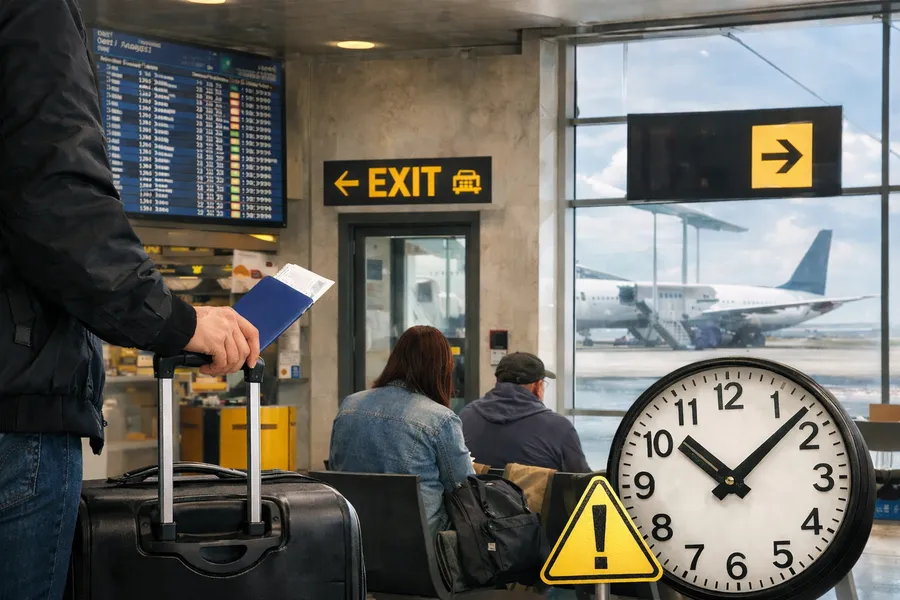
In terms of layover time, most experts recommend a minimum of 5-6 hours for domestic flights and 8+ hours for international layovers, to take into account deplaning, transit to the city and back, and return security checks. Plan to be back at least 2 hours before boarding for domestic flights and 3 hours early for international flights. Be sure to check the distance to and from the airport and reliable transit options (trains vs. taxis) to ensure you can return on time.
In this article
Countries with Strict Transit Visa Policies
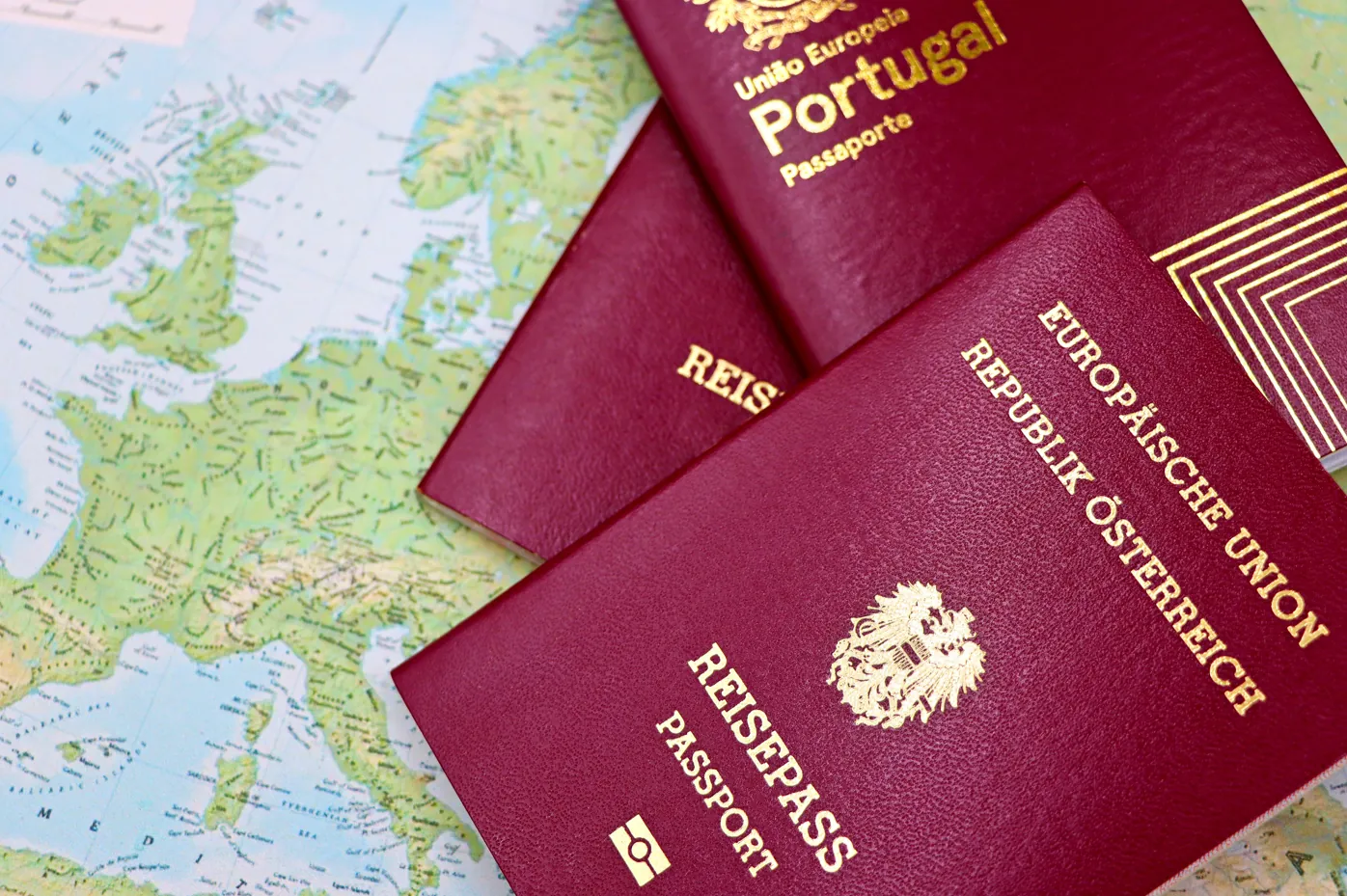
Whether you need a visa to leave the airport during a layover depends on the specific country and your nationality. Some nations have strict transit rules, while others are more flexible or even offer specific layover programs.
The following countries typically require a visa even if you are staying within the airport’s international transit area, or they require a specific electronic authorization (e.g., ESTA, eTA) before travel.
United States
All international travelers need a visa or an approved ESTA (under the Visa Waiver Program) to enter the US, even for a layover, because you must clear customs and immigration upon arrival.
Canada
Most nationalities need a transit visa or an eTA (Electronic Travel Authorization) if their international flight stops at a Canadian airport.
Find flights for this trip

United Kingdom
A Direct Airside Transit Visa (DATV) is required for certain nationalities unless they hold exemptions, such as a valid visa for the U.S. , Canada , or the Schengen Area.
Russia
A transit visa is generally required, especially for layovers exceeding 24 hours or requiring a change in airports.
Countries Offering Visa-Free Transit or Special Programs
Many countries facilitate easy entry for layovers to encourage tourism. Eligibility often depends on your nationality and the length of your layover.
Schengen Area (most countries)
Citizens of many nations (including the US, Canada, and Australia) can transit without a visa for short stays, provided their passport allows visa-free entry to the Schengen Area under normal circumstances.
Singapore
Offers a Visa Free Transit Facility (VFTF) for eligible nationalities, allowing them to exit the airport, often with free city tours available for those with sufficient time.
United Arab Emirates (UAE)
Offers 48-hour or 96-hour transit visas, which must be applied for in advance through a UAE-based airline.
Qatar
Provides visa-free entry to many nationalities and an optional free transit visa program for layovers of 96 hours or less.
China
Many cities offer 24-, 72-, or 144-hour visa-free transit policies for citizens of specific countries, allowing entry into the city during that time frame.
Key Considerations
Nationality
Your passport determines the rules that apply to you. Always check official government websites for requirements specific to your nationality.
Staying Airside vs. Exiting
Remaining in the international transit area (airside) usually doesn’t require a visa, but leaving the airport (entering the country officially) always requires meeting entry requirements.
Baggage
If you must collect and re-check your bags (common in the US or for self-transfer flights), you must go through customs and immigration, which necessitates meeting entry requirements.
To Note
Always verify the current visa and entry requirements with the embassy or consulate of your transit country before you travel to avoid being denied boarding or entry.
How Long a Layover Is Considered to Be Safe?
Recommended Minimum Time
| Flight Type | Recommended Minimum Layover | Safety Buffer for Return |
|---|---|---|
| Domestic | 4–6+ hours | 2 hours before boarding |
| International | 8+ hours | 3 hours before boarding |
Critical Factors for Safety
Immigration and Customs
For international layovers, you must clear immigration both when exiting and re-entering the airport. This process can take 1-3 hours, depending on the airport’s efficiency and date of travel.
Visa Requirements
Ensure your passport allows visa-free entry or that you have a valid transit visa/electronic authorization (like an ESTA for the US).
Transit to City Center
Consider the distance from the airport to the city. For example, Amsterdam Schiphol is only 18 minutes from the city center, while London Heathrow and Paris Charles de Gaulle can take over an hour due to traffic or distance.
Security Re-screening
You must always pass through security again upon re-entry. Factor in at least 45-90 minutes for these lines during peak times.
Luggage Handling
In some countries, like the US, you may need to collect your checked bags and re-check them, even if you are on a single ticket, which significantly reduces sightseeing time.
Time Breakdown for Exiting (Average Estimates)
To determine if your specific layover is safe, subtract these necessary steps from your total time:
- Deplaning and exiting: 30-60 minutes.
- Immigration/Customs (International): 1-3 hours.
- Travel to city and back: 1-2 hours total (highly dependent on the city’s infrastructure).
- Returning security check: 45-90 minutes.
- Buffer for boarding: 45-60 minutes before departure.
Planning Tips
Work Backwards
Calculate your available time from the boarding time, not the departure time.
Check Ticket Rules
Some airlines may void your connection if you exit the airport; verify your ticket rules before leaving.
Stay Informed
Use your airline’s app to monitor gate changes or delays in real-time.
Airport Exit Rules: International vs. Domestic
The primary difference between exiting an airport on domestic and international layovers lies in the legal right to enter the country and the time required for processing.
Domestic-to-Domestic Connections
Exiting during a domestic layover is straightforward because you are already legally within the country.
- Legal Requirements: No visa or passport control is required to exit the terminal.
- Time Recommended: At least 4-6 hours.
- Re-entry Process: You must pass through standard security again. Be back at the airport 2 hours before departure.
- Baggage: In most cases, your checked bags are automatically routed to your final destination.
International Connections
Exiting an international layover requires officially entering a foreign country, which adds significant layers of bureaucracy and added time to be taken into account. If leaving the airport, give yourself at least 8 hours.
Legal Requirements
You must pass through Passport Control/Immigration and may require a valid visa, even for a short stay. Some countries (like the UK or US) require electronic authorizations such as an ETA or ESTA.
Re-entry Process
You must clear both immigration/customs and security upon returning. It is recommended to be back at least 3 hours before departure.
Baggage
In many countries (notably the US), you must collect your checked bags to clear customs even if you have a connecting flight, then re-check them before exiting or continuing.
Transit Proximity
Only exit if the airport has fast, reliable transit (like a 20-minute train) to the city center. For example, a 6-hour layover in Zurich is often “safer” than 6 hours in Paris due to the airport’s proximity. Be sure to inform yourself about this as well as reliability of public transport and potential traffic issues.
Comparison Summary
| Feature | Domestic Connection | International Connection |
|---|---|---|
| Exit Barrier | None; walk out freely | Immigration & Passport Control |
| Documents | Standard boarding pass/ID | Passport + Visa/ETA/ESTA |
| Baggage | Stays with airline | Often must be collected/re-checked |
| Min. Layover | 4–6+ hours | 8+ hours |
| Return Buffer | 2 hours before flight | 3 hours before flight |
Important Exception
Schengen Zone (Europe)
Flights between two Schengen countries are treated like domestic flights; you generally do not face passport control when exiting during a layover.
Using Transit Hotels, City Tours, and Stopover Programs
Utilizing transit hotels, city tours, or stopover programs transforms a potentially tedious wait into a valuable part of your trip, offering opportunities for rest, exploration, and cultural immersion at little to no extra cost.
Transit Hotels
Transit hotels are specifically designed for travelers with long layovers. They are typically located inside the airport terminal, often past security and immigration, which means you usually do not need a visa to access them.
Purpose & Benefits
The primary benefit is convenience, allowing you to rest, shower, and sleep in a private room without the hassle of leaving the airport, going through security again, or finding outside accommodation. This significantly reduces travel fatigue and makes long journeys more comfortable.
Booking
Rooms can often be booked for short durations, sometimes by the hour, providing flexibility based on your layover time.
Examples
Brands like YotelAir, Aerotel, and specific hotels at major hubs like Singapore Changi (SIN), Istanbul (IST) , and Amsterdam Schiphol (AMS) offer these services.
City Tours for Layovers
Many airports and their partner airlines, in cooperation with local tourism boards, offer guided tours designed to give travelers a taste of the city during a long layover.
Purpose & Benefits
These tours convert unproductive waiting time into sightseeing opportunities, allowing you to see local landmarks and experience the culture. They are specifically timed to ensure you return to the airport well before your connecting flight, minimizing the risk of missing it. They are often free or heavily discounted.
Logistics
Tours handle transportation and timing, and in some cases you may not need a specific visa if the tour is organized as part of a transit program.
Examples
Free tours are available at airports in cities like Seoul (ICN) , Singapore (SIN), Istanbul (IST), Doha (DOH), and Taipei (TPE).
Stopover Programs
A stopover is a planned, longer break (usually more than 24 hours) in a connecting city on the way to your final destination.
Purpose & Benefits
Stopover programs, often run by airlines in partnership with local tourism boards, allow you to add an extra destination to your itinerary for little or no additional airfare. They often include such perks as free or heavily discounted hotel stays, complimentary meals, airport transfers, and attraction discounts. This strategy is excellent for breaking up long-haul flights, combating jet lag, and getting essentially two vacations for the price of one.
Booking
You usually need to book these through the airline’s website, often using the multi-city booking option or a specific program portal in advance. Eligibility can depend on flight routes, booking class, and layover duration.
Examples
Airlines with notable programs include Iceland Air , Turkish Airlines, Qatar Airways, Etihad Airways , and TAP Air Portugal.
To Note
Remember to always check visa requirements and specific program conditions with the airline or airport in advance to ensure a seamless experience.
Risks of Missing Your Connection and How to Avoid Them
Risks of Missing Your Connection
Financial Costs
If you booked separate tickets (self-connection), the second airline is not obligated to rebook you, often requiring the purchase of a new, expensive last-minute ticket.
Ticket Cancellation
If you miss one leg of a single-ticket itinerary, the airline may label you a “no-show” and cancel all remaining flights on that ticket, including return legs.
Baggage Complications
If you are not on the flight, your checked luggage might be removed, delayed, or lost.
How to Avoid Missing Your Connection
Book Single-Ticket Itineraries
Choose flights with a single booking reference. The airline then assumes responsibility for rebooking you and providing care (meals/hotels) if a delay is their fault.
Use Airline Apps & Notifications
Install the airline’s app to receive real-time updates on gate changes or boarding times.
Purchase “Missed Connection” Insurance
Select a policy that explicitly covers missed connections due to carrier delays (e.g., weather or mechanical issues). Some policies require a minimum delay (often 3 hours) to trigger benefits. Standard travel insurance does not cover missed connections caused by your personal negligence. Coverage is designed for unforeseen events beyond a traveler’s control.
Inform Crew of Tight Windows
If your first flight is delayed, notify flight attendants; they may assist with faster disembarkation or check for “tight connection” assistance programs at the gate.
Stay Within the Airport for Short Layovers
If your stopover is less than 5-6 hours, stay within the airport. Only venture out for city tours if they are specifically timed for transit passengers.
What to Pack and Plan Before You Leave the Airport
Leaving the airport during a long layover requires balancing legal readiness with practical mobility. Preparation ensures you don’t waste precious exploration time at a security checkpoint or stuck in traffic.
Essential Planning (Before You Land)
Visa & ETIAS Readiness
Check if you need a transit visa or a regular entry visa to clear immigration. Note that starting in late 2026, the ETIAS system will require many visa-exempt travelers to have electronic authorization for transiting or entering the Schengen Area.
Luggage Logistics
Confirm if your checked bags are tagged through to your final destination. If not, you must claim them and use airport luggage lockers or storage apps like Bounce or Stasher to avoid dragging bags through the city.
Connectivity
Download offline maps (Google Maps) and transit apps (Rome2Rio) before landing. Consider an eSIM (e.g., Airalo or Nomad ) for instant local data without searching for Wi-Fi.
What to Pack in Your “City Break” Day Bag
Keep a small, lightweight backpack or cross-body “belt bag” as your primary kit for the city.
Tech Essentials
- Power Bank: A 10,000+ mAh battery is essential, as using GPS and cameras drains phones quickly.
- Universal Adapter and Charging Cords: If you plan to stop at a cafe or hotel.
Personal Care
- Hygiene: Toothbrush/toothpaste, deodorant, and face wipes to feel human after a long flight.
- Moisturizer & Lip Balm: Crucial for combating dry cabin air once you’re on the ground.
- Reusable Water Bottle: To stay hydrated.
- Prescription Meds and Pain Reliever: Just in case.
Clothing & Comfort
- Layers: A packable jacket or large scarf that doubles as a blanket for the plane and warmth for the city.
- Comfortable Shoes: Non-negotiable for city walking.
- Spare Clothes: At minimum, a fresh t-shirt and change of underwear to swap into before your next flight.
Safety & Documents
- Physical Backups : Printed copies of your onward boarding pass and passport.
- RFID Wallet : To protect cards in crowded tourist areas.
Final Terminal Checklist
Set Two Alarms
One for when you must head back to the airport and another for when you must be at the gate.
Find Your Gate First
Locating your departure gate before leaving helps you understand the layout and any additional security checks you’ll face upon return.
Check Local Time
Ensure your phone has updated to the local time zone to avoid missing your return window.
Long Layover FAQs: What You Need to Know Before Leaving the Airport
How long should a layover be for me to leave the airport and see the local sights?
The recommended minimum layover for domestic flights is 4–6 hours or more. For international flights, aim for at least 8 hours. Always factor in how far the city center is from the airport, the reliability of public transportation, and potential traffic delays. Calculate your usable time from the boarding time, not the scheduled departure time.
How much of a return buffer should I include in the layover time?
For domestic flights, return to the airport at least 2 hours before departure. For international flights, plan for a minimum buffer of 3 hours to account for security, immigration, and boarding procedures.
On international flights, will I need a visa to leave and return to the airport?
This depends on your nationality and the transit country. Some countries, such as the United States, Canada, and Russia, have strict transit requirements. Others are more flexible or offer dedicated layover programs, including Qatar and the UAE. Always confirm current visa and entry rules with the relevant embassy or consulate before traveling.
How can I get the most out of a long layover without straining my budget?
Some airports offer free city tours, including Seoul (ICN), Singapore (SIN), Istanbul (IST), Doha (DOH), and Taipei (TPE). Many airlines also provide stopover programs with discounted or free hotels, meals, transfers, and attraction access. Notable programs are offered by Turkish Airlines, Qatar Airways, Etihad Airways, and TAP Air Portugal. Qatar also offers an optional free transit visa for layovers of up to 96 hours.
How can I protect myself from the risks of missing my connecting flight during a long layover?
Book flights under a single reservation so the airline is responsible for rebooking if delays occur. Purchase travel insurance that covers missed connections caused by carrier delays. Use your airline’s app for real-time updates, and set two alarms: one to leave the city and another to be at the gate.
What happens to my baggage if I leave the airport?
On most domestic-to-domestic itineraries, checked bags are routed directly to your final destination. In countries where baggage must be collected during transit, you can usually re-check bags before exiting or store them using airport lockers or luggage storage services such as Bounce or Stasher.