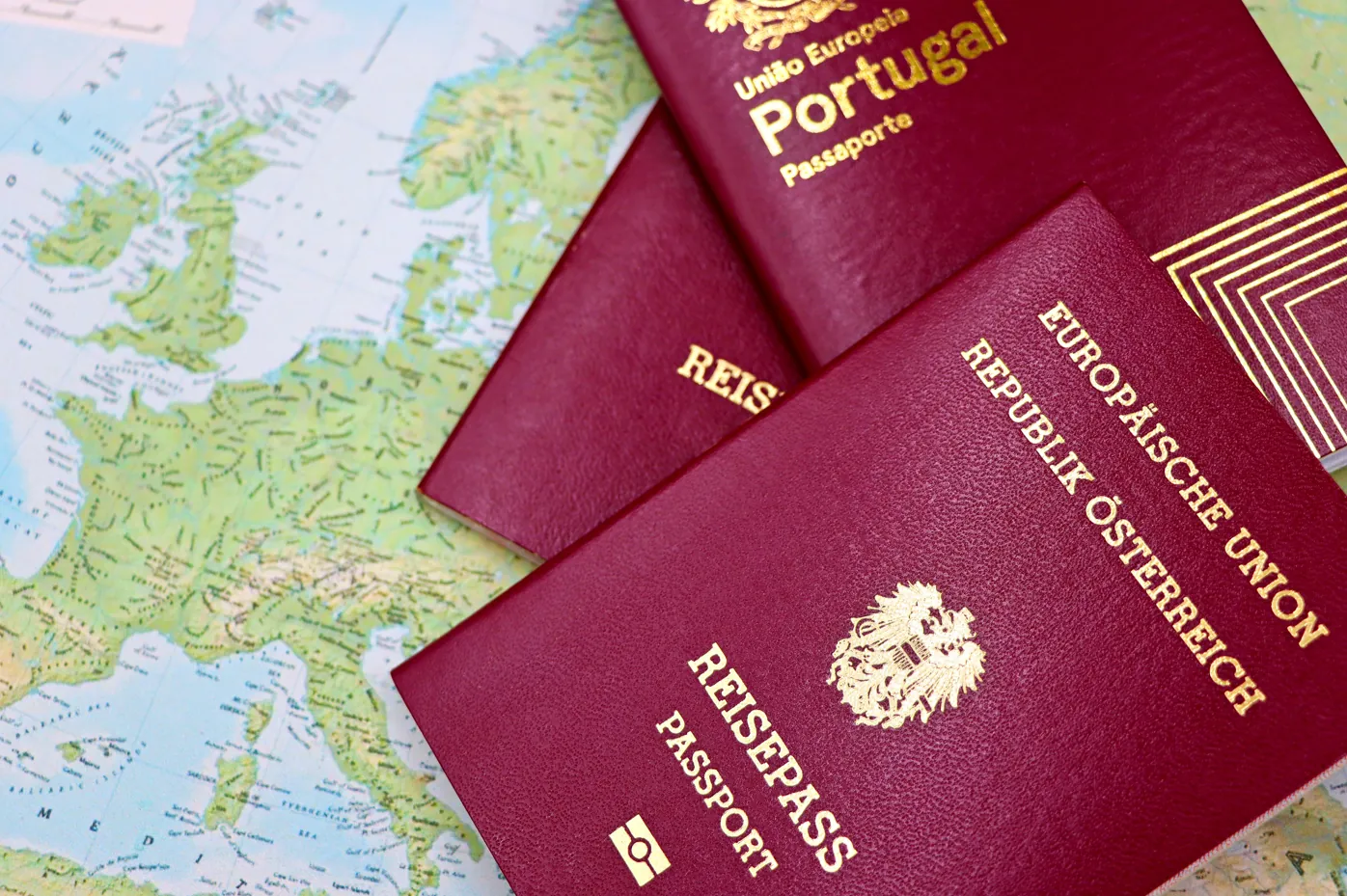







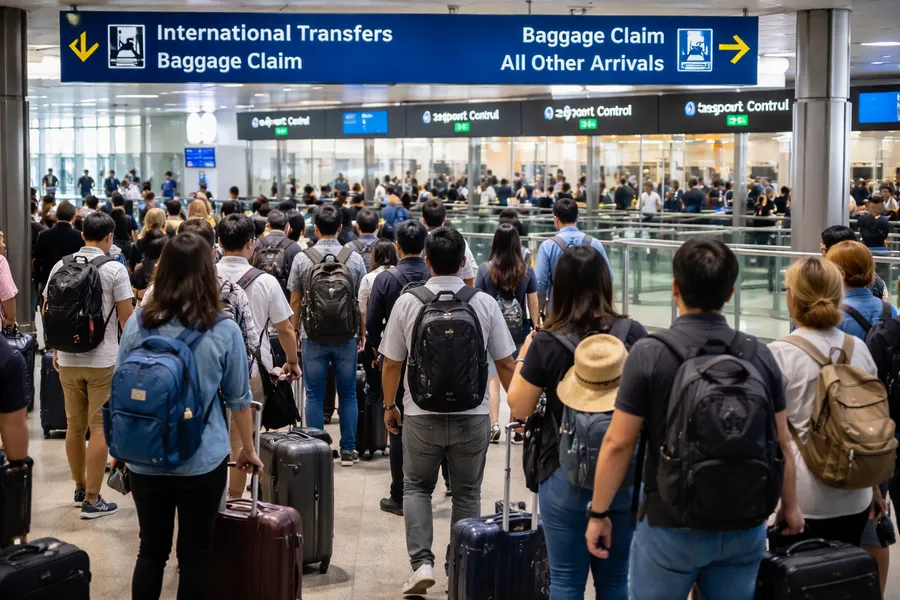
The necessary time buffer for customs clearance depends on whether your flights are on a single ticket, your final destination, and whether you have checked luggage. Two hours is generally the minimum for a low-stress connection, while 3+ hours is safer if the hub is notoriously busy (e.g., Heathrow , JFK ). To avoid missing your connection, make sure to secure pre-travel approvals like ETIAS for Europe or the UK ETA and that liquids purchased at a previous airport are in a Security Tamper-Evident Bag (STEB ) .
Introduction
General Rules for Most Regions
In most international airports, if you have a single ticket and your bags are checked through to your final destination, you stay in a “sterile” international transit area.
- Transit: You do not clear customs or immigration in the layover country.
- Arrival: You clear both customs and immigration at your final destination.
- Exception: If you leave the airport during a long layover, you must pass through immigration to enter the country and security to return.
The United States & Canada (Exceptions)
Unlike most of the world, the U.S. and Canada usually require you to clear customs at your first port of entry, even if you have a connecting flight.
Find flights for this trip
US Arrival
You must clear immigration, collect your checked bags, and take them through customs. Afterward, you re-check them at a nearby transfer desk for your next flight.
European Schengen Area
The Schengen Zone (most of the EU) treats internal borders differently. You clear passport control at the first Schengen country you enter and typically clear customs at your final destination. Your bags are often tagged with green-edged labels to show they came from outside the EU and are subject to inspection at the final airport.
Single vs. Separate Tickets
If you booked flights on separate tickets, you will almost always have to clear customs and immigration, collect your bags, and re-check them for the next leg.
First Point of Entry Rules Explained
The “First Point of Entry” rule generally requires travelers to clear immigration and/or customs at the very first airport they land in within a specific country or shared-border zone.
The United States (Strict Rules)
The US typically requires all international arrivals to clear both immigration and customs at their first stop on US soil. You must deplane, pass through immigration, collect all checked luggage, and physically carry it through a customs checkpoint.
Biometrics (2026 Update)
As of late 2025/early 2026, the US has expanded universal biometric collection. Nearly all non-US citizens now undergo facial and fingerprint scanning upon entry.
Exception (Preclearance)
If you fly from an airport with US Preclearance (e.g., Dublin , Toronto , or Abu Dhabi ), you clear U.S. customs before takeoff and arrive as a domestic passenger.
Canada
Canada also requires international travelers to confirm their identity and declare goods at their first port of entry.
Kiosks
Most major airports (e.g., Toronto Pearson ) use Primary Inspection Kiosks (PIK) where you scan your passport and submit declarations digitally.
Luggage
If your bags are through-checked on a single ticket, some Canadian airports allow them to be transferred automatically to your next flight without you picking them up, but you must still clear immigration at the first stop. Always confirm with your airline at first check-in whether your bags are tagged through to your final destination.
European Schengen Area (2026 Changes)
Immigration
You clear passport control at the first Schengen country you enter.
EES
By April 10, 2026, the Entry/Exit System (EES) will be fully operational across all Schengen external borders. Most non-EU visitors will have their biometrics (photo and fingerprints) registered digitally at this first entry point, replacing manual passport stamps.
ETIAS (Late 2026)
Starting in the last quarter of 2026, visa-exempt travelers (like US and Canadian citizens) will also need an ETIAS authorization before they can enter at their first point of entry.
Customs
Unlike immigration, you usually clear customs for your bags at your final destination.
United Kingdom (2026 Update)
The UK is not part of the Schengen Zone and maintains its own entry rules. From February 25, 2026, many visa-free visitors must hold an approved UK Electronic Travel Authorisation (ETA) to enter or even transit through a UK airport.
When You Must Reclaim and Recheck Your Luggage
Mandatory Reclaim Scenarios
First Port of Entry in North America
On most international flights arriving in the US or Canada, you must collect your bags to pass through customs before re-checking them for your next flight, regardless of whether you are on a single ticket.
Changing Airports
If your connection requires traveling between different airports in the same city (e.g., from London Heathrow to Gatwick ), you must transport your own luggage between them.
Ticket and Airline Factors
Separate Tickets
If your flights were booked as independent journeys (self-transfer) you must collect your bags, clear immigration/customs, and check them in again for the next leg.
Low-Cost Carriers
Budget airlines (e.g., Ryanair , AirAsia ) often do not have “interline agreements” and typically require you to handle your own baggage transfers at every stop.
Airline Rules for Long Layovers
Many airlines require you to collect your bags if your layover exceeds a certain timeframe, typically 12 hours for United and 16 hours for American Airlines.
When You Generally Do NOT Reclaim
International Transit (Non-US)
In most of the world (Europe, Asia, Middle East), if you are on a single ticket and staying in the international transit area, your bags are automatically transferred.
Schengen Zone (Internal)
For flights entirely within the Schengen Area (e.g., Paris to Rome), luggage is typically through-checked to the final destination.
How to Verify
Check the Bag Tag
When you first check in, look at the airport code on the printed tag. If it shows your final destination, it is through-checked. If it shows your layover airport, you must reclaim it there.
Ask at Check-in
Always confirm with the gate agent at your departure airport if your bags are “checked through”.
Customs Procedures for Connecting International Flights
In 2026, customs procedures for multi-country flights depend primarily on whether you are in transit or entering a specific region’s customs zone.
Types of Multi-Country Stops
Layovers (less than 24 Hours)
If you remain in the airport’s international transit area, you typically do not clear customs. However, some countries (e.g., US) require all transit passengers to clear customs at their first point of entry.
Stopovers (more than 24 Hours)
These are treated as arrivals at a final destination. You must clear immigration and customs, collect your bags, and re-check them when you resume your journey.
Self-Transfer (Separate Tickets)
If your multi-country journey is on separate tickets, you must clear customs at every stop to collect and re-check your bags. ???
Key Regional Rules for 2026
Schengen Area (Europe)
You clear immigration (passport control) at your first point of entry into the Schengen zone. You typically clear customs for your checked baggage only at your final destination, unless your first stop is a non-Schengen country.
- New for 2026: Travelers from visa-exempt countries like the US will need an ETIAS authorization before boarding any flight to these 30 European countries.
United States
You must clear customs and immigration at your first U.S. airport, even if you have a connecting flight to another country.
United Kingdom
In 2026, many visitors (including U.S. citizens) need a valid Electronic Travel Authorisation (ETA ) even for transit.
Asia
In 2026, customs and transit procedures at major Asian hubs prioritize digital pre-clearance and biometric efficiency. While procedures vary by country, the general rule for multi-country flights is that passengers remain “airside” and do not clear customs if they are transiting between international flights on a single ticket
Customs vs. Immigration
Immigration
Checks you (passport, visas, ETIAS/ETA). This usually happens at the first point of entry into a specific border zone (like Schengen).
Customs
Checks your goods (luggage, restricted items). This generally happens where you finally collect your bags, except in the U.S. and Canada, where it happens at the first stop.
Preparation Checklist
- Check Transit Visas: Some countries require a transit visa even if you never leave the airport.
- Declare Restricted Items: In 2026, the EU strictly prohibits bringing meat or milk products from most non-EU countries.
- Confirm Bag Tagging: At your first check-in, verify if your bag is tagged to your final destination or just the next stop.
Key Rules for Duty-Free Purchases and Carry-Ons
When traveling on multi-country flights, managing duty-free purchases, especially liquids, aerosols, and gels (LAGs), requires careful planning to adhere to evolving international security rules. The primary challenge arises during connecting flights that involve passing through additional security checkpoints.
Security Tamper-Evident Bags (STEBs)
The main way to carry duty-free liquids over the standard 100ml (3.4oz) limit in your carry-on is by ensuring they are packed in a special, transparent, security tamper-evident bag (STEB) by the retailer at the time of purchase.
Keep it Sealed
The bag must remain sealed until you reach your final destination.
Keep the Receipt
The original receipt must be inside the sealed bag and show the purchase was made within the last 48 hours.
Security Screening
You must present the STEB separately from your other carry-on baggage at security checkpoints. Security officers may open the bag for screening, but they should re-seal it if everything is cleared.
General Liquid, Aerosol, and Gel (LAG) Rules
Standard carry-on rules for LAGs in most countries remain:
- Containers must be 100ml (3.4oz) or less.
- All containers must fit into one transparent, re-sealable plastic bag of a maximum one-liter capacity (approx. 20x20cm or 15x25cm).
Regional Nuances in 2026
Rules for accepting duty-free LAGs purchased in one country when connecting in another can vary significantly.
EU and UK
Most airports follow the standard STEB rules for international connections. However, some airports, like Amsterdam Schiphol, may have specific restrictions on accepting duty-free liquids from certain non-EU countries (e.g., if you are connecting from the UK and the items were bought there).
United States
The TSA allows duty-free liquids in secure, tamper-evident bags to be carried on international flights with connections, provided the bag shows no signs of tampering and the receipt is present. The items must pass a secondary screening.
Asia (e.g., Singapore, India)
Similar to the US and EU, items must be in a sealed bag with a receipt. Be sure to check with airport personnel if flying to the US or Australia from an Asian hub, as some items may not be accepted at the gate.
New in 2026
As of 2026, many airports in Europe (including Prague Airport ) are rolling out new CT scanners that may eventually eliminate the 100ml liquid limit and the need to remove liquids from bags. However, the older 100ml rule still applies where these scanners are not installed, so always check the specific rules of your connecting airport.
Important Considerations
Baggage Allowance
Duty-free purchases typically count toward your airline’s carry-on baggage allowance (weight and size limits), unless an exception is specified by the airline.
Customs Allowances
Each country has limits on the value or quantity of duty-free goods (e.g., spirits, tobacco) you can bring in without paying local duties. Exceeding these limits can result in penalties or confiscation.
Time Buffers You Should Plan for Customs Clearance
Recommended Buffer Windows
International to International (Same Terminal)
- 2 hours is generally the minimum for a low-stress connection.
- 3+ hours is safer if the hub is notoriously busy (e.g., Heathrow, JFK).
- A minimum of 2.5 to 3 hours is recommended to allow for customs processing for US connections.
Self-Transfer (Separate Tickets)
- 4 to 6 hours is recommended if you have checked bags.
- 2 to 4 hours may suffice if you have carry-on only, though you still risk missing the flight if the first leg is delayed.
Changing Airports (e.g., Heathrow to Gatwick)
- 5 to 8 hours minimum for medium-sized cities.
- 8 to 12 hours for large, congested cities like London, Paris or Tokyo .
Factors Affecting Wait Times
Queue Lengths
Peak windows (early morning/late afternoon) or busy seasons can push wait times_._
Nationality
Non-citizens can wait up to 66% longer than domestic citizens at immigration checkpoints.
Baggage
Waiting for checked bags adds an average of 20–45 minutes to the total clearance process.
Common Mistakes That Cause Missed Connections
Document & Authorization Errors
Missing New Travel Authorizations
A major cause for denied boarding or delays in 2026 is failing to secure pre-travel approvals like ETIAS for Europe or the UK ETA. Even transiting passengers often need these digital authorizations.
Digital Arrival Card Delays
Travelers who fail to complete digital declaration cards (e.g., for Singapore , China, or South Korea) at least 72 hours before arrival face significant holdups at immigration.
Passport Validity Issues
Many countries now strictly enforce a six-month validity rule from the date of departure or return. Having fewer than two to four blank pages can also lead to entry refusal.
Logistical & Planning Mistakes
Underestimating Biometric Processing
New systems like the EU’s Entry/Exit System (EES) have increased processing times by up to 70% at some hubs, making traditional 1-hour layovers insufficient.
Self-Transfer Oversights
Booking separate tickets (“self-transfer”) without realizing you must clear customs and re-check bags is a leading cause of missed second legs.
Ignoring Transit Visa Requirements
Some countries require a transit visa even if you never leave the airport’s secure area.
Customs & Security Pitfalls
Undeclared High-Value Items
Failing to declare cash (over €10,000 or equivalent) or luxury goods can lead to lengthy secondary inspections and potential confiscation, causing you to miss onward flights.
Restricted Item Delays
Carrying prohibited items (e.g., certain foods, medications without prescriptions, or oversized liquids) can trigger time-consuming manual baggage searches.
Improperly Packed Duty-Free Items
Liquids purchased at a previous airport that are not in a Security Tamper-Evident Bag (STEB ) with a visible receipt may be confiscated at transit security, causing further delays.
Navigational Errors
Terminal Miscalculations
Many travelers do not research the distance between terminals. In massive hubs like Heathrow or JFK, changing terminals can take over an hour.
Ignoring Gate Changes
With automated systems, gate changes in 2026 happen rapidly and may only be reflected on airline apps rather than overhead screens.
Customs on Multi-Country Flights: FAQs You Need Before You Travel
If I am on a multi-country flight, do I have to pick up my bags and pass through customs at each stop?
In the United States and Canada, you must collect your checked bags to clear customs and then re-check them for your next flight. In the Schengen Zone, you clear passport control at the first Schengen country you enter, but customs inspection happens at your final destination. In most parts of Asia, international-to-international transfers usually do not require clearing customs. However, budget airlines such as Ryanair or AirAsia often require passengers to collect and re-check baggage at every stop. Always confirm at check-in whether your bags are checked through to your final destination.
What if I booked my flights on separate tickets?
If your itinerary is booked on separate tickets, you must clear immigration and customs, collect your baggage, and re-check it at every leg of your journey. Airlines treat each ticket as a separate trip, even if flights occur on the same day.
What happens if my itinerary includes a long layover?
For layovers under 24 hours, travelers who remain in the international transit area typically do not clear customs, except in countries like the United States where all arriving passengers must clear customs at their first point of entry. For stopovers longer than 24 hours, you must clear immigration and customs, collect your bags, and re-check them. Many airlines also require baggage collection for long layovers, often around 12 hours for United Airlines and 16 hours for American Airlines. Confirm baggage rules at check-in.
How can I prepare for customs procedures on multi-country flights?
Check whether you need a transit visa, as some countries require one even if you do not leave the airport. Review customs restrictions and declare any regulated items. At your initial check-in, verify whether your baggage is tagged to your final destination or only to the next stop to avoid surprises during connections.
How much time should I allow to clear customs on connecting flights?
Plan for at least two hours for a low-stress international connection. At busy airports, allow three hours or more. For connections in the United States, a minimum of two and a half to three hours is recommended. If your itinerary requires changing airports, allow five to eight hours in mid-sized cities and eight to twelve hours in large, congested hubs such as London, Paris, or Tokyo.