







In the world of air travel, ticket prices are rarely static. While we’ve all heard stories of someone scoring a “steal” at the final hour, the reality is that airline tickets usually get more expensive as the departure date approaches. The truth is, airlines use sophisticated algorithms to hike prices when they know travelers are desperate or booking for business.
However, if you know how to navigate the system, using tools like Kiwi to find creative routes, you can still find affordable flights even when you’ve left it late. Let’s unwrap how it all works.
Looking for last-minute domestic flights in Australia?
Search domestic flights in Australia →
Quick Answer (TL;DR)
Last-minute flight deals do happen, but they’re the exception rather than the rule. Prices often hike as departure nears, especially on popular routes and during peak travel times. However, if airlines have empty seats close to takeoff, you might snag cheap last minute flights , especially on short-haul or less busy routes.
Why do flight prices change close to departure

Here’s the thing: airlines use a strategy called dynamic pricing. This means the amount you pay for a ticket depends on current demand, remaining capacity, and historical data. Airlines categorize seats into different “buckets”; once the cheapest buckets are sold, only the higher-priced ones remain.
Business travelers are a huge reason for this. Unlike budget-conscious travelers, business flyers often need to buy plane tickets just days before a meeting and are willing to pay a premium. Airlines know this, so they hold onto the last few seats and hike prices significantly. To understand the best timing for your next trip, check out our guide on when flights are cheapest to see how the day of the week influences your costs.
When airlines drop prices
While it’s not the norm, there are specific moments when you might find a minute ticket for a bargain. This usually happens when a flight has a high number of empty seats and the airline wants to recoup at least some of the fuel costs.
You’ll see this more often with charter flights or on routes to popular destinations during a random mid-week slump. For example, Tuesday and Wednesday flights are less popular for weekend breakers, so an airline might offer lower fares to fill the cabin.
If you’re eyeing a quick getaway to Las Vegas or Mexico City and don’t mind flying on a whim, these dips can happen. Learn more about when to book your seats to catch these rare windows.
When airlines raise prices instead
For most international flights and popular domestic flights, the price trajectory goes only one direction: up. As the holiday season approaches or a major event hits a city like San Francisco, the demand skyrockets. So when booking flights for easter , for example, book them a few months in advance.
Many airlines prioritize profit margins over filling every single seat at the last second. They would rather fly with five empty seats than sell them for $50 when they could have sold them for $500 the day before. This is especially true for long-haul flights, where operational costs are high, and the “last-minute” window actually closes weeks in advance.
How to find cheaper flights without waiting for last-minute drops

You don’t have to play “price chicken” with the airlines to save money. The smartest way to secure flight deals is to use different airlines for each leg of your trip. You can do this by using services like Kiwi, which find flights through virtual interlining. Instead of a standard round trip, look for “hacker fares” that combine two one-way tickets.
Also, don’t believe the incognito mode myth ; clearing your cookies won’t magically lower the cash prices. Instead, focus on being flexible with your travel dates. Shifting your departure by just 24 hours can save you hundreds.
Smart ways to check prices
Great fares don’t just fall from the sky when you least expect them. You need to put effort into tracking prices over a period of time. Don’t just look once and pay; use technology to do the heavy lifting. Google Flights is a great starting point for broad searches, but for more complex, multi-city itineraries, specialized travel sites offer more creative routing. So is Kiwi.
Here’s a quick example of how price drop tracing works. If you want to fly from New York to San Juan, check prices for different departure times. You might notice that early-morning departures or red-eye flights on Tuesdays are consistently cheaper.
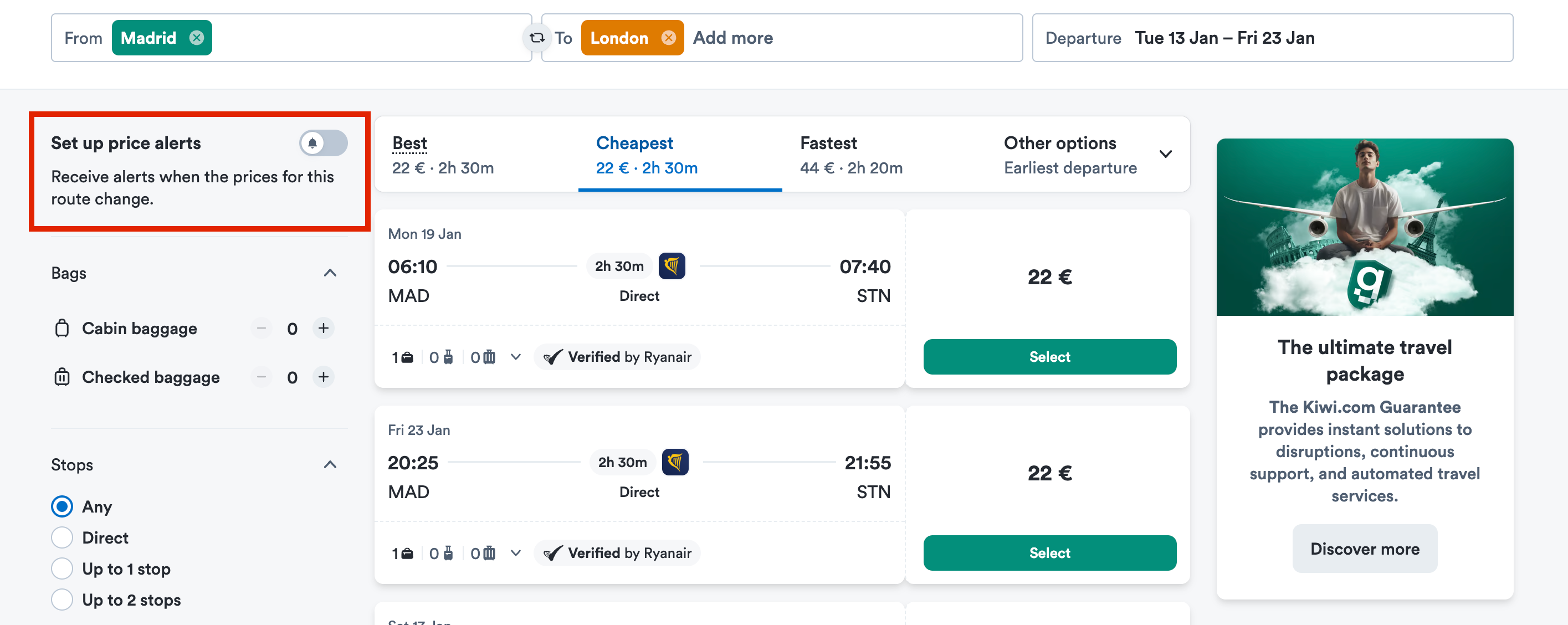
Setting up flight price alerts ensures you get a notification the second the price hits your target “buy” zone. All you need to do is set up a route you’re interested in and turn on the price alerts. This way, you won’t need to check the airline websites every minute.
Best times to book flights if you want low prices
If you want to beat the system, aim for Wednesday flights. Statistically, Tuesday and Wednesday are the cheapest days to fly because they sit right between the busy Monday business rush and the Friday weekend getaway.
Booking a red-eye flight can also save you a significant amount, as most travelers prefer to arrive at their destination feeling refreshed rather than at 4:00 AM. Additionally, look for flights with airline partners that offer “hidden city” or self-transfer options. Those morning flights can also help you avoid the domino effect of daily delays while keeping costs down.
How early should you plan your trip
Planning is your best defense against high last-minute bookings. For domestic flights, the “sweet spot” is usually 1 to 3 months in advance. For international flights, you should start looking even earlier.
| Trip Type | Booking Window |
|---|---|
| Domestic | 3–8 weeks early |
| International | 4–6 months early |
| Holiday Season | 6 months+ early |
If you are a budget-conscious traveler, start watching fares 6–8 weeks out for short-haul trips. This gives you enough time to see the price fluctuations without risking the steep hike that happens in the final 14 days.
And remember, once you book, make sure you know how early to get to the airport so you don’t miss that hard-won flight!
Finding the Sweet Spot for Savings
In the end, while the dream of scoring the best prices at the departure gate is mostly a relic of the past, you don’t have to be at the mercy of last-minute ticket hikes. The key is to shift your strategy from gambling on the final hour to capitalizing on lower demand periods. If you have the flexibility to travel during the off-season or can select dates in the middle of the week, you significantly increase your chances of finding unsold seats that airlines are eager to fill.
For those who must travel on short notice, keep an eye on loyalty programs or inquire about standby tickets, which can occasionally offer a bypass to standard fares. While major carriers like United Airlines typically favor high-margin business bookings close to takeoff, being a savvy digital nomad means using tools like Kiwi to find the best deals through alternative routes.
Remember, the best prices aren’t always found by waiting; they’re found by being smart, staying flexible, and knowing when to hit “book” before the seat selection dwindles.
Frequently Asked Questions (FAQs)
Last-Minute Flight Pricing FAQ
Do flights ever get cheaper at the very last minute?
Rarely. While budget carriers might occasionally drop prices for empty seats on unpopular routes, prices tend to rise significantly in the final two weeks before departure as airlines target high-paying business travelers.
Why do last-minute flights cost more?
Airlines use dynamic pricing to maximize revenue. They know that last-minute bookings are often made by people who must travel, allowing them to hike prices far above the standard cash prices offered months earlier.
How can I avoid high last-minute prices?
Book at least three weeks in advance, be flexible with your travel dates, and consider early morning or red-eye flight options. Using tools like Kiwi can also help you find cheaper multi-carrier routes.
Should I wait or book early?
Always book early if you have specific dates and a fixed destination. Waiting for a last-second drop is a high-risk strategy that usually results in paying much more for your airline tickets.
Popular routes on Kiwi.com
- Cheap flights from London to Barcelona
- Cheap flights from London to New York
- Cheap flights from London to Asturias
- Cheap flights from London to Pattaya
- Cheap flights from London
- Cheap flights to Spain
- Cheap flights to Italy
- Cheap flights to Thailand
- Cheap flights to the United States
- Cheap flights to the United Kingdom
- Cheap flights from London Luton Airport
- Last minute flights
People Also Read