







In 2024, roughly 37% of all flights experienced some delay. Both airports and airlines can be responsible for delayed departures. The reasons include air traffic control issues, severe weather and airplane mechanical problems. This year, Alaska Airlines has the best on-time departure rate among US carriers, with 92%. Frontier has the worst record, at 70%. If you’re facing a delay, always check the airline’s contract of carriage and local passenger rights laws.
Why Planes Take Off After Their Scheduled Departure Times
The official departure time is when the aircraft pushes back from the gate, not when it becomes airborne. Factors influencing delayed departures include:
Air Traffic Control (ATC)
Air traffic control can be responsible for takeoff delays when it meters traffic to ensure safety during high congestion, extreme weather, or when there are runway obstructions. By slowing down the flow of departing aircraft, ATC creates a temporary delay with a “release time ” to prevent planes from colliding, ensure they follow safe routes, and maintain proper separation between them.
Release Time
“Release time” refers to a departure restriction telling a pilot when they are authorized to depart. This is used to ensure separation from other aircraft or manage traffic flow. It serves as a specific time for a flight’s takeoff clearance, which may be determined by factors such as weather, air traffic congestion, and runway and staff availability.
Weather
Fog, heavy rain, or snow can reduce visibility to dangerous levels, requiring flights to be delayed until conditions improve. In addition, excessive crosswinds or gusty conditions, as well as thunderstorms and hail, can exceed the safe operating limits for aircraft, leading to takeoff delays.
Congestion
Air traffic congestion at departures is caused by factors such as adverse weather, airport and airspace capacity limitations, air traffic control system issues, technical problems with aircraft, staffing shortages, and logistical failures such as late-arriving planes or ground equipment. These issues create bottlenecks where too many aircraft are waiting for clearance, leading to disrupted flight schedules.
Where and When
Busy airports often experience air traffic delays due to a high volume of flights. There is also a greater chance of congestion during peak travel seasons and on holidays.
Air Traffic Control System Issues
Issues such as radar malfunctions, communication breakdowns, or failures in navigation aids can severely disrupt ATC capabilities. When such systems fail, controllers may need to switch to backup procedures, which are typically slower and less efficient.
Airplane Mechanical Issues
Mechanical issues delaying flights can include problems with an aircraft’s engines, landing gear, control systems, or other critical components, often detected during pre-flight checks or scheduled maintenance. Issues like unexpectedly discovered defects or the need to swap planes for repairs can all cause delays. Note that smaller airlines often lack backup aircraft, so any mechanical issue causes ripple delays.
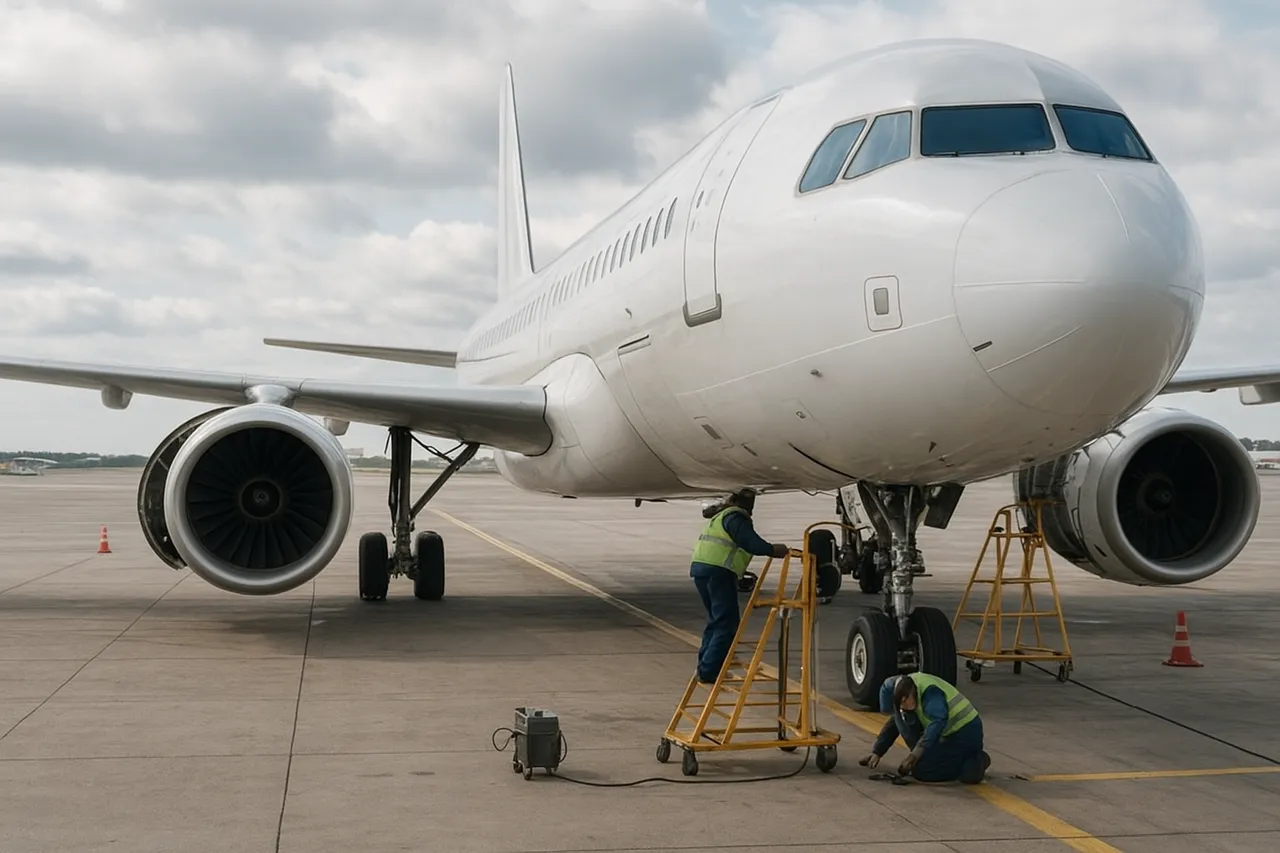
Flight delays can happen when mechanical issues such as problems with engines, landing gear, or other critical systems are discovered during pre-flight checks, requiring immediate maintenance before takeoff © Kiwi.com
Late Arrival of Incoming Aircraft
If your plane has been delayed at its original departure airport, your takeoff will be delayed as well. In addition, airlines often hold departing flights to wait for passengers transferring from delayed inbound flights. This is especially common at hub airports, such as Frankfurt , where many travelers rely on connections. In addition, a late aircraft may occupy a gate longer than planned, preventing the next scheduled flight from boarding on time. This bottleneck can ripple across multiple flights.
Cyber Attacks
On September 20, a cyberattack on Collins Aerospace, a provider of check-in and boarding systems, disrupted services at several European airports, delaying hundreds of flights and canceling dozens. At Brussels Airport passengers were being checked in and boarded manually, and Berlin’s Brandenburg Airport reported longer waiting times due to the problem. This has been a growing issue for airports and passengers since September 2018, when a ransomware attack disabled flight display systems, forcing manual operations for two days, and is likely to become a larger problem as hackers become more technologically sophisticated.
How Airlines Deal With Late Takeoffs
Airlines have developed a whole playbook to handle late takeoffs because even a few minutes can ripple across an entire network. Here’s how they tackle the disruptions:
Operational Strategies
Buffer Scheduling
Airlines build in extra time between flights to absorb minor delays without affecting the next leg. These buffers are especially common in hub-and-spoke models, where flights from smaller, outlying airports are routed through a central, “hub” airport, such as Frankfurt , to connect passengers to a wide range of other destinations.
Dynamic Rerouting
If a flight is late, dispatchers may work with air traffic control to find faster or less congested routes to make up time in the air.
Aircraft Swaps
If one plane is delayed, airlines may substitute it with another available aircraft to keep the schedule moving.
Crew Reassignment
If a delay pushes crew members past their legal duty limits, airlines scramble to reassign fresh crew to avoid delays.
Priority Handling
Late flights may be given priority for takeoff slots or gate access, especially if they’re carrying connecting passengers.
Tech & Communication
Real-Time Monitoring Systems
Airlines use advanced software to track delays and predict their impact across the network. This allows for faster decision-making and resource allocation.
Passenger Alerts
Apps and SMS updates keep travelers informed, helping reduce confusion and manage expectations.
Coordination with Airports
Airlines work closely with airport operations to ensure gate availability and that refueling and boarding are streamlined once the aircraft is ready.
Recovery Tactics
Schedule Adjustments
Airlines may delay subsequent flights slightly to accommodate late arrivals, especially if many passengers are connecting.
Contingency Planning
Rapid response teams are activated to handle logistics, rebook passengers, and manage crew rotations.
Feedback Loops
Post-delay debriefs help airlines refine their strategies. Crew and passenger feedback is used to improve future delay management.
Airline and Airport Departure Performances (2025)
Airlines (from several sources including here )
Best Airlines for On-Time Departures
| Airline | On-Time Departure Rate | Region |
|---|---|---|
| Safair | 94.49% | South Africa |
| Alaska Airlines | 92% | United States |
| Delta Air Lines | 90% | United States |
| Gol Airlines | 89.77% | Brazil |
| Avelo Airlines | 88% | United States |
| United Airlines | 88% | United States |
| Piedmont Airlines | 87% | United States |
Worst Airlines for On-Time Departures
| Airline | On-Time Departure Rate | Region |
|---|---|---|
| TUI Airways | 59.2% | United Kingdom |
| Wizz Air | 66% | Europe |
| Ryanair | 66.5% | Europe |
| easyJet | 67.8% | Europe |
| Jet2 | 68% | United Kingdom |
| Frontier Airlines | 70% | United States |
| Spirit Airlines | 70–75% | United States |
Airports (from several sources, including here )
Best Airports for On-Time Departures
| Airport | On-Time Departure Rate | Notes |
|---|---|---|
| Seattle-Tacoma International (SEA) | 89% | Highest among U.S. airports |
| Riyadh King Khalid (Saudi Arabia) | 86.65% | Global top-tier performance |
| Cape Town International (South Africa) | 8.6/10 score | Global leader in punctuality |
| Salt Lake City International (SLC) | 83.94% | Top U.S. performer, efficient ops |
| San Francisco International (SFO) | 81.94% | Despite fog, ranks high |
| Tokyo Haneda (Japan) | 81.5% | Precision and efficiency |
Worst Airports for On-Time Departures
| Airport | On-Time Departure Rate | Notes |
|---|---|---|
| Newark Liberty International (EWR) | ~74% | Northeast weather + traffic |
| Washington Reagan National (DCA) | 70.74% | Congestion and weather issues |
| Dallas Fort Worth International (DFW) | 69.28% | Worst in U.S. two years running |
| Ho Chi Minh (Vietnam) | 6.21/10 score | Delay-prone operations |
| Rhodes Diagoras (Greece) | 6.05/10 score | Poor infrastructure |
| Tunis Carthage (Tunisia) | 5.4/10 score | Lowest global score for punctuality |
Flight Delays Explained: Your Top Questions Answered
1. Why do flights often take off well after their scheduled departure times?
Severe weather, air traffic control issues, airport congestion, airplane mechanical problems, crew scheduling issues, late incoming flights, and even cyberattacks are the main issues leading to departure delays.
2. Are some airlines better than others in on-time departures?
This year, South Africa’s Safair and US airlines Alaska and Delta top the list of top-performing airlines in terms of on-time departures, thanks to strong fleet management, scheduling discipline, and turnaround efficiency. Europe’s Wizz Air and EasyJet, as well as US airlines Frontier and Spirit, are among the worst performers due to scheduling conflicts, resource shortages, and logistical inefficiency.
3. Are some airports better than others in terms of on-time departures?
Yes. Salt Lake, Los Angeles, and Cape Town international airports are at or near the top in departure efficiency due to efficient ground operations, smart scheduling, and, in some cases, favorable weather. Tunis Carthage, London Gatwick, and Turkey’s Antalya airports have the worst departure records.
4. Who is legally responsible in case an airport issue leads to significant delays or even cancellations?
When a flight is significantly delayed or canceled due to airport-related issues, the legal responsibility typically falls on the airline. In the EU/UK, you’re entitled to a full refund if your flight is canceled or delayed by more than 5 hours, even if it’s due to airport issues. In the U.S., delays due to airport issues don’t guarantee compensation, but you can still request a refund if the delay is substantial. American Airlines will provide a refund for a significantly delayed or canceled flight if you choose not to accept rebooking or alternative travel options.
5. What can I do if I am facing a significant delay?
Always check the airline’s contract of carriage and local passenger rights laws. Know your rights by studying the policies and laws of your regional aviation or transportation authority. Use travel insurance, especially for international travel; it can cover costs airlines may not. File complaints promptly. If an airline stonewalls, contact the appropriate national aviation authority or use services like AirHelp.