




Are you planning on flying with your sizable four-legged friend soon and need help figuring out where to start? You’ve come to the right place! Traveling with a dog on a plane can be testing, with so many things to consider, from finding the best airlines for traveling with a dog to ensuring you’re up to date with the airline’s pet policy.
In this article
There’s no need to fret, as we’ve compiled all the must-dos for flying with animals, breaking down the safety requirements, airline regulations and top tips to make planning your vacation an enjoyable, rather than overwhelming, experience.
Can I Bring A Large Dog On A Plane?
Though it can vary depending on the airline, most of the time, the answer is yes. However, the rules can be confusing as many carriers have very different policies, and it’s common for airlines to change their requirements regularly and at short notice.
In general, large dogs tend to be permitted on planes but must travel in the hold as cargo or checked baggage. This is true for many airlines, but we’ll talk about this in more detail later, as a couple of carriers are incredibly pet-friendly and allow big dogs in the cabin, while some only allow small dogs to travel, period. You’ll also notice some differences between dog-friendly travel destinations and those with stricter policies, as some countries impose much more stringent rules than others.
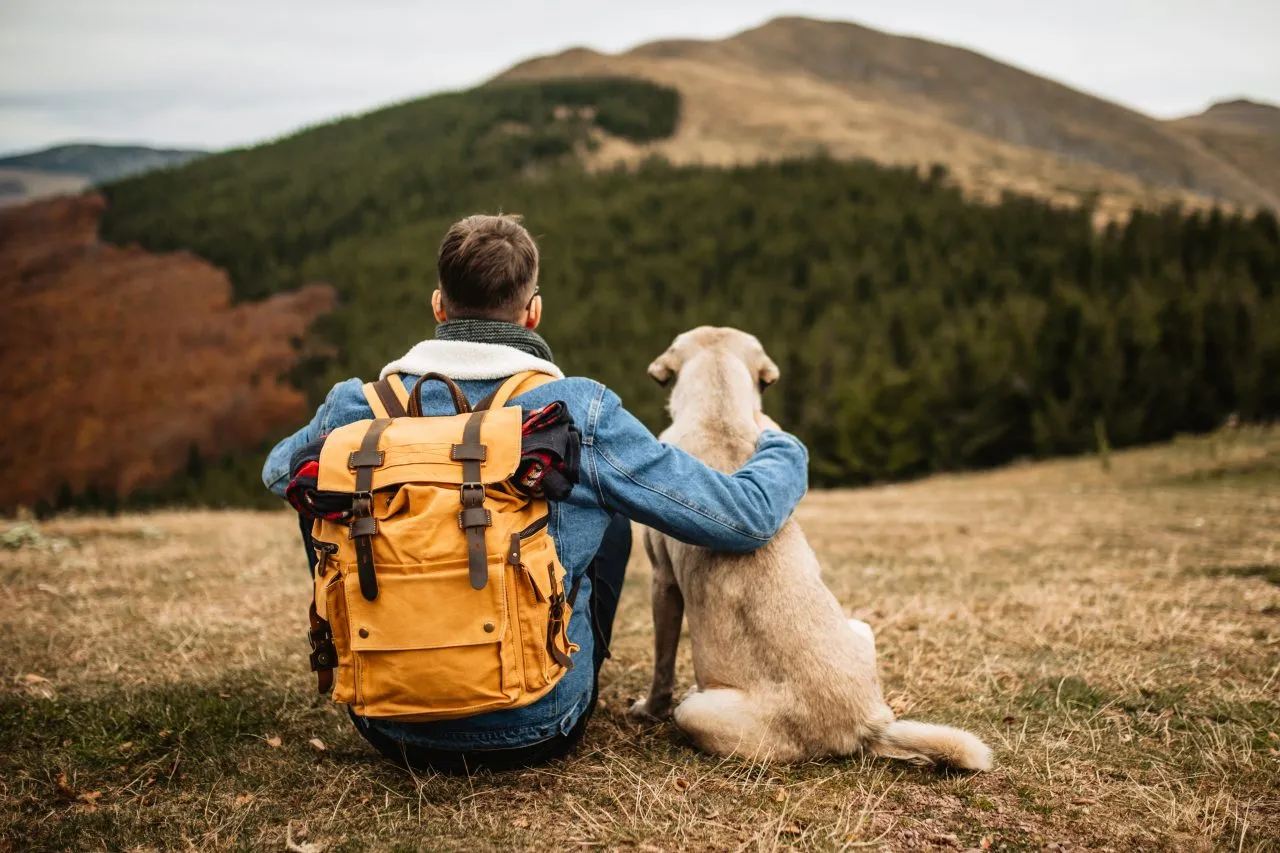
Hiker with backpack and his dog resting on a mountain © Getty Images
One exception to this rule that holds for all airlines is for service dogs, as these animals are permitted in the cabin with their handler. Unfortunately, the regulations differ if you’re flying with therapy dogs, and these pups are often only allowed to travel in the cabin with you if they meet the size and weight requirements.
Flying With Large Dogs On A Plane
Flying with small dogs tends to be more straightforward than with large dogs, as most airlines allow pooches that fit the size restrictions to travel in the cabin, while how bigger dogs travel largely depends on the airline unless you’re flying with service dogs.
Depending on what part of the plane your pet will fly in, there are different factors to evaluate and varying requirements.
Let’s look at how flying with a large dog in the cabin compares to in the hold as cargo.
Which Airlines Allow Large Dogs In The Cabin?
Sadly, finding an airline that will allow you to take your companion on board is a challenging task if your pet weighs more than 9 kg and is too big to fit in a carrier beneath the seat. Bigger dogs are usually only found in the cabin on flights if they are service dogs or if you’re flying by chartered plane, but we have compiled a list of the most flexible airlines with slightly looser restrictions than others.
| Airline | Rules | Size/Weight |
|---|---|---|
| Spirit | - 6 kennels per flight. - Cannot sit in the front or exit rows. - Dogs must be odorless and well-behaved. | Up to 18 kg for dog and carrier combined. |
| Delta | - 4 pets per flight in economy. - Must be at least 10 weeks old. - Not permitted in cabins with flat-bed seating. | Maximum kennel dimensions: 18”x11”x11” |
| United | - No weight limit once pets fit comfortably in the carrier. - Must be at least 8 weeks for domestic flights and 16 weeks for international flights. - Only 1 pet per carrier. | Maximum kennel dimensions: Soft-sided - 11”x18”x11” Hard-sided - 7.5”x17.5”x12” |
| Southwest | - No pets are permitted on international flights. - 6 kennels per flight. - 1 pet carrier per passenger. | Maximum kennel dimensions: 18.5”x13.5”x9.5” |
Note that many airlines do not require a health certificate if your dog can travel with you in the cabin. Contact your airline ahead of time to see if your pet will need a trip to the vet or not.
Flying With Dogs In Cargo
Many airlines permit large dogs to travel as cargo, provided they meet the size, weight and health requirements specific to the airline, transit countries and final destination. Cargo and checked baggage are often used interchangeably, but knowing the difference is important if you’re flying with a big dog. As cargo, your pup may or may not be traveling on the same flight as you and can arrive at a different time than when you land. Though most owners will prefer to fly on the same plane as their beloved pet, cargo flights can be a better option if your route is not direct, as connecting flights can cause added stress for animals.
Compare some popular airlines below based on their restrictions for flying with pets in cargo and checked baggage.
Flying With Large Dogs In Checked Baggage
Most of the time, flying with big dogs in the cabin is not possible. Traveling with your pet as checked baggage is the next best thing. Conditions in the hold are similar if you choose for your pet to fly as cargo or checked baggage, as they both require your pup to be in a rigid, leak-proof crate that they can comfortably stand, sit and turn in and are kept in a temperature-controlled environment.
The main difference is that dogs traveling as checked baggage are linked to your ticket and must be on the same flight as you, making monitoring and tracking your furry friend easier.
| Airline | Rules | Checked Baggage | Cargo |
|---|---|---|---|
| Alaska | - You must request access to your dog if you have a stopover of more than 4 hours. - Short-nosed dogs cannot fly in the hold. | Up to 68 kg for dog and carrier combined. Maximum kennel dimensions: Up to 40”x27”x30” | For dogs over 68 kg. Maximum kennel dimensions: Up to 40”x27”x30” |
| Delta | - Bookings are accepted 14 days before departure. - Short-nosed dogs cannot fly in the hold. - Drop-off 3 hours before departure. | Unavailable | No limit. |
| Air Canada | - Short-nosed dogs cannot fly in the hold. - Robust or aggressive dogs must have a special reinforced container. | Up to 45 kg for dog and carrier combined. | No limit. |
| British Airways | - Short-nosed dogs require a carrier 10% larger than the minimum. - Certain strong or aggressive dogs are not accepted. | Unavailable | No limit, but the minimum kennel dimensions are 27”x20”x19” |

Young man with a surfboard with his dog on a sandy beach © Getty Images
What Are The Best Airlines For Flying With Large Dogs?
The top airlines for transporting your pup will depend on where you fly. Below, we’ve rounded up some of the best carriers in the U.S.A., Europe and worldwide . It’s worth noting that since the pandemic, airline policies can be quite changeable, so it’s essential to contact the airline for the latest regulations.
Alaska Airlines
Known for its pet-friendly policies, Alaska permits large dogs to travel in the hold and is one of the best options for domestic flights in the U.S. They offer an option for dogs to travel on a separate cargo plane if your dog’s crate is too large for the hold on the aircraft you’re flying on.
Experience a plane journey alongside your dog with Alaska Airlines
American Airlines
Flying with your dog on American Airlines is similar to Alaska, as they run a program called PetEmbark for large dogs to travel on a cargo plane, as they currently only permit small dogs who can fit in the cabin to travel on commercial flights.
Air France
One of Europe’s best carriers for travel with animals, Air France permits large dogs to fly in the hold or as checked baggage. However, costs will vary depending on the route, as some destinations may have different regulations.
Fly comfortably with your furry friend: Air France’ pet-friendly flights
KLM Royal Dutch Airlines
KLM airlines is part of the same group as Air France and, therefore, implements a similar pet policy, allowing large dogs to fly in cargo for reasonable fares.
Experience a plane journey alongside your dog with KLM Airlines
Etihad
Etihad airways operates a well-established LiveAnimlas pet transportation program and will fly your pet via their cargo service if your dog is too big for the cabin. This is a great choice if you’re flying with exotic animals, too.
Plan your trip: dog-friendly plane travel on Etihad Airways
British Airways
Pets can only travel in the hold with British Airways, and they work closely with two animal transport companies to ensure a safe and comfortable flight for your dog.
Go safe: fly with large dogs on British Airways
How Much Does It Cost To Fly A Large Dog?
Pet owners can expect different price ranges depending on whether the dog is traveling in the cabin, as checked baggage or as cargo. Your flight route and destination will also influence the final cost of your pet’s journey, as well as the weight and size of your pup in some cases.
| Airline | Cost As Checked Baggage | Cost As Cargo |
|---|---|---|
| Alaska | - €137 - €91 within Alaska | Contact the airline for a quote. |
| American | Only available for active U.S. Military personnel. | Starting from €137. |
| Air France | - Medium-haul: €200 - Long-haul: €400 | Between €100 and €400, depending on the destination. |
| KLM Airlines | Between €75 and €400. | Between €75 and €400. |
| Etihad Airlines | Contact the airline for a quote. | Contact the airline for a quote. |
| British Airways | Starting from €927. | Starting from €927. |
What Is The Biggest Dog You Can Take On A Plane?
Cabin: Spirit Airlines has one of the highest maximum weight allowances for dogs traveling in the cabin, with pets up to 18 kg permitted on board. This is an excellent option for bigger dogs traveling on domestic flights.
Checked baggage: Dogs traveling the hold as checked baggage can weigh up to 75 kg with some airlines, including KLM airlines., Air France and Finnair.
Cargo: Large dogs exceeding 75 kg, depending on the airline, usually will have to fly on a cargo plane, with India’s Akasa Airline transporting canines of up to 100 kg as cargo.
I want to fly with my pooch in comfort on Spirit Airlines
I wish to ensure seamless travel for my furry pal with Finnair
woman walking siberian husky and german shepherd next to a beach house © Getty Images
What Is The Check-In Procedure For Large Dogs?
Different check-in protocols are in place for pets traveling in the cabin, as checked baggage or cargo.
Cabin
If your dog is small enough to fly with you on the plane, you can head to the check-in desk as usual with your pet in a suitable crate. You’ll present the staff with the specific travel documents for you and your companion, though you may not need as much documentation if your dog stays with you on the plane. You’ll also pay any fees associated with your pet’s flight here. Remember, your dog’s crate will usually count as your carry-on baggage, so you may need to pay for extra hand luggage.
Checked Baggage
Dogs flying in the hold generally require health certificates and vaccination records at check-in, where you may also pay if your airline doesn’t allow payment over the phone or online in advance. Be sure to give yourself plenty of time on the day of the flight, as dogs traveling as checked baggage often need to be dropped off at designated spots in the airport that may be far from the check-in desk. Once you land, you can head to the collection point after you’ve picked up your luggage, where you can reunite with your pet an hour or two after the flight.
Cargo
Owners traveling with pets as cargo often follow very similar procedures as dogs flying as checked baggage, though you might find you have to drop off and collect your pup at different times to when you take off and land if they’re traveling on another flight.
What Is The Security Check Like For Large Dogs?
For first-timers, tackling the security check at the airport can feel like an unsettling experience, but with a bit of preparation, it can be quick and smooth. Your dog will pass through the airport in their carrier for the most part, but they will need to walk through security on a leash with you while the crate goes through the X-ray machine. Once you get the go-ahead from the staff, you must return your pet to their carrier.
How Can I Prepare My Large Dog For Flying?
Due to airline restrictions, most large dogs will fly in the hold and need more preparation than smaller pups who will travel in the cabin.
Packing List
Make sure you gather all your dog’s travel essentials on your packing list well in advance of your holiday, such as a hard-sided crate that meets the airline’s requirements and is large enough for your dog to stand, sit and turn entirely. Kennels being placed in the hold also must be hard-sided with handles and made from a rigid, durable material.
Other accessories you should pick up include comfortable bedding, leak-resistant padding and food and water bowls that staff can refill from the outside. Your pup’s leash and collar should be attached to the crate, as they can be a choking hazard if kept on when the plane is in flight. Clearly label the crate as ’live animal’ on the top and sides.
Crate Training
Many dogs will not be familiar with spending prolonged periods in crates, so it’s best to introduce your pet to their carrier a few months before the flight, making it a space where they feel safe and comfortable. Adding a blanket that smells like your home can help to settle your pup and make their crate training easier.
Airports can be noisy and chaotic places that many people find taxing, so imagine how daunting it can be for your dog. Getting acquainted with busy environments is a good idea if your pet is not used to crowded places.
Health Check
A vital step when planning for your dog’s flight is to take them to the vet for a full health check at most ten days before you depart, though some airlines and countries may request a different time frame. For anyone planning a long trip, you may need to take your dog to a local vet before catching your return flight, as health certificates are usually valid for only 30 days.
Check The Airline’s Requirements
Regarding booking your pet onto a flight, contacting the airline over the phone is the most straightforward way to ensure you get the most current requirements. Most airlines cap the number of pets per flight, so booking your flight well in advance is advisable to secure a spot for your pooch, which means last-minute journeys with a dog are generally off-limits.
What Do I Need To Know About Flying With A Large Dog Internationally?
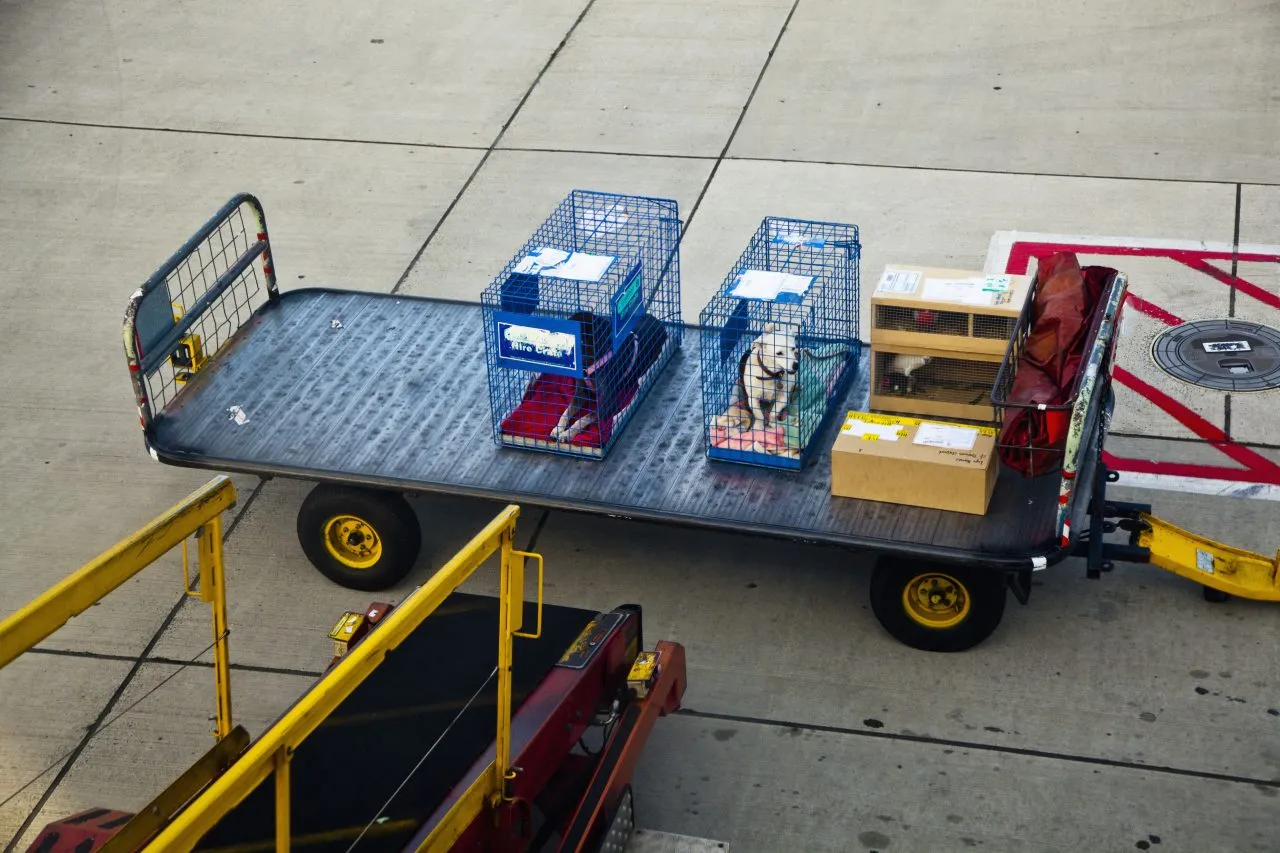
Two dogs in cages next to other luggage on a trailer at an airport © Getty Images
Quarantine
Quarantine requirements can differ massively based on where you’re traveling to and from, so be sure to do plenty of research beforehand. Here are some of the regulations for popular routes.
Owners traveling with a dog to Europe can rest easy if they are heading to an E.U. country, as dogs do not require quarantine after landing, and the same goes for dogs entering the U.K. , provided they have met all the criteria.
Are you taking a plane with your dog to Mexico ? Dogs can enter Mexico without quarantine once they have all the required documents, are in good health and have the necessary vaccinations, with many of the same rules in place if you travel with a dog to Canada .
Many tourists run into difficulty if they travel with a dog to Hawaii . Hawaii is the only state free of rabies, so the local authorities have strict regulations to ensure it doesn’t enter the community, with quarantine periods of up to 120 days for dogs that arrive without the required health checks. To keep your pup’s isolation period as short as possible, make certain they have had two rabies shots, are microchipped and that you have applied for the 5 Days Or Less quarantine program ahead of time, as there’s a 30-day waiting period you must observe before entering the state.
Documents
Many countries have similar documentation requirements for dogs, with most destinations requesting the following:
- Up-to-date rabies vaccinations, sometimes including a blood test within 30 days before your flight to confirm it was successful.
- Health certificate from a licensed vet and granted at most ten days before your flight for most international routes.
- Microchip (15-digit microchips are preferable).
Read up about your final destination and any stopover locations in advance, as some countries require additional documentation.
Preparations
How you prepare for an international flight with your pet will depend on your destination, flight duration, and whether you’ll be flying with your dog in the cabin or the hold. As most large dogs will have to fly as checked baggage or cargo, here are some things to watch out for while planning.
- Contact the airline before booking your ticket to ensure your canine can fly and that you know their rules and regulations.
- Call the airline again after securing your flights to add your pet to your booking or onto a cargo flight.
- Give your dog ample time to adjust to their crate and gather all the necessary accessories, ensuring they can use their water and food supplies independently.
- Keep track of your dog’s medical records and bring them for their health check within the time set by your airline and destination country.
- Check your pet’s vaccination history and ensure they are booked in for any new shots they may need.
- Find out where you’ll drop and collect your dog before and after the flight.
After Arrival
Provided your pup has no mandatory quarantine, you can usually collect your pet within an hour or two after landing. After passing through the baggage claim, you can pick up your dog at a specified area within a set time frame. Some countries may perform a health check on your dog before releasing them, though this is usually not required if you have provided all the necessary information before your flight.
Vaccines
As always, it’s best to get specific requirements from your airline, but here are some of the recommended vaccines for international flights:
- Rabies
- DHPP (Distemper, Hepatitis, Parainfluenza, Parvovirus)
- Bordetella (also called kennel cough)
- CIV (Canine influenza virus)
- Leptospira
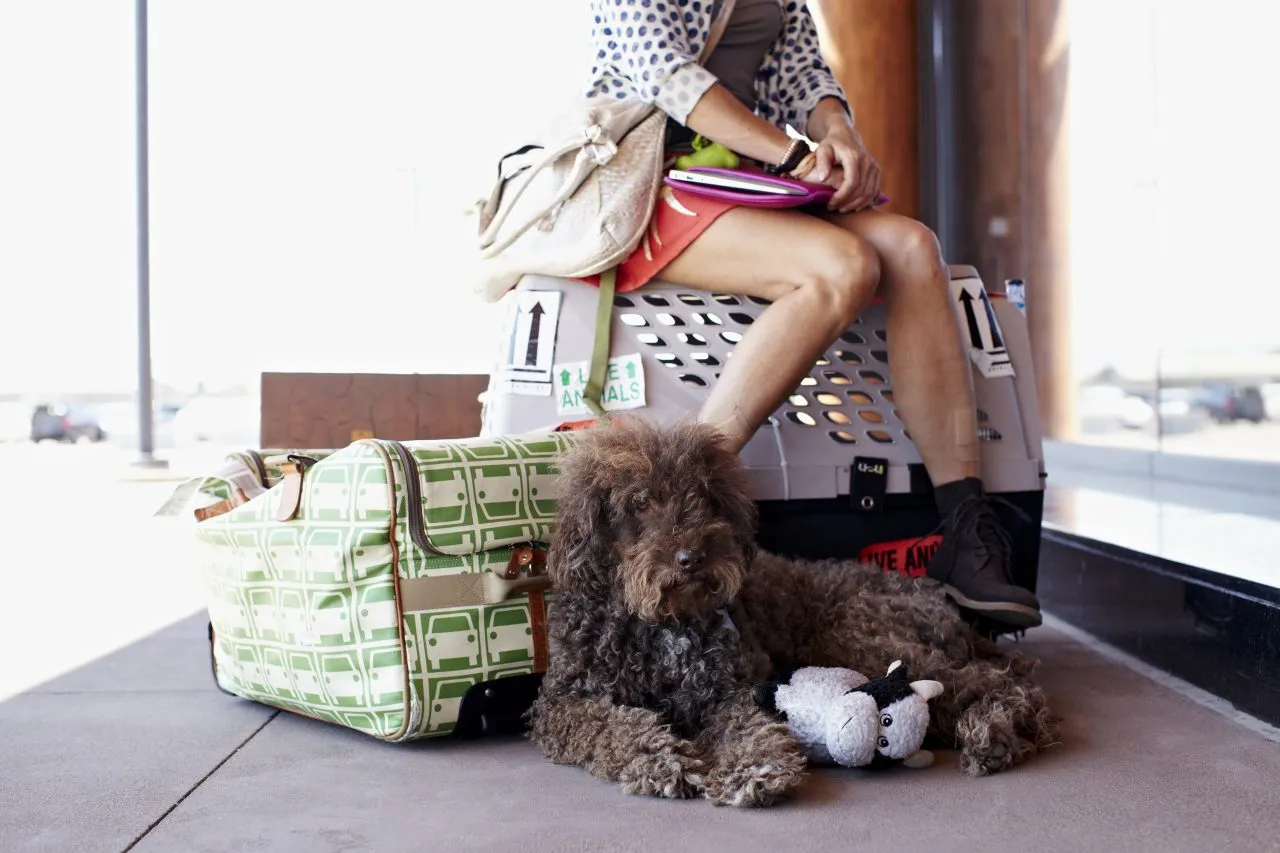
young woman waiting at the airport with large dark brown curly dog, suitcase and pet carrier © Getty Images
What Do I Need To Know About Flying With A Large Dog Domestically Within The U.S.?
Traveling domestically can often be a simpler process than flying with your dog internationally. Let’s look at the requirements for Alaska Airlines and American Airlines for dogs traveling in the baggage compartment. It’s worth noting that flying with your dog on Southwest or flying with your dog on United Airlines is not permitted.
Alaska Airlines
- Dogs and their crate must weigh less than 68 kg combined.
- Dogs must be at least eight weeks old.
- Food and water must be provided within four hours before check-in, with sufficient supplies of each attached to your pup’s carrier.
- Stopovers over four hours will incur additional fees.
- Dogs cannot travel on Airbus planes.
American Airlines
- Only dogs flying with active U.S. Military and U.S. State Department Foreign Service personnel can travel as checked baggage.
- Dogs cannot fly as cargo if the ground temperatures are less than -6°C or more than 30°C.
- An additional vet certificate is required for dogs traveling to or from destinations with ground temperatures between -5°C and 7°C.
- Sedated animals are not permitted to fly.
- Two dogs are allowed per kennel if they fit comfortably and weigh less than 9 kg each.
Tips For Flying Big Dogs Across States
- Find direct routes to avoid additional upheaval and distress for your dog.
- It’s best to avoid flying with older dogs or those with health issues.
- Many pet transportation companies can travel with your dog if you find the process overwhelming.
- Domestic flights tend to be cheaper and require less paperwork, but research the state you’re flying into to be safe.
- Consider driving with your pooch if possible.