





Flying your dog, cat, or any pet, for that matter, to Europe can send even the most seasoned of travelers into a panic. Reading through airline pet policies, ticking the travel essentials off your packing list, and deciding whether you’ll be flying with your pet in the cabin or cargo is time-consuming and complicated, but we’re here to relieve some of your worries.
In this article
Keep reading as we answer all of your top questions and concerns, including the best airlines for traveling with dogs or cats, the fees you can expect to encounter, what countries require quarantine for your beloved pet, and all the need-to-know tips for traveling with your pet on a plane for the first time.
Can You Fly Internationally With A Pet?
Perhaps the first thing you’ll ask yourself when planning a trip to Europe is whether you can take your furry companion with you or not. While there’s no definitive answer, you can usually take your pet with you, though it will largely depend on the airline and your destination. Luckily, many countries that are European Union members follow the same policies and procedures.
Some airlines allow you to travel with your pet domestically but not internationally. If you’re flying with your dog with United or flying with your cat with Delta , for example, you can rest easy knowing your furry companion can fly overseas with you. On the other hand, flying with dogs with American Airlines is only possible within North America. The same goes for anyone flying with cats or dogs with Southwest.
Another important factor to consider is the type of animal your pet is, as it can be much more challenging to travel with exotic animals than with traditional domestic pets like cats or dogs. Before booking any flights, it’s worth comparing different airlines and import protocols, but we’ll get into more detail about all that throughout the article.
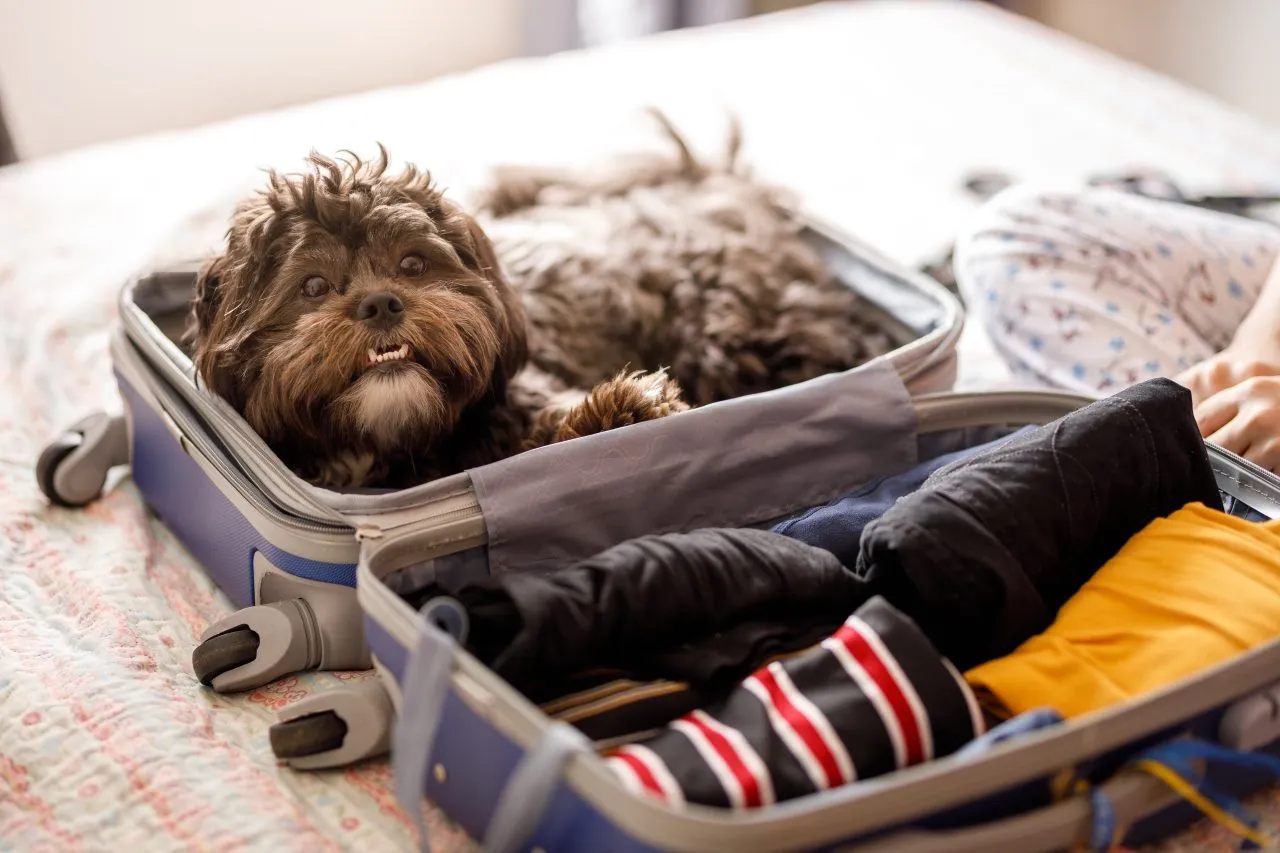
Your dogs will be more excited if they’re joining you on your trip! © Getty Images
How Much Does It Cost To Bring A Pet On An International Flight?
You’ll quickly see that there are a lot of variables when it comes to flying with animals. Flying with big dogs in the cabin domestically will be a completely different experience than traveling with a cat to Europe, and that extends to the prices you can expect to find.
Before we get into comparing the prices from some of the most popular airlines flying to European countries, it’s a good idea to consider whether your pet can join you in the cabin or if they’ll have to fly as cargo or checked baggage in the hold. Keep in mind that you may not be able to bring your pet on vacation at all, as some airlines only allow animals onboard if you’re flying with service dogs.
Let’s take a look at the fees for international travel with animals from a range of airlines, mostly relevant for anyone traveling with a dog on a plane or a cat.
| Airline | Cabin | Checked Baggage/Cargo | Additional Information |
|---|---|---|---|
| K.L.M. | €75 - €400 | €75 - €400 | You can take up to 3 pets in the hold. |
| Lufthansa | Domestic: €55 European: €65 Medium intercontinental: €110 Long intercontinental: €120 | Varies depending on distance, size, and destination. Contact the airline for quotes. | Surcharges of €150 apply for connections in certain countries. |
| Air France | European: €125 Transatlantic: €200+ | European: €200 Transatlantic: €400+ | Additional charges for connecting flights. |
| Delta | €182 | Varies depending on distance, size, and destination. Contact the airline for quotes. | Pets can only travel in the cabin or as cargo, and can’t fly in as checked baggage. |
| United Airlines | One-way costs are €112, with an additional €112 for layovers | Unavailable | Layovers under 24 hours won’t incur an extra change, permitting it’s outside of the U.S. |
| Air Canada | €92 - €110 | €250 - €295 as checked baggage. | Cargo fees vary. Contact the airline for quotes. |
| Turkish Airlines | Varies depending on distance, size, and destination. Contact the airline for quotes. | Varies depending on distance, size, and destination. Contact the airline for quotes. | Pets aren’t permitted on flights to the U.K., including connecting flights. |
| Emirates | Only available for service dogs. | €463+ depending on the route and the animal’s weight and size. | Animals can travel as checked baggage for routes starting in Dubai but must fly as cargo for routes ending in Dubai. |
| Qatar | Only available for service dogs. | €182+ depending on the route and the animal’s weight and size. | Birds can fly as checked baggage or cargo, in addition to cats and dogs. |
Take to the skies: bring your cat aboard an Air Canada flight.
Embark on a journey with your cat via Turkish Airlines flights.
Note: Pets flying as ‘checked baggage’ will travel in the hold on the same flight as you, while animals flying as ‘cargo’ may travel on a different plane to you. Airlines will usually try to ensure your pet reaches the final destination at a similar time to you, where possible.
Can You Bring Pets To European Countries?
While many countries welcome pets, you’ll find that a significant number of them will only accept animals that have traveled in the hold. In other cases, your destination may permit you to bring particular pets, usually dogs and cats, into the country. However, flying with other animals, like reptiles or rodents, may be prohibited.
Many European nations will allow flying with your dog or cat in the cabin, but you may be transiting in a country with stricter regulations.
Some countries that only allow pets to fly in the hold include:
- Australia
- New Zealand
- United Arab Emirates
- All countries within the United Kingdom
What Countries in Europe Can My Pet Travel To?
Animal lovers can breathe a sigh of relief, as there are plenty of international dog-friendly and cat-friendly travel destinations in Europe. While it’s vital to do research specific to your final country, as well as any locations along the way if your itinerary includes stopovers, here are some popular countries that welcome pets without the need for quarantine. These are specifically related to dogs and cats.
- Most EU countries, including Germany, Italy, France, Spain, The Netherlands, Belgium, Croatia, Czechia, and Austria.
- Switzerland
- Norway
- Turkey

Cats love to explore their surroundings, especially with their owner on vacation © Getty Images
Pet-friendly adventures: traveling to Germany with your beloved companion.
Italian escapade with your pet: explore the possibilities of travel.
Wander Spain alongside your pet: unleash memorable journeys.
Furry friend included: embark on a journey to the Netherlands with your pet.
Experience Belgium together: unforgettable travel with your pet.
Tail-wagging travels: navigate Croatia with your faithful pet.
Pet-ready for Czechia: search for ultimate pet-friendly flights with your furry friend.
From home to Austria: pet-friendly travel options await your journey.
Embark on a pet-friendly journey: find flights for your furry friend to explore Switzerland
Wings for paws: discover Norway — one of the best pet-friendly countries in Europe
Furry companion’s adventure awaits: explore and book pet-friendly flights to Turkey
What Airlines Allow Pets In The Cabin Internationally?
Here, we’ve broken down the airlines that allow pets on international flights to travel in the cabin, though this will sometimes change based on the connecting and final destinations, as some countries won’t permit pets to travel in the cabin even if the airline allows it. Animals traveling in the cabin must usually be small and fly in carriers that fit easily under the seat.
As a side note, while the United Kingdom is in Europe, it’s not in the EU and has many different regulations, which you can find here. As such, animals, except service dogs, can only travel in the hold when entering the U.K.
Below, you’ll find some pet-friendly airlines that fly to Europe and what animals they allow in the cabin.
U.S. Airlines:
- Delta - Dogs, cats, household birds
- United - Dogs, cats
European Airlines
- K.L.M - Dogs, cats (within Europe)
- Lufthansa - Dogs, cats
- Air France - Dogs, cats
Other International Airlines
- Air Canada - Dogs, cats
- Turkish Airlines - Dogs, cats, household birds
What Documents Will I Need For Flying With My Pet To Europe?
After you’ve picked your holiday destination and airline, the next thing you’ll want to start thinking about is the documentation you need. In order to comply with the airline and country requirements, you should consider how to obtain a health certificate, if your destination imposes quarantine for animals, and what vaccines your pet needs.
We’ve put together all the must-know information about the documents you’ll need to help you get organized for your flight.
What Are Pet Health Certificates for International Travel?
Many countries have their own particular health certificate requirements, but you may find yourself visiting somewhere that doesn’t require a country-specific document.
If this is the case for you, getting a United States Department of Agriculture (USDA) International Health Certificate from a certified vet if flying from the U.S. is best. This will usually contain relevant information about your pet’s health and your contact details, confirming they’re safe to travel.
Check with your airline to see their health certificate requirements, as some airlines will ask for them to be dated no more than 10 days before the flight.
Are There Any Specific Health Certificates For Pet Travel I Should Use?
Pet owners traveling with their cat or dog to Europe, specifically to an EU country, will need to get an EU animal health certificate issued within 10 days before the animal enters the Union.
It’s helpful to know that non-EU European countries, such as Switzerland, will often accept this document too. However, if you’re traveling to a European country outside the EU, be sure to double-check that the EU health certificate is accepted.
What Do I Need To Know About International Health Certificates For Dogs?
Health certificates can vary depending on the animal, but let’s take a look at what an example of this document for a dog would contain and how to get one for your pup. You’ll need to make an appointment with a certified vet authorized to provide health certificates. It’s best to aim for a visit less than 10 days before your trip, but your destination and airline may have different time frames, so it’s a good idea to find out their requirements first.
When you’ve booked your dog in for their check-up, the vet will examine your pooch and determine whether it’s safe for them to travel. Dogs that are older, prone to certain illnesses, or in poor health may not be given the go-ahead from the vet, so it’s essential to be aware of this when planning your vacation.
If the vet is happy to let your pet travel, they’ll issue a health certificate filled with important information about your dog. This usually includes your dog’s age, breed, size, microchip number, and vaccination history, stating that your pet is free from disease and in good health. Completed health certificates will also include your contact details.
Do I Need Any Other Pet Travel Documents?
The most commonly required travel documents for your pet include:
- International health certificate
- Vaccination records (especially for rabies)
- Microchip (15-digit numbers are preferred in Europe)
While you may have three separate documents, all of this information is often contained in the health certificate, helping you cut down on the paperwork you’ll need to organize.
When animals travel on a separate plane to their owner, there are generally some additional documents to fill out, such as a written declaration that you’ve permitted another person or a transporting company to fly with your pet.
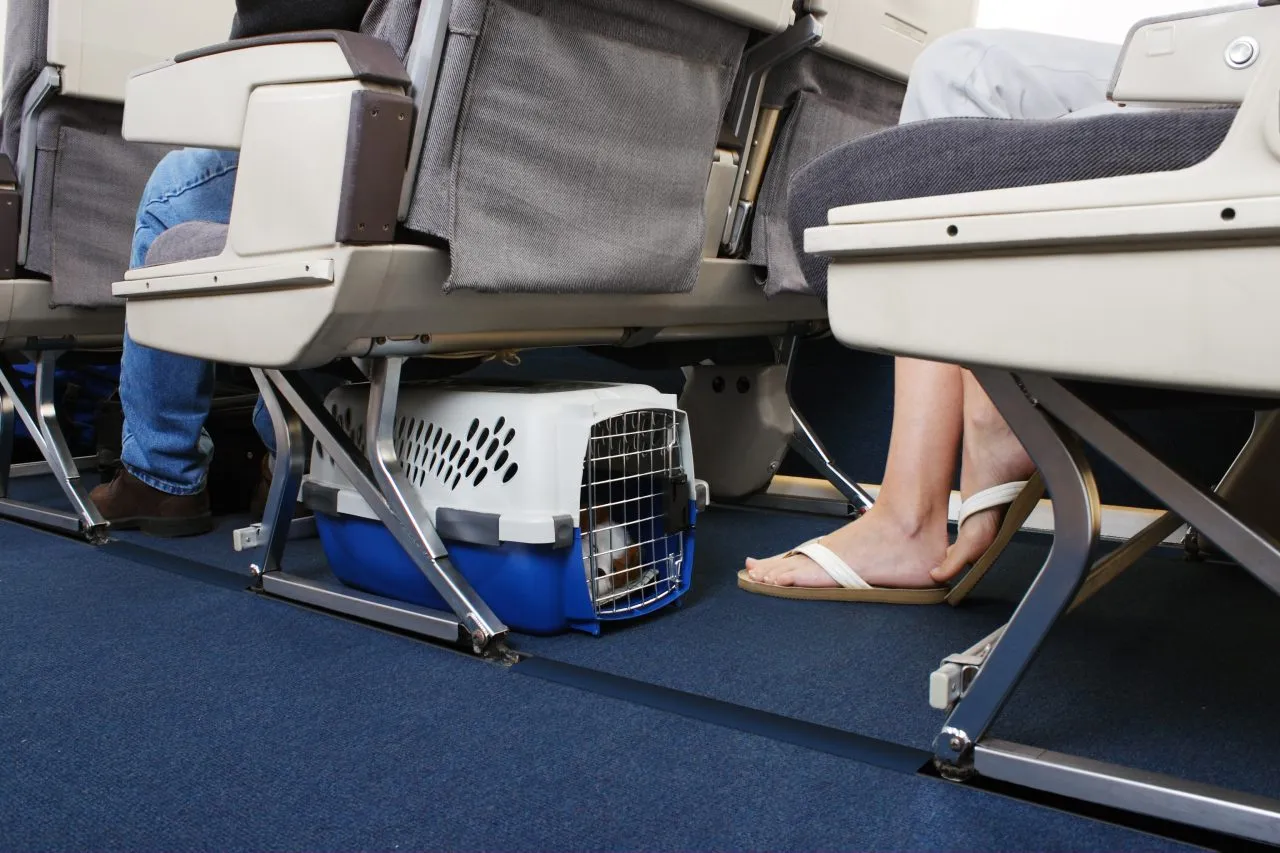
You can always fly with your pets in the cabin © Getty Images
Will My Pet Need To Be Quarantined In Europe?
Quarantine will surely be a concern for any pet owner, but there’s no need to worry about this when visiting Europe. Provided you have supplied the necessary documents, you’ll be able to reunite with your pet an hour or two after landing. After you’ve collected any checked baggage, you can go to an assigned section in the arrivals area and pick up your companion.
While this is true for dogs, cats, and ferrets, you’ll need to research country-specific regulations if flying with reptiles, birds, rabbits, and aquatic animals.
What Vaccinations Will My Pet Need to Enter Europe?
There are a few vaccines and treatments that your pet must have before traveling to Europe, such as:
- Rabies: Dogs, cats, and ferrets must be fully vaccinated against rabies and have received their first shot at least 21 days before entering the EU.
- Rabies test: Dogs, cats, and ferrets entering the EU from certain countries must also undergo a blood test to check for rabies immunity. This includes European countries like Albania, Montenegro, and Serbia.
- Tapeworms: Dogs traveling to Ireland, Northern Ireland, Finland, Norway, or Malta must have anti-Echinococcus treatment before departure.
- Avian Influenza H5 and H7: Needed for birds entering the EU and administered no more than 60 days before travel.
What Is A Pet Passport, And Do I Need One For My Pet?
You’ll often hear the terms ‘pet passport’ and ‘animal health certificate’ used interchangeably, but they can mean different things.
Technically speaking, pet travel certificates are issued for single trips or within short periods. In the EU, these last for four months, provided you don’t leave and re-enter the Union. These permit pets to travel for a given number of days, but owners will need to get a new certificate for any additional trips once they’ve expired.
Pet passports are commonly used and issued in EU countries. Unlike health certificates, they don’t expire as long as they’re kept up-to-date with vaccine requirements. Though they’re accepted when flying between EU countries and other European destinations, like Switzerland, Iceland, and Monaco, they can’t be obtained or issued in the U.S. or U.K.
As a result, anyone flying from the United States or the United Kingdom to most European countries will require an animal health certificate rather than a pet passport.
Is It Possible To Get An International Pet Passport?
At present, there’s yet to be a standard international pet passport that’s widely accepted in most countries. EU pet passports are great to use if you reside in a member country or other select European countries, but these can’t be used elsewhere.
For this reason, animal health certificates continue to be the norm for most destinations.
What Will I Need For Flying To Europe With A Pet From The U.S.?
To help you prepare for your visit to Europe from the U.S. with your pet, here’s a list of things you’ll need:
- A valid health certificate that states your pet is up-to-date with rabies vaccinations, fit to travel, and in good health.
- Once a certified vet completes the certificate, it must be sent to the USDA for approval and returned to you.
- Details of your pet’s microchip information (10-digit numbers are standard in the U.S. and are not accepted in the EU. You’ll need to get a 15-digit ISO-compatible microchip).
On a side note, if you need to change your pet’s microchip from a 10-digit to a 15-digit chip, it’s vital to know any vaccinations your pet received with the original chip will be invalid. This can be frustrating if you’re coming from the U.S., but knowing in advance can save you from taking your pet for additional rabies shots before getting a new microchip.
What Should I Know Before Flying With Pets To France?
Although most regulations and requirements are standard amongst EU countries, there can be some variances between countries. Here are some things to be aware of when traveling to France with your pet :
- Pets can enter France in the cabin, as checked baggage or cargo.
- If arriving from a non-EU country by air, pets can only enter at Paris, Lyon, Toulouse, Marseille, Nice, or Reunion airports.
- Rabies vaccinations can’t be administered before puppies or kittens are 12 weeks old, meaning traveling to France with young animals may not be feasible.
- Mastiffs and pit bulls are prohibited. Other breeds, like rottweilers and Staffordshire terriers, can only enter France as guard dogs.
- Birds must be quarantined for 30 days before or 30 days after flying to France.
What Should I Know Before Flying With Pets To Italy?
Another hugely popular European destination, Italy , has some of its own requirements for animals entering the country, such as:
- Pets like dogs, cats, and ferrets from non-EU countries can only enter Italy by air at Rome, Turin, Milan, Pisa, or Bologna airports.
- Pet birds can only fly to Rome or Milan Malpensa airports .
- Rottweilers are not allowed to travel to Italy.
- You can take up to five animals in total to Italy, including exotic pets like common reptiles and small turtles, as well as rodents and rabbits.
Your furry friends deserve the best: fly to Turin with them .
Wings for wanderlust: discover pet-friendly flights to Pisa.
Pets included: search for flights and explore Bologna together

This ginger cat is ready to fly! © Getty Images
What Do I Need To Know About Flying With A Cat To Europe?
Much like flying with small dogs, taking a flight with a cat is considerably more straightforward than traveling with large dogs on planes. Unless you happened to be flying with an exceptionally huge cat, that is!
Cats are often some of the easiest pets to travel with, as you can take them into the cabin with you as long as your airline and destination permits it. In Europe, only a handful of countries prohibit pets in the cabin, such as those in the U.K.
Flying with your cat internationally should be pretty uncomplicated as long as you have completed all the necessary checks and paperwork.
What Are The Rules For Flying With Emotional Support Pets To Europe?
Emotional support animals are subjected to the same rules as other pets for the most part. This means that, unlike trained service dogs, when you’re flying with therapy dogs, there’s no guarantee that they can travel in the cabin with you.
Your animal must meet the airline’s size, breed, and temperament requirements to fly in the cabin. As we’ve previously mentioned, some airlines and countries require all animals to travel in the hold, with the exception of service dogs.
Therefore, you must be aware of the criteria you must meet for your pet to travel with you. If an airline allows pets in the cabin, usually the animals must:
- Be a well-behaved cat or dog.
- Weigh less than 7-9kg.
- Comfortably fit in a soft or hard-sided carrier within specific dimensions that can be placed under the seat.
However, it’s worth getting in touch with different airlines, as some of them may have looser rules for flying with a large dog.
What Are Some Other Tips For Flying With Pets To Europe?
Take a look at some of our other top tips to make your travel experience to Europe with your pet as smooth as possible!
- Start planning your trip earlier than you usually would. Giving yourself extra time will allow you to compare different airlines, read up on safety requirements, stock up on travel accessories, and plan when to take your pet for their health certificate check-up.
- Research the requirements of the European country you’re traveling to, particularly if it’s a country that’s not an EU member.
- Ensure your airline permits pets to fly to the country you’re visiting. For example, flying with dogs with JetBlue might be possible in the U.S., but they don’t allow animals on European routes, even if the final and connecting destinations welcome pets.
- Check that your destination is pet-friendly, as you could find that you can’t bring your furry friend into many businesses and spaces in some countries. Fortunately, most European countries are welcoming to pets, but it’s always best to do plenty of research.
- Book your flight early if possible, as many airlines cap the number of animals traveling per plane. Other airlines only allow you to add a pet to your booking within 14 days before departure.
- Try to stick to direct flights whenever possible. Connecting flights can make flying more stressful for you and your pet. The additional documentation, different protocols, new rules, and added fees associated with layovers can make connecting flights a logistical nightmare. Your pet will likely be faced with more unfamiliar faces and surroundings, too, so direct flights are best to minimize your four-legged friend’s anxieties.
- Begin crate training your pet a few months in advance, mainly if they’re not used to spending hours at a time in kennels or carriers. Make the crate a comfortable space where they feel inclined and safe to enter.