



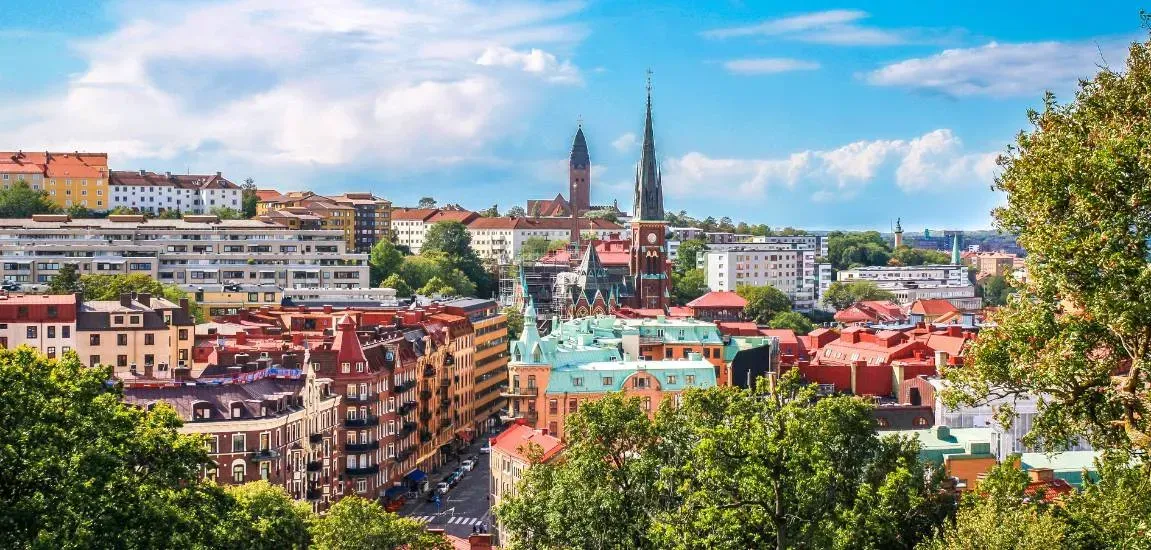
Gothenburg is a smart city. I mean that in every possible way. It’s a good-looking place with large parks and wide boulevards, it’s home to some of Sweden’s brightest young tech companies, and it’s also blazing a trail for urban sustainability and environmental kindness. Here’s a user’s guide to Sweden ’s hip, happening, handsome second city.
When to visit Gothenburg
Summer is the best time to visit Gothenburg as it’s never too hot and, unlike some other cities like Copenhagen , isn’t a massive tourist hotspot at the best of times. You might get lucky with the weather in September or as early as the end of April, but June to August is your best bet for nice weather. As it happens, our own Hana Leakey has visited Gothenburg once in late January, and once in early July. She says that it was dark, icy, and “bloody freezing” in January; and it was comfortable but still breezy in July, with the sun going down at around 11 pm. Take your pick.
Gothenburg city center: Nordstaden, Lorensberg, and Järntorget
The main body of the city is to the south of the railway station and the dockyards along the Göta älv river, and it’s the best place to get your bearings. The older part of the city lies between the river and the zig-zagging canal that also marks the old city walls — here’s where you’ll begin.
Nordstaden/Inom Vallgraven: historic Gothenburg
If you arrive by bus or train, you’ll immediately be thrust into the mad rush of commuters where Norra and Östra Hamngatan intersect, everyone battling to get onto one of Gothenburg’s signature light blue trams. Say hello to the statue of Gustav Adolf, the city’s founder (and the inevitable seagull perched on top of his head) before heading south over the canal and into the Old Town. The original city burned down in a series of fires in the 1700s; the buildings you see now are 19th-century constructions. This gives the city its distinctive style — solid, stone and brick buildings in simple, straight lines — and the cobbled streets that criss-cross the area in a grid are now home to boutiques, bars, bookstores, and all manner of other locally-owned businesses. Occasionally, you’ll pop out of a street onto a square and spot something unexpected — a cathedral, a library — before diving back in to see what you can find. From here, you can exit the Old Town through the battlements and cross the moat into Kungsparken, the long strip of greenery that runs between the Old Town and the newer part of the city.
Lorensberg and Vasastaden: shopping and food
Built mainly between 1870 and 1920 and separated by the University of Gothenburg and its Vasaparken, these two areas are home to more generic chains of shops, especially down the wide boulevard of Kungsportsavenyen.
Everything feels much larger and more open, and it’s where you’ll find a lot of the city’s cultural institutions, with art galleries like Galleri Thomassen . It’s pretty typical of the kind of cool Scandi space, in which you expect to see tall men in turtleneck sweaters and rimless glasses mingling with waif-like women in black dresses and unusual hats while looking pointedly at things.
It’s also a great area to come to try the city’s food and drink scene, with bars like 3 Små Rum and the Flying Barrel offering craft beers and gastropub food, while nearby Totale served me — genuinely — one of the best pizzas I’ve ever had in my life. For a flavor of something more local, Tvåkanten offers a modern twist on traditional Nordic cuisine, while Familjen wants to be just that — “an extension of the living room”, as they claim — and serves locally sourced, family-style Swedish comfort food. Otherwise, take a wander through the university park, or down to the statue of Poseidon on the large square in front of the vast art gallery and concert hall complex that dominates the southern end of Kungsportsavenyen.
Järntorget and Haga: retro stores and nightlife
Keep going west and you’ll end up in Haga, a slightly more raffish neighborhood than anywhere mentioned above. It’s a good area for slightly grubby nightlife, pub crawls, and also — interestingly (for me at least) — second-hand record shops. 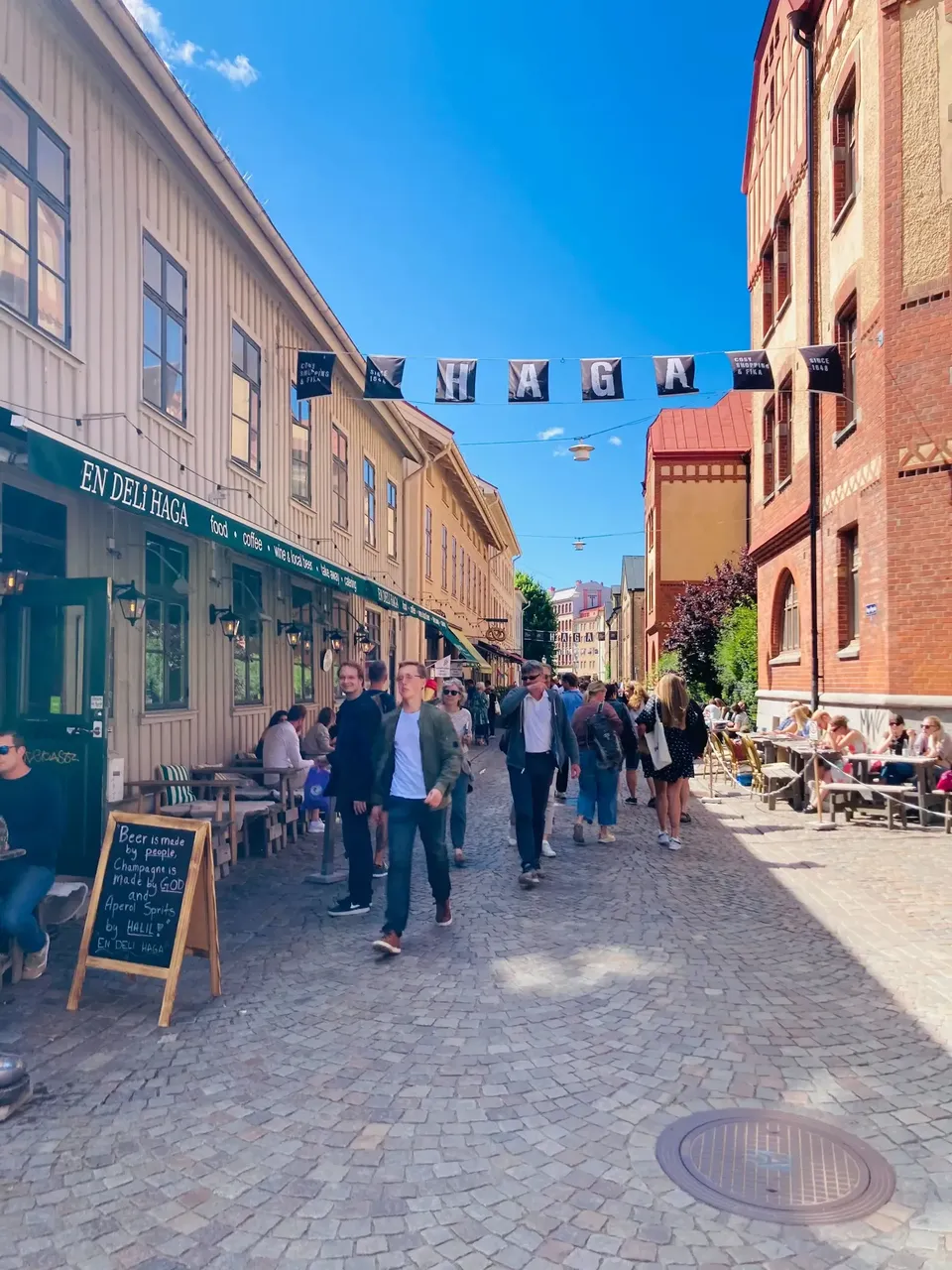 Haga has been deemed one of Europe’s very coolest neighborhoods — Hana Leakey I came upon this part of town quite by accident by descending the hill from the huge Slottsskogen park (of which more later) and found myself walking along a busy main road on the riverfront. To make my walk more pleasant I ducked right and then left to find myself on Andra Långgatan, a long, narrow street in an area that had been named one of Europe’s coolest by the Guardian
. Good to see I’ve got a nose for finding cool places, if accidentally. There’s a selection of great record shops, including Linné skivbörs
(classic rock, soul and jazz), Andra Långgatans Skivhandel
(one of the largest, dealing in vinyl, CDs, DVDs and record player repairs), and Dirty Records
, which is also a vegetarian café and coffee shop. As well as record shops and bars, this is also the area for cheap (by Swedish standards) world food, plus second-hand books, clothes, and general bric-a-brac.
Haga has been deemed one of Europe’s very coolest neighborhoods — Hana Leakey I came upon this part of town quite by accident by descending the hill from the huge Slottsskogen park (of which more later) and found myself walking along a busy main road on the riverfront. To make my walk more pleasant I ducked right and then left to find myself on Andra Långgatan, a long, narrow street in an area that had been named one of Europe’s coolest by the Guardian
. Good to see I’ve got a nose for finding cool places, if accidentally. There’s a selection of great record shops, including Linné skivbörs
(classic rock, soul and jazz), Andra Långgatans Skivhandel
(one of the largest, dealing in vinyl, CDs, DVDs and record player repairs), and Dirty Records
, which is also a vegetarian café and coffee shop. As well as record shops and bars, this is also the area for cheap (by Swedish standards) world food, plus second-hand books, clothes, and general bric-a-brac. 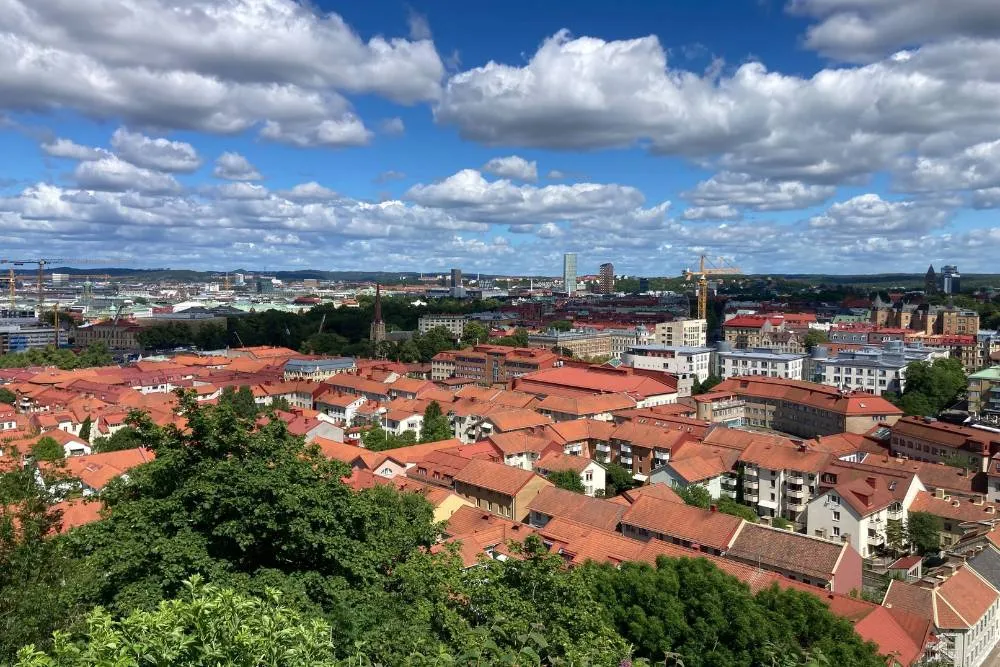 View over the city from Kronan Fortress — Hana Leakey Walking back towards the university, Haga is home to a few more restaurants and cafés, as well as a former (actually not that big) fortress called Kronan which, if you fancy climbing the (actually not that big) hill, gives you views of the surrounding red roofs and out to the river.
Outskirts of Gothenburg: Majorna, Slottsskogen, and the Volvo Museum
Jump on one of the clattering blue trams and head out of the very center of the city to discover more of suburban Gothenburg, get a bit of greenery, meet some animals, and learn about the history of one of Sweden’s biggest and proudest companies.
Majorna 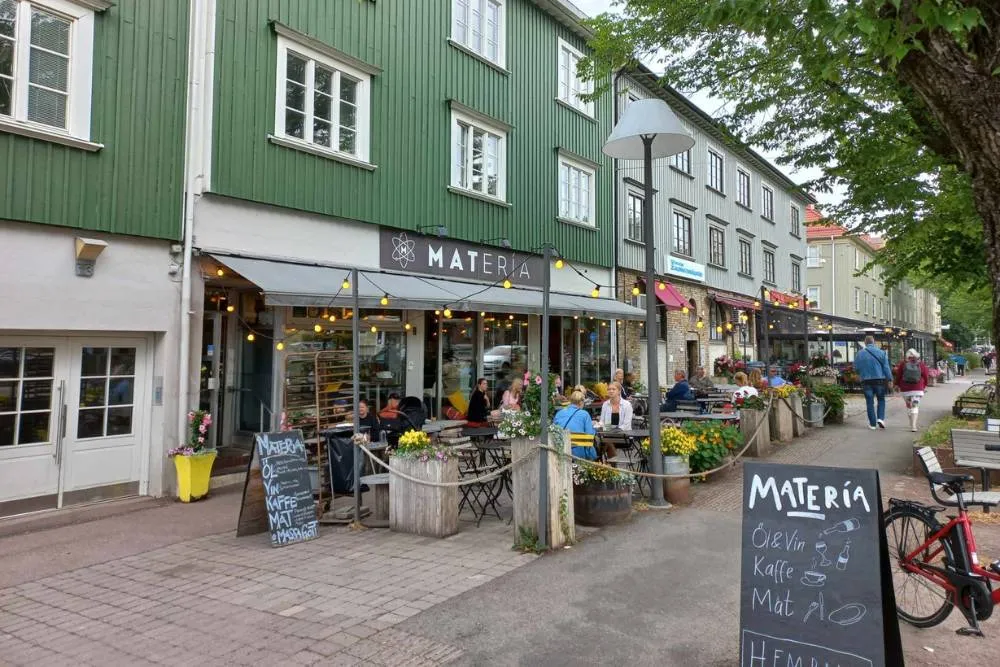 Majorna is a relaxed neighborhood home to lots of independent businesses — David Szmidt
This part of town had been recommended to me by my friend Johanna who went to university in Gothenburg
for a while, and it stuck in my head because it sounded a bit like ‘mayonnaise’. Hey, whatever works, right? I took the tram to Kaptensgatan and got off with no real plan other than just walking in the direction of wherever looked interesting. Walking uphill, I found myself skirting the Marieberg cemetery, then getting vaguely lost in a series of paths across a wooded hilltop, all silent houses and empty parks, before descending to a large roundabout at the northern end of Mariagatan. 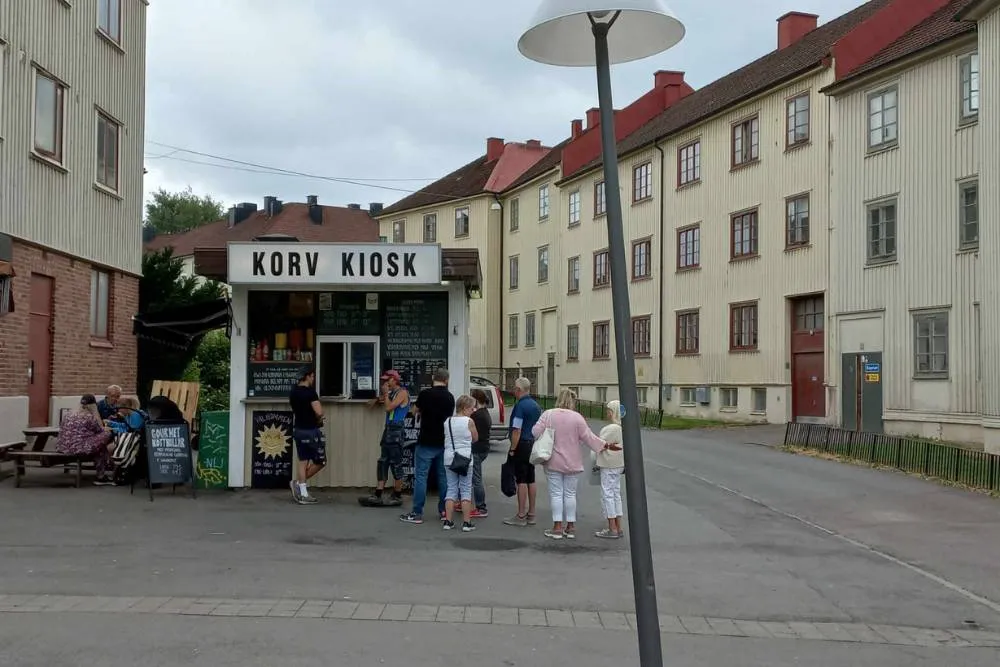 Find this hot dog stand and try the “halv special” — David Szmidt This was more like it. Comfortable, suburban Gothenburg, but even then with an interesting mix of locally-owned businesses. People were having brunch outside Materia
, a couple of art student-looking types were poking around the antique bazaar next door, and a motley selection of locals were queuing at what I was later informed was a famous hot dog kiosk. I wasn’t hungry just yet but apparently, one of their best is the “halv special”, topped with mashed potato and shrimp salad. To each their own, I say. Anyway, I continued to wander, taking photos of some excellent 1950s buildings before heading to the park.
Find this hot dog stand and try the “halv special” — David Szmidt This was more like it. Comfortable, suburban Gothenburg, but even then with an interesting mix of locally-owned businesses. People were having brunch outside Materia
, a couple of art student-looking types were poking around the antique bazaar next door, and a motley selection of locals were queuing at what I was later informed was a famous hot dog kiosk. I wasn’t hungry just yet but apparently, one of their best is the “halv special”, topped with mashed potato and shrimp salad. To each their own, I say. Anyway, I continued to wander, taking photos of some excellent 1950s buildings before heading to the park.
Slottsskogen
When Gothenburg was growing, this area was simply forest. However, by the 1880s, the city had reached the forest and a local merchant decided that what the city needed was a park modeled on one of the great parks of London (think The Regent’s Park) — still wild, but with pathways and occasional bits of landscaping here and there. Maybe the odd artificial lake. 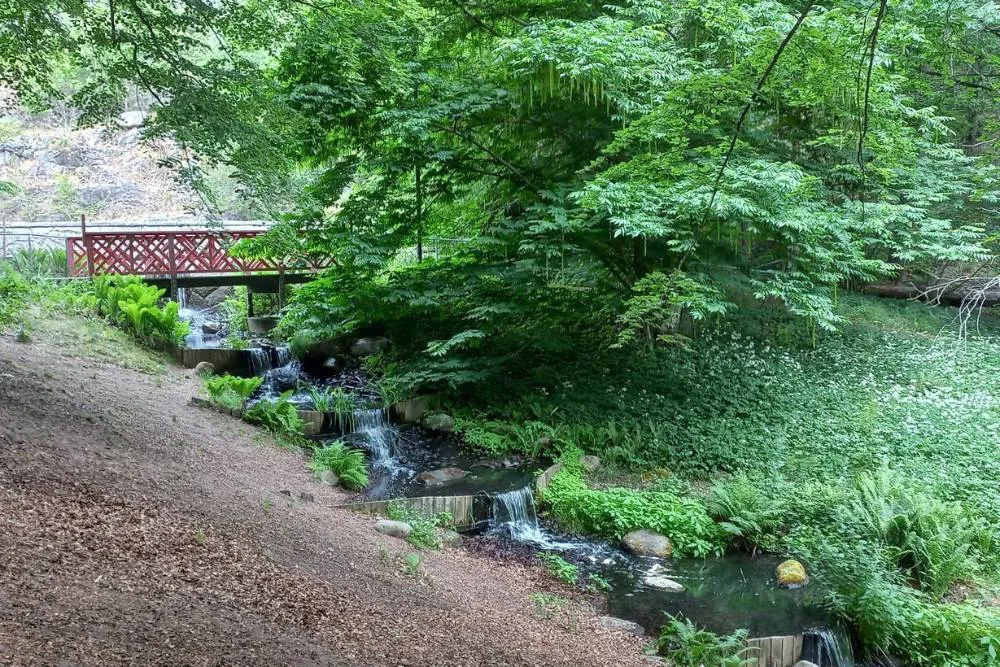 Slottsskogen is located just a short way away from the city center, and has a lot to offer… — David Szmidt
 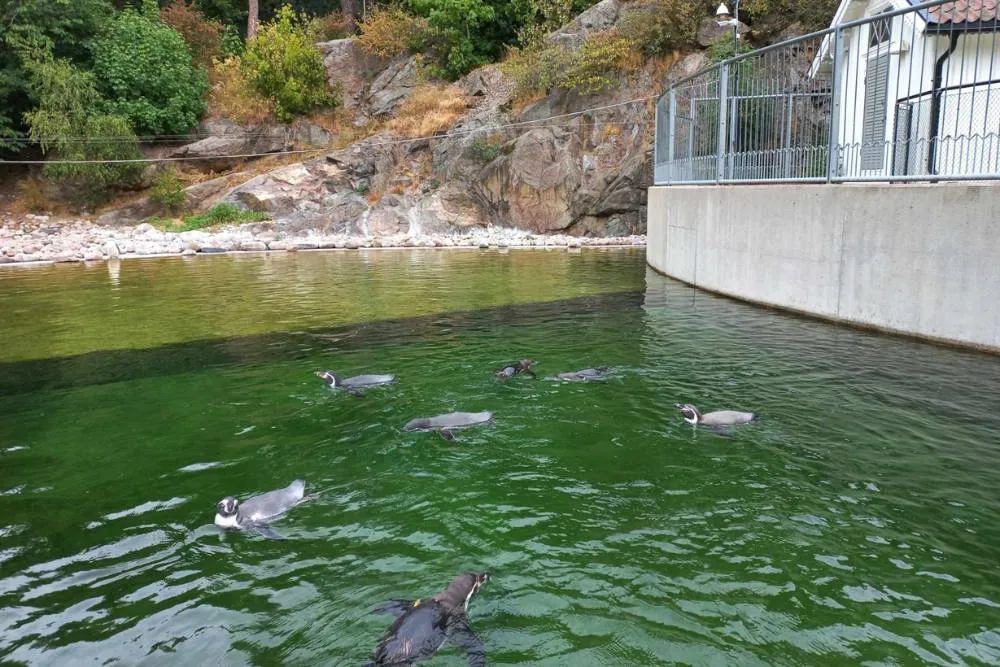 …including penguins! — David Szmidt And that’s what it is today: a huge swathe of trees, grass and water on a gentle hillside. Again, it was somewhere I knew nothing about — it simply looked like a big park and I hadn’t been in a big park yet, so off I trotted. My first surprise was seeing penguins. Just penguins, hanging out in an enclosure opposite what looked like a very pleasant café. I later discovered a free zoo with ponies, seals, moose, and other Scandinavian animals, the Natural History Museum
, play areas, waterfalls, mini-golf, and “the barefoot trail” — a 300-meter-long sensory path.
…including penguins! — David Szmidt And that’s what it is today: a huge swathe of trees, grass and water on a gentle hillside. Again, it was somewhere I knew nothing about — it simply looked like a big park and I hadn’t been in a big park yet, so off I trotted. My first surprise was seeing penguins. Just penguins, hanging out in an enclosure opposite what looked like a very pleasant café. I later discovered a free zoo with ponies, seals, moose, and other Scandinavian animals, the Natural History Museum
, play areas, waterfalls, mini-golf, and “the barefoot trail” — a 300-meter-long sensory path. 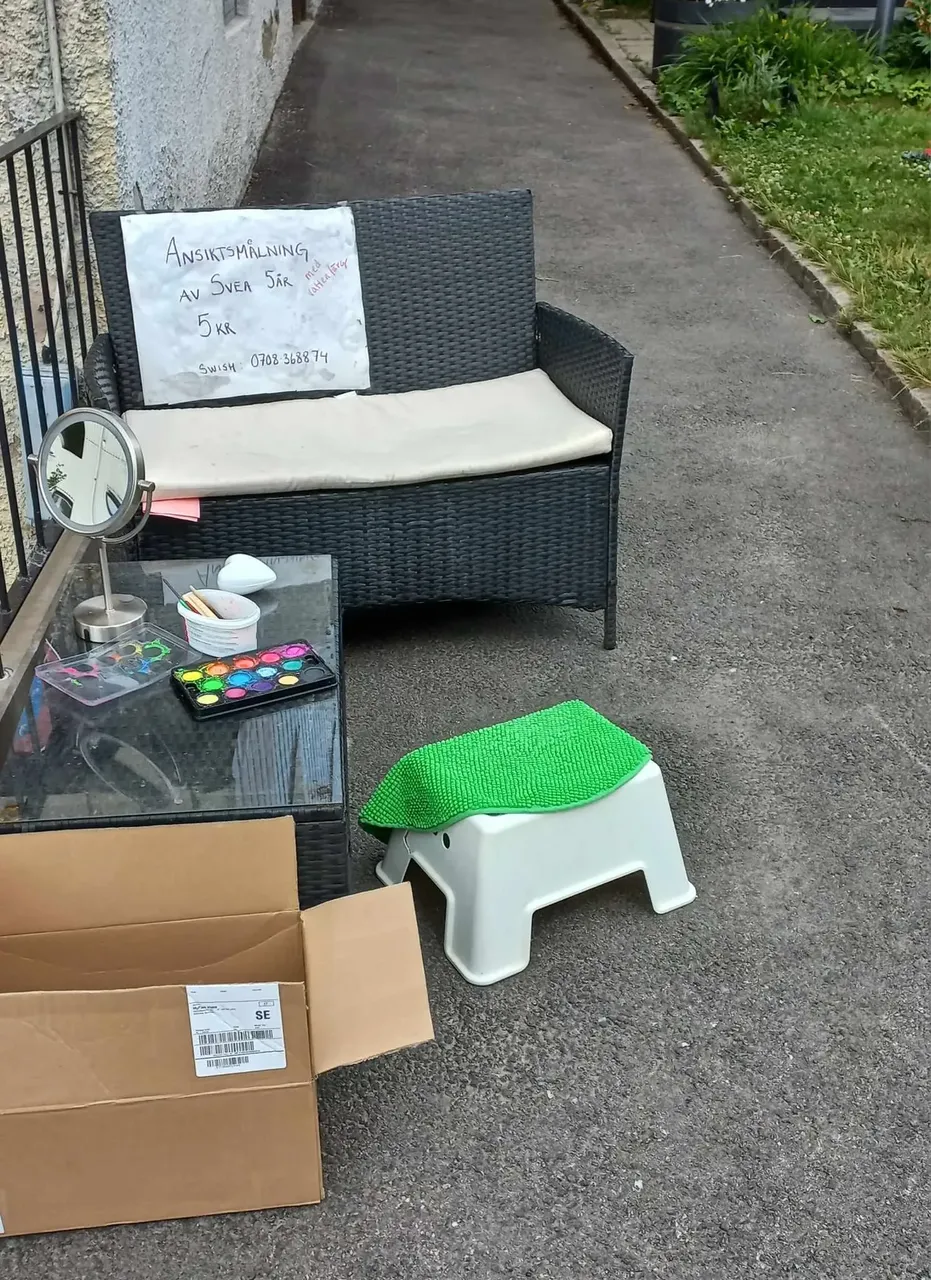 Face-painting for 5 kr? The best bargain in Sweden — David Szmidt As a lovely aside, walking down the hill and emerging on Hålekärrsgatan I spotted a small table, some garden furniture, and a sign offering face painting for five krona. I stopped to ponder this when I was noticed by a family sitting in their garden. This was their young daughter’s idea for making some pocket money, so did I want my face painted by her? I didn’t, but we exchanged pleasantries and, heartened, I went on my way.
Volvo Museum
 One of David’s dream cars — David Szmidt I’m going to tell you right now that this was, if not the main reason I’d come to Gothenburg, then certainly something I wasn’t going to miss. We grew up with Volvos in my family and I bloody love them (I will own an Amazon one day; that is going to happen), so this was a bit of a pilgrimage. And a pilgrimage it turned out to be, in that it was pretty difficult to get there. It seemed easy enough at first — tram 5, 6, or 10 to Eketrägatan, then bus 32 to Volvo Torslanda, getting off at Arendal. No worries. However, it was Saturday and what I hadn’t realized is that if you’d like the bus on Saturday, you have to phone Västtrafik (Gothenburg’s municipal transport authority) and book a bus at least one hour in advance. I’d have been stumped were it not for two chaps visiting from a Volvo plant in India whose boss had organized transport, and they were happy for me to tag along. Cheers, guys!
 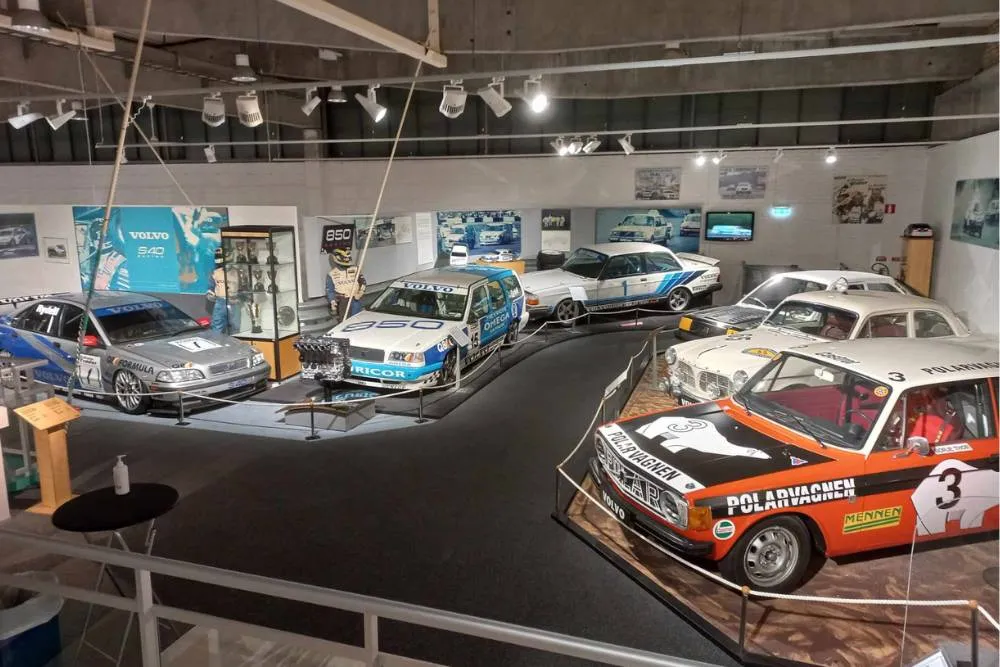 If you too are into cars, you can’t miss the Volvo Museum when you come to Gothenburg — David Szmidt Anyway, the museum is great. I’d been to the BMW equivalent in Munich a couple of months prior
and found it informative, but a bit sterile. The Volvo one was not. I think because they were so ubiquitous, they became the go-to manufacturer not only for family cars, but for police cars, post office vans, ice-cream trucks, fire engines… You name it, they had it, and were very proud of their oddities. There are good-sized sections on HGVs, buses, their Polestar high-performance road car arm, and their racing programs. It was here where I got to meet a childhood icon of mine, one of the 850 estates that raced in the 1994 British Touring Car Championship. After the nice woman at reception had ordered a bus for anyone who wanted to head back into the city, I hopped on it in a very good mood indeed.
If you too are into cars, you can’t miss the Volvo Museum when you come to Gothenburg — David Szmidt Anyway, the museum is great. I’d been to the BMW equivalent in Munich a couple of months prior
and found it informative, but a bit sterile. The Volvo one was not. I think because they were so ubiquitous, they became the go-to manufacturer not only for family cars, but for police cars, post office vans, ice-cream trucks, fire engines… You name it, they had it, and were very proud of their oddities. There are good-sized sections on HGVs, buses, their Polestar high-performance road car arm, and their racing programs. It was here where I got to meet a childhood icon of mine, one of the 850 estates that raced in the 1994 British Touring Car Championship. After the nice woman at reception had ordered a bus for anyone who wanted to head back into the city, I hopped on it in a very good mood indeed.
How to navigate Gothenburg’s public transport system
Unless you’re sticking very close to the center, you’ll almost certainly need to take a tram or bus at some point. The best way to do this is by downloading the Västtrafik To Go app . This will give you everything you need: routes, connections, schedule changes, the lot; and you can get single tickets, day tickets, or longer period passes. A single trip is 35 kr (just under €3), and the ticket lasts for one hour, regardless of whether your journey takes that long or not, so you can use the same ticket again if you’ve still got time left on it.
Gothenburg: a typical budget
Local currency: Swedish krona; €1 = 12 kr Coffee: €4 0.5l local beer: €8 — €10 Lunch: €12 Dinner in a mid-range restaurant: €30 — €45 per person Hostel for one night: €30 — €60 3-star hotel for one night: €80 — €130 with breakfast
DAILY BUDGET (excluding accommodation): €90 — €120
Visit Gothenburg with Kiwi.com
I love what could be called second cities: Catania in Sicily, Hamburg in Germany, Brno in the Czech Republic , Montreal in Canada, and Gothenburg very much falls into that category. Like Catania and Hamburg, it’s also a port, maintaining that slight air of itinerant rakishness and bohemian spirit while also being charming, good-looking, and friendly. If you’re looking for a genuinely cool city break, stick Gothenburg on your list immediately and browse Kiwi.com’s flight deals ! Visit Kiwi.com Stories for more travel inspiration.
Popular routes on Kiwi.com
- Cheap flights from London to Turkey
- Cheap flights from London to Barcelona
- Cheap flights from London to Japan
- Cheap flights from London to New York
- Cheap flights from New York to Paris
- Cheap flights to Spain
- Cheap flights to Italy
- Cheap flights to the United States
- Cheap flights to the United Kingdom
- Last minute flights
People Also Read


How to Travel Patagonia: A First-Timer's Guide to Chile & Argentina's Wild South


Where to stay in Palma de Mallorca: best areas for beaches, culture and nightlife