






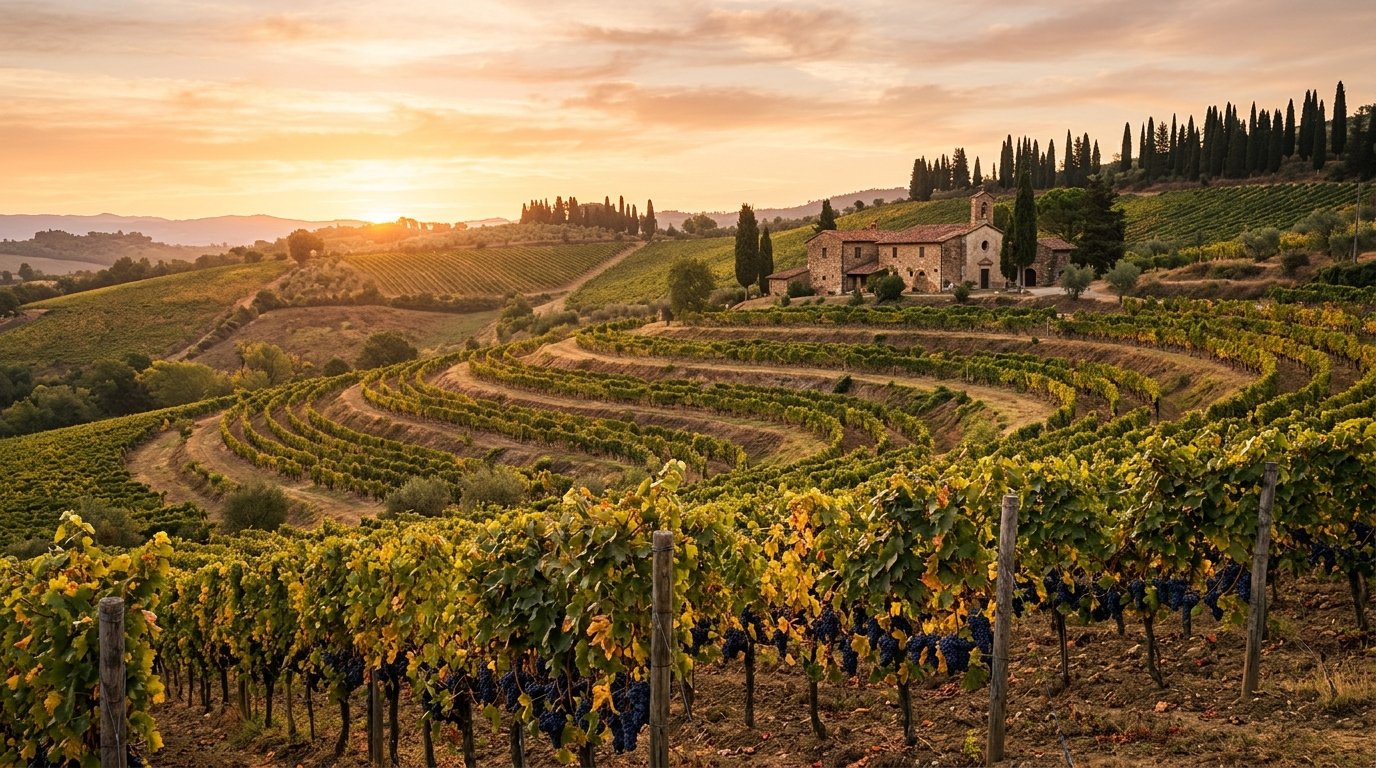
The 2026 grape harvest (la vendemmia) in Tuscany arrived up to two weeks early due to an exceptionally warm summer and prolonged dry spells. Vineyards across the region are buzzing with activity right now, as picking began in mid-to-late August for whites and early-ripening reds like Merlot, while the star Sangiovese grape is being brought into cellars across Chianti and Montalcino through mid-September.
Despite the early start, harvest activities continue through October. September is the peak of the grape harvest, while in October Tuscany celebrates the new wines alongside autumn harvests like truffles, chestnuts, and olive oil. There are fewer visitors and the festivals change from casual street parties to gastronomic feasts. Guided tours, tastings and accommodation in Tuscany can be expensive, but you can experience la vendemmia on a budget by, for example, joining a group tour that includes transport, a guide and tastings at two wineries for €50–€70.
Find flights for this trip

Key takeaways
The 2026 harvest started early. Picking began in mid-to-late August for whites and early-ripening reds like Merlot, up to two weeks early after a warm, dry summer.
Yields are lower, quality is high. France dropped to its lowest wine production in 30 years; Italy's volume is lower than average but relatively stable.
Tastings start at €25. San Polo's Smart Tasting is €25.00 per person; Villa Le Corti's cellar tour and tasting is €38.00; private estate tours run €35.00 to €350.00.
A group tour costs €50 to €70. Budget operators run daily buses from Florence to Chianti including transport, a guide, and tastings at two wineries.
Cooperative wineries pour for €3 a glass. At the Cantine Sociali you can taste high-quality wines for free or just €3.00 a glass.
This year’s harvest outlook: 2026 conditions
The good news
Because spring brought steady rainfall, the vines built up enough groundwater reserves to survive the scorching summer heat without shutting down. The resulting wines are expected to have rich concentration, exceptional balance, and vibrant character.
The challenge
Yields are lower than average. Wine lovers should expect smaller production quantities but exceptional quality from this year’s harvest.
The French contrast
To put Italy’s yield in perspective, neighboring France was devastated by the same heatwaves, dropping to its lowest wine production in 30 years. Italy’s volume is lower than average but remains relatively stable.
A tourism boom
The frenzy of the early harvest has triggered a massive travel spike. Over 18 million tourists are visiting Italian vineyards during this harvest window.
The best wines to look for
While the 2026 harvest ferments in the cellar, you can enjoy these legendary Tuscan classifications that define the region’s excellence:
- Chianti Classico DOCG — Made primarily from Sangiovese grapes in the historic hills between Florence and Siena. Look for Gran Selezione or Riserva bottles, which offer complex notes of wild berries, earth, and elegant spices.
- Brunello di Montalcino DOCG — A powerful, 100% Sangiovese wine crafted around the fortress town of Montalcino. It is bold, rich, and built to age for decades.
- Vino Nobile di Montepulciano DOCG — An elegant red from the southern hills, balancing structure with soft, velvety tannins and floral aromas.
- Super Tuscans (Toscana IGT) — Bold, modern blends that are celebrated for their rich, full-bodied flavors of dark chocolate and black currant.
The best vineyards to visit right now
Because of the accelerated harvest, visiting a winery right now means seeing the production floor completely alive.
Villa Le Corti (Principe Corsini) — San Casciano in Val di Pesa
Owned since 1427 by one of Italy’s noble families. The massive property features striking rolling hills and national-monument cellars.
You can book an immersive tour of the ancient estate, taste their highly rated Don Tommaso Chianti Classico, and walk the historic grounds.
Classic Wine Cellar Tour & Tasting: €38.00 per person. It includes a 1.5-hour guided trek through organic cultivation fields, a walk along the historic 17th-century underground passages, and a tasting of 4 organic estate wines (including their Chianti Classico Gran Selezione) plus local extra virgin olive oil. Children’s rates: €15.00 for ages 7–17 (includes olive oil tasting only); children 6 and under are free.
Tenuta La Massa — Panzano in Chianti
Located in the heart of Chianti’s famous “Conca d’Oro” (Golden Shell), this winery is known for high-quality, modern blending techniques.
They offer exclusive, intimate tours of their single-plot vineyards and wine cellars, ending with a tasting of Asiram, their rare 100% Merlot.
This ultra-premium, modern-style winery operates by appointment only. Standard tastings and private estate tours: €35.00 to €350.00 per person. Because they limit tour group sizes to 10 people, prices depend on whether you are doing a basic barrel introduction or a highly customized, private library tasting of their long-cellared Super Tuscans.
San Polo — Montalcino
An elegant, sustainably focused estate overlooking the breathtaking ancient valleys of southern Tuscany.
They feature dedicated hands-on harvest day tours through October. You can join the winemakers in the organic vineyards, try traditional hand-picking, and sit down for a seasonal Tuscan lunch paired with an estate Brunello.
| Item | Price |
|---|---|
| Smart Tasting | €25.00 per person (30 minutes; features 2 expressions of Sangiovese) |
| Discovering Sangiovese | €50.00 per person. Includes a 1.5-hour tour exploring their winemaking cellars, an overview of the vineyard, and tastings of 2 distinct vintages of San Polo Brunello |
| Brunello Connoisseur Package | €65.00 per person (1 hour 45 minutes; focuses heavily on the terroir of their iconic Podernovi vineyard) |
| Brunello Prestige/Grand Tasting | €95.00 to €200.00 per person for deep library excavations exploring rare vintages and single-vineyard selections |
Copy the code to embed this table on your site.
Pro tip: Because it is active harvest season right now, advance reservations are mandatory to guarantee that a host will be available to guide you.
Local wine festivals in September and October
While September is the peak of the physical grape harvest, October in Tuscany is when the region celebrates the new wines alongside autumn harvests like truffles, chestnuts, and extra virgin olive oil. The crowds thin out and the festivals shift from casual street parties to deep gastronomic feasts.
- Vino al Vino (Panzano in Chianti Classico) — September 18–20, 2026. Local winemakers gather in the village square to pour their finest releases.
- Festa dell’Uva e del Vino (Chiusi) — September 25–27, 2026. Features open-door wine cellars, live music, and rustic street food.
- Festa dell’Uva (Impruneta) — September 27, 2026. This year marks the historic 100th anniversary of Italy’s oldest grape festival, featuring massive allegorical floats and grand community parades.
- Sagra del Tordo (Montalcino) — October 24–25, 2026. A vibrant medieval festival that pits the town’s four historic districts against each other in an intense archery tournament. Food stands serve Tuscan dishes paired directly with world-class Brunello di Montalcino wine. Book accommodation as early as possible.
- Borgo diVino in Tour (Montaione) — October 16, 2026. A traveling national wine exhibition that stops in Italy’s most beautiful historic villages. It is highly sophisticated but very accessible to casual wine lovers.
- Mostra del Chianti (Montespertoli) — Throughout mid-October. A dedicated exhibition featuring more than 40 premier local producers from the prestigious Chianti DOCG denomination. The admission price of €15.00 includes your personal tasting glass.
Where to stay
Option 1: Greve or Panzano in Chianti Classico
Look for a working vineyard estate (Agriturismo) that rents out rooms (like Torraccia di Presura or Vignamaggio), where you can watch the fields from your window. Or try a cozy, family-run hotel on the village square, allowing you to walk to dinner and local wine bars (enoteche) at night.
Best for first-time visitors, Chianti Classico lovers, and central sightseeing. Nestled in the rolling hills between Florence and Siena, this location puts you right next to Tenuta La Massa and Villa Le Corti. The vibe is classic postcard Tuscany: cypress trees, ancient stone farmhouses, and endless vineyards.
Option 2: Montalcino or San Quirico d’Orcia
A restored medieval hamlet (borgo) converted into 5-star spa resort overlooking the valley or a charming apartment inside the stone walls of Montalcino, just steps away from world-class Osterias.
Best for connoisseurs of bold reds (Brunello) and fans of dramatic scenery. Located in southern Tuscany’s breathtaking Val d’Orcia (a UNESCO World Heritage site), this is the perfect base for visiting San Polo. The vibe: dramatic, sweeping clay hills and historic medieval fortress towns.
Option 3: Siena (the city base)
If you don’t want to drive, Siena is the main hub where professional wine tour guides can pick you up and drop you off each day. Stay in a boutique hotel in a historic building just a short walk from the famous Piazza del Campo.
Best for travelers without a car or those who want vibrant nightlife. Perfectly positioned in the center of Tuscany, between the Chianti region to the north and the Brunello/Montepulciano regions to the south. The vibe: a breathtaking, walkable medieval city filled with Gothic architecture, lively outdoor cafes, and incredible restaurants.
Strategic booking tips
- An Agriturismo for authenticity — If you have a car, stay at a working farm or vineyard. Many offer home-cooked Tuscan dinners paired with their own estate bottles.
- Check the parking — If driving, make sure your accommodation offers free on-site parking. Many historic hilltop towns have strict ZTL zones (restricted driving areas), where driving without a permit results in heavy fines.
- Split your stay — If you are staying for more than 5 days, consider spending half your time in a central Chianti village and the other half in the Val d’Orcia. This cuts your daily driving time in half.
The cost of private tours (with drivers)
A professional private wine tour guide with a car in Tuscany typically costs between €300 and €800+ per day. The final price depends on group size, pickup location (such as Florence vs. Siena), and whether tasting fees and lunch are included.
| Tour Type | Typical Cost | What is Usually Included |
|---|---|---|
| Private Driver-Chauffeur (NCC License) | Around €350 to €600 per day | Luxury vehicle (often a Mercedes sedan or van), fuel, tolls, and basic area commentary. Note: Drivers are legally forbidden from leading tours inside historic cities or cellars. Winery tasting fees are paid separately. |
| Sommelier Driver-Guide (Expert-Led) | Around €400 to €800+ per day | An English-speaking guide who is also a certified wine expert. They guide you inside the wine cellars, explain production, and handle itinerary logistics. |
| All-Inclusive Private VIP Package | Around €600 to €1,200+ total | Private vehicle, expert sommelier guide, all tasting fees at 2 to 3 premium wineries, and a multi-course Tuscan lunch paired with wine. |
Regional price variations
Chianti Classico tours are generally on the lower end of the pricing spectrum, while the southern regions of Brunello di Montalcino and Val d’Orcia generally cost more because driving distances from Florence are much greater.
Critical hidden costs to check
- Winery tasting fees — Unless you book an “all-inclusive” tour, you will pay tasting fees directly to each estate. These generally run around €30 to €60+ per person.
- Lunch — A traditional three-course winery lunch with wine pairings usually costs around €55 per person.
- Overtime fees — Standard day tours usually cap at 8 hours. Extra hours can quickly add up if you run behind schedule.
La vendemmia in Tuscany on a budget
You can absolutely experience la vendemmia in Tuscany without spending a fortune. While high-end wine resorts and private drivers get a lot of attention, the harvest season is a rustic, community-driven event at its core. By changing how you travel, where you taste, and where you sleep, you can experience the magic of the harvest on a modest budget.
Getting around
- The Siena bus network (Autolinee Toscane) — Siena is the ultimate budget transit hub. You can take local buses (like the 112 bus) directly from Siena into the heart of the Val d’Orcia or up into Chianti villages for under €5 each way.
- Group day tours from Florence — Instead of booking a private guide, join a shared group tour. Budget operators run daily buses from Florence to Chianti that include transport, a guide, and tastings at two wineries for around €50.00–€70.00.
- Rent a small manual car — If you can drive a manual stick-shift, renting a tiny European car (like a Fiat 500) from Florence airport can cost as little as €25.00 to €35.00 a day plus gas.
Wine tasting: skip the mega-estates
- Visit the cooperative wineries (Cantine Sociali) — These are local hubs where small, independent farmers bring their harvest to process. They have casual tasting rooms where you can try high-quality wines for free or just €3.00 a glass. Check out Cantina di Leonardo or Geografico in Chianti.
- Village enoteche (wine shops) — Instead of booking a formal tour, walk into a village enoteca. Many have automated wine dispensing machines where you can buy a small 1-ounce tasting sip of legendary wines like Brunello for just €2.00 or €3.00.
Lodging: look beyond hotspots
- Budget Agriturismo — Look for smaller, family-run working farms on booking sites. If you stay slightly outside the famous zones—such as in the Valdelsa valley or the Maremma hills—you can find beautiful rustic apartments with vineyard views for €60.00 to €90.00 a night.
- Convent and monastery stays — Many active monasteries across Tuscany rent out clean, simple rooms (look on websites like MonasteryStays). They are peaceful, beautifully located, and usually cost around €40.00 to €60.00 a night, often including breakfast.
Frequently asked questions
When does the grape harvest start in Tuscany?
Due to an exceptionally hot and dry summer, this year’s harvest began a few weeks early—in mid-to-late August for white wines and early-ripening reds like Merlot, while the Sangiovese grape is being brought into cellars through mid-September. But la vendemmia activities will continue through October.
What are the festivals like?
September festivals are generally casual street parties, such as the Festa dell’Uva e del Vino in Chiusi, on September 25–27. In October Tuscany celebrates the new wines alongside autumn harvests like truffles, chestnuts, and olive oil. The crowds are smaller and the festivals become gastronomic feasts like the Sagra del Tordo in Montalcino, on October 24–25. Nights can be chilly in Tuscany, especially in high-altitude towns like Montalcino, so pack appropriate clothing.
How much does it cost to hire a private driver and tour guide?
A professional private wine tour guide with a car in Tuscany costs between €300 and €800+ per day, depending on group size, pickup location (such as Florence vs. Siena), and whether tasting fees and lunch are included. Specifically, a state-licensed private driver goes for €350–€600 per day. An expert sommelier driver/guide will cost €400–€800+ a day. And an all-inclusive private VIP package, which includes an expert sommelier guide, tastings at 2 to 3 premium wineries, and a Tuscan lunch paired with wine is priced at €600–€1,200+. The prices in Chianti Classico are lower than in Brunello di Montalcino or Val d’Orcia.
What are some helpful booking tips?
If you’re driving, try to stay at a working vineyard (Agriturismo); many offer home-cooked meals with their own wines. Make sure your accommodation offers free on-site parking. If staying more than 5 days, split your time between a central Chianti village and the Val d’Orcia; this cuts your daily driving time in half. Important: Because it is active harvest season right now, reservations are mandatory to guarantee that a host will be available to guide you.
Is it possible to experience la vendemmia in Tuscany on a budget?
Absolutely. Use local buses (like the 112) to travel to wineries or rent a small car like a Fiat 500. Join a shared group tour with a budget operator that includes transport, a guide, and tastings at two wineries for €50.00–€70.00. For tastings, go to one of the Cantine Sociali (Cooperative Wineries), where independent farmers bring their harvest to process. There you can taste high-quality wines for free or just €3.00 a glass. And look for a smaller family-run working farm on booking sites or check out websites like MonasteryStays to book a room at a monastery or convent.