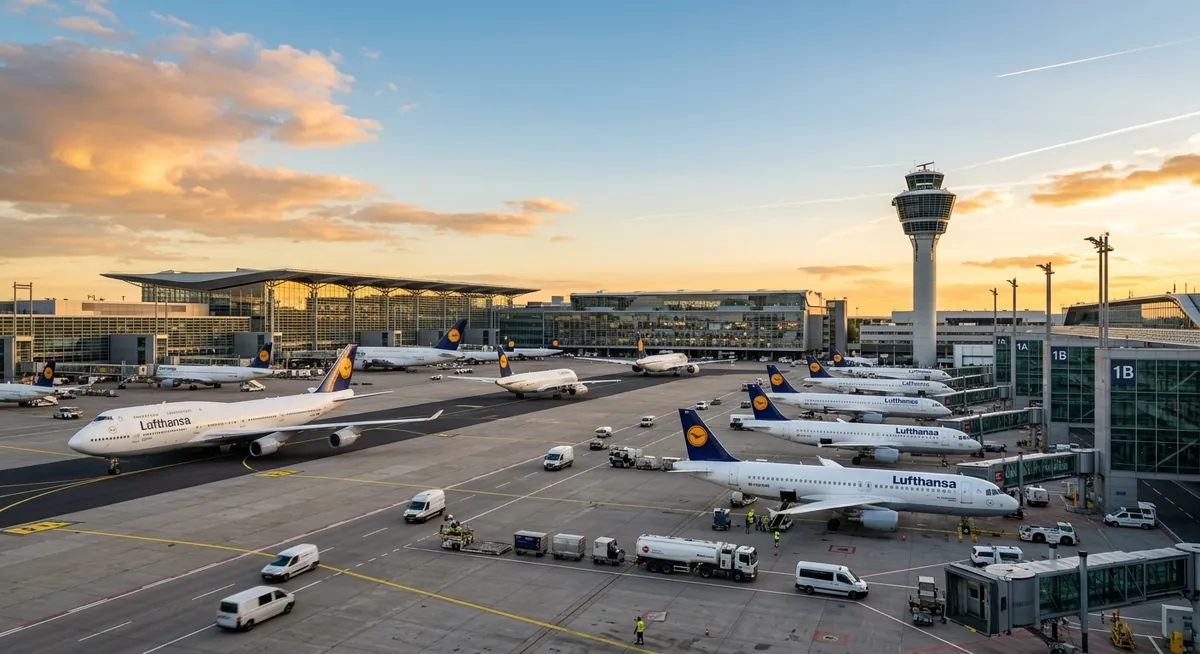







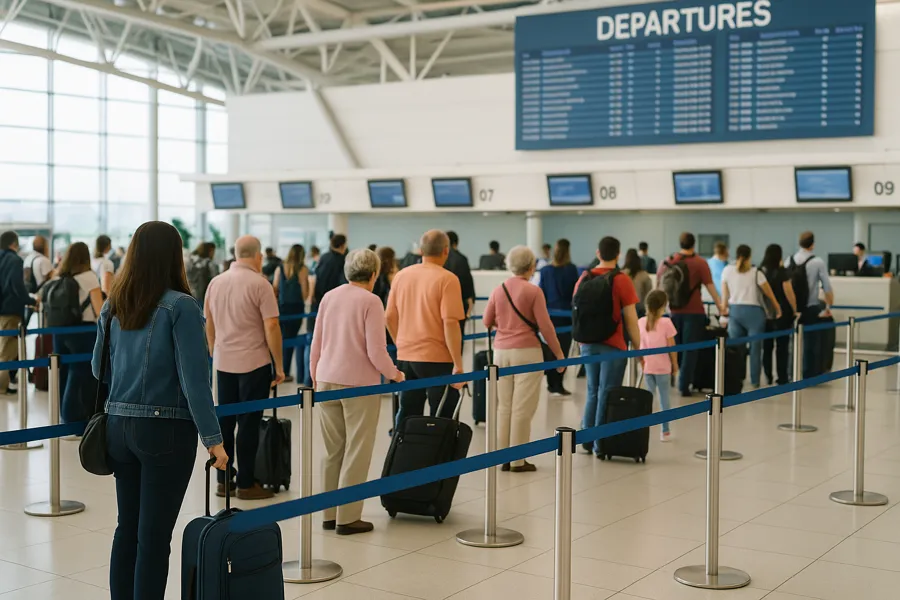
Recommended airport arrival times depend on whether your flight is domestic or international. For domestic flights, arriving 2 hours before departure is standard, as check-in deadlines are generally shorter; airlines such as Delta allow check-in up to 30 minutes before takeoff. For international flights , arriving 3 hours early is advised because security procedures are more thorough, and you must clear passport control.
Regardless of the type of flight, passengers should consider their own circumstances. Factors such as security wait times and whether you’re checking bags can affect how long it takes to move through the airport.
Considerations for Arrival Timing
Airline’s Check-in Times
Certain airlines have strict check-in guidelines. These rules help ensure that everyone’s luggage gets through without delay so the flight can depart on schedule. Ryanair is a prime example of this. They have a clear policy where their check-in counters close exactly 40 minutes before takeoff, no exceptions. Additionally, they charge passengers who try to check in at the airport.
Time of the Day
Airports are known to be busy at certain times of day. Mornings, particularly the peak hours between 6 am and 9 am, often see the largest crowds, as this is when many business travelers are on the move. So if your flight is at 7 am and you usually head to the airport 2 hours beforehand, it’s wise to arrive even earlier to account for possible delays.
Airport Security Screening Times
Airport security is a pain, but it’s unavoidable. Some airports have a reputation for long security wait times, with Seattle-Tacoma International Airport (SEA) being a notable example. One effective way to manage this is to check official airport websites, which sometimes provide live information on how long it takes to get through.
Your Luggage
If you’re traveling with checked luggage, you’ll need extra time at the airport to drop off your bags. On the other hand, if you’re traveling light with just a carry-on and can check in online, you’ll have more flexibility since you can skip the bag-drop line.
Whether You’re Traveling with Kids or Not
There’s a big difference between traveling by yourself and with kids. Having little ones by your side almost always means extra delays when it comes to air travel. Think bathroom breaks, snack stops, minor meltdowns, basically all the things adults can plan around but kids can’t.
Airport Layout
The layout of an airport has a huge impact on how quickly you can reach your gate. Smaller airports, like Bangkok Don Mueang (DMK) , are usually easier to navigate since security lines are shorter and the gates are a short walk away. But then there’s Bangkok Suvarnabhumi Airport (BKK). It’s much bigger, so passengers need to allow more time to get around.
When to Arrive at the Airport?
How Early to Get to the Airport for a Domestic Flight
The standard guideline is to show up 2 hours before a domestic flight. Here’s why:
- No immigration: Domestic flights often don’t require passengers to clear immigration, since you’re flying within a country’s borders.
- Airport/terminal sizes: Domestic airports or terminals tend to be smaller, so the walk time between gates is mostly only a few minutes, and passengers have fewer procedures to go through.
- More lenient check-in policies: Airlines typically allow passengers to check in later for domestic flights, offering greater flexibility. For instance, Delta will enable passengers to check in 30 minutes before their domestic flights. However, for their international flights, it’s one hour before.
- Less rigorous security procedures: Security checks are usually less intense when flying domestically. This is for a variety of reasons, like fewer liquid restrictions, and there’s less need to screen for certain banned items since passengers aren’t crossing international borders.
How Early to Get to the Airport for an International Flight
For international flights, travelers are encouraged to arrive three hours before for the following reasons:
- Boarding takes longer: Flying internationally mostly involves larger aircraft, which take longer to board than smaller ones used for domestic flights.
- Passport control: Since you’re exiting one country and entering another, you’ll have to go through passport control, which adds more time.
- In-depth security screening: As we mentioned for domestic flights, the security process isn’t as comprehensive. However, for international flights, it’s more thorough, with stricter liquid limits and random luggage inspections being more common.
- Check-in procedure: Some airlines require passengers to check in at the airport to receive a physical boarding pass instead of doing it online. This is often because they need to review your passport and confirm that you meet the entry requirements for the country you’re traveling to.
Circumstances That May Require Adjusting Your Arrival Time
Flying During the High Season
High seasons attract far larger crowds than the rest of the year. With more people off work, airports see a major jump in passenger traffic. The busiest periods are usually around major holidays like Christmas and long breaks such as summer.
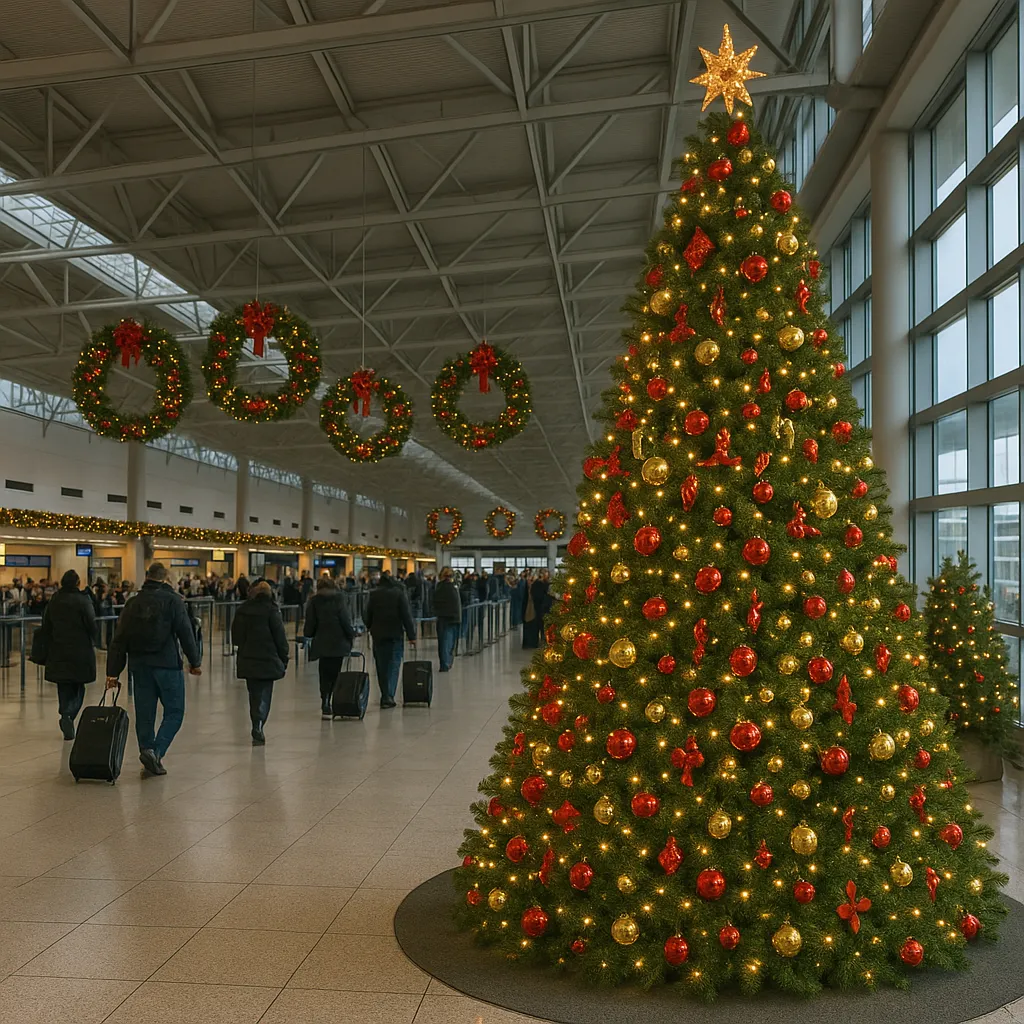
Airports transform into bustling holiday hubs as travelers weave through festive decorations and crowded terminals on their way to seasonal celebrations © Kiwi.com
Keep in mind that some regions also have their own seasonal peaks, like the dry season in parts of Southeast Asia, which runs from November to May.
Bringing Pets on Your Trip
There are a number of extra hoops you have to jump through if you want to bring a pet on board. Airline staff must review all the necessary documents for your pet before they can approve them for international travel and issue you a boarding pass. If anything is missing or doesn’t meet the rules, you may not be able to bring it with you. For example, EVA Air requires passengers to show all necessary pet vaccination records for both the departure and arrival countries.
Traveling Around Event Dates
Specific events at your destination can increase passenger numbers at airports. Take a major football event like the 2025 Champions League Final at Munich’s Allianz Arena. Many airports with direct routes to Munich would have seen a surge in passengers, both on the day of the event and in the days leading up to it. That extra traffic can make airports noticeably busier and slow things down.
If You Need Additional Support
In some cases, passengers may need extra support when flying, whether it’s wheelchair assistance or help due to a medical condition. If you or a family member needs these kinds of special services, make sure to give yourself some breathing room at the airport before your scheduled departure.
How Early You Should Arrive at the Airport Answered Fast
How early can you check in for a flight?
Many airlines allow online check in 24 hours before departure. Airport counters usually open three to four hours before international flights and two to three hours before domestic flights. When in doubt, check your airline’s policy so you know exactly when you can check in.
When does boarding end for flights?
Most airlines close their boarding gates about 15 minutes before departure. Plan to be at your gate 30 to 45 minutes beforehand to avoid any last minute issues and to prepare comfortably.
How early can you go through security for a flight?
Security typically allows passengers through during normal operating hours. Even if security is open, you must have a valid boarding pass issued by your airline in order to enter the checkpoint.
How late can you check your bags for a flight?
Each airline sets its own baggage cut off times. United Airlines, for example, requires checked bags to be dropped off no later than 45 minutes before departure. Always confirm the rules for your specific airline before heading to the airport.
Is 1 hour early enough for a flight?
One hour is usually not enough time to navigate an airport. Most airports recommend arriving two hours before domestic flights and three hours before international flights, with busy airports sometimes needing even more time.
How early can you check bags for a flight?
Bag drop generally opens about four hours before scheduled departure. Many airlines follow this timeline to keep operations running smoothly. If you miss the window, you often will not be able to check a bag at all.
Popular routes on Kiwi.com
- Cheap flights from London to Barcelona
- Cheap flights from London to New York
- Cheap flights from London to Asturias
- Cheap flights from London to Pattaya
- Cheap flights from London
- Cheap flights to Spain
- Cheap flights to Italy
- Cheap flights to Thailand
- Cheap flights to the United States
- Cheap flights to the United Kingdom
- Cheap flights from London Luton Airport
- Last minute flights
People Also Read


How to Travel Patagonia: A First-Timer's Guide to Chile & Argentina's Wild South