




It’s estimated that approximately 1 in every 604 flights experiences a medical emergency, with nausea and vomiting, fainting, and respiratory issues among the most common causes. While only 10% of these emergencies result in diversions, 0.3% lead to fatal outcomes. When a flight diverts due to a medical emergency, passengers may be able to remain on the aircraft to continue their journey or be required to disembark and wait for a later flight. In such situations, all passengers must follow the cabin crew’s instructions and adhere to the procedures outlined to ensure everyone’s safety on board.
In this article
What Are Some Typical Examples of Medical Emergencies on Flights?
The term ‘medical emergency’ is more of a general label that airlines use rather than a description of the specific situation. Medical emergencies can include a wide range of issues, from minor illnesses to serious health incidents that require immediate attention.
Roughly 1 in 604 flights experiences a medical emergency on board, but about 90% of these flights complete the journey without needing to land. In the remaining 10% of cases, aircraft have had to make an unscheduled landing due to serious issues, such as cardiac problems or stroke, where a passenger’s life may be at risk. Among the flights that do divert for severe medical reasons, approximately 0.3% result in a fatality.
Nausea and Vomiting
Planes are shaky by nature, and when you hit a bad patch of turbulence, it’s bound to make people feel nauseous and sometimes even vomit. While some can handle these feelings and get through them in one piece, other incidents can be more severe and require medical attention.
Fainting
Fainting, also medically referred to as syncope, makes up around one in four medical emergencies during flights. It can affect those with certain conditions, but also people with no known underlying issues. A number of factors can trigger it, including stress or anxiety, orthostatic hypotension, or the level of oxygen in the cabin.
Respiratory Problems
Some passengers may also be at higher risk of having respiratory issues due to the reduced cabin pressure at cruising altitude. Conditions such as asthma, COPD, or other respiratory problems can cause them to flare up.
What Happens During a Medical Emergency
The Crew Assesses the Situation
The crew first needs to assess the situation with the affected passenger to determine what’s going on. Cabin crew members are trained in first aid and aviation medicine, so they’ll check to see if the problem can be resolved with their expertise before taking further action.
Calls for Doctors
Most major carriers have a direct line to a medical professional on the ground, allowing them to seek expert advice regarding the passenger’s condition. This guidance is crucial to the pilot’s decision when determining whether an emergency landing is necessary. In some cases, the crew may also ask throughout the cabin if there’s a practicing doctor on board to assist.
Pilot’s Decision
Based on the evaluation from the doctors, they’ll speak to the captain and provide their analysis and recommended course of action. This may involve continuing the flight so the passenger can receive assistance upon landing or making an emergency landing at the nearest airport so that the passenger gets immediate help.
Possible Diversion
If the pilot decides to divert, the cabin will be notified, and the crew will take the necessary steps to organize medical treatment for the passenger on the ground.
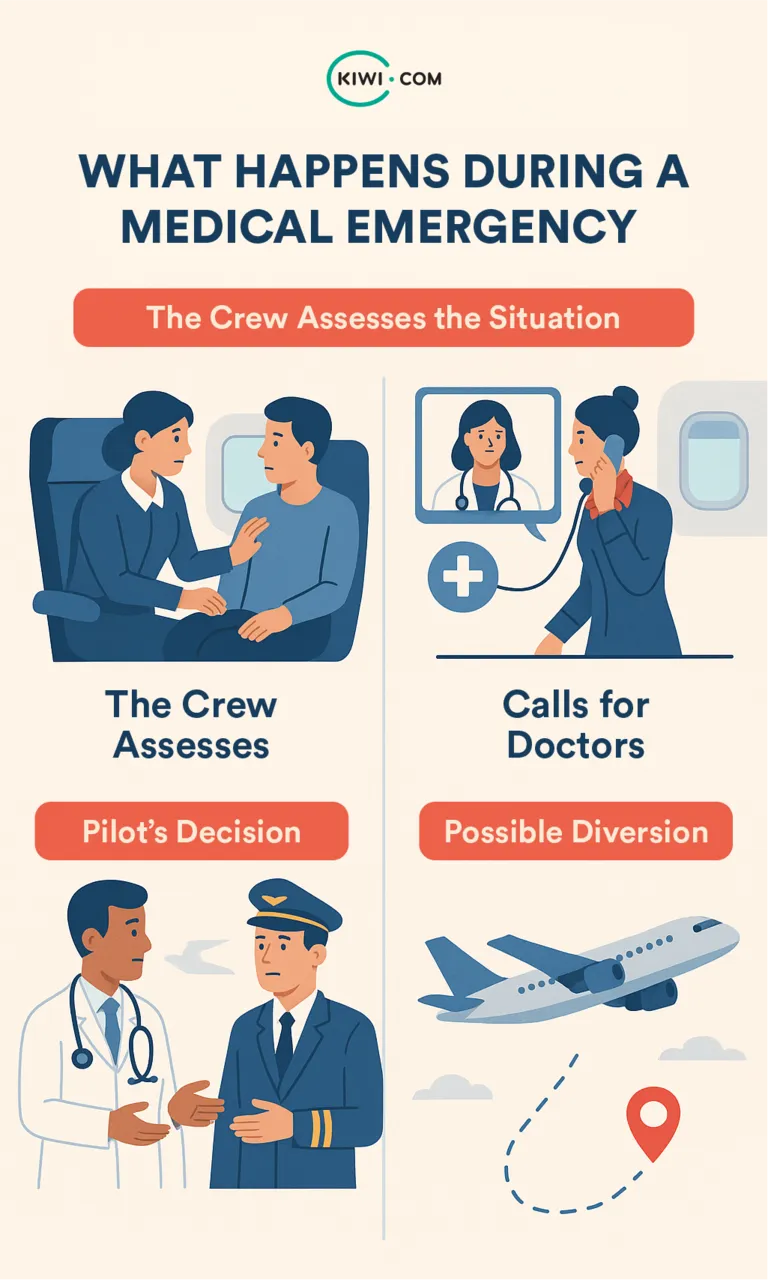
Step-by-step look at how flight crews handle medical emergencies, from initial assessment to potential flight diversion © Kiwi.com
Steps Passengers Can Take During a Medical Emergency Onboard
You never know how you’ll react if someone sitting near you experiences a health issue on a plane. It can be frightening, but staying calm and following these steps will help you handle the situation.
Get a Crew Member’s Attention
Whenever you notice someone with health difficulties on board, the first thing you need to do is alert the crew. They’re the people in charge and trained for these situations.
Stay in Your Seat and Avoid Crowding the Aisles
It’s human nature to want to help when someone is in difficulty, but when too many people crowd the aisles, they only clog the area and prevent the crew from doing their job. So just stay seated.
Be Ready to Help if Asked
If you’re sitting near the person with the medical issue, the crew may ask you to assist. Be prepared to do so.
What Happens to the Other Passengers if the Flight Needs to Divert
If the call has been made to divert by the captain, the rest of the passengers will also be affected by the incident. This can bring a wealth of uncertainty to everyone’s plans, but the passenger with the medical issues will be the person who comes first in this situation, as their life may be in danger. Here’s how things usually unfold.
Wait for the Affected Passenger to Be Removed From the Plane
The emergency personnel waiting on the ground will board the plane to assist the person, and they’ll be removed from the aircraft before anything else can happen.
Follow the Crew’s Orders
After the affected passenger has received attention, the crew will await orders regarding the next steps. The plane may continue its journey, or passengers may be asked to disembark and wait for instructions on boarding a later flight. The exact procedure will depend on factors such as flight schedules, aircraft availability, and airport immigration procedures.
Disembarkation if Required
If passengers need to exit the plane, the airline is fully responsible for everyone. This includes ensuring that all passengers reach their final destination and are cared for in the meantime, with food, accommodation, and other assistance as needed.
Stand By for Further Updates
It can take time to organize an alternative flight plan, particularly if you’re in a country where the airline doesn’t usually operate. Passengers will need to stand by for further updates. Diversions can sometimes last only a few hours, but in some cases may extend overnight. The crew’s working hours also need to be considered, as they can only be on shift for a set number of hours. If they have reached their limit, they must take time off before the next flight can depart
Urgent and Practical FAQs About Medical Emergencies During Flight Travel
Are other passengers able to claim compensation for a flight diversion due to a medical emergency?
In most cases, passengers aren’t entitled to compensation for diversions caused by medical emergencies, as these situations are considered ’extraordinary circumstances’ beyond the airline’s control. Regulations such as EU REG 261 don’t cover claims resulting from these types of events. However, the airline you fly with is still obligated to provide necessary care while you wait. This can be in the form of meals, water, and accommodation if delays are long. Passengers are encouraged to request these things when needed to ensure their comfort and safety.
Are airlines allowed to refuse boarding for passengers with serious medical conditions?
Yes. Airlines are permitted to deny boarding to passengers whose medical condition poses a risk to themselves or others on board. This may include passengers with infectious diseases, serious cardiovascular conditions, or other health issues that deem them unsafe to fly. If a passenger is unsure whether their condition may affect boarding eligibility, they should contact the airline before purchasing tickets to receive guidance.
Do planes have appropriate medical supplies to deal with emergencies onboard?
The availability of medical equipment on aircraft varies depending on the country and regulations. For example, in the United States, the Federal Aviation Administration (FAA) sets clear requirements for the type and number of medical kits based on aircraft size and seat capacity. While most commercial aircraft carry basic first aid kits, not all planes are equipped with supplemental oxygen for every situation. Passengers who think they may need specialized medical support should check with their airline in advance to make sure the airline is equipped to handle these situations.
What should I do if I feel unwell during a flight?
If you begin to feel unwell during a flight, it’s important to notify a crew member, even if your condition isn’t life-threatening. Cabin crew are trained to provide assistance, monitor your condition, and take action if it gets worse. Hoping the issue resolves on its own can lead to complications, so it’s essential that the crew is notified about your well-being for your safety.