





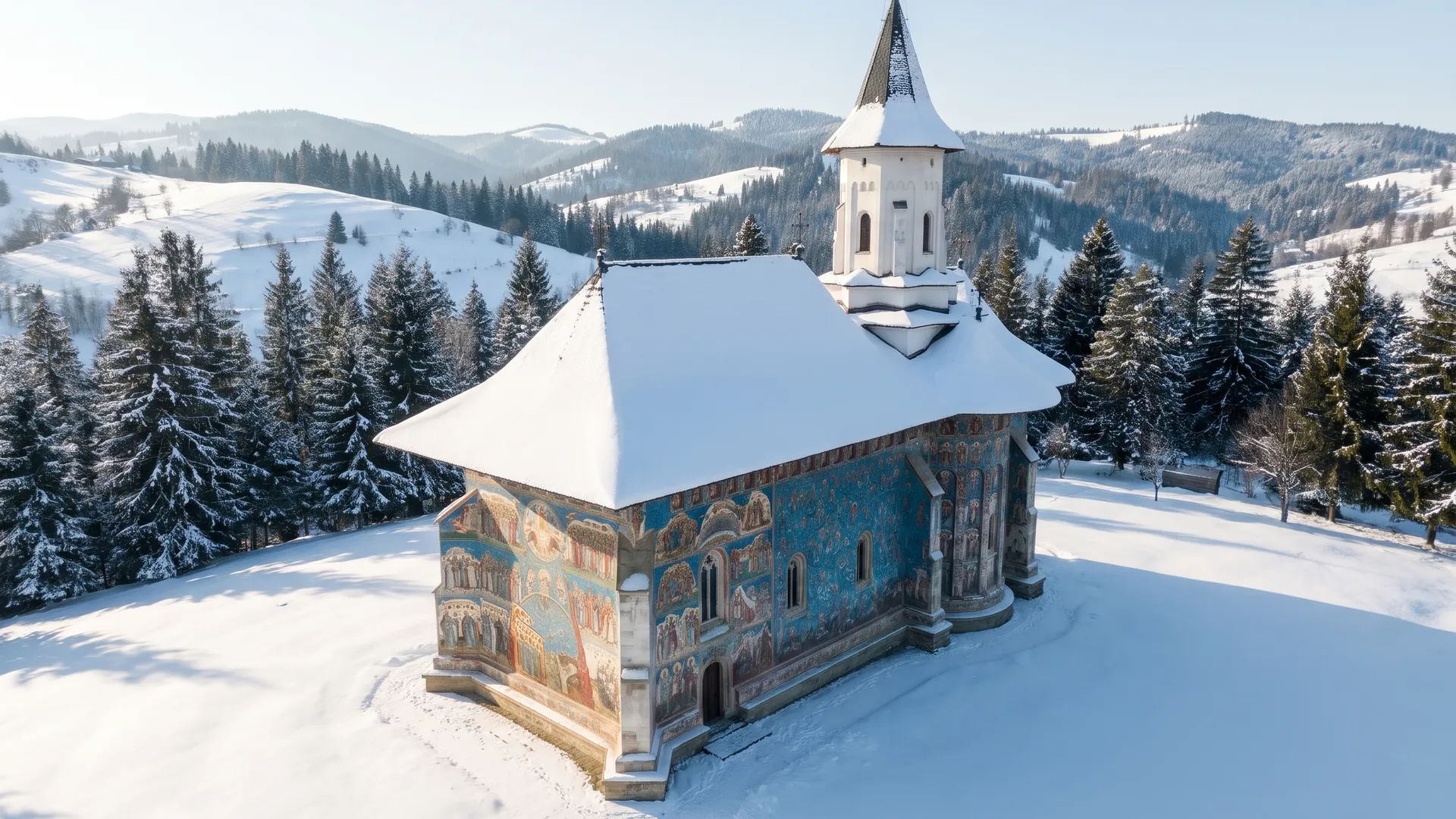
The cheapest interesting winter flight out of London right now lands in a place almost nobody goes in winter. Suceava , in northeastern Romania, is the airport for Bukovina, the hill region whose monastery walls are painted head to foot in 500-year-old frescoes. Return fares from London have sat between EUR 64 and 68 every day for the past week, nonstop, about three hours in the air. The cheapest pair we found, at EUR 64, flies out in March and comes back three weeks later.
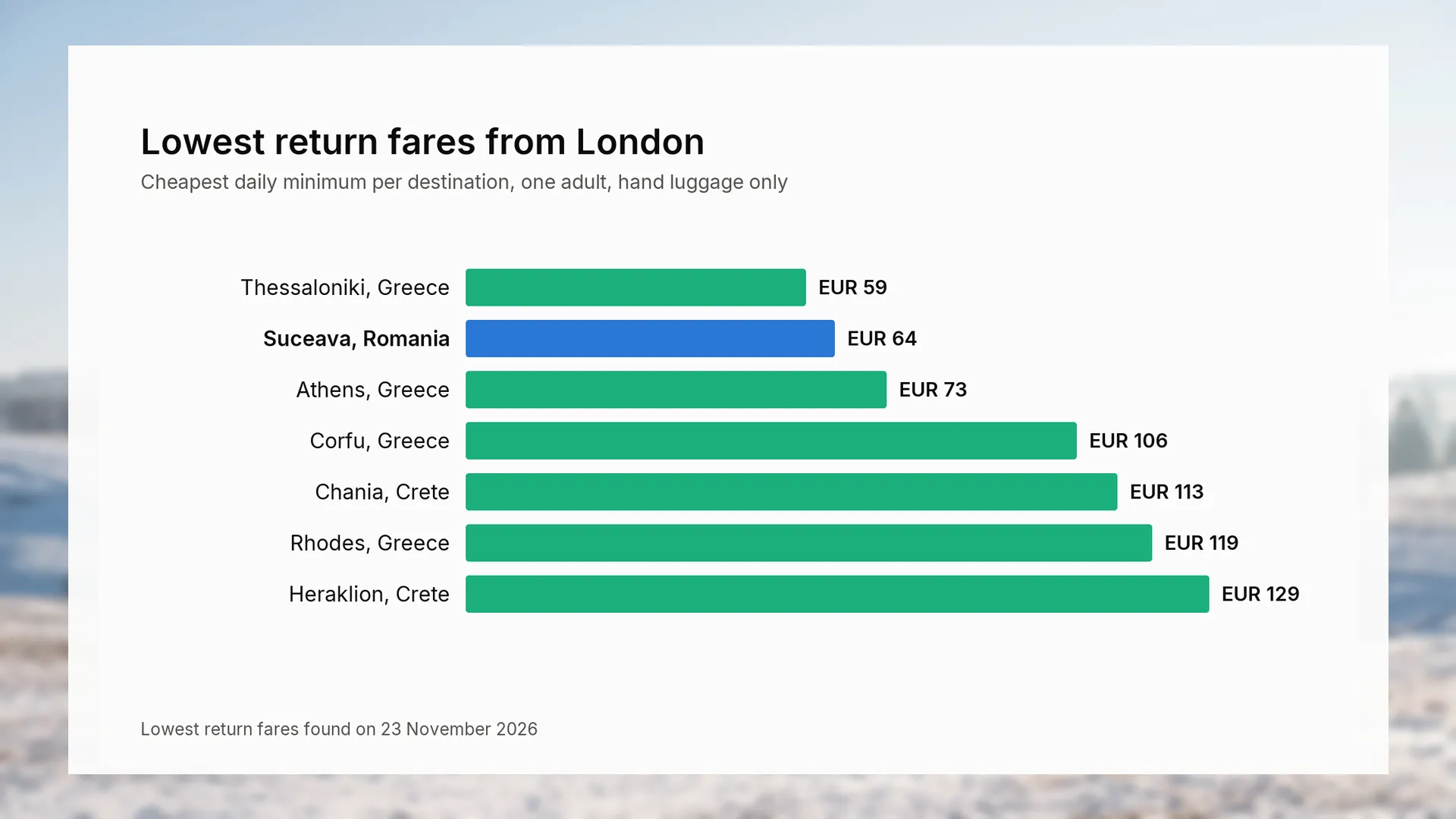
That price would be unremarkable for the airports everyone already uses. What makes it worth a look is the company it keeps. The same week of price data puts every Greek island well above it: Corfu from EUR 106, Chania from EUR 113, Rhodes from EUR 119, Heraklion from EUR 129. If your winter reflex says Greece, the numbers say the islands cost nearly double, and in winter much of what you would fly there for is closed anyway.
Two honest notes before the monastery walls. The fares below are per person, one adult, hand luggage only, return, from Kiwi’s cached search results on 23 November 2026, subject to change; all of them are in euro, not pound, because that is the currency our price data is collected in. And “London” means the London airports: the nonstop is from London Luton. If you are coming from the north, Manchester to Suceava exists too.
Key takeaways
The fare is real and flat: London to Suceava returns have cost EUR 64 to 68 every day for the past week. Right now the floor is EUR 64, out in March 2027, nonstop from London.
Two mainland Greek cities match it, the islands do not: Thessaloniki returns start at EUR 59 and Athens at EUR 73 from London. Corfu, the cheapest Greek island in the set, starts at EUR 106.
The monasteries are open in winter: Bukovina's painted churches, UNESCO-listed since 1993, stay open year-round, while the Greek islands largely shut down for the season.
You will want a car: A full circuit of the painted monasteries realistically needs a hire car or a guided day tour from Suceava or Gura Humorului. Local buses exist but are hard to plan around.
Pack for real winter: Suceava's January averages are minus 2.8°C by day and around minus 6°C at night (1991 to 2020 normals). Snow on the hills is normal, not a surprise.
Find flights for this trip

How the fare compares with every Greek destination
Here is the full set, lowest return fares from London found on 23 November 2026, per person, hand luggage only. Thessaloniki and Athens are the two mainland Greek cities in the comparison; the rest are the islands.
| Destination | Lowest return fare from London |
|---|---|
| Thessaloniki, Greece | EUR 59 |
| Suceava, Romania | EUR 64 |
| Athens, Greece | EUR 73 |
| Corfu, Greece | EUR 106 |
| Chania, Crete | EUR 113 |
| Rhodes, Greece | EUR 119 |
| Heraklion, Crete | EUR 129 |
Read the table honestly and it makes one call and concedes one. The concession: Greece’s two mainland cities match or beat Suceava on fare, so this is not “Romania is cheaper than Greece” as a blanket claim, and if you just want a cheap city break, Athens at EUR 73 in winter is a fine plan. The call: the islands, the part of Greece a winter-sun daydream is actually about, start at EUR 106 and climb. In December most of them have closed their beach bars and emptied their tavernas, with ferry timetables cut to the bone. Suceava’s sights do the opposite. The monasteries are working religious sites, open year-round; winter is when you see their walls without another visitor in the frame.
The flight itself is simple: Suceava airport is small, and the nonstop means no connection to worry about. One airline flies the route. Suceava has been sitting at this price level all week, so treat EUR 64 to 68 as the route’s normal fare. When you check the live page, expect the number to move around within a few euro. It will not disappear.
What you actually land in: Bukovina and the painted monasteries
Suceava is a modest city of about 100,000 people, and the reason to fly into it sits 30 to 50 kilometres west and south, in the hills. This is Bukovina, and its monasteries are the reason the region is known at all.
The Churches of Moldavia, as UNESCO calls them, went on the World Heritage List in 1993, with Sucevița added in 2010, eight churches in total. They were built in the late 15th and 16th centuries under Stephen the Great and his successors, and their distinction is on the outside: whole exterior walls covered in frescoes, full cycles of religious scenes painted onto plaster, in a climate where you would not expect paintings to survive half a millennium of winters. They have.
Voroneț, founded in 1488, carries the image most visitors come for: the Last Judgement covering an entire wall, dominated by a deep blue that became known as Voroneț blue, a pigment so specific to the place it carries the monastery’s name. Moldovița has its own siege fresco; Sucevița, the newest of the set, has a famous ladder-of-virtues wall. You do not need to know the iconography to be stopped by the walls themselves. The standard description, rolling hills with painted churches on the ridgelines, is accurate.
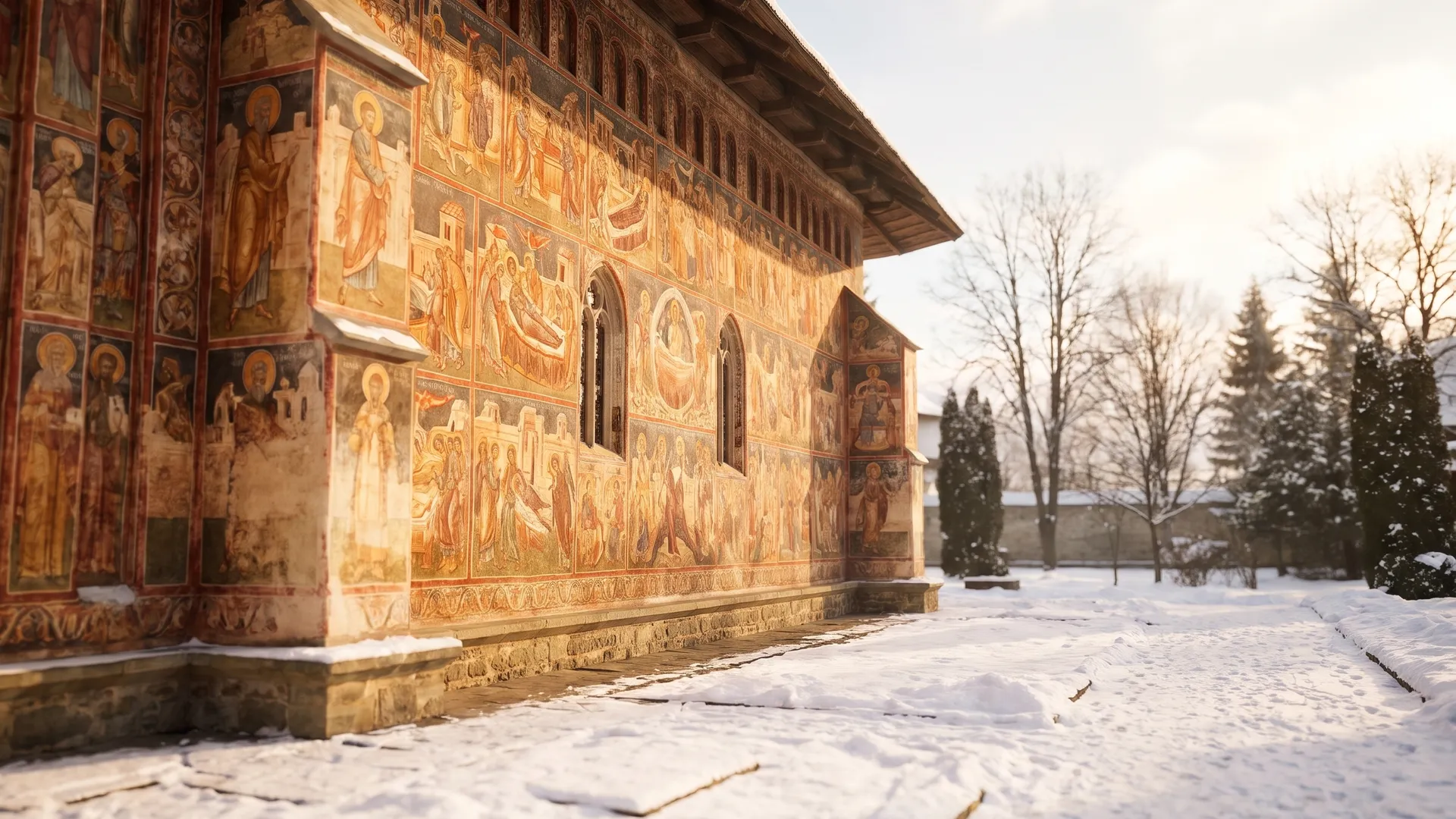
The texture worth knowing before you book: these are living monasteries, not ruins. Nuns keep the grounds and services run; at Voroneț and Humor you buy your ticket at the gate and walk in. Winter light on the walls is flat and grey by afternoon, so aim your visit for the morning. And you will largely have them to yourself: December visitor numbers are a fraction of summer’s, and the souvenir stalls that line the car parks in July are shuttered.
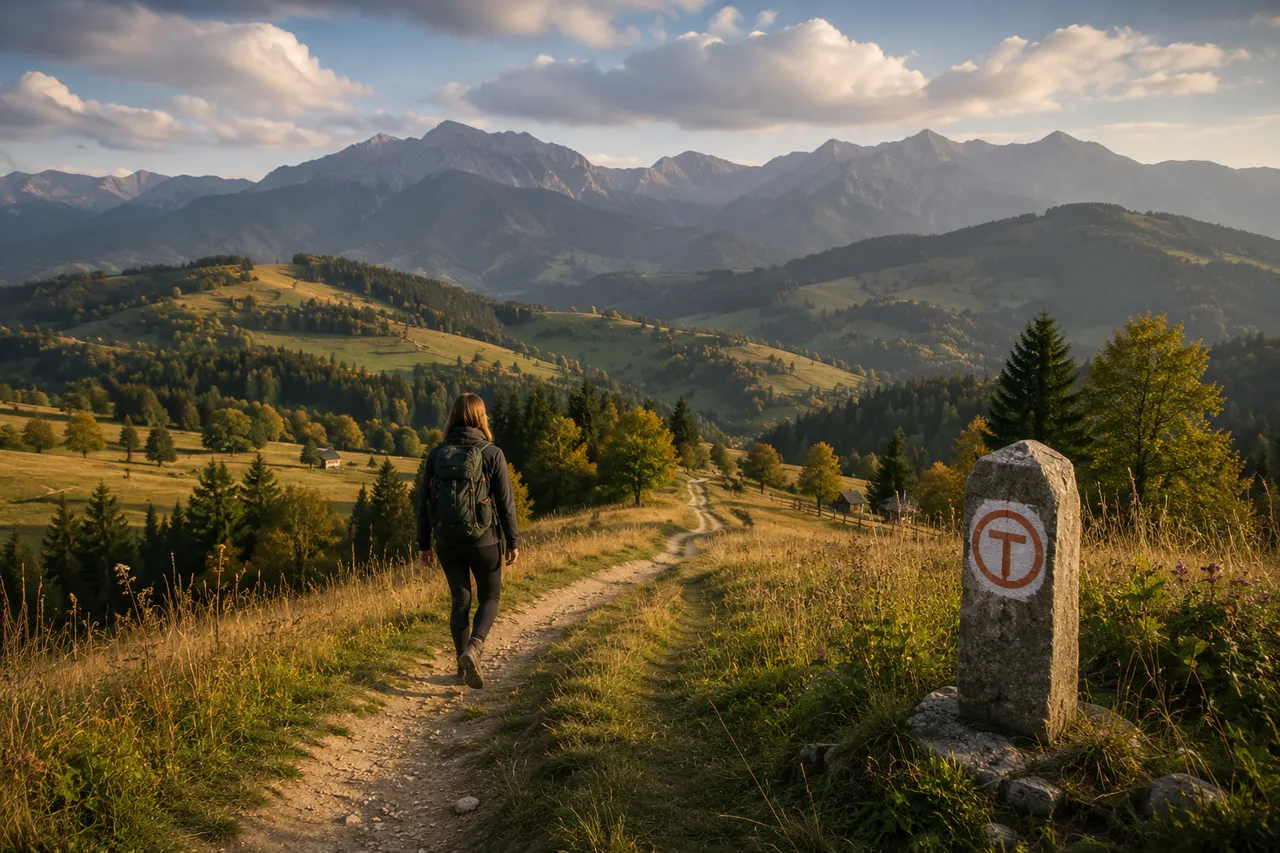
Romania keeps giving even if monasteries are not your thing. Hikers have a whole other way in: the Via Transilvanica trail , the long-distance path that starts in the Bukovina monastery town of Putna and crosses the country to the Serbian border. Walking it in winter is a serious undertaking, but its Putna trailhead makes the same flight useful.


The two things that might kill the idea (and the one that should not)
You need a car, or a tour. The monasteries sit in villages spread across the hills, and a full circuit of the main ones, Voroneț, Moldovița, Sucevița, Humor, realistically needs two days with a hire car. Romania’s driving is manageable and the roads between the monasteries are quiet, but in winter you want a car booked with winter tyres and you want daylight, which in December means starting early: the sun is down by five. Local buses connect Suceava and Gura Humorului with some of the villages, but they run to their own logic and are hard to build a trip on without asking around when you arrive. If you would rather not drive on snow, guided day tours from Suceava or Gura Humorului, where most visitors base themselves, cover two or three monasteries in a day and cost a modest amount by UK standards.
 Inspiration
Via Transilvanica: The Long-Distance Hike Through Romania That Everyone Is Talking About
Discover Via Transilvanica, Romania's spectacular long-distance hiking trail. Explore breathtaking mountain scenery, historic villages, and why this route has become one of Europe's most talked-about hiking adventures.
Read the guide
Winter is real winter. Suceava’s January normals are minus 2.8°C for the daily mean and about minus 6°C at night, from the 1991 to 2020 record. Snow lies on the hills for weeks at a time. That is no reason to stay home; it is a packing instruction: proper boots and layers, plus gloves you can take off to take photographs. What minus 6°C Bukovina looks like is worth naming, because it is the honest version of the trip: rolling hills under clean snow, wood smoke over the villages, a monastery’s blue wall with nobody standing in front of it. Cold, quiet, everything open.
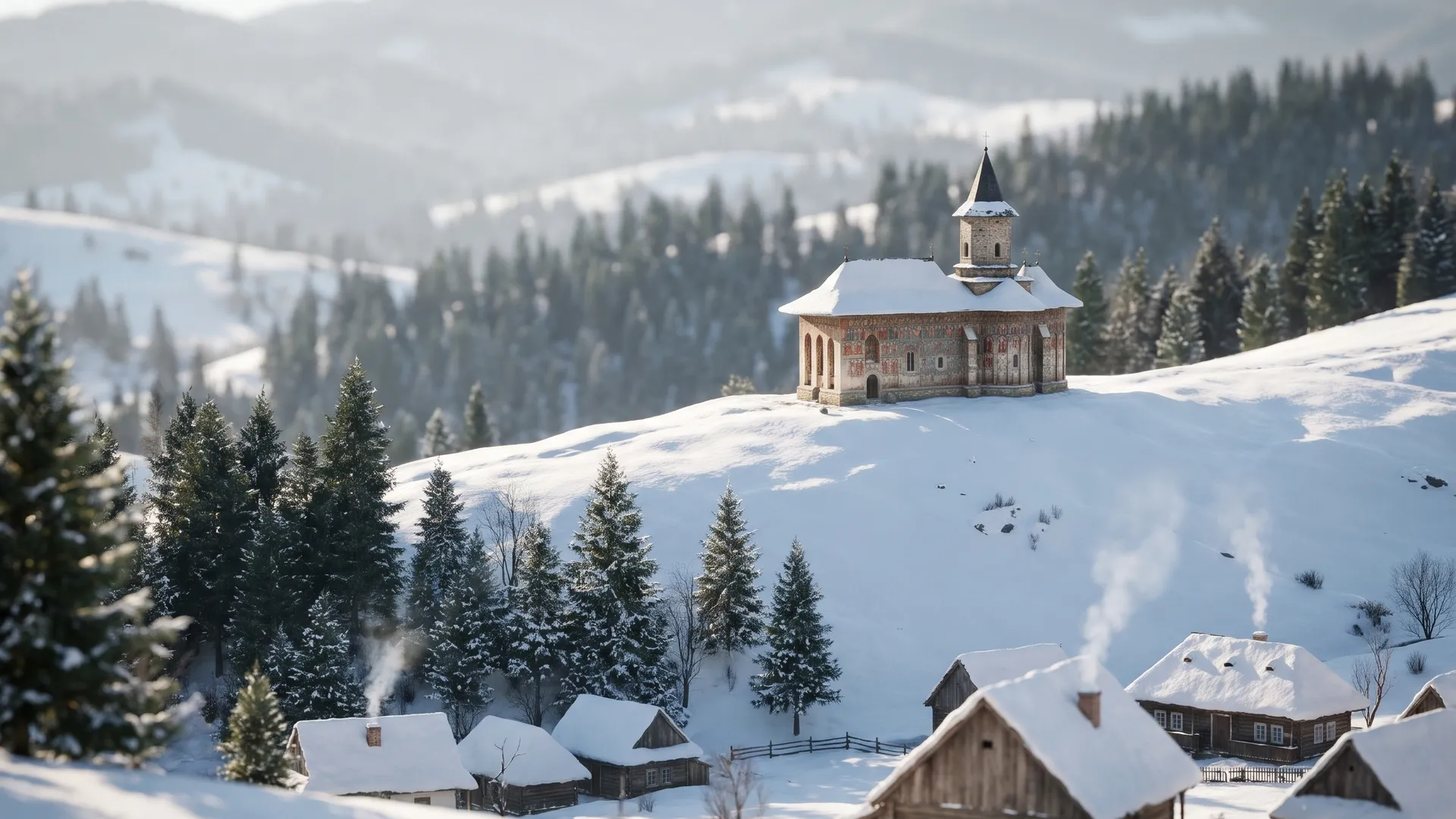
The one that should not kill the idea is the price of getting around once you are there. Romania is one of the cheaper countries in the EU to spend a weekend in: guesthouses in Gura Humorului and Rădăuți run well below what a Greek island charges in high summer, and a two-day trip with a car, a room, plus three monastery visits still totals less than the flight premium you would pay for a winter island. The flight is the big number; the ground costs are small ones.
Which dates to grab
The pattern in the price data is consistent: the cheap shapes are midweek pairs. Weekends cost more. Long stays often work out cheaper per day than short ones.
In the current data, the cheap shapes are February and March midweek pairs. Out Wednesday 3 February, back Monday 15 February 2027, sits at EUR 66. Out Tuesday 19 January, back Wednesday 7 February, sits at EUR 67. The overall floor, EUR 64, is on March departures with roughly three weeks in destination, which suits anyone who can work remotely or is planning more than a weekend. For a shorter January version, out Tuesday 18 January, back Wednesday 27 January 2027, was sitting at EUR 68 in the freshest check.
If it has to be a weekend, the weekend shapes left in the data are early December: out Sunday 29 November, back Thursday 3 December, at EUR 143; the Monday 30 November pair returning Thursday 4 December sits at EUR 148. Both are close enough to book this week, and both are before the deepest cold sets in. The Fri 4 to Sun 6 December pair this article was first drafted around was EUR 138 a few days ago and has since drifted out of the cheap rows, which is the practical lesson: on a route this cheap, the specific pairs move by ten or twenty euro within days. Check the live page for your own dates before you book.
One line for the reader whose heart is still set on winter sun: the only cheap Greek answer in the data is mainland, not islands. Thessaloniki at EUR 59 return is the cheapest of the whole set, and Athens at EUR 73 follows. If what you wanted was December warmth and a beach, no fare makes that true in the Greek islands, and Suceava’s offer is a different one: cold and spectacular, half the price of an island, with everything you flew there to see still open.
Frequently asked questions
How do I get from Suceava airport to the painted monasteries without a car?
Badly, is the honest answer, which is why the article recommends a hire car or a guided day tour from Suceava or Gura Humorului. Buses connect Suceava city with some of the monastery villages but run infrequently and are hard to plan a trip around from abroad. The airport itself is about 10 kilometres from Suceava city; a taxi or pre-booked transfer covers that part easily.
Are the Bukovina monasteries open in winter?
Yes. They are working monasteries, not seasonal attractions; they stay open year-round. Hours are typically shorter in winter, roughly 9am to 4pm. The best light on the painted walls is in the morning. Check the individual monastery hours locally, since service times can affect access to specific churches.
Is EUR 64 return really the total price?
The EUR 64 to 68 figures are per person, one adult, hand luggage only, return, economy, from Kiwi’s cached search results on 23 November 2026, subject to change. Add a hold bag or seat selection and the total moves; so does a different date pair. The live price on the day you book is the only one that counts, and this route’s numbers have been moving within a few euro, with no big jumps.
Why is flying to Suceava cheaper than flying to the Greek islands in winter?
Demand. The Greek islands’ winter flight schedules shrink after the summer season, so the few remaining flights do not get cheap, while a winter city route with a single nonstop carrier can stay low precisely because few people want it. Our comparison set puts every Greek island at EUR 106 or more from London this week, against Suceava’s EUR 64 to 68.
What is the cheapest time of week to fly London to Suceava?
Midweek. Every cheap pair in the current data leaves London on a Tuesday or Wednesday, and the weekend shapes start around EUR 148. Long stays are also cheap: the EUR 64 floor is on March departures with about three weeks in destination.