


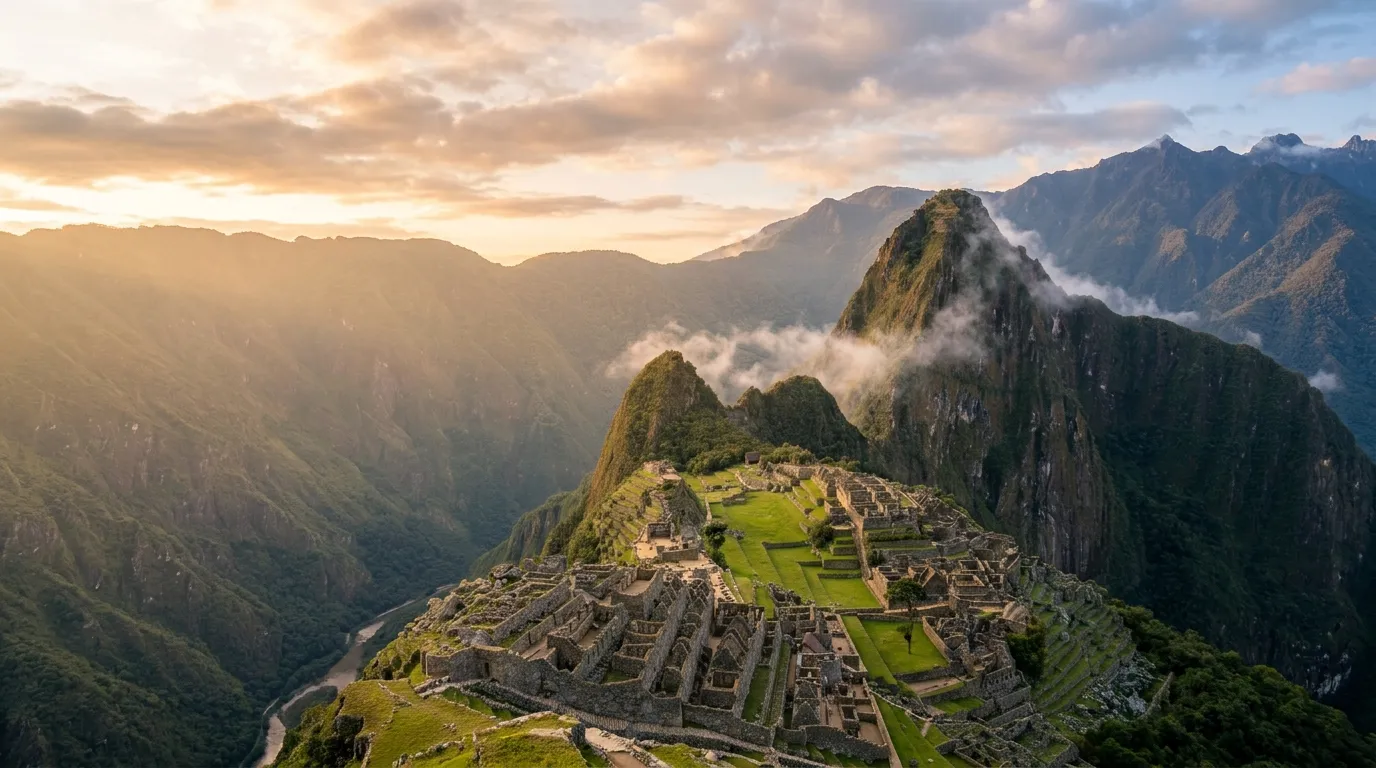
You just need to plan a few things in the right order, and book them early.
In this article
Key takeaways
The ticket is the cheap part. A standard entry is S/ 152 (Peruvian sol, PEN), about €40, plus small fees such as a card fee. The expensive part is the packaging around it.
Entry is timed and capped. Machu Picchu allows 4,500 visitors a day, or 5,600 in high season. The best dates sell out first.
Machu Picchu is lower than Cusco. The citadel sits at about 2,430 m; Cusco is at about 3,400 m. Get used to the altitude first and the ruins feel easy.
There is a budget route. The Hidroeléctrica route skips the train fare for around S/ 40 to 50 (€10 to 13) one way from Cusco, including a 2 to 3 hour walk.
A day trip by budget train costs roughly S/ 960 (about €250). With a standard ticket, transport and the shuttle bus, before food. The Hidroeléctrica version needs a night in Aguas Calientes and comes to around S/ 390 (about €100).
5 Things Most People Don’t Know
The ticket is the cheap part
A standard entry is S/ 152 (Peruvian sol, PEN), about €40, plus small fees such as a card fee. The expensive part is the packaging around it.
Entry is timed and capped
Machu Picchu allows 4,500 visitors a day, or 5,600 in high season. The best dates sell out first.
Machu Picchu is lower than Cusco
The citadel sits at about 2,430 m. Cusco is at about 3,400 m. Get used to the altitude first and the ruins feel easy.
There is a budget route
The Hidroeléctrica route skips the train fare for a long, flat walk.
The Inca Trail shuts every February
Check the calendar before you book flights.
Fly to Lima, Hop to Cusco
Most trips to Peru start in Lima (LIM), the main international hub. From there, a domestic flight to Cusco (CUZ) takes about 1 hour 20 minutes. On Kiwi.com we saw direct one-way fares from about US$51 (roughly €46) in October. Check which bags are included.
Find flights for this trip

You can fly into Lima and home from Cusco, or the other way around, so you never backtrack. The bus from Lima to Cusco takes about a day.
Acclimatise First, Climb Later
Cusco is higher than almost any city in Europe. Some people feel it straight away, with a headache, a racing heart and a bad night’s sleep. The fix is cheap. Spend your first two nights lower, in the Sacred Valley, at about 2,800 m. Then move up to Cusco once you feel normal. Drink water, take it slowly on day one, and skip heavy meals and late nights.
How the Tickets Actually Work
Today there are three circuits, split into ten routes. You choose a circuit, a route, a date and an entry time. Then you pay on tuboleto.cultura.pe , run by the Ministry of Culture. That is the only official place to buy online.
Circuit 1 (Panoramic)
The high viewpoints, including the Machu Picchu Mountain route.
Circuit 2 (Classic)
The main citadel and the lower terraces. Best for a first visit.
Circuit 3 (Royalty)
The temples and royal buildings, plus the Huayna Picchu mountain route.
You can buy up to five tickets in one purchase. Enter your name exactly as it appears in your passport. Small extra fees, such as a card fee, may apply at checkout.
Book as early as you can, especially for June to August and for mountain routes. In peak season, the most popular circuits often sell out months ahead, so book as soon as your dates are fixed.
There is also a last-minute option. The Ministry of Culture sells up to 1,000 tickets a day in person in Aguas Calientes, at its Cultural Centre. They are for the following day, and you need a valid ID. It is a gamble, not a plan, and it means sleeping in Aguas Calientes the night before.
The Cheapest Ways to Get There
There are three real options for reaching Machu Picchu . Here is how they stack up.
| Train | Hidroeléctrica route | Inca Trail | |
|---|---|---|---|
| Cost | from about US$65 one way from Ollantaytambo (budget class), or about US$85 from Cusco (bus + train). The return costs more, about US$123 to Cusco | around S/ 40 to 50 (€10 to 13) from Cusco, by shared transport | from about US$700 (roughly S/ 2,400, €625), guided only |
| Time | about 1.5 hours from Ollantaytambo, or 4 hours 20 minutes from Cusco | about 9 hours or more from Cusco, including a 2 to 3 hour walk | 4 days |
| Effort | easy | medium, mostly flat | hard |
| Good for | saving time | saving money | the experience |
The train
Two companies run the trains to Aguas Calientes, the town below Machu Picchu: PeruRail and Inca Rail. From Ollantaytambo, in the Sacred Valley, the ride takes about 1 hour 30 minutes. On PeruRail’s own booking site we saw a one-way budget fare of about US$65 for early December. From Cusco, the budget class is a bus and train combo of about 4 hours 20 minutes, and we saw about US$85 for mid-November. The way back costs more: the cheapest return to Cusco we found was about US$123. Fares change by date, so compare both companies.
Pack small, as hand luggage is limited to about 8 kg. Check your operator’s rules before you travel. The next class up costs about US$30 more, and the premium trains cost much more. For most people, the basic class is plenty. The train ticket does not include Machu Picchu.
The Hidroeléctrica route
This is the one tour operators rarely mention. It is a relay of shared transport with four legs. There is no official fare list, so these prices are approximate:
- Cusco to Santa María: shared bus or van, about 5 hours, around S/ 25 to 30 (€6.50 to 8).
- Santa María to Santa Teresa: shared taxi, about 1 hour, around S/ 8 to 12 (€2 to 3).
- Santa Teresa to Hidroeléctrica: shared taxi, about 30 minutes, around S/ 5 (€1.30).
- Hidroeléctrica to Aguas Calientes: on foot, about 10 km along the tracks, 2 to 3 hours, free and mostly flat.
That is roughly S/ 40 to 50 (about €10 to 13) one way, a fraction of the train. You get a scenic walk. But it takes 9 hours or more each way, so plan at least one night in Aguas Calientes.
The Inca Trail
The classic four-day trek is about 42 km long and ends at the Sun Gate at sunrise. It climbs to about 4,200 m on day two, so acclimatise first. You need a licensed operator, and spaces are limited, so plan well ahead. It is the priciest option, from about US$700 per person (roughly S/ 2,400, €625). That covers the permits, a guide, porters, tents, meals, the return train and the bus down. Sleeping bag, poles and tips cost extra. The Machu Picchu ticket comes with the trek.
The trail closes every February for maintenance. In 2026 it reopened on 1 March.
On the Day: Bus Up or Walk Up?
The shuttle bus takes about 25 to 30 minutes and costs around US$12 each way (about S/ 41, €11). It is run by Consettur and San Antonio de Torontoy, and one ticket works on any bus.
Walking up costs nothing. It is a steep climb on stone stairs and takes about 1.5 hours. Good if you are fit, and you can always take the bus down.
 Budget Guides
How to Slay Lima Without Paying Like a Gringo
Unlock the secrets to exploring Lima on a budget—authentic experiences and local gems without the tourist markups.
Read the guide
Pick the earliest slot you can. Mornings are cooler, quieter and better for photos. Arrive a little before your entry time, as late arrivals can be refused. There are no toilets inside and food isn’t allowed, so eat in Aguas Calientes first.
Is the Extra Mountain Worth Paying For?
The two mountain routes cost S/ 200 (about €52), against S/ 152 for a standard route. Both sell out early.
Huayna Picchu is the steep one in every postcard. Short, narrow stairs and a view straight down on the citadel. It suits people who are comfortable with heights.
Machu Picchu Mountain is the longer, calmer climb. The views are wider and the pace is gentler.
If you can only pick one, pick Huayna Picchu for drama, and Machu Picchu Mountain for space.
Best Time to Visit
May to September is the dry season. Clear skies, cold mornings and the biggest crowds. It is also high season, so book early.
November to March is the rainy season. Expect cloud and muddy paths. Prices dip and the crowds thin out.
The shoulder months, April and October, are a smart middle ground.
Beyond Machu Picchu: Where to Spend the Rest of Your Trip
Cusco
Cusco . The old capital of the Inca empire. Cobbled streets, stone walls and a big free-walking-tour scene. The Cusco Tourist Ticket (Boleto Turístico) covers 16 sites, including Sacsayhuamán, Pisac, Ollantaytambo and Moray. The full ticket costs S/ 130 (about €34) and lasts 10 days. Single circuits cost S/ 70 (€18). A new tourist ticket law was approved in August 2026, so these prices may change.
The Sacred Valley
The Sacred Valley. Terraces, salt pans and market towns. Ollantaytambo and Pisac are well worth a day each. Base yourself here to acclimatise.
Rainbow Mountain
Rainbow Mountain. Striped hills at about 5,000 m, reached on a very early day trip from Cusco. Do it after you have acclimatised. The entrance fee is around S/ 25 (€6.50), paid in cash at the trailhead. Day tours start from about US$19, so check if the entrance fee is included.
Lima’s food scene
Lima’s food scene. Ceviche, lomo saltado and cheap set lunches. Save two nights for it on the way in or out - here is how to slay Lima without paying like a gringo .
What It Actually Costs
At today’s rate, 1 EUR ≈ 3.85 S/ (Peruvian sol, PEN). Prices checked on 24 October 2026 and subject to change.
- Machu Picchu standard entry: S/ 152 (€40)
- Entry with a mountain route: S/ 200 (€52)
- Card fee on the ticket: about 5%, so S/ 8 to 10 (€2 to 2.60)
- Train from Ollantaytambo, one way: about US$65, roughly S/ 225 (€58)
- Train from Cusco: about US$85 out, US$123 back, roughly S/ 290 (€75) and S/ 420 (€110)
- Bus up and down: about US$24, roughly S/ 83 (€22)
- Cheap local lunch: S/ 7 to 10 (€1.80 to 2.60)
- Sit-down dinner: S/ 30 to 60 (€8 to 16)
- Hostel dorm bed in Cusco: from about US$5 to 7/night, roughly S/ 17 to 24 (€4.50 to 6.30)
- Budget private room in Cusco: from about US$15 to 17/night, roughly S/ 52 to 58 (€13 to 15)
- Budget room in Aguas Calientes: from about US$16/night, roughly S/ 55 (€14). Dorm beds can be cheaper, but they sell out.
A day trip from Cusco by budget train, with a standard ticket and the shuttle bus, comes to roughly S/ 960 (about €250), before food. The Hidroeléctrica version needs a night in Aguas Calientes. With the ticket, transport, bus and a budget room, it comes to around S/ 390 (about €100). Both are well under a tour package, and Peru regularly ranks among the best budget-friendly destinations in South America .
5 Mistakes That Wreck a Machu Picchu Trip
Booking tickets too late. In peak season, the popular circuits often sell out months ahead. Book the ticket first, then plan the flights around it.
Skipping acclimatisation. Landing in Cusco and going straight up costs you a day of headaches.
Bringing the wrong ID. You need your original passport, and the name has to match the ticket exactly. Rangers check it. Make sure it is valid for at least six months after you arrive.
Buying from a lookalike website. Only the official government platform sells entry at the official price. Third-party sellers add fees.
Missing your slot. Your ticket has an entry time. Arrive early, because the gate will not wait.
A tip most people don’t know: you can usually get a souvenir Machu Picchu stamp in your passport near the entrance. It is unofficial and not an entry rule, and some travellers prefer to keep their passport clean, so it is your call.
Peru entry basics: as a tourist you can stay up to 183 days, set by the border officer. If you arrive by air, entry is registered electronically. If you arrive by land, make sure you get an entry stamp, or you can’t leave. Check the rules for your own passport before you fly.
Ready to Go?
Find flights for this trip
Machu Picchu is easier to do on your own than the packages let on. A few early bookings, one smart route and a bit of altitude patience are all it takes.
Start with the flight. Search flights to Lima on Kiwi.com or search flights to Cusco on Kiwi.com, or browse all flights to Peru. Then book your ticket and slot on the official site.