








You stop resisting.
In this article
You start flowing.
Delhi teaches you to cross the road with confidence, to eat boldly, to sit still in a garden full of tombs and somehow feel alive. It’s overwhelming at first and then it becomes magnetic.
This isn’t a “see the sights and relax” destination. This is a lean in and level up destination.
From Airport to City: Welcome to the Chaos (Efficiently)
Indira Gandhi International Airport is modern, surprisingly smooth, and filled with calm energy that will not prepare you for what’s outside.
Metro (Budget Hero Move)
₹60–100 (€0.70–1.20) • 20–30 minutes Fast, air-conditioned, and gloriously civilised. Drops you into the city like a responsible adult.
Uber / Ola
₹400–800 (€5–9) • 30–60 minutes depending on traffic Comfortable, affordable by global standards, and your first lesson in Delhi traffic choreography.
Walking from the airport? No.
Getting Around Without Losing Your Mind
Delhi is vast. Like, empire-level vast. You will not “just walk everywhere.” That is optimism speaking.
The Metro is your best friend. Clean, efficient, cheap, and blissfully air-conditioned. Fares range from ₹20–60 depending on distance. It connects most major sights and gives you a break from surface-level intensity.
Auto-rickshaws are iconic and chaotic in equal measure. Negotiate or use an app. Expect wind in your face and an immediate understanding of trust.
Walking is doable in specific areas like Connaught Place or Old Delhi but prepare for traffic that does not believe in personal space.
Budget Bliss: Delhi Is Generous If You Are Brave
Delhi rewards curiosity. If you’re willing to step into the noise instead of flinching from it, your money stretches in ways that feel almost suspicious. €10 here isn’t “one sandwich and regret.” It’s a metro ride, a monument ticket, street food, chai breaks, and still coins in your pocket. Delhi doesn’t make you rich — it just makes your budget feel respected.
Let’s walk it.
India Gate (Free, Glorious, and Glowing at Night)
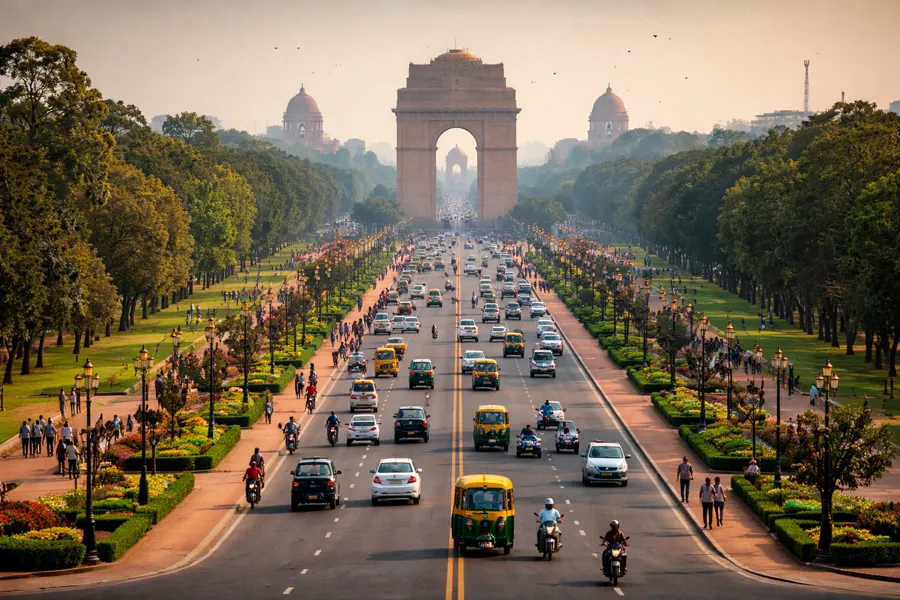
India Gate stands wide and confident in the middle of open lawns, like the city paused to build something ceremonial and then forgot to charge admission. During the day it feels stately and formal, a sandstone arch rising against the haze. But come evening, the energy shifts.
Families stroll slowly. Vendors sell roasted corn and ice cream. Children run in circles as if this national monument is their personal playground. The whole area hums with soft chaos. It`s relaxed, joyful, very Delhi. You don’t pay to be there. You just show up, wander, snack, and watch the sky darken behind the arch. It’s atmospheric without trying.
Humayun’s Tomb (Budget Taj Mahal Energy)
For around ₹600 (about €7), Humayun’s Tomb delivers serious architectural drama without Taj Mahal-level crowd density. Red sandstone walls, white marble details, symmetrical gardens. It feels grand but breathable.
This is early Mughal elegance. Clean lines. Perfect proportions. Long walkways that invite slow pacing rather than rushed selfies. If you arrive early, before the heat builds and tour groups multiply, the space feels almost serene. Sit in the shade. Let the geometry sink in. It’s history that doesn’t overwhelm you. It simply impresses.
Lotus Temple (Modern Calm Moment)
Delhi does intensity well. The Lotus Temple does the opposite. Shaped like a white marble flower and surrounded by reflecting pools, it feels almost futuristic compared to the rest of the city’s historical layers.
Entry is free. Shoes come off. Voices drop. Inside, silence is the point. You sit on simple benches, and for a few minutes the traffic and honking outside might as well not exist. It’s not about religion as much as it is about pause. In a city that runs loud and fast, that kind of pause is valuable.
Old Delhi (Organised Mayhem, Spiritually Charged)
Then there’s Old Delhi, which politely declines the concept of calm.
Chandni Chowk isn’t a street, it’s a living organism. Rickshaws weave through impossibly narrow gaps. Vendors shout. Electrical wires create their own skyline overhead. Spice markets, jewellery shops, sweet stalls, temples, and mosques layer on top of each other like the city forgot to edit.
The first five minutes feel like sensory overload. The second five feel manageable. By minute fifteen, something shifts. You stop trying to control it. You move with it instead. That’s when Old Delhi becomes magic.
Get lost on purpose. Follow the smell of something frying. Step into a side lane just to see what’s there. This is where Delhi feels oldest, loudest, and most alive. And it costs almost nothing except attention.
The Art of Eating Big (The North Indian Way)
Delhi doesn’t do subtle when it comes to food. It layers flavour the way it layers history: generously, confidently, without checking if you’re ready. This is a city where sauces are rich, spices are unapologetic, and meals feel like events rather than refuelling stops. You don’t nibble in Delhi. You commit.
Butter Chicken (Respect the Legend)
₹300–600 (€3–7)
Yes, it’s famous. Yes, it’s everywhere. And yes, it absolutely earns the hype. Proper Delhi butter chicken is smoky from the tandoor, coated in a creamy tomato gravy that somehow manages to be sweet, spicy, and deeply savoury all at once. Tear off warm naan, scoop generously, and accept that you are not leaving hungry. It’s indulgent in a way that feels celebratory rather than excessive. This is not diet food. This is “I travelled across the world for this” food.
Chole Bhature (Carbs With Confidence)
₹100–200 (€1–2.50)
Chole bhature is what happens when chickpeas decide to become dramatic. The chole — slow-cooked in a dark, spiced gravy — are bold and punchy. The bhature — giant, puffed, fried bread — arrives inflated like it has something to prove. You tear it open, steam escapes, and suddenly you understand why people eat this for breakfast. Heavy? Absolutely. Necessary at least once? Also absolutely. It’s messy, filling, and oddly joyful.
Street Chaat (Trust Carefully)
Chaat is controlled chaos served on a plate. Crispy elements, yogurt, chutneys, tamarind, mint, spice, crunch, sweetness — all colliding in a way that makes no logical sense and yet works perfectly. It’s bright, tangy, and designed to wake you up. The key rule: eat where it’s busy. If locals are lined up, you’re safe. If the stall looks lonely, keep walking. When done right, chaat feels like a flavour explosion that somehow resets your brain.
Chai (Fuel of the Nation)
₹10–30 (€0.15–0.40)
Chai in Delhi isn’t a beverage choice. It’s infrastructure. Milky, sweet, spiced with cardamom and ginger, poured from steel kettles into small cups and sometimes even into little clay cups that you toss afterwards. You drink it standing by the roadside, sitting on a plastic chair, waiting for a train, after a meal, before a meeting. It punctuates the day. It softens the noise. After a few days, you’ll find yourself craving it at odd hours. That’s normal. Embrace it.
After Dark, Before Regret (Delhi Edition)
Delhi doesn’t market itself as a party capital, but it absolutely knows how to go out. The nightlife here isn’t one-note. It’s layered: rooftop cocktails, basement gigs, polished lounges, chaotic dance floors, poetry readings, and late-night food runs all existing at once. And compared to global capitals, you can still have a proper night out without feeling financially attacked the next morning.
Hauz Khas Village
By day, Hauz Khas Village is all crumbling medieval ruins and calm lakeside views. By night, it flips the switch. Rooftop bars light up, music drifts through narrow streets, and suddenly the ancient tombs feel like they’re supervising your drink choices.
The crowd skews younger: students, creatives, start-up types, people who look like they own at least one tote bag with strong opinions printed on it. Drinks here are pricier than street-side Delhi, but still reasonable in global terms. Expect ₹600–900 for cocktails and less for beer. You’re paying for the rooftop views, the energy, and the rare feeling that Delhi is being intentionally stylish.
Come for sunset if you can. Watching the sky shift over old stone domes while music hums in the background feels unfairly cinematic.
Connaught Place
Connaught Place (or CP, as everyone calls it) is Delhi’s colonial-era circle turned nightlife hub. White colonnades wrap around the centre like a giant architectural hug, and inside those arches are bars, restaurants, breweries, and people who absolutely have opinions about politics.
The vibe here is more polished and slightly older than Hauz Khas. It’s busy but structured. You can bar-hop easily between spots, grab craft beer, settle into a lounge, or end up in a club that escalates the energy quickly. It’s social, lively, and central enough that getting home won’t require spiritual resilience.
CP feels like Delhi in business-casual mode. It’s still loud, still intense, just slightly more put together.
Live Music & Culture
Delhi’s real nightlife flex isn’t always about clubs. It’s cultural. On any given week you’ll find poetry slams, indie gigs, theatre performances, art openings, comedy nights, and classical music concerts tucked into unexpected venues.
Check listings before you go. Something is always happening. A jazz set in a hotel lounge. A spoken-word night in a café. A Sufi music performance that leaves the room silent in a way that feels sacred.
This is where Delhi softens at night. It is not by getting quieter, but by getting deeper.
Delhi after dark isn’t just about partying. It’s about possibility. You step out thinking you’ll have one drink, and you end up in a conversation, a rooftop, a music session, or a late-night chai stop you didn’t plan for.
That’s the city. It rarely sticks to the plan.
Off-the-Map Delhi (For Brave Main Character Energy)
When you need a break from traffic symphonies and spice-induced revelations, Delhi has pockets of calm that feel almost secret. These aren’t hidden because no one knows about them. They’re hidden because the city is so loud everywhere else that you don’t expect softness to exist.
Lodhi Gardens
Lodhi Gardens is where Delhi remembers how to breathe. Spread across wide green lawns, the park is dotted with 15th-century tombs that just casually sit there like it’s completely normal to picnic beside a sultan’s resting place.
Come early and you’ll see Delhi’s unofficial morning club: joggers doing determined laps, yoga groups stretching with discipline, aunties power-walking in coordinated outfits, and couples sitting on benches pretending not to hold hands. The air is cooler, the light softer, and for a moment the city feels almost gentle.
It’s free, spacious, and grounding. A place where history doesn’t shout, it simply coexists with everyday life.
Dilli Haat
Dilli Haat feels like a controlled version of Indian market energy. An open-air craft bazaar with rotating stalls from different Indian states, it’s colourful without being overwhelming. You’ll find handwoven textiles, jewellery, pottery, paintings, and food counters representing regions from Nagaland to Kerala .
Entry is cheap, and once inside, you can wander at your own pace without traffic pressing against you. It’s one of the best places to buy souvenirs that feel intentional rather than airport-regret purchases. Bonus: the regional food stalls let you “travel” across India through your stomach without leaving Delhi.
It’s lively, yes but it’s manageable chaos.
Agrasen ki Baoli
Hidden between modern buildings near Connaught Place, Agrasen ki Baoli feels like stumbling into a forgotten chapter of the city. This ancient stepwell drops down in dramatic symmetry — long stone steps descending into shadow, arches lining the walls, pigeons adding unexpected sound effects.
It’s quiet in a way that feels cinematic. The temperature drops slightly as you descend. The city noise fades. Suddenly you’re standing inside geometry and silence, wondering how something this old survives inside a capital that never slows down.
Travel Hacks: Delhi Edition
Carry water always.
Dress modestly and comfortably.
Download Uber/Ola.
Expect intensity.
Stay flexible.
How Expensive Is Delhi?
Street food: €0.50–3 Restaurant meal: €3–10 Metro ride: under €1 Hostel: €5–15 Hotel: €30–100
Delhi can be wildly affordable.
You Survived. Now You Understand.
You won’t leave Delhi feeling rested. You’ll leave feeling awake.
Awake to colour. To flavour. To contradiction. To scale. To the fact that the world is bigger, louder, and more layered than you remembered.
Delhi doesn’t whisper goodbye. It stays with you in spice cravings, in traffic memories, in sudden bursts of confidence when crossing busy streets anywhere else in the world.
Once you’ve handled Delhi, you handle things differently.