






Deciding when to book flights really depends on your situation. If you’re flexible with your travel dates, expect a sale soon (which is often predictable with airlines like Ryanair), or if past trends show that prices might drop, it can be worth waiting. However, when you’re flying a busy route, traveling on popular dates, or have a specific seat in mind, it’s best to book the tickets as soon as possible. Whenever you’re ever unsure about what to do, it’s usually smarter to book sooner rather than later, just in case prices go up.
Understanding the Pricing Strategy Behind Flights
Unless you’re sitting in the pricing office at Singapore Airlines or Cathay Pacific, it’s pretty much impossible to know exactly what makes flight prices rise or fall on any given day. Still, there are a few key factors that can help explain why ticket costs change so much. Let’s break some of them down.
| Factor | Description | How It Affects Price |
|---|---|---|
| Demand for Tickets | Prices rise when flights are in high demand and drop when fewer people are booking. | Higher demand means fewer cheap seats remain, pushing prices up as the flight fills. |
| Route Length | The farther the destination, the more fuel and operating costs involved. | Longer routes generally cost more, though occasional deals can appear. |
| Competition | Airlines flying the same route compete for passengers by adjusting fares. | More competition often lowers prices, while fewer airlines can drive them higher. |
| Seat Classes | Planes are divided into economy, premium economy, business, and first class. | Each class has a different price point, with premium options increasing average fares. |
| Booking Timing | When you choose to book directly affects cost. | Booking too early or too late can raise fares; the sweet spot is usually 1–3 months before travel. |
Demand for Tickets
Like any business, when demand is high, prices tend to go up. When demand is low, businesses often lower prices to boost sales, and flights work the same way. In the airline industry, carriers often use a pricing schedule where, once a collection of lower-priced seats is sold, they move to the next, more expensive set. This cycle continues until the flight is sold out.
Route Length
Naturally, the length of the flight is a major factor in pricing, since it affects how much fuel the plane will need to reach its destination. While you can sometimes snag a bargain on longer routes, in general, the further you fly, the more it’s going to cost.
Competition
Competition among airlines is fierce. When multiple carriers operate the same route, they constantly adjust their prices to attract passengers. Take the London to Dubai route, for example. Both Emirates and British Airways fly this route, and each is undoubtedly monitoring the other’s fares to stay competitive and offer the best deal to people.
Seat Classes
It would be nice if all seats on a plane were priced the same, but they’re not. Seats are divided into classes. You already know the names: economy, premium economy, business, and first class. Economy is the most affordable, while first class is… well, something most of us will only dream about.
Timing Your Seat Selection
Now that you know the main factors that affect seat prices, it’s time to look at when to book and when to hold off. These tips may not be perfect for every situation, but they work in most cases. Let’s dive in.
Situations When You Should Book Your Flights
Busy Routes
Some routes are busy year-round. Take Cairo to Jeddah or Bangkok to Singapore, for example. If you know you want to book a ticket for one of these trips, there’s no point in waiting. Those sorts of flights tend to sell out, no matter the season, so you’ll only end up paying more if you wait too long.
Popular Dates
Want to travel on a popular date like Christmas or Thanksgiving in the U.S.? It’s best to book your flights early. Airlines know everyone is heading home to see family, so they increase prices as the departure date approaches.
You Know Where on the Plane You Want to Sit
Some people are very particular about where they sit on a plane. If that’s you, it’s not worth waiting for cheaper fares because by the time prices drop (if they do), the seats with all the extra legroom, like the emergency rows, will already be likely taken.
You Like Knowing Everything Is Taken Care Of
Many travelers prefer to book their flights early just to have peace of mind. If you don’t like the uncertainty of waiting or having to worry about prices skyrocketing at the last minute, you’re better off just getting it out of the way.
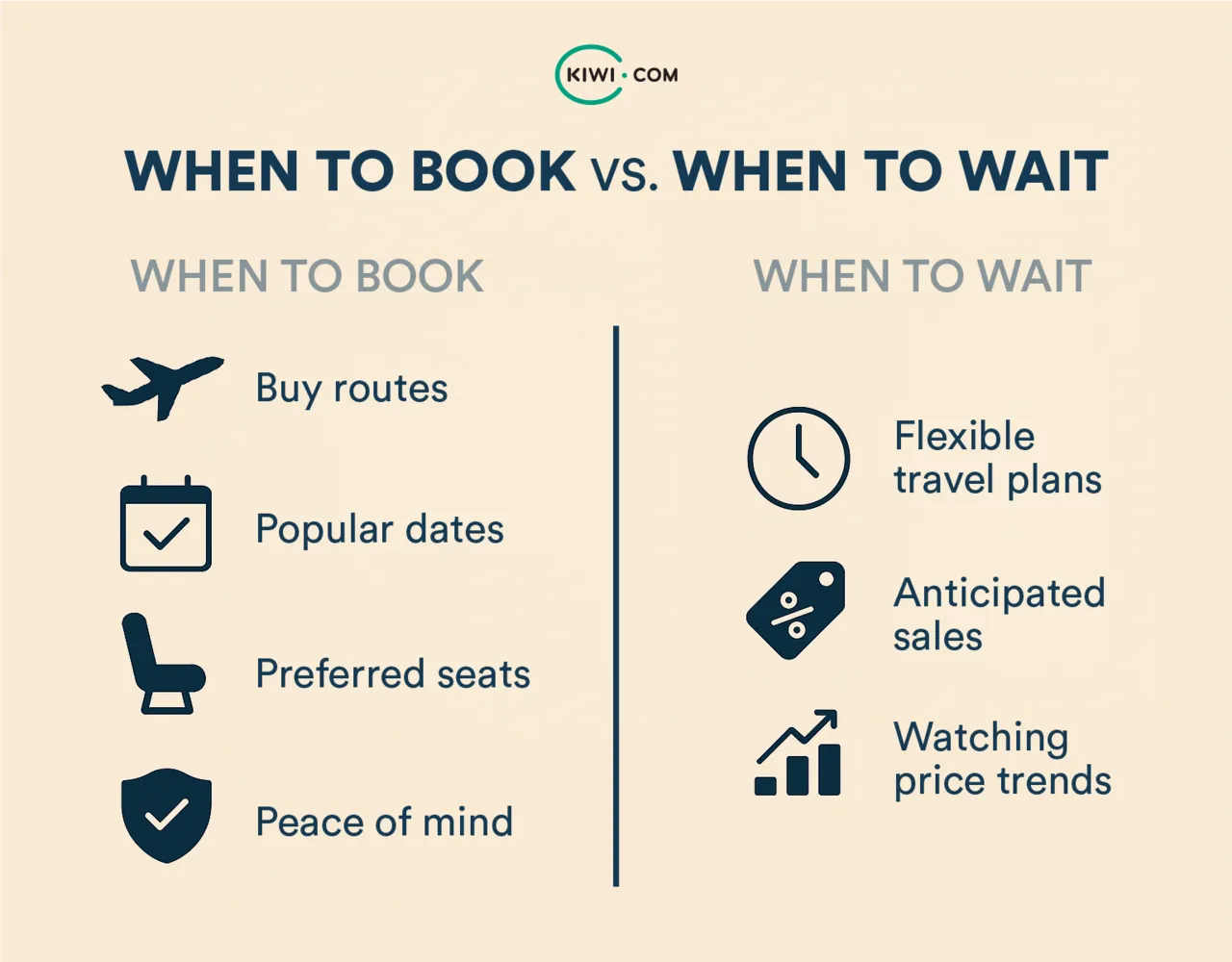
A quick visual guide to help travelers decide whether to book flights now or wait for better deals © Kiwi.com
Situations When You Should Hold Off on Booking Flights
You’ve Got Some Flexibility
Having flexible travel plans gives you the advantage of being able to wait a bit before booking your flights. You might choose to hold off for a day or even up to a week. Since there’s no immediate rush, you have more time to explore other options and find the best route, unlike someone with only a week off, who would need to book whatever is available right away.
A Sale Could Be Coming up Soon
There are certain airlines where it’s fairly easy to predict when they’ll have a sale. Ryanair is a classic example. Their sales tend to follow a predictable pattern, often timed around specific events, maybe the summer season or the Christmas markets in Europe. For instance, if you were planning to fly to Budapest at the end of November but it’s still summertime, it would make sense to wait until around September or October to see if Ryanair announces a sale.
The Pricing Data Says Something Else
When you log on to an airline’s website and browse through the dates, it can be a helpful way to get a sense of where prices might be headed. For example, if it’s September and your trip isn’t until March, you could look at fares for October or November to get a feel for how prices might shift over time. While this method isn’t always 100% reliable due to many other factors influencing ticket prices, it can serve as a useful indicator of potential trends.
How to Take a Smarter Approach to Booking Flights
As I mentioned in the introduction, timing is everything when it comes to booking flights. That said, there are practical strategies you can use to make timing your booking much easier, ensuring you never miss out on the best-priced seats. Here are my favorite strategies.
Set Up Price Alerts
Why spend your valuable time checking flight prices online every night when you could simply use Kiwi’s price alerts feature? All you need to do is activate it for the route you’re tracking, and you’ll be the first to know whenever there’s a price change (good or bad).
Do Your Research and Be Brutally Honest With Yourself
It goes without saying that good research makes everything easier, and the same is true for timing your flights. Take a close look at the available data for your route and be honest with yourself about whether waiting will actually save you money.
Give Yourself a Cut-Off Point
For the people who want to wait and try to snag a bargain, it’s still a good idea to set a cut-off point for yourself. This will vary from person to person, but a general rule of thumb is to book 1 to 3 months in advance to get the best prices. Use that timeframe as a guide for choosing your booking window.
Go Ahead and Book Your Flights Without Second-Guessing
Figuring out when to buy flights can feel like a guessing game, and most of us end up overthinking it. But with the guidance you’ve read here, you’ll know exactly when it’s worth holding out for a deal and when to hit that book button.
Smart Flight Booking FAQs: Save Money and Fly Smarter
Why do airfare prices change so much?
Airfare prices change regularly due to dynamic pricing, a system airlines use to adjust fares in real time based on factors like demand and competitors’ pricing. The best way to make sure you never miss a good fare is to use the flight alert features on websites like Kiwi.
Is it true that it’s better to book flights on certain days?
There’s no evidence that any specific day is always the cheapest to fly, but days like Tuesday and Wednesday tend to be more affordable because fewer people are traveling. Flying midweek gives you a better chance of finding low-cost fares, but always double-check weekends to avoid missing out.
When should I avoid booking flights?
Never book flights too early or too late. Booking too far in advance, more than a year ahead, or waiting until just a few days before departure can both increase your chances of paying more. As a general rule, aim to book your flights 1 to 3 months in advance.
Should I search for flights in incognito mode for the best prices?
Contrary to popular belief, it doesn’t actually make a difference because airlines use other methods, such as dynamic pricing, to establish airfare rates. While searching in incognito mode won’t do any harm, you should instead focus on some of the tried and tested tactics we’ve mentioned in this article.