




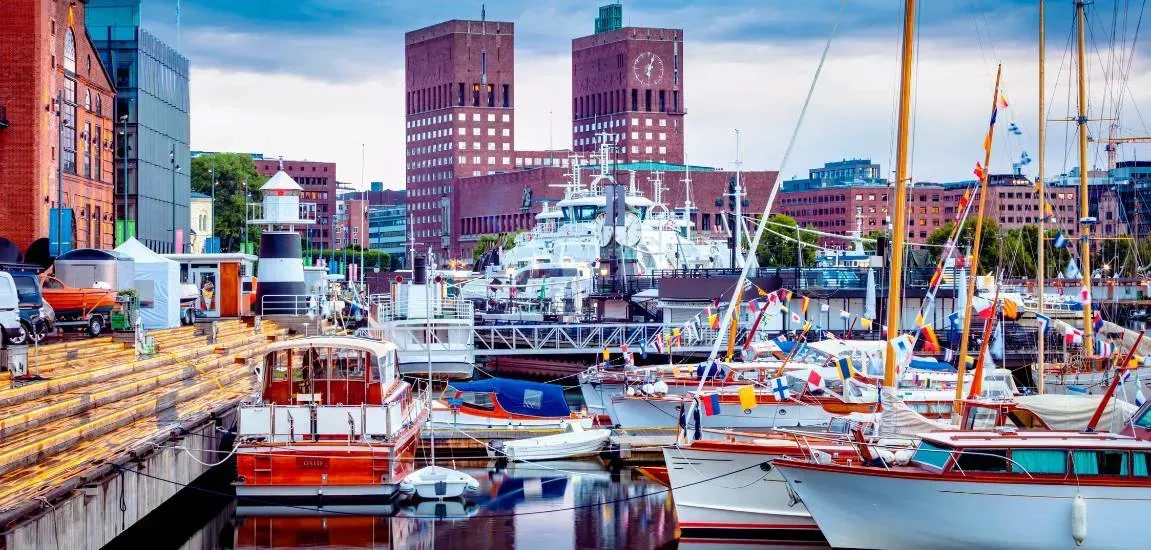
Norway ’s capital is a cosmopolitan, tourist-friendly place that mixes high culture with a fun spirit and city life with nearby nature. The sea air makes the city feel fresh and life on the water is central to Oslo life. Here’s how to travel and see the best of Oslo : museums, tours, bars, history, art, music, when to go, and how to budget. Let’s explore.
Oslo city center
The center of Oslo is built on a grid system from the Domkirke (Cathedral) southwest toward the waterfront, and from the Stortinget (the Norwegian Parliament) to the railway station. It’s here that you’ll find the main shopping streets and a bunch of restaurants and bars serving food from around the world.
The Tiger, Karl Johans gate, and Oslo Cathedral 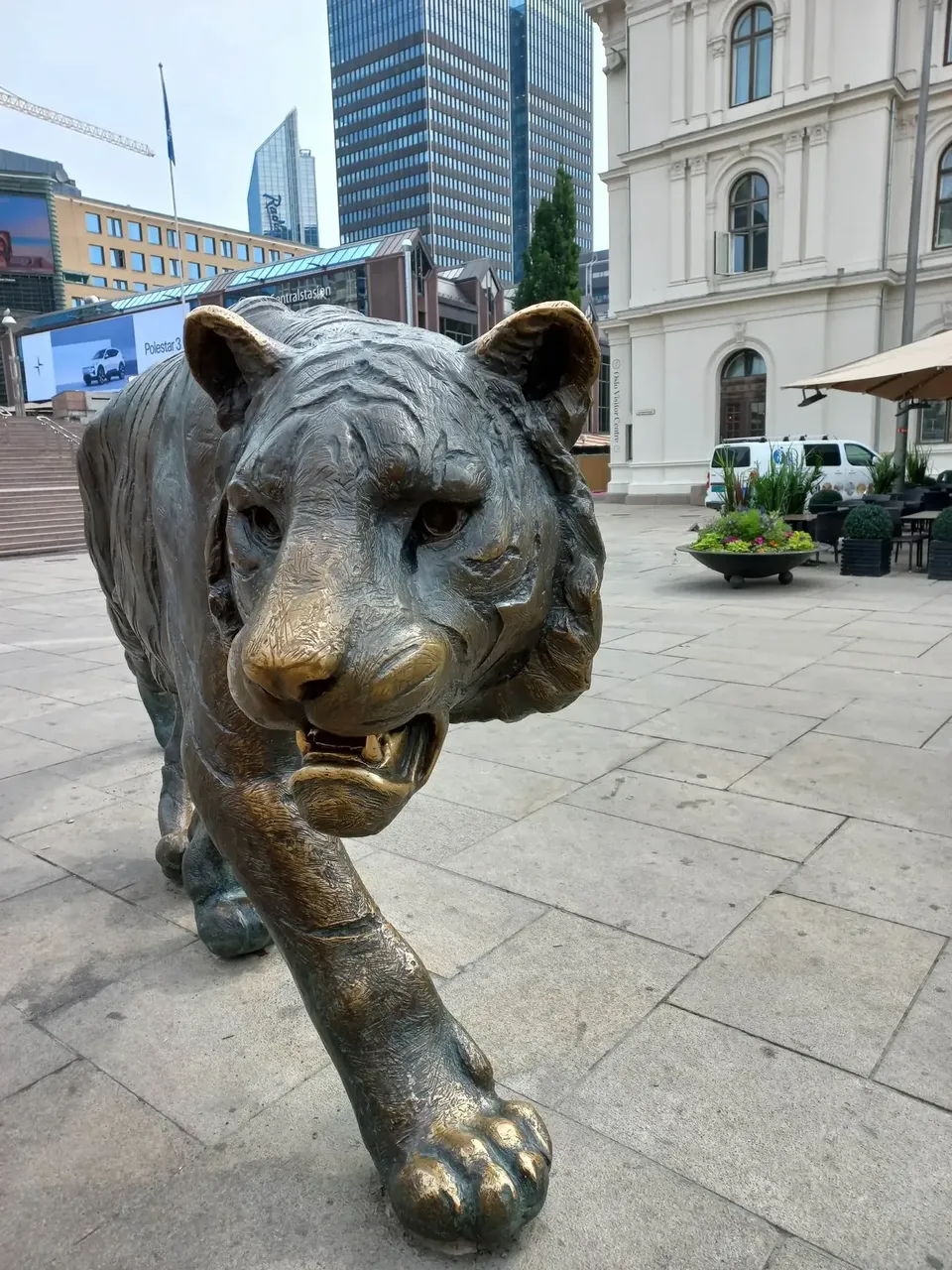 Oslo is known as Tigerstaden — David Szmidt
In front of Central Station, Oslo S, you’ll meet The Tiger, a 4.5-meter bronze sculpture stalking across the concrete plaza. Oslo’s nickname is Tigerstaden — Tiger City — and was originally meant as somewhat of a negative thing, appearing first in Bjørnstjerne Bjørnson’s 1870 poem Sidste Sang in which a tiger represents the dangers inherent in a city. It’s now taken on the meaning of exciting and dramatic rather than dangerous, and Elena Engelsen’s tiger is a proud representation. 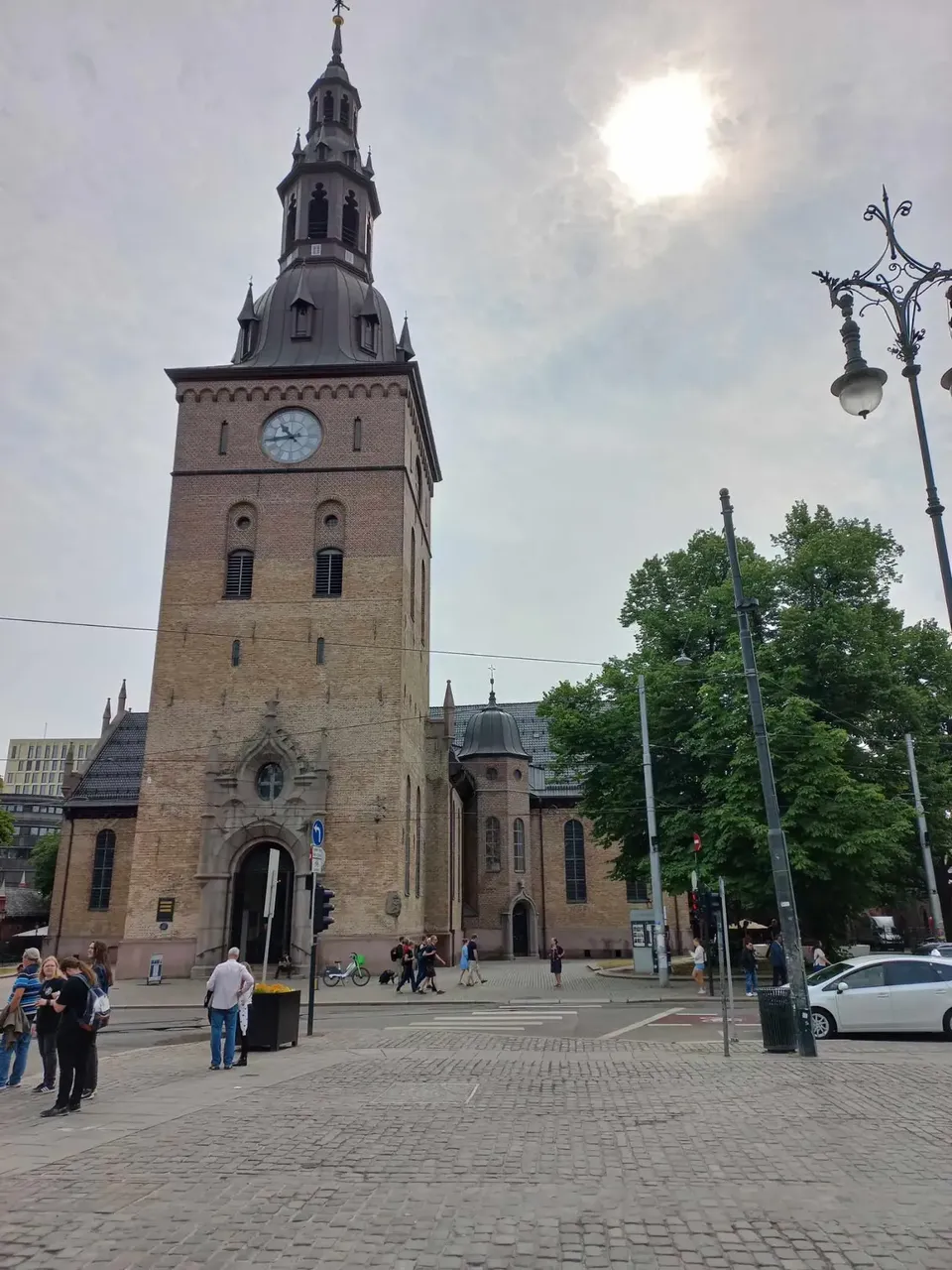 Oslo Cathedral — David Szmidt From the tiger, I walked northwest up Karl Johans gate, past the shops, souvenir stores, and Irish (and Scottish and English) bars to the Cathedral, perched oddly on a tuft of greenery. It’s not massively impressive from the outside, but the inside contains some wonderful stained glass and unusual, Munch-esque ceiling murals by painter Hugo Lous Mohr. It was also from here that I noticed Oslo’s love of putting historical figures on plinths. They’re absolutely everywhere.
Stortinget and the Royal Palace 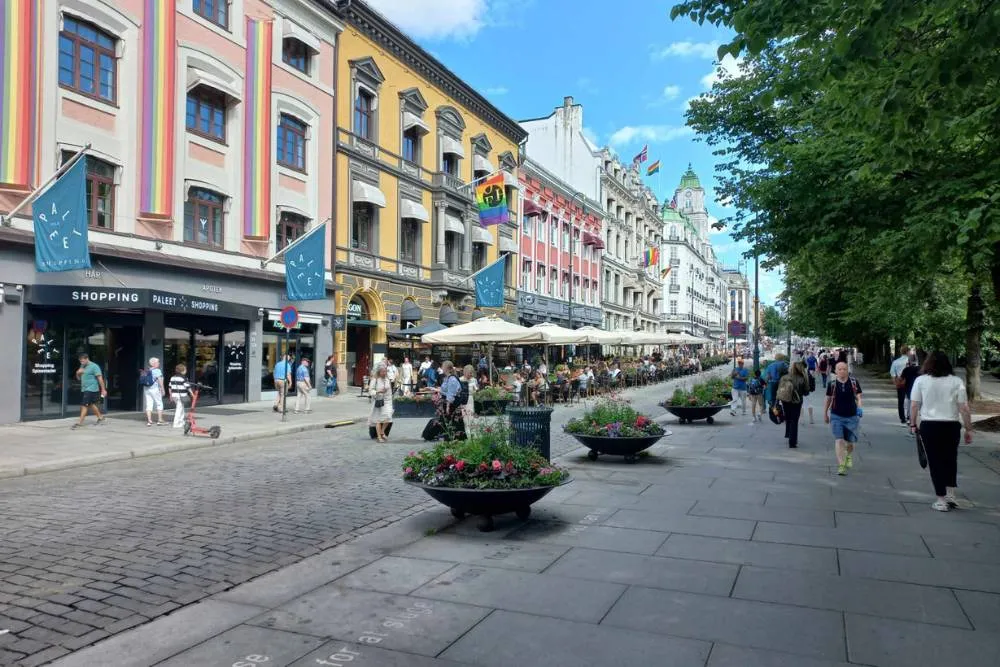 Karl Johans gate — David Szmidt Keep going and you’ll approach the Stortinget — the parliament building — from the rear, and emerge onto the tree-filled square which stretches to the National Theater at the other end. Here, I found Karl Johans gate and the parallel Stortingsgata to be home to fancy hotels and upmarket restaurants, with happy, handsome locals dining at outdoor tables. Knowing I’d never be able to afford this on my relatively meager budget, I walked on.
 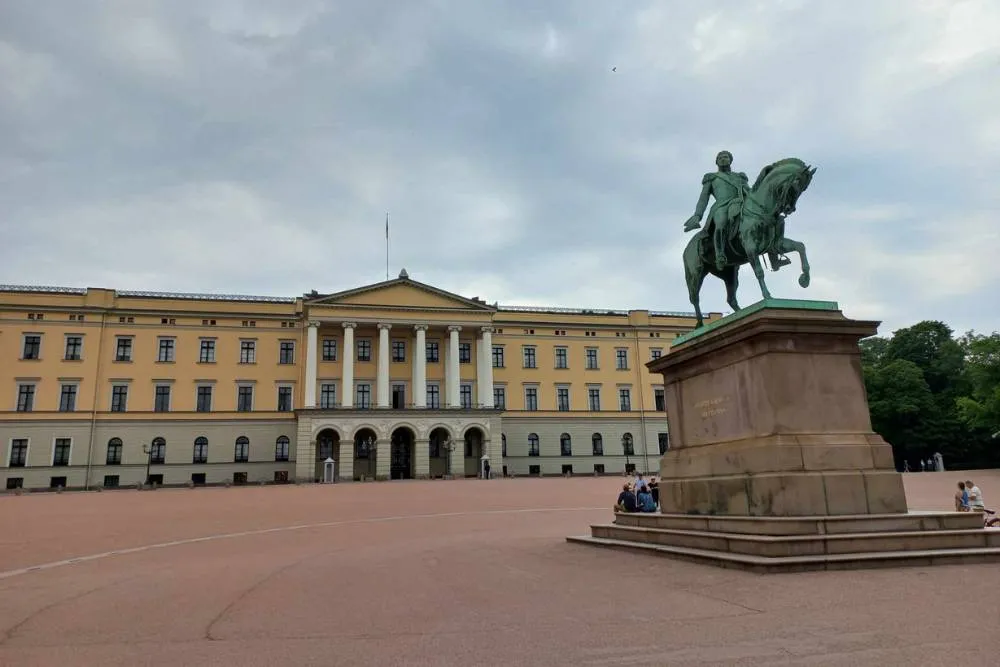 The Royal Palace — David Szmidt Crossing a busy intersection, you’ll see a wide driveway leading uphill to the pale yellow-and-white columns of the Royal Palace. It sits in the middle of a large and empty parade ground, but I walked around the back and into the gardens. They’re not big, but they are pleasant, with two ponds and thick, overhanging trees, which were a convenient shelter for the 15-minute rain shower that suddenly hit. I wandered back around to the front of the Palace, down the hill, and headed right down Roald Amundsens gate to be immediately confronted with… Coventry.
Rådhuset 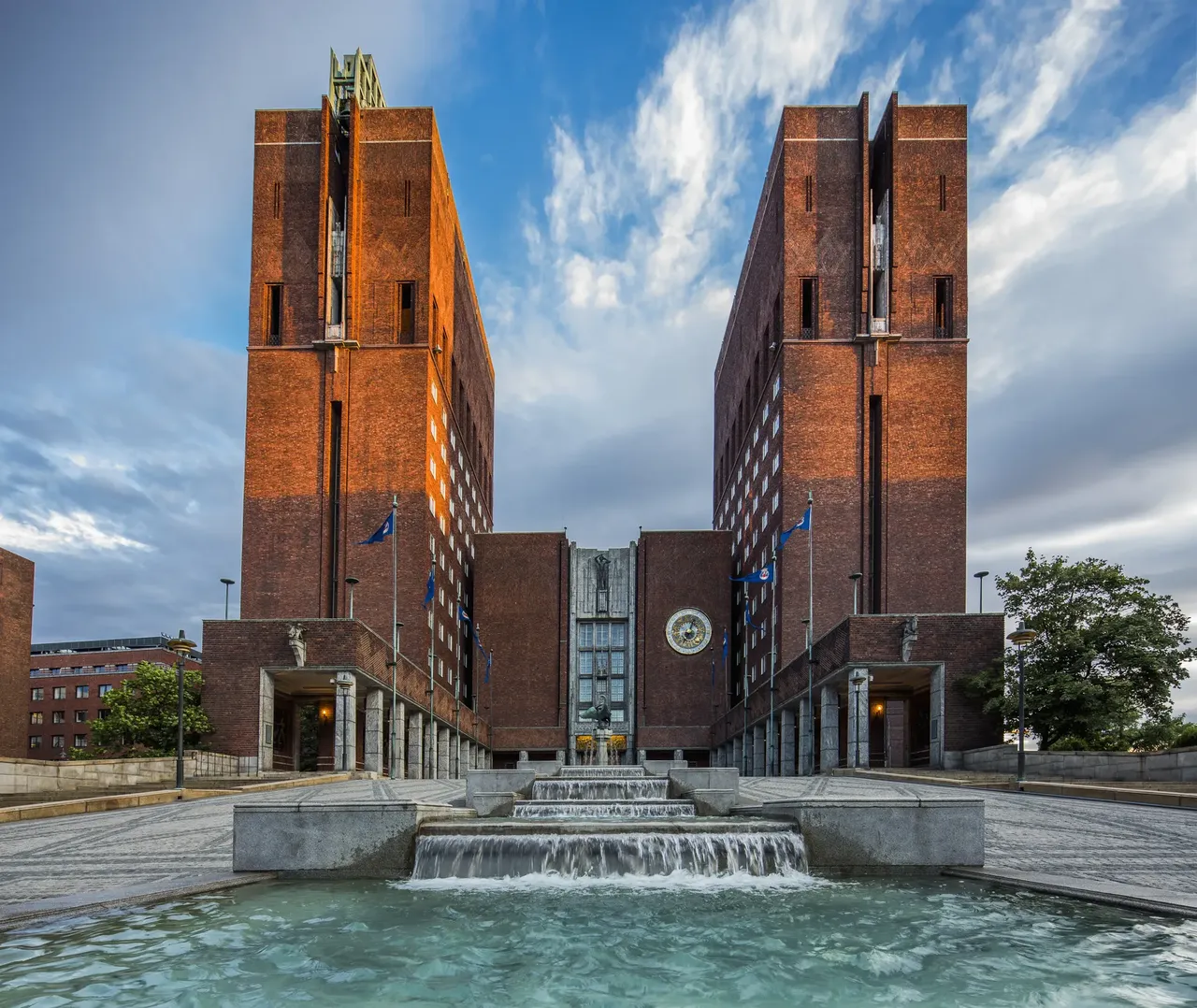 The Rådhuset is a particularly curious, conspicuous building — Getty Images Now, I’m from Coventry and I’m immensely proud of that fact (no, really), and the architecture of that city is almost unique in the UK; I never thought I’d see it replicated elsewhere. But blow me down: the wide, curved Fridtjoft Nansens plass and the huge, 1950s Rådhuset (City Hall) are just a fat Coventry. I was stunned. The whole thing — plaza, building, materials, style, the lot — is so incongruous because it was the only major structure built at that time and in that style. Begun when bricks and functionalism were all the rage, construction was suspended during World War II and the building wasn’t completed until 1950, by which time it had gone out of style. This means Oslo’s (arguably) most massive and important building is the only one that is totally, wildly, monumentally out of place. I loved it.
 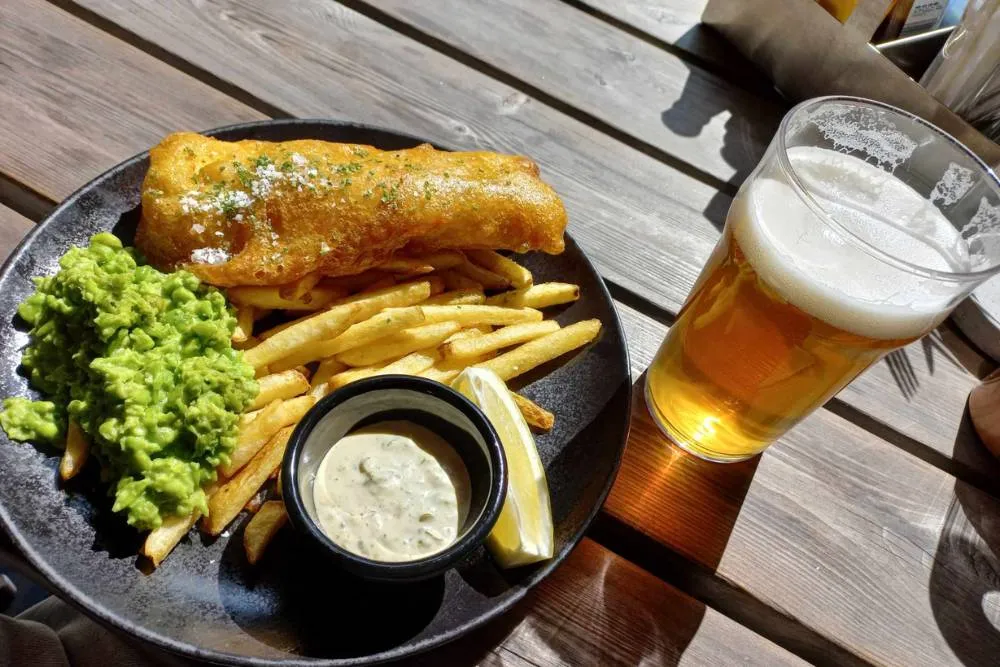 The Amundsen Brewery pub does great fish and chips, and this is coming from an Englishman — David Szmidt I treated myself to a late lunch at the Amundsen Brewery pub
— good beers and pub food, solid — and chose the fish and chips. It was bloody delicious, but the fish had a flavor I couldn’t quite place. After a while, I worked it out — they’d managed to infuse the batter with English-style chip shop curry sauce (a flavor that has no relation to Indian cuisine whatsoever), which amazed and delighted me. I’ve no reason to mention this other than surprise. Recommended.
The Amundsen Brewery pub does great fish and chips, and this is coming from an Englishman — David Szmidt I treated myself to a late lunch at the Amundsen Brewery pub
— good beers and pub food, solid — and chose the fish and chips. It was bloody delicious, but the fish had a flavor I couldn’t quite place. After a while, I worked it out — they’d managed to infuse the batter with English-style chip shop curry sauce (a flavor that has no relation to Indian cuisine whatsoever), which amazed and delighted me. I’ve no reason to mention this other than surprise. Recommended.
Oslo waterfront
Akershus Fortress 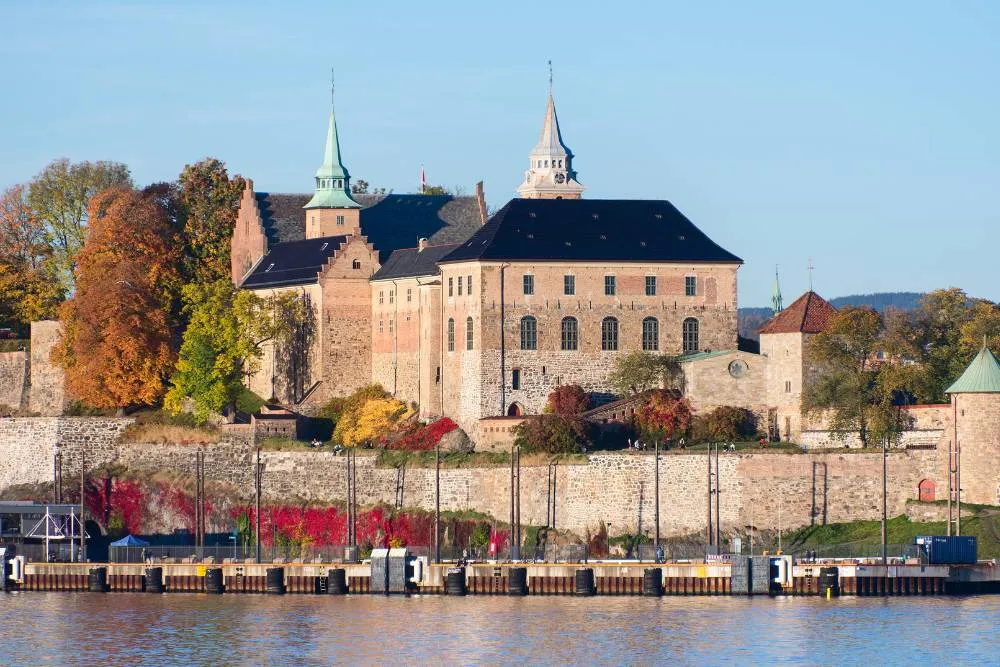 Akershush Fortress — Getty Images
Rådhusplassen sits on the waterfront where local boats and island ferries come and go, and if you head south past the statues of Peter Wessel and Franklin D. Roosevelt, you can climb the small hill to the grassy area behind Akershus Fortress. Originally built in the 13th century, it now houses a couple of museums (of the Norwegian Armed Forces and of the Norwegian Resistance of World War II) as well as the Royal Mausoleum. Take a guided tour or simply wander the grounds and look out to sea. Talking of tours, I’d like to give a quick mention of Nordic Freedom Tours — the free walking tour I chose for Oslo. In contrast to my experience in Copenhagen , our guide (not a local, but a South African woman whose name, shamefully, escapes me) was engaging, witty, and tailored things specifically to our group, pointing out places to get souvenirs, pubs to watch the cricket on TV, and where to get the best cup of tea (to some Americans, an Aussie couple, and me, respectively). The stories felt fresh, the anecdotes were gently amusing, and the group chatted easily amongst ourselves along the journey. She was rightly showered with tips at the end of the tour.
Oslo Opera House 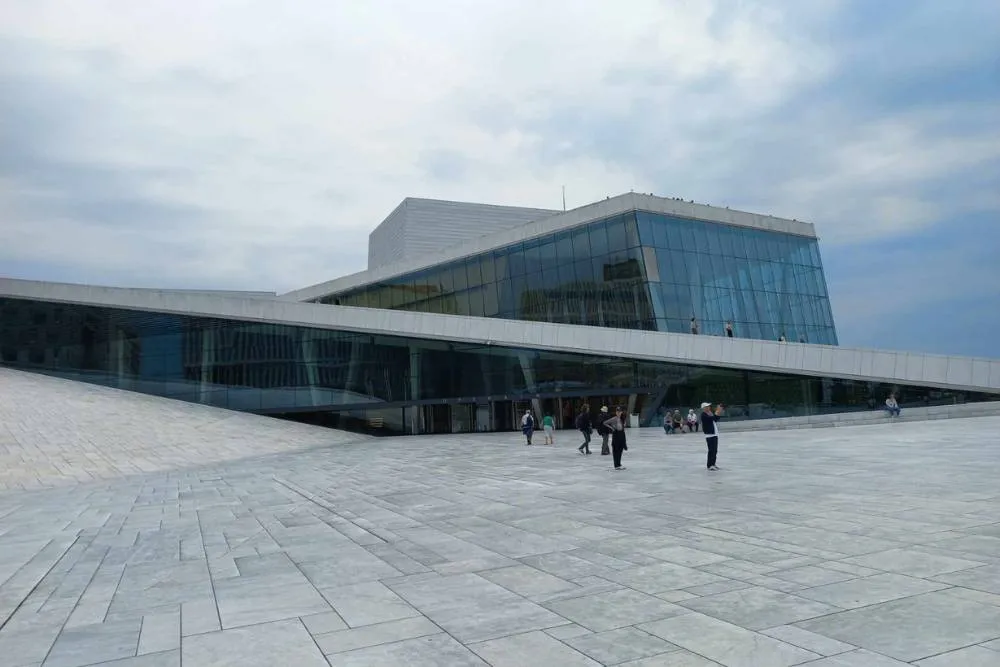 Go ahead and climb the Opera House — David Szmidt Sitting low-slung on the harborside to the east is the Oslo Opera House. Built in the 2000s from a mix of granite and marble, it covers an area of 49,000 square meters. Most of this you can’t see from the outside, but what you can do is walk all over it. Literally. You’re encouraged to climb the sloping sides onto the roof (where occasional summer cinema showings take place) and from there, you’ll get a lovely panorama of the harbor. Or it would have been lovely if it wasn’t so overcast. Ah well, one day of bad weather was not so bad, overall. But seriously — climb the Opera House. It feels like you shouldn’t be allowed to, giving it an extra little thrill. Oh, be careful if it’s raining, though — I nearly went sliding straight down the damp marble, my sudden panic and flailing of arms as I grabbed for the handrail, sending pigeons scattering.
Munch Museum
@munchmuseet.no The exhibition “The Shape of Freedom” has now come to an end but make sure to follow us for upcoming exhibitions and events #edvardmunch #munch #leekrasner #jacksonpollock #abstractartist ♬ original sound - Munchmuseet.no
The nearby museum dedicated to the life and work of Edvard Munch is three floors of getting to know the artist, his life and works; as well as temporary exhibitions, workshops, a restaurant, and occasional concerts across the other ten. Norway is rightly proud of Munch, and various versions of The Scream in the collection are displayed in rotation (either as a painting, drawing or print), so you’ll always be able to see it in some form or another. It’s all brilliantly done, with video and audio guides, a whole floor of interactive exhibits, as well as small peepholes dotted around to give context to Munch’s work in a kid-friendly way. Entrance is 160 kr (€14), or turn up between six and nine in the evening on Wednesdays to get in for free.
A morning on the islands, Grünerløkka, and fjord tours
After a fulfilling but gray day, my second day in Oslo promised much, with blue skies and mere wisps of cloud meaning it was time to venture a bit further out.
Oslo’s inner fjord and islands 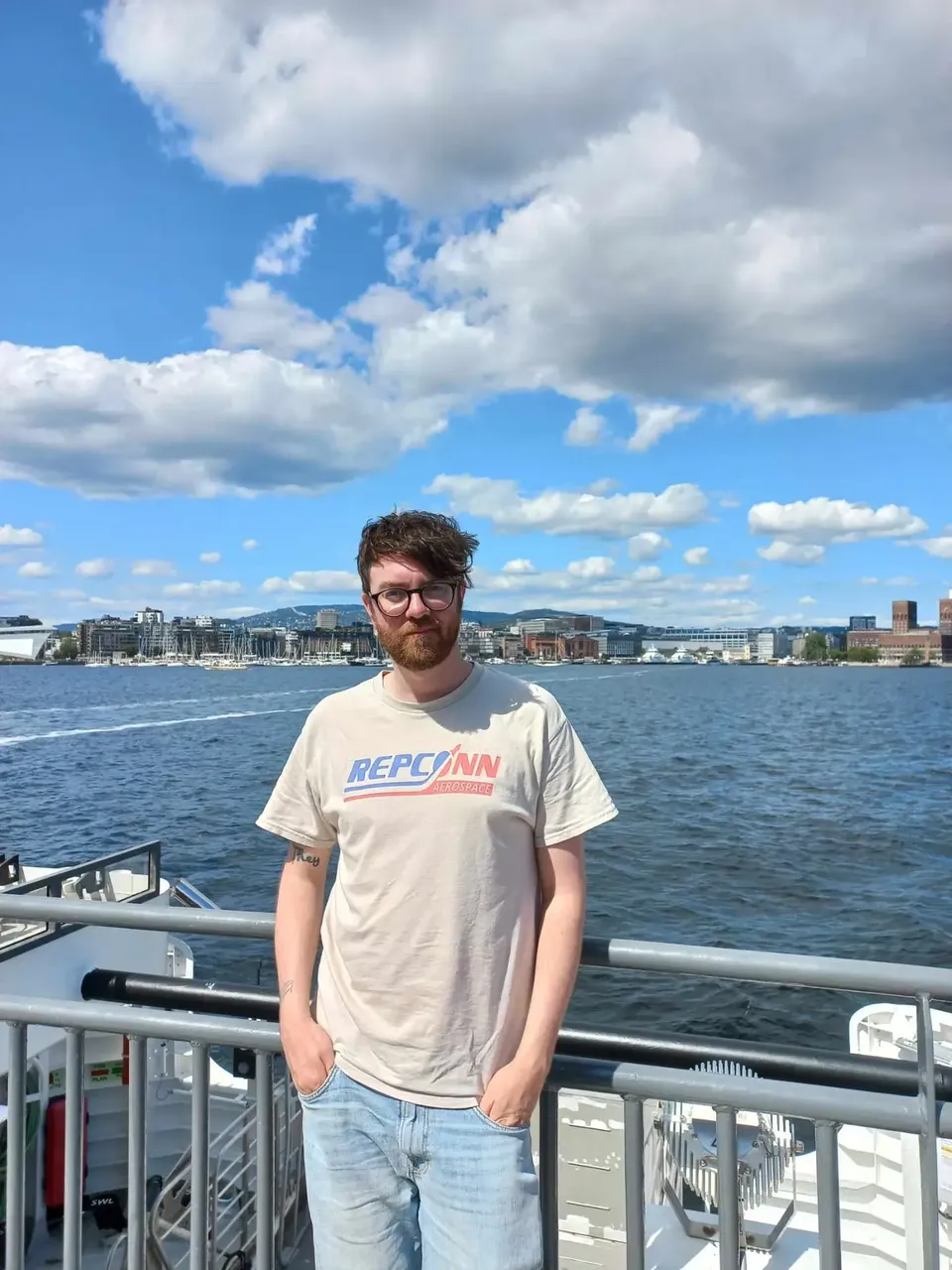 David set off for a morning of island-hopping — David Szmidt From the ferry terminal in Aker Brygge (behind the City Hall and next to the National Museum), you can hop on one of the neat electric ferries that’ll take you out to the islands near the city. The islands — Hovedøya, Lindøya, Nakholmen, Bleikøya, Gressholmen, and Langøyene — are all connected by lines that run every 20 minutes and can be explored using just a regular transport ticket. The Ruter
app is the one you’ll need, and it facilitates the regular jobs of route planning and ticket purchasing with no fuss. A single ticket will set you back 40 kr (€3.50) or you can get a 24-hour pass for a very specific 121 kr (around €10.50).
David set off for a morning of island-hopping — David Szmidt From the ferry terminal in Aker Brygge (behind the City Hall and next to the National Museum), you can hop on one of the neat electric ferries that’ll take you out to the islands near the city. The islands — Hovedøya, Lindøya, Nakholmen, Bleikøya, Gressholmen, and Langøyene — are all connected by lines that run every 20 minutes and can be explored using just a regular transport ticket. The Ruter
app is the one you’ll need, and it facilitates the regular jobs of route planning and ticket purchasing with no fuss. A single ticket will set you back 40 kr (€3.50) or you can get a 24-hour pass for a very specific 121 kr (around €10.50).
Each of the islands has its own character, some of them being home to cottages and marinas, viewpoints and historical ruins, while some are little more than scrub-covered rocks with deserted beaches. I bounced happily from one to the other over the course of the morning, stopping for a drink or to read my book on the beach here and there before heading back into Oslo feeling refreshed and suntanned. A charming surprise.
Grünerløkka
This is the area of the city in which I was staying, and I was pleased with myself that I’d picked it so well. As with Vesterbro during my time in Copenhagen
, it was lively, friendly and colorful with a slew of excellent restaurants and bars sitting shoulder-to-shoulder with 24-hour food windows and corner stores. The southern end of the area is marked by the narrow and winding Akerselva river, while north you’ll find Torshov, an area known for theater and live music. Check out the streets around Torggata and Osterhaus’ gate just south of Grünerløkka too for a mix of hip food and drink places, including the wonderful Crow Bar
which quickly became a favorite of mine. 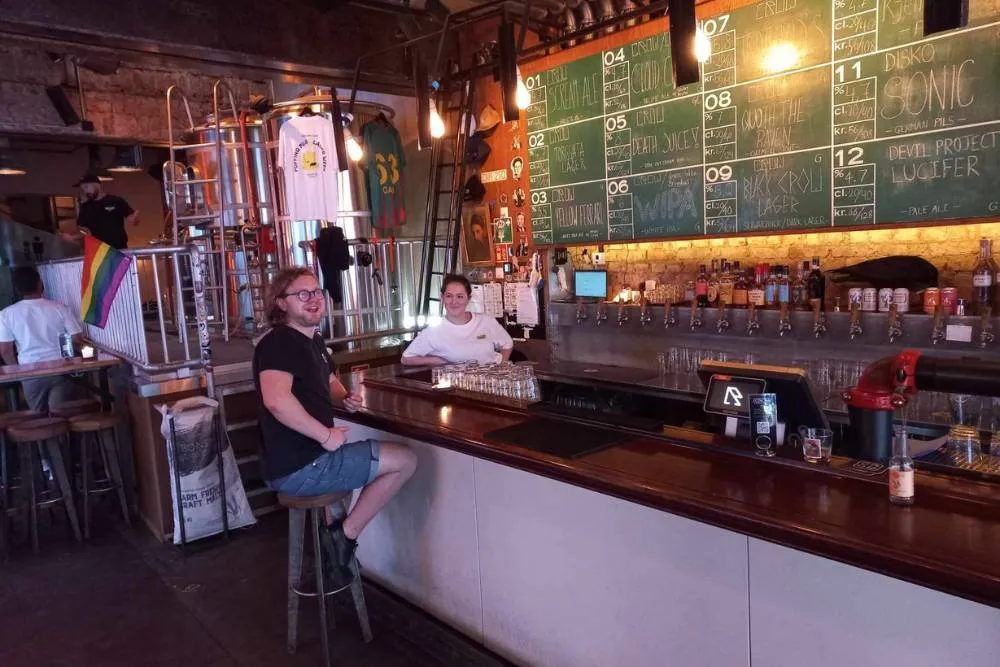 Stop by Crow Bar for good beer and friendly (if sometimes eccentric) vibes — David Szmidt I was sitting having a beer and reading my book outside the Crow one afternoon, happily watching the world go by, when a politely reticent chap asked if he could take a photo of my shoes. Apparently there was something about the angle of the light hitting my yellow paisley Converse that would be perfect for his book of photos of peoples’ shoes. At least, that’s what he told me. His name was Ketil and he acknowledged that it was a very odd request, but he didn’t seem like a madman, so we had a drink and chatted before he wandered off to meet some friends. Also, props to José’s
, a Mexican place on Markveien for one of the heftiest and tastiest burritos I’ve had in a while, despite the cilantro, which I had to brush off. Vile stuff, it is.
Stop by Crow Bar for good beer and friendly (if sometimes eccentric) vibes — David Szmidt I was sitting having a beer and reading my book outside the Crow one afternoon, happily watching the world go by, when a politely reticent chap asked if he could take a photo of my shoes. Apparently there was something about the angle of the light hitting my yellow paisley Converse that would be perfect for his book of photos of peoples’ shoes. At least, that’s what he told me. His name was Ketil and he acknowledged that it was a very odd request, but he didn’t seem like a madman, so we had a drink and chatted before he wandered off to meet some friends. Also, props to José’s
, a Mexican place on Markveien for one of the heftiest and tastiest burritos I’ve had in a while, despite the cilantro, which I had to brush off. Vile stuff, it is.
Fjord tours and more from Oslo 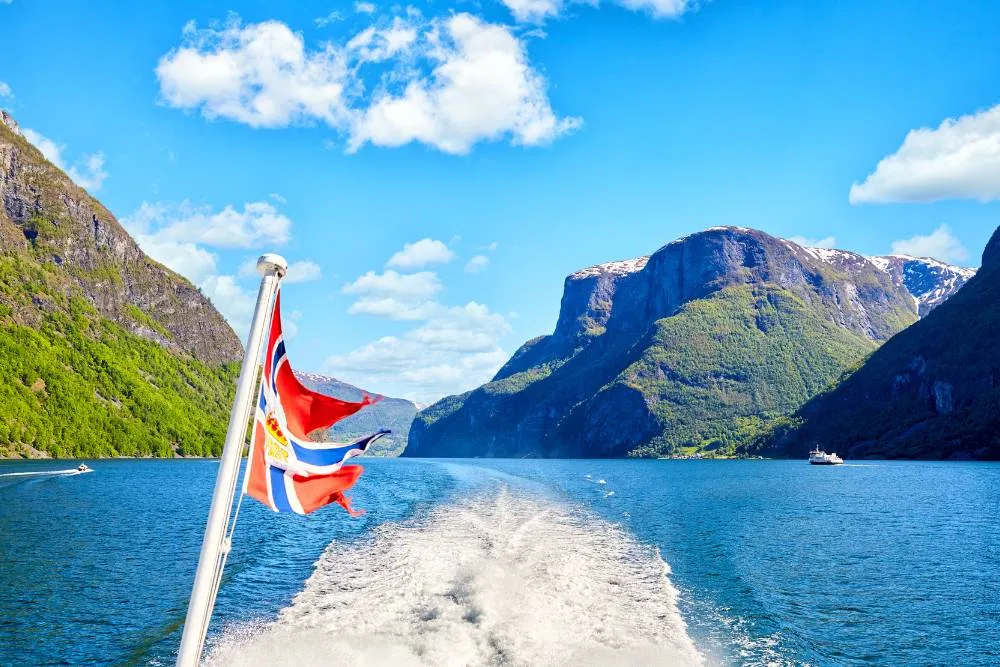 The fjords are perhaps Norway’s biggest selling point, and you can see them on a day trip from Oslo — Getty Images
If you want a day on the water or to treat yourself to something a bit special, there are a number of day trips out of Oslo along the fjords. Tours run from one and a half hours just cruising the city’s waterfront on an electric boat, to three hours on a historic sailing ship including food, drink and occasional live music. If you’ve got the money and time to spare (and we really do mean that), there are private 14 to 16-hour trips from Oslo to Sognefjord and the scenic Flåm railway.
For a wildly authentic Norwegian experience, you can try the KOK floating saunas . These bizarre electric ‘boats’ can hold up to 10 guests for two-hour bookings, so you can either book alone and join a bunch of strangers, or a group of you can hire one for yourselves. Either way, you’ll get a changing room with a stereo and a wood-fired sauna to sweat out your worries before plunging into the icy waters of the fjord.
Oslo: a typical budget
Local currency: Norwegian krone; €1 = 11.45 kr Coffee: €4 0.5l local beer: €8 — €9 Lunch: €14 Dinner in a mid-range restaurant: €45 — €55 per person Hostel for one night: €40 — €60 3-star hotel for one night: €90 — €150 with breakfast
DAILY BUDGET (excluding accommodation): €90 — €120
When to visit Oslo
It’s a summer destination, really. However, you’ll have to be okay with the lack of darkness; when I was there at the end of June, it didn’t really get dark until almost midnight, and then it got light again only a couple of hours later. Make sure your accommodation has thick curtains! On the flip side, Oslo could be used as a base before heading north to catch the northern lights in winter. It’s doubtful you’ll see them in the city, but there are companies who run tours for a few days from Oslo. Spring and fall are wet and windy, but you might be lucky with the weather in September or late April to May, so you could combine decent weather with lower accommodation prices and fewer visitors.
See Oslo with Kiwi.com
@kiwi.com Oslo is Adrian’s fav destination: why?😄♬ original sound - Kiwi.com
Fly direct to Oslo or travel there by train or bus from across Scandinavia by searching for cheap travel on Kiwi.com . You can get from Gardermoen Airport to Oslo Central Station in just around 2o minutes, making it a perfect destination for your next city break! Want more travel inspiration? Visit Kiwi.com Stories .
Popular routes on Kiwi.com
- Cheap flights from London to Turkey
- Cheap flights from London to Barcelona
- Cheap flights from London to Japan
- Cheap flights from London to New York
- Cheap flights from New York to Paris
- Cheap flights to Spain
- Cheap flights to Italy
- Cheap flights to the United States
- Cheap flights to the United Kingdom
- Last minute flights
People Also Read


How to Travel Patagonia: A First-Timer's Guide to Chile & Argentina's Wild South

Where to stay in Palma de Mallorca: best areas for beaches, culture and nightlife