





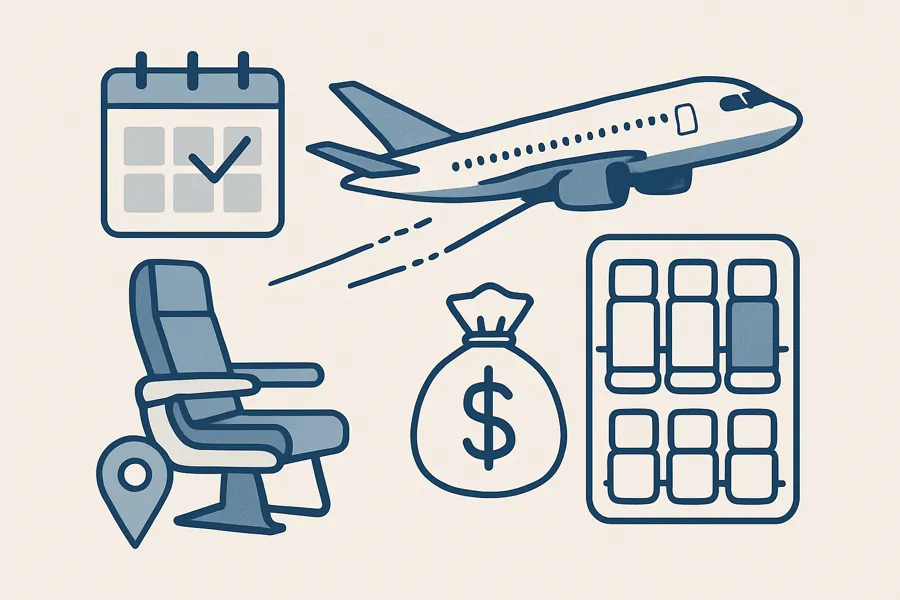
Several carriers, such as Japan Airlines and Qatar Airways , still allow standard economy fares to select their seats for free. But many airlines charge for advance seat selection. Seats with more legroom or in the front of the cabin are more expensive than standard seats. EasyJet charges approximately $1.30, with extra legroom and front seats costing more. Average fees for Delta are $15 per flight. If paying, utilize a good seat map strategy using specialized tools and check the airline’s official seat map directly before booking.
When It’s Worth Paying Extra
Long-Haul Flights
The difference in comfort between a middle seat and a window or aisle seat becomes significant on flights of three hours or more, making the fee a worthwhile investment in your well-being.
Traveling with Companions/Family
While airlines often aim to seat families with young children together for free (sometimes mandated by potential government regulations), paying ensures you sit next to your desired companion without the stress or the need to ask other passengers to switch seats at the gate.
Family of 3
Book a three-seat row (e.g., aisle, middle, window) to keep everyone together.
Family of 4
- Two-by-two : Book two seats in one row and the two behind them.
- Three and one: Book a three-seat row and have one adult sit across the aisle in the next row.
Family of 5
- 3+2: Book a three-seat row and two seats directly in front or behind it to allow for easy communication.
- 3 and 2 across aisle: Book three seats together and have two other family members sit across the aisle.
| Scenario | Why It’s Worth Paying |
|---|---|
| Long haul flights | Comfort differences become significant after 3+ hours, especially avoiding middle seats. |
| Traveling with companions | Guarantees sitting together without relying on others to swap seats. |
| Specific seating needs | Aisle for mobility, window for sleep/view, extra legroom for comfort. |
| Peace of mind | Eliminates anxiety about undesirable seat assignments. |
| Avoiding being bumped | Passengers without assigned seats are more vulnerable to involuntary bumping. |
Tips to ensure you sit together
Select seats as early as possible, preferably when booking, to secure your desired arrangement. If you have multiple reservations, contact the airline to link them and note that you are traveling as a group.
Keep in mind
For long-haul international flights, families with infants can request a bassinet, and airlines must guarantee that children are seated next to at least one adult without an extra fee if adjacent seats are available.
Specific Seating Needs
Aisle Seats
Worth it if you need to stretch often, make frequent trips to the lavatory, or have a tight connection and need to deplane quickly.
Extra Legroom/Exit Rows/Bulkhead
If you are tall or value the additional space for comfort, these seats can make a substantial difference in your travel experience.
Window Seats
If you plan to sleep or want a view, paying ensures you aren’t stuck in a middle seat.
Peace of Mind
For some travelers, the guarantee of a specific seat (especially on important trips like to a wedding or family gathering) provides a sense of security and avoids the anxiety of an unfavorable assignment at check-in.
Avoiding Being Bumped
Some sources suggest that passengers without a pre-assigned seat are more likely to be involuntarily bumped from an overbooked flight, though having a ticket guarantees you a seat on the plane.
When It’s Generally Not Worth It
Short Flights
On a flight of two hours or less, most people can tolerate a less desirable seat (like a middle one).
Solo Travelers Who Are Indifferent
If you don’t care where you sit, you can save the money and take whatever seat is assigned at check-in.
Budget-Conscious Flyers
For those prioritizing the lowest possible cost, skipping the fee and checking in exactly 24 hours before departure (when free seat selection often opens) can secure a decent seat for free.
Airlines That Still Allow Free Seat Selection
While many airlines have introduced fees for advance seat selection, several carriers still allow economy fares to select seats for free:
Alaska Airlines
Guarantees adjacent seats for children 13 or under and an accompanying adult at no additional cost for all fare types.
British Airways
Allows passengers with “Blue” status to select a seat for free from 24 hours before departure, and offers free selection to passengers who check a bag once online check-in opens. British Airways also guarantees that children under 12 will be seated with at least one adult from their booking.
Japan Airlines (JAL)
JAL generally allows economy passengers to select a seat for free at the time of booking, excluding their most basic fare type.
Qatar Airways
Economy-class passengers (excluding “Economy Classic” tickets) can often book a seat for free at the time of booking.
Virgin Atlantic
Allows free seat selection only if you purchase hold luggage with your booking.
Turkish Airlines
Offers free selection of standard seats for certain elite status members and their companions. For those without status, a random seat is assigned free during online check-in.
Elite Status
Holding elite status with an airline or their partner alliance often provides free seat selection benefits, including access to preferred or extra-legroom seats.
Your Seat Map Strategy
A good seat map strategy involves using specialized tools to understand the aircraft layout, prioritizing your personal comfort needs (legroom, quiet, views, easy access), and employing booking tactics to potentially secure a more comfortable spot, like an empty adjacent seat.
Essential Tools
- AeroLOPA is recommended as a reliable, up-to-date source for detailed aircraft seat plans across many airlines.
- AwardFares is another popular option that provides a live seat map showing you exactly which seats are taken, available, or blocked right now.
- Airline Websites/Apps: Always check the airline’s official seat map directly before booking to see real-time availability and costs.
Key Strategic Considerations
Know your priorities
Decide what matters most to you on a flight: legroom, quiet, views, or easy lavatory access.
Understand seat map symbols
A fork/knife symbol indicates a galley, a bathroom symbol indicates a lavatory, and gaps between rows indicate exit rows or bulkheads. Shaded areas on either side of the map usually represent the wings.
Avoid certain seats
- Seats in the last row or the row immediately in front of an exit row often have limited or no recline.
- Seats near galleys and lavatories are subject to more noise, light, and foot traffic.
- Middle seats offer the least personal space and mobility.
Seek out desirable seats
Extra legroom
Exit rows and bulkhead seats (first row of a cabin section) offer more space, though they may have restrictions on stowed luggage during takeoff/landing and potentially immovable armrests.
Smoothest ride
For those sensitive to turbulence, seats over the wings or toward the front of the plane are typically the best choices. The very back of the plane tends to be the bumpiest.
Quiet
Seats at the front of the cabin are generally quieter and further from engine noise and high-traffic areas.
Views/Sleeping
Window seats offer a view and a wall to lean against for sleeping.
Easy access/mobility
Aisle seats allow you to get up and move around without disturbing others.
Booking Tactics
Book early
The best seats are usually selected quickly, so try to book your preferred seat when you purchase your ticket.
Monitor your flight
Aircraft swaps can occur, changing the seating configuration. Recheck your seat assignment periodically after booking and before your flight.
The “empty middle” strategy (for couples)
Book an aisle and a window seat in a row of three, leaving the middle seat empty. A single passenger is less likely to choose a middle seat. If the flight is full and someone takes it, they will usually be happy to swap for an aisle or window so you can sit together.
Check-in on time
If you don’t have an assigned seat, or are hoping for a free upgrade, checking in exactly 24 hours before departure can improve your chances of snagging a good seat as more options become available.
When to Wait & When to Book Seats Immediately
Reasons to Book Immediately
You need to sit with companions/family
Airlines’ booking systems usually try to seat groups together, but it is not guaranteed unless you pay. For families with children, while most airlines ensure one adult sits with a child, the rest of the group might be split up.
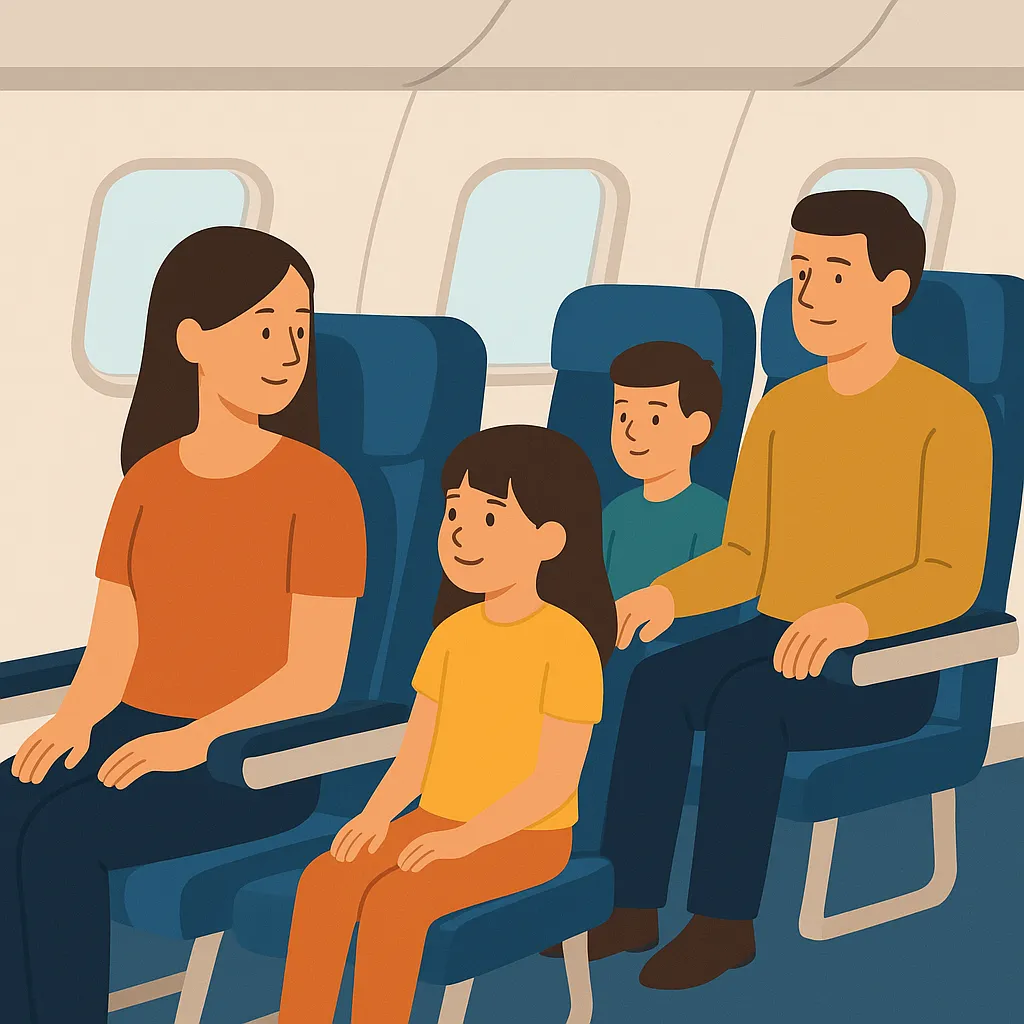
Keeping families seated together during flights © Kiwi.com
You want a specific or better seat
If you want a window, aisle, extra legroom (exit row), or front-row seat, the best selection is available the moment bookings open. The most desirable seats are typically the first to be reserved.
Long-haul international flights
Comfort is more critical on long flights, and waiting increases the risk of being assigned an undesirable middle seat near the restrooms or galley.
High-demand routes or peak season travel
For flights around holidays, school breaks, or on busy routes, flights fill up fast. Booking early is essential to secure a seat at all, let alone a good one.
You have specific mobility needs
If you require special assistance or a specific seat due to a disability, contact the airline in advance to ensure appropriate arrangements are made, often for free.
You want to avoid being bumped
Passengers without an assigned seat are often the first to be bumped from an oversold flight, a risk that is eliminated by having a confirmed seat assignment.
Situations Where Waiting Might Work
Waiting carries the risk of getting stuck with a random, potentially undesirable, seat assignment at check-in. But it can sometimes lead to a better seat for free if you are flexible and strategic.
The “upgrade hack”
Sometimes all standard seats sell out, leaving only “premium” seats (extra legroom, bulkhead, etc.) available. If you don’t pay for a seat, the airline might assign you one of these better seats for free at the gate because the plane must be balanced and all seats filled.
Check-in exactly at the 24-hour mark
Many airlines release any remaining unassigned seats (both standard and sometimes premium) for free selection when online check-in opens (usually 24 hours before departure). Logging in immediately gives you the best chance of securing a good seat among the remaining options.
Check in late on budget airlines
If you are flying a low-cost carrier and have not paid for a seat, checking in as late as possible may result in a more favorable random assignment, as the system may hold better seats until the last minute, according to Paliparan .
Potential risks of Random Seat Assignment
- Separation from companions: Random assignment can, and often does, place members of a group, including families and children, in different rows or parts of the aircraft. This can be stressful and potentially dangerous in an emergency, as people may waste precious time looking for each other instead of evacuating quickly, notes this article from The Sydney Morning Herald .
- Undesirable seating: Passengers who do not select a seat in advance are typically assigned from the remaining available seats, which are often the least popular. This frequently results in a middle seat, a seat at the back of the plane, or one near high-traffic areas like galleys or lavatories.
- Weight and balance issues: Changing seats without authorization before takeoff can disrupt the plane’s weight distribution, which is crucial for flight safety and could require a re-weighing of the aircraft.
Booking Engines vs. Airline Direct Maps
Booking engines offer a wide view of flights and prices, but airline direct maps provide the most accurate, real-time seat availability and are generally the best for selecting and managing seats, especially after booking. Third-party seat map tools can also be useful for detailed information and alerts, but it is best to verify seat selection and booking details with the airline directly, particularly for flexible terms, changes, or issues.
Booking engines
Pros
- Allow you to compare many flights, prices, and options from different airlines in one place.
- May offer deals or bundled packages (e.g., flight + hotel).
- Some modern booking engines integrate seat map functionality during the booking process.
Cons
- Seat maps might not always show real-time availability and could have data inconsistencies.
- May require you to book and then go to the airline’s site to select a seat, or the selection process may be less user-friendly.
- Changes or cancellations can be more complicated and may involve additional fees charged by the booking engine.
Airline direct maps
Pros
- Provide the most accurate, real-time view of available seats.
- Offer the best customer service and flexibility for changes or cancellations, especially for seats selected after booking.
- May be integrated directly into the booking process and offer a smoother seat selection experience.
Cons
- You have to search for flights and prices on each airline’s website individually.
- May not provide a consolidated view of options across all airlines.
Which one to choose?
- Use booking engines to research and find the best flight options and prices across different airlines.
- Go to the airline’s direct website to view the most accurate seat map and to complete the seat selection after booking, especially if you want the most flexibility for future changes.
- Consider using a third-party seat map website like Aerolopa or SeatMaps.com for additional details like passenger reviews or window locations before you book. But always confirm seat selection with the airline.
Urgent and Practical FAQs About Paid Seating
When should I pay for my seats?
For long haul flights, when traveling with your family or other groups, if you want or need a specific seat for comfort, or to avoid being bumped from an over booked flight.
When is paying for a seat not worth it?
If you travel alone and don’t care where you sit, if you’re on a short flight, or if you want the lowest possible cost. In that case, check in exactly 24 hours before departure, when free seat selection often opens, to secure the best possible seat for free.
What airlines, if any, still allow you to select a seat for free?
Japan Airlines and Qatar Airways generally allow economy passengers to select a seat for free at the time of booking. British Airways allows passengers with Blue status to select a seat for free from 24 hours before departure and offers free selection to passengers who check a bag once online check in opens. Virgin Atlantic offers free seat selection to passengers who purchase hold luggage when booking. Having elite status with an airline or their partner alliance often provides free seat selection benefits. Check the airline’s website before booking.
How can I select the best possible seat for my money?
First determine your personal priorities. Then have a good seat map strategy using specialized tools, such as AwardFares to see what seats are free, and AeroLOPA for a detailed map that will tell you if a seat has a misaligned window, is too close to the lavatory, or has extra legroom. Finally, book as early as possible and monitor your flight to make sure the aircraft has not been switched. Always check the airline’s official seat map directly before booking and then verify seat selection and booking details with the airline.
Why should I book as soon as possible?
To get the best available seats if you need to sit with companions or family members, for long flights, for flights around holidays, school breaks, or on busy routes, if you require special assistance or a specific seat due to a disability, and if you want to avoid being bumped in case of overbooking.