




You arrive and immediately think:
In this article
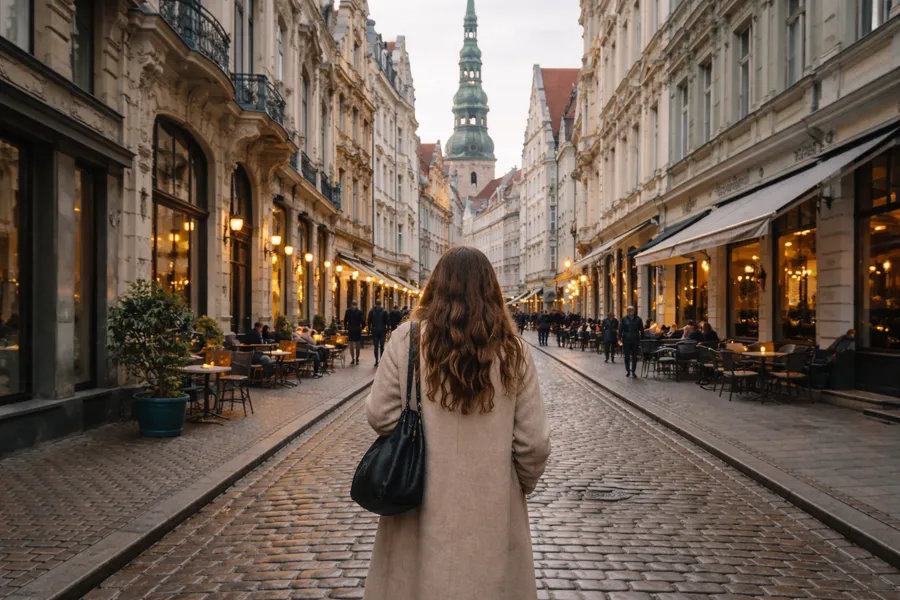
Why is everything this pretty? Why is the architecture flexing so hard? Why does this feel like Berlin and Paris had a calm, introverted Baltic child?
This is not chaos city. This is quiet confidence city.
From Airport to City: Efficient and Unbothered
Riga International Airport is small, efficient, and suspiciously calm.
Bus 22 (Budget Royalty)
€1.50 • 25–30 minutes Drops you right into the centre. Cheap, reliable, no drama.
Taxi / Bolt
€10–15 • 15–20 minutes Fast, affordable by European standards, and mildly luxurious compared to Western Europe prices.
Getting Around Without Trying Very Hard
Riga is beautifully compact. The Old Town, Central District, and Art Nouveau quarter are all walkable. You will walk. You will enjoy it.
Public transport (trams, buses, trolleybuses) costs around €1.50 per ride and works smoothly. But honestly? You probably won’t need it much.
This is a strolling city. A wandering city. A “let’s turn down this street just because” city.
Budget Bliss: Riga Is Quietly Affordable
Riga isn’t loud about being good value. It doesn’t plaster “cheap!” across its skyline. It just casually lets your money stretch further than it does in Paris, Berlin, or basically anywhere west of here. €10 here doesn’t vanish into one coffee and a sigh, it covers actual experiences. Meals. Views. Snacks you didn’t plan for. A pastry you definitely deserved.
It’s the kind of city where you stop checking prices after a day because nothing feels like a trap. Let’s explore.
The Old Town (Postcard Without the Price Tag)
Riga’s Old Town looks like it was assembled specifically for aesthetic purposes. Cobblestones curve gently. Church spires stab the sky in dramatic fashion. Colourful façades lean into narrow streets that feel almost suspiciously charming.
Yes, it’s touristy. Of course it is. But it’s not aggressive about it. The charm feels earned rather than manufactured. You can wander for hours without spending anything, drifting through Town Hall Square, staring up at the ornate House of the Blackheads, slipping into quiet courtyards that feel half-hidden and slightly cinematic.
The best part? Simply being there costs nothing. No tickets required. Just walk, look up, and let the Baltic light do its thing.
Art Nouveau District (Architecture Flex)
Riga does not casually have Art Nouveau buildings. It has the Art Nouveau buildings. Entire streets where façades compete for your attention with sculpted faces, mythical creatures, floral explosions, and balconies that look like they’re about to whisper secrets.
On Alberta iela and nearby streets, you’ll find some of the most ornate examples in Europe and they’re just… there. No entry fee. No queue. Just look up and let your neck ache slightly from admiration.
It feels like walking through an outdoor architecture exhibition curated by someone with excellent taste and zero ego. A free museum. Bring curiosity.
St Peter’s Church Tower (Budget Viewpoint Win)
If you’re going to pay for one view in Riga, make it this one. For around €5–7, St Peter’s Church tower gives you the full perspective: red rooftops spreading outward, the Daugava River slicing calmly through the city, and that soft Baltic sky that somehow makes everything look composed.
It’s not outrageously high or dramatic in a skyscraper way. It’s proportionate. Human. You see how compact Riga is, how walkable it feels, how everything connects.
And compared to Western Europe’s “€20 to look at buildings from slightly above,” this feels like a small victory.
Riga Central Market (Hangar Energy, But Make It Delicious)
Set inside former Zeppelin hangars (because why not) Riga Central Market feels slightly industrial, slightly chaotic, and entirely excellent. The space is huge, airy, and buzzing with everyday life rather than tourist choreography.
You’ll wander past smoked fish counters, towers of pickles, dense dark rye bread, honey jars glowing gold, cheeses stacked with confidence, pastries dusted in sugar, and snacks you didn’t plan to buy but absolutely will.
Prices are local-friendly. Portions are generous. Vendors are used to regular people shopping for dinner, not just visitors browsing for content. Grab something small, sample what you can, and sit nearby with your market haul like you live here.
This is where Riga feels most real and most affordable.
Winter-Proof Cuisine
Latvian food is not flashy. It’s not trying to reinvent cuisine. It is built for survival, comfort, and long winters where the sun clocks out early. Think potatoes in confident portions, dark rye bread that feels structural, smoked meats, creamy soups, pickled things, and desserts that don’t apologise for being sweet.
This is food that says, “You look cold. Sit down.”
Grey Peas with Bacon (Trust the Texture)
€4–7
Yes, it’s literally peas and bacon. Yes, it sounds humble. But this is one of Latvia’s national comfort dishes, and it’s more satisfying than it has any right to be.
The peas are soft but still hold their shape, the bacon is smoky and salty, and together they form something that feels deeply grounding. It’s pub food, winter food, “I’ve walked around cobblestones all day” food. Pair it with a local beer and suddenly you understand the appeal.
Simple. Savoury. Effective.
Rye Bread Everything
Latvia takes rye bread very seriously. It’s dark, dense, slightly sweet, and absolutely everywhere. This isn’t background bread. It’s part of the identity.
You’ll see it served thick and unapologetic alongside meals, transformed into garlic-fried rye bread sticks in pubs (often with a creamy cheese sauce that you will think about later), or even used in desserts.
It’s hearty without being heavy in a bad way. It tastes like tradition.
Cold Beet Soup (Pink Confidence)
€3–5
Bright pink. Completely unapologetic. Served cold. At first glance, it looks like someone dared a soup to be dramatic.
Made with beetroot, kefir or buttermilk, cucumber, dill, and often a boiled egg on the side, it’s refreshing, slightly tangy, and surprisingly addictive. Especially in summer, when you didn’t realise you wanted something cool and earthy at the same time.
It’s bold in colour, calm in flavour, and very Baltic in attitude.
Cafés (Scandinavian Calm, Baltic Prices)
Riga’s café scene is quietly excellent. Interiors lean minimalist: light wood, clean lines, plants placed with intention. The coffee is taken seriously. The atmosphere is relaxed but not lazy.
And the best part? Prices that feel refreshingly pre-inflation compared to Western Europe.
Coffee runs about €2–3. Pastries sit around €2–4. You can afford to sit for an hour without calculating regret.
Order a flat white. Try a layered cake you can’t pronounce. Open a notebook. Pretend you’re a Baltic creative who moved here for the “light and space.”
Riga makes it easy.
Where the Beer Is Cold and the Bills Aren’t Scary
Riga might look reserved in daylight but once the sun drops, it loosens its collar slightly. Not wild. Not reckless. Just quietly, confidently lively.
It’s the kind of nightlife where you actually talk to people. Where you can move between places without queue trauma. Where your bank account doesn’t text you in panic the next morning.
Old Town Bars
The Old Town is where most nights begin and often continue without much planning. Bars are compact, friendly, and close enough together that accidental bar-hopping becomes inevitable. One drink turns into “let’s just see the next place,” which turns into a small, manageable adventure.
Beer sits comfortably around €3–5. Cocktails usually land between €6–9, which (compared to Western Europe) feels almost polite. You can order a second drink without doing mental math. That alone is liberating.
The vibe is social but not chaotic. Groups laugh loudly, music spills gently onto cobblestones, and the mood stays buoyant rather than overwhelming. It’s energetic without tipping into madness.
Folkklubs Ala Pagrabs
Ala Pagrabs is not subtle. It’s underground (literally) and feels like you’ve stepped into a medieval tavern that accidentally installed decent sound equipment.
Long wooden tables. Brick ceilings. Live Latvian folk music some nights. Hearty food. Strong beer. The energy swings between cosy and chaotic in the best possible way.
You might arrive intending to “just have one.” Then someone starts playing fiddle. Then someone starts singing. Then you’re clapping along to a song you absolutely do not understand but fully support.
Authentic chaos. Basement energy. Zero pretence.
Craft Beer Spots
Riga takes beer seriously but not aggressively. The city has embraced craft brewing with small local breweries, intimate taprooms, and bartenders who are enthusiastic without being intimidating.
You’ll find cosy spaces with wooden counters, exposed brick, and menus featuring Baltic porters, IPAs, lagers, and seasonal experiments. Prices remain reasonable (usually €4–6) meaning you can explore without regret.
It’s not about excess. It’s about flavour, atmosphere, and long conversations that stretch comfortably into the night.
Off-the-Map Riga (Soft Baltic Cinema Energy)
When you step beyond the Old Town and its predictable prettiness, Riga shifts tone. It gets quieter. More residential. More reflective. This is where the city feels less like a postcard and more like a place people actually live: slowly, thoughtfully, without performance.
Ķīpsala Island
Just across the river from the Old Town, Ķīpsala feels like a secret suburb that forgot to modernise (in the best way). Wooden houses in soft colours line peaceful streets, some beautifully restored, others charmingly worn. It’s calm enough that you’ll hear your own footsteps.
There are river views, small docks, and the occasional cat surveying its territory with Baltic seriousness. It genuinely feels like stepping into another decade - one where everything moved a little slower and nobody rushed for content.
Come at sunset, when the light softens and the Old Town skyline glows quietly across the water. It’s not dramatic. It’s gentle. And that’s the appeal.
Mežaparks
Mežaparks is Riga exhaling.
Located north of the centre, this vast green space wraps around Lake Ķīšezers and offers forest paths, quiet lakeside stretches, and enough room to forget you’re in a capital city. Locals jog, cycle, walk dogs, sit on benches, and generally exist without hurry.
It’s perfect for a slow afternoon when you’ve had enough cobblestones. Bring coffee. Bring a book. Walk without destination. In summer, it’s leafy and alive. In autumn, it turns golden and cinematic. In winter, it becomes very Baltic: quiet, frosted, almost poetic.
This is where Riga feels expansive rather than compact.
Latvian National Library (The Castle of Light)
Across the Daugava River stands Riga’s most modern flex: the Latvian National Library. Sharp lines, angular design, glass and steel. It looks futuristic without being cold.
Inside, it’s calm, minimal, and surprisingly welcoming. Entry is free, and if you head up to the upper floors, you’ll get sweeping views back toward the Old Town. It feels like a quiet statement: Riga respects its history, but it also builds forward. Come for the view, stay for the atmosphere. It’s one of those places where you instinctively lower your voice and feel slightly more intelligent.
Travel Hacks: Riga Edition
Bring layers. Baltic weather shifts moods.
Supermarkets are your friend.
Explore beyond Old Town — it’s worth it.
English is widely spoken. Relax.
How Expensive Is Riga?
Coffee: €2–3 Meal: €7–15 Beer: €3–5 Hostel: €15–25 Hotel: €50–100
It’s not Southeast Asia cheap. But for Europe? Very kind.
Riga Doesn’t Shout. It Lingers.
You won’t leave Riga overwhelmed. You’ll leave thoughtful.
You’ll remember the architecture details, the pink soup, the quiet streets at dusk, the way the city felt calm but never boring.
Riga doesn’t scream for attention. It just stands there looking beautiful until you notice.