
Combining the two safaris is tricky because the two countries’ safari hubs are 3,000 to 3,500 km apart and there are no direct flights. But since the best time to experience both safaris is August and September, it is practical and saves you the cost of an additional international flight. To make the African travel days worth it, you should dedicate at least 4 nights to each country. Because Botswana relies heavily on bush planes, you must pack no more than 15kg/33 lbs in soft-sided duffel bags.
The Landscapes & Wildlife Experience
Kenya (The Maasai Mara & Beyond)
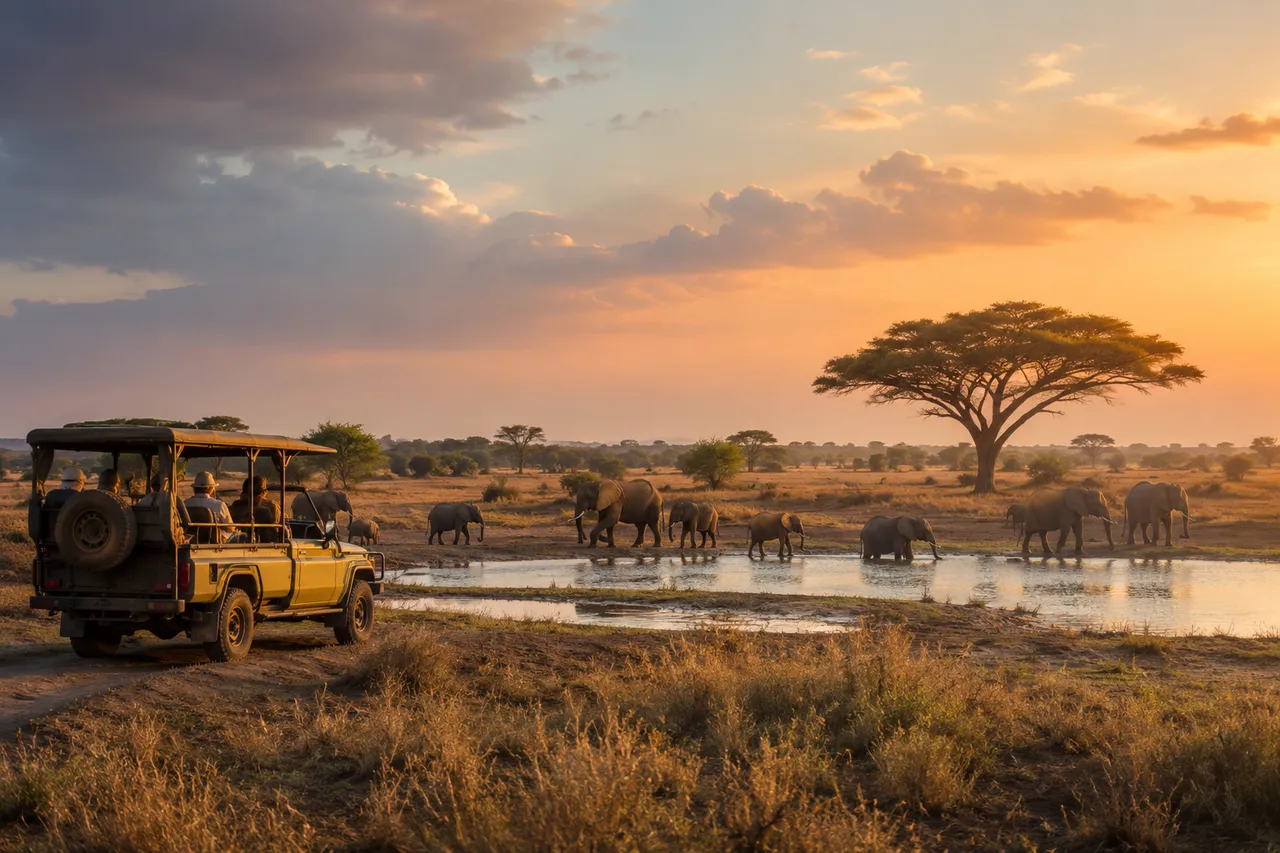
Kenya delivers classic “Lion King” scenery—vast, open, golden savannas dotted with acacia trees. Wildlife is highly concentrated and predictable, making it incredibly easy to see the Big Five (African elephant, leopard, African buffalo, lion and rhinoceros). It is famously home to the Great Wildebeest Migration (usually July–October), featuring dramatic river crossings and intense predator action from massive lion prides, leopards, and cheetahs.
Botswana (The Okavango Delta & Chobe)
Botswana is characterized by water. The Okavango Delta is a lush, green oasis where seasonal floodwaters create intricate networks of channels, lagoons, and islands. Here, you swap dust for water. It is world-renowned for its enormous elephant populations (especially in Chobe National Park), hippos, crocodiles, wild dogs, and specialized aquatic antelopes like the red lechwe.
Safari Style & Vibe
Kenya
Kenya is fast-paced and cultural. Game drives are conducted in open-top or pop-up 4WD vehicles. It also offers rich cultural integration, allowing you to visit traditional Maasai communities. Because it is so easily accessible, the main national parks can get crowded during peak migration season.
Botswana
Botswana is exclusive and tranquil. Botswana operates on a strict “low-volume, high-yield” tourism model. Most camps are small, luxurious, and located on private concessions, meaning you will rarely see another vehicle. A signature experience here is drifting silently through the delta reeds in a mokoro (a traditional dugout canoe), listening to the sounds of nature.
Logistical Realities of Combining Them
While it makes for a dream trip, combining East and Southern Africa requires careful planning because they are thousands of miles apart.
Flights
There are no direct commercial flights between Nairobi (Kenya) and Kasane or Maun (Botswana’s safari hubs), which are about 3,000 km (1,865 miles) and 3,500 km (2,175 miles) apart, respectively. You will typically fly from Nairobi to Johannesburg (South Africa) or Kigali/Addis Ababa, and then take a connecting flight into Botswana. From there, you will board light charter aircraft to fly directly into the remote bush camps.
Luggage Constraints
Because Botswana relies heavily on bush planes, you must pack light in soft-sided duffel bags (usually restricted to 15kg/33lbs total), which means you’ll need to pack smartly for the entire dual-country trip.
Ideal Best-of-Both-Worlds Itinerary (10 to 12 Days)
To make the long travel days worth it, you should ideally dedicate at least 4 nights to each country:
Days 1–2: Nairobi to the Maasai Mara (Kenya)
Fly from Nairobi’s Wilson Airport into the Maasai Mara. Spend your days tracking big cats and experiencing the immense density of the open plains. Staying in a private conservancy adjacent to the main reserve is highly recommended to avoid crowds and enjoy night drives.
Days 5–6: Travel Day & Arrival in the Okavango Delta (Botswana)
Fly back to Nairobi, catch an evening or early morning flight to Johannesburg, and connect to Maun, Botswana. Take a scenic light aircraft flight over the delta into your remote water-based camp. Enjoy a sunset boat cruise.
Days 7–9: Okavango Delta & Moremi Game Reserve (Botswana)
Spend your time doing mokoro safaris, guided wilderness walking safaris, and night game drives looking for leopards and endangered African wild dogs.
Days 10–11: Chobe National Park / Departure
Optionally move to the Chobe River front to witness hundreds of elephants swimming and bathing, before flying home out of Kasane or nearby Victoria Falls.
Best Time to Go
The ideal window to combine both countries is during the dry season, specifically August and September.
- In Kenya: This is the height of the Great Migration in the Maasai Mara, one of the most spectacular wildlife events on Earth. It is part of a continuous, year-round cyclical journey where over 1.5 million wildebeest, 400,000 zebras, and hundreds of thousands of gazelles travel in a massive clockwise circle through the Serengeti-Mara ecosystem
- In Botswana: This coincides with the peak floodwaters in the Okavango Delta (the floods arrive months after the rain actually stops), making water-based mokoro safaris spectacular, while Chobe’s elephants congregate heavily around the remaining water sources.
The “Big Five”
The African Elephant
The largest land mammal on Earth, the African bush elephant is an ecosystem engineer, clearing paths through dense brush and digging for water. They are incredibly intelligent and emotional creatures that live in close-knit, matriarchal family groups.
Best places to see them
Chobe National Park (Botswana) or Amboseli National Park (Kenya).
The Lion
The lion is Africa’s apex predator. They are unique among big cats because they are highly social, living in family groups called prides. Hearing a lion roar at night from a safari camp is one of the most thrilling experiences in the bush.
Best places to see them
The Maasai Mara (Kenya) or the Serengeti (Tanzania).
The Leopard
Unlike lions, leopards are solitary, nocturnal, and masters of camouflage. They are remarkably strong, frequently dragging heavy prey (sometimes twice their own body weight) up into the branches of trees to keep it away from lions and hyenas.
Best places to see them
Sabi Sands Game Reserve (South Africa) or the Okavango Delta (Botswana).
The African Buffalo (Cape Buffalo)
The Cape Buffalo is widely considered one of the most dangerous animals in Africa. They have a notoriously unpredictable and aggressive temperament, especially when wounded or when an older bull is isolated from the herd.
Best places to see them
Kruger National Park (South Africa) or Katavi National Park (Tanzania).
The Rhinoceros (Black and White Rhinos)
The Big Five technically includes both the White Rhino (which is larger, has a wide mouth, and eats grass) and the Black Rhino (which is smaller, has a hooked lip, and hooks leaves from bushes). Due to severe poaching for their horns, rhinos are highly endangered and are usually the hardest of the Big Five to spot.
Best places to see them
Ol Pejeta Conservancy (Kenya) or Etosha National Park (Namibia).
The Advantages of Combining the Two Safaris
Combining a Kenya safari (East Africa) with a Botswana safari (Southern Africa) creates an absolute blockbuster of a trip, but it is an ambitious undertaking. Because they are located in different regions, they offer entirely different landscapes, cultures, and safari styles. The advantages and disadvantages of combining them into one mega-trip versus breaking them into two standalone vacations highlight key trade-offs in logistics, timing, and experience.
The Ultimate Contrast in Ecosystems and Landscapes
Doing both gives you the two most contrasting safari experiences Africa has to offer. Kenya gives you the classic, quintessential The Lion King landscapes: vast, wide-open savannas, massive rolling grasslands, volcanic landscapes (like Tsavo), and iconic views of Mount Kilimanjaro from Amboseli.
Botswana is defined by water and wilderness. It offers the lush, labyrinthine channels of the Okavango Delta, the desert pans of the Kalahari, and the dense elephant-draped riverbanks of Chobe.
Differing Styles of Safari (Land vs. Water)
In Kenya, your safari will be almost entirely vehicle-based (traditional 4x4 game drives). By adding Botswana, you introduce entirely new ways to see wildlife: gliding through the reeds in a traditional mokoro (dugout canoe), motorboat safaris, and high-end walking safaris.
High Volume vs. Intense Exclusivity
Kenya’s public reserves (like the Masai Mara) boast some of the highest concentrations of wildlife on earth, but they can get incredibly crowded with vehicles. Botswana pioneered a “low-volume, high-yield” eco-tourism model. Most of its prime spots are private concessions where you will barely see another vehicle for days. Combining them gives you the thrill of Kenya’s massive herds balanced by the utter peace and exclusivity of Botswana.
Maximizing Long-Haul Travel
If you are flying from North America, Europe, or Asia, getting to Africa is expensive and time-consuming. Combining the two destinations means you only pay for that massive international flight once, ticking off two bucket-list giants in a single go.
The Disadvantages of Combining Them
Brutal Logistical Interconnectivity
There are very few (if any) direct commercial flights connecting Nairobi (Kenya) to Maun or Kasane (Botswana). To combine them, you will likely have to fly from Nairobi to Johannesburg (South Africa), spend a night or wait out a long layover, and then fly into Botswana the next day. This burns at least 1 to 1.5 full days of your vacation just in transit, checking in and out of airports.
Staggering Costs
Botswana is probably the most expensive safari destination in Africa due to its remote, fly-in luxury lodges. Kenya can also be pricey during the Migration. Combining them requires multiple regional flights, different park fees, and expensive lodging. Furthermore, packing for both regions can be tricky due to the strict 15kg (33lb) luggage limits in Botswana.
“Safari Fatigue”
Safaris are exhilarating but exhausting. They involve 5:00 AM wake-up calls, hours bumping along rough dirt roads (“African massages”), and intense sun. By day 10 or 12, a phenomenon known as “safari fatigue” sets in. If you combine these countries, you risk becoming desensitized. A pride of lions that would have made you cry with joy on Day 3 might elicit a simple “oh, more lions” by Day 14.
Comparison Summary
| Feature | Combined Into One Trip | Done Separately (One at a Time) |
|---|---|---|
| Airfare Efficiency | High (One round-trip international ticket). | Low (Paying for two international flights over different years). |
| Transit Time | High (Lost days flying between East and Southern Africa). | Low (Smooth internal regional travel). |
| Wildlife Variation | Unmatched (The Great Migration + Okavango aquatic specialists). | Focused (Deeper dive into regional behaviors and species). |
| Pacing | Rushed (Hard to spend more than 4–5 days in each country). | Immersive (Can easily spend 10 days exploring diverse parks in just one country). |
The Verdict
- Do them together if: You have at least 2.5 to 3 weeks available, a healthy budget, and you want to experience the starkest contrast of landscapes possible.
- Do them separately if: You prefer a slower, more immersive pace, want to hit the absolute perfect weather/wildlife peak for each specific country, and intend to return to Africa in the future.
.
What Do They Cost in 2026?
A dual-country safari is a premium trip because Botswana is Africa’s most expensive safari destination (due to its strict “low-volume, high-price” tourism model) and you must factor in costly cross-continental regional flights. Rates are typically quoted per person, per day (all-inclusive of lodging, meals, guiding, and park fees**)**:
| Tier / Comfort Level | Daily Cost in Kenya | Daily Cost in Botswana |
|---|---|---|
| Budget / Mobile Camping | $150 – $250 | $350 – $550 |
| Mid-Range / Classic Permanent Lodges | $300 – $600 | $600 – $1,200 |
| Luxury / Fly-In Premium Camps | $700 – $1,500+ | $1,500 – $4,500+ |
Estimating Your Total 2026 Trip Costs
Assuming a standard 10-to-12-day balanced itinerary (e.g., 5 days in Kenya, 1 travel day, 5 days in Botswana) during the highly desirable dry/migration season (July–October), expect the following total price tags per person:
Mid-Range Package ($5,500 – $9,000 per person)
You will stay in highly comfortable, en-suite permanent tented camps. You’ll travel by road 4x4 in Kenya and rely on shared light-aircraft flights or luxury mobile camps in Botswana.
Luxury / Premium Package ($11,000 – $25,000+ per person)
A completely “fly-in” safari. You will bypass bumpy roads by flying into private airstrips, staying at top-tier lodges (like those run by &Beyond, Wilderness, or Great Plains Conservation), featuring premium drinks, private vehicles, and specialized water activities.
Critical “Hidden” Costs to Remember
When reviewing a quote from a tour operator, look carefully to see if the following are included, as they can add thousands to your expenses:
The Cross-Continent Flights
Expect to pay $400 to $800 for the flight from Nairobi (NBO) to Johannesburg (JNB), plus another $300 to $500 for the regional connection into Maun or Kasane (Botswana).
Park Fees (Steeply Rising)
Kenya’s Maasai Mara park fees stand at $100 to $200 per adult, per day, depending on whether you stay inside or outside the reserve. Make sure your tour operator explicitly includes these.
Luggage Limitations
Internal bush planes in Botswana strictly enforce a 15kg (33 lbs) limit in soft-sided duffel bags. If you overpack, you will be forced to pay for an extra seat on the bush plane to carry your luggage, which can cost several hundred dollars.
FAQs - Plan the Ultimate Kenya and Botswana Safari Adventure
What is so special about experiencing safaris in Kenya and Botswana on the same visit?
Combining Kenya and Botswana in one trip allows travelers to experience two of Africa’s most distinct safari environments. Kenya is known for its vast savannas, rolling grasslands, volcanic scenery, and iconic views of Mount Kilimanjaro from Amboseli National Park. Botswana offers a completely different experience with the watery channels of the Okavango Delta, the remote Kalahari Desert, and the elephant-filled riverbanks of Chobe National Park.
What are the must-have experiences in both countries?
In Kenya, the highlight is witnessing the Great Migration in the Maasai Mara, where more than 1.5 million wildebeest, hundreds of thousands of zebras, and gazelles move through the Serengeti-Mara ecosystem. The dramatic Mara River crossings are among the most memorable wildlife spectacles on Earth.
In Botswana, travelers should experience a traditional mokoro safari through the Okavango Delta when floodwaters are at their highest. Chobe National Park is another must-see destination, especially when large elephant herds gather around water sources during the dry season.
When is the best time to do the two safaris?
The ideal time to combine Kenya and Botswana is during August and September. This period aligns with the peak of the Great Migration in the Maasai Mara while also coinciding with the highest flood levels in the Okavango Delta, creating exceptional wildlife-viewing opportunities in both countries.
What are the pros and cons of combining the two safaris instead of visiting separately?
The biggest advantages are experiencing two completely different safari styles in one vacation and saving money by paying for a single international flight rather than two separate trips. Travelers enjoy the excitement of Kenya’s massive wildlife concentrations alongside Botswana’s quieter, more exclusive safari atmosphere.
The drawbacks include spending additional time in transit between destinations, dealing with Botswana’s strict 15kg (33lb) luggage restrictions on bush flights, and potential safari fatigue from multiple early mornings and long game drives over an extended itinerary.
How expensive is it to combine both safaris?
Botswana is widely regarded as one of Africa’s most expensive safari destinations due to its remote fly-in lodges and exclusive camps. A balanced 10- to 12-day itinerary that includes both Kenya and Botswana typically costs between $5,500 and $9,000 (€4,725–€7,732) per person for a mid-range package. Luxury trips can range from $11,000 to more than $25,000 (€9,450–€21,480+) per person.
Before booking, verify that the quoted package price includes internal flights, cross-country transfers, park entrance fees, accommodations, and meals. Travelers should also pay close attention to Botswana’s 15kg (33lb) luggage limit on light aircraft, as excess baggage may require purchasing an additional seat.
Popular routes on Kiwi.com
- Cheap flights from London to Turkey
- Cheap flights from London to Barcelona
- Cheap flights from London to Japan
- Cheap flights from London to New York
- Cheap flights from New York to Paris
- Cheap flights to Spain
- Cheap flights to Italy
- Cheap flights to the United States
- Cheap flights to the United Kingdom
- Last minute flights
People Also Read

How to Travel Patagonia: A First-Timer's Guide to Chile & Argentina's Wild South
Where to stay in Palma de Mallorca: best areas for beaches, culture and nightlife