








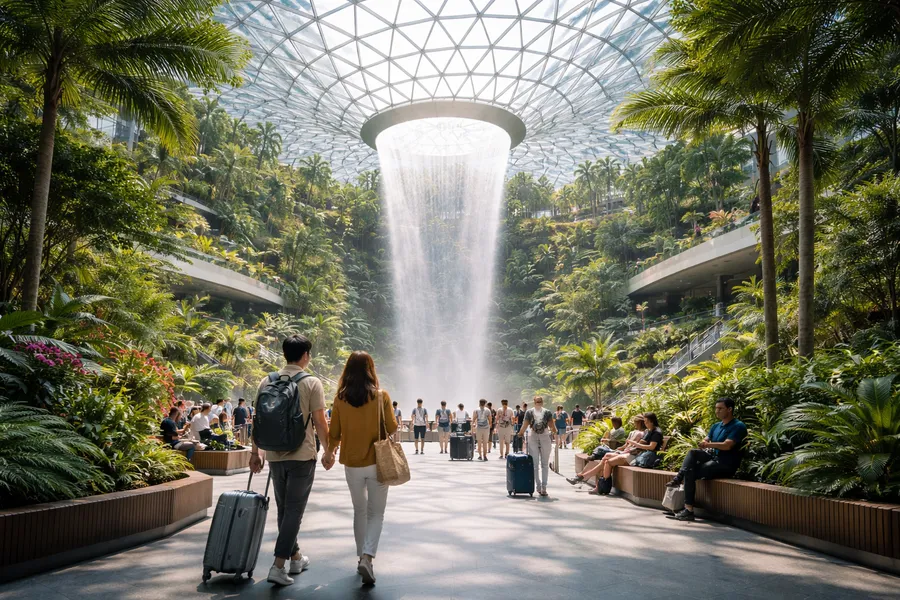
Airport stressors such as long security lines can increase blood pressure by 15 to 20%. To mitigate stress, leading airports use tools such as facial recognition to reduce the aggravation of security checkpoints. Singapore Changi Airport’s automated immigration process enables passengers to clear security in as little as 10 seconds. Some have installed indoor gardens to remove the stress caused by crowded terminals. To reduce stress, arrive at the airport at least 2 to 3 hours early to avoid the anxiety of rushing.
Stress at airports can derail even the best-laid plans, but hearing from the people who see travel play out daily adds context. These Kiwi.com reviews highlight what travelers and flight crew members alike appreciate about smooth journeys and how Kiwi.com supports them through it.
The Main Causes of Airport Stress
Airport stress is caused by a combination of psychological, environmental, and operational factors, with long security lines, crowded terminals, and fear of missing flights being the most common triggers. These stressors often stem from a perceived lack of control over the environment and the fast-paced, unpredictable nature of air travel.
Here are the primary factors that create stress at an airport, categorized by type:
Find flights for this trip

Procedural and Time-Based Stress
Security Checkpoints
These are widely considered one of the most stressful aspects of the pre-boarding process because long lines, strict and often changing rules, and the pressure of perhaps having to remove packed items often provoke high anxiety.
Long Lines
Extended waiting times at check-in, baggage drop-off, and security checkpoints turn the pre-flight period into a test of patience.
Tight Connections and Delays
Fears of missing a flight or navigating tight connections are significant stress drivers. Delays and cancellations cause high frustration, particularly when communication from airlines is poor or conflicting.
Baggage Issues
Anxiety over lost luggage or exceeding weight limits for checked bags can be very stressful.
Environmental and Physical Factors
Crowds and Noise
High passenger density, noisy environments, constant loud PA announcements, and limited, uncomfortable seating cause aggravation overload.
Unfamiliarity and Navigation
Large, complex terminals can make finding gates or services difficult, leading to a feeling of being lost or disoriented.
Poor Design and Amenities
Poor signage, harsh lighting, and lack of relaxing and/or quiet spaces contribute to anxiety.
Psychological and Personal Factors
Lack of Control
The regulatory nature of airports (security, rigid schedules) reduces a person’s sense of control over their own environment.
Fear of Flying
Anxiety regarding turbulence, safety, or claustrophobia is common.
Pre-existing Anxiety
Stress from home (e.g., packing, getting to the airport) often carries over, along with the fear of having forgotten something critical, like a passport.
Family/Group Travel Pressure
Managing children or elderly family members in a high-stress environment can aggravate anxiety.
Human Factors and Interactions
Rude Staff or Passengers
Interactions with stressed-out staff or other passengers, as well as witnessing anti-social, disruptive behavior can be unnerving.
Communication Failures
Not having access to real-time, accurate information about flight changes or boarding times can be unnerving and make you feel helpless.
How to Mitigate Airport Stress
The stressors cited above can increase blood pressure by 15-20% and keep cortisol levels elevated for hours. Mitigating airport stress is best achieved through a combination of early preparation, streamlining logistical hurdles, and managing your immediate environment.
Preparation & Logistics
Arrive Extra Early
Aim to arrive at least 2 to 3 hours before your flight to avoid the anxiety of rushing.
Check In Online
Use your airline’s app to check in 24 hours in advance. This allows you to skip the check-in counter and head straight to security if you have only carry-on bags.
Expedite Security
Use programs like TSA PreCheck or Global Entry to access shorter, faster lines where you don’t have to remove shoes or electronics.
Pack for Efficiency
Keep liquids and electronics in easily accessible pockets so you can pull them out quickly at security. Wear shoes that are easy to slip on and off.
Environmental Control
Find a “Quiet Zone”
Many airports offer meditation rooms, chapels, or quiet gates far from the main terminal bustle.
Book Lounge Access
If you don’t have status, you can often buy a day pass through apps such as Lounge Buddy to escape crowds and access free food and Wi-Fi.
Manage Sensory Input
Use noise-canceling headphones or earplugs to block out constant announcements and noise.
Stay Comfortable
Wear layers of soft clothing; bring a travel pillow or blanket to maintain your personal comfort zone; read an entertaining book.
Psychological Grounding
Practice Controlled Breathing
Use techniques like box breathing (inhale for 4, hold for 4, exhale for 4, pause for 4) to activate your parasympathetic nervous system and lower your heart rate. Or use a yoga breathing exercise for calm.
Use Grounding Exercises
Try the 5-4-3-2-1 technique: identify 5 things you see, 4 you can touch, 3 you hear, 2 you smell, and 1 you taste to stay in the moment.
Ask for Support
If you have a so-called hidden disability like severe anxiety, consider wearing a Sunflower Lanyard, which alerts staff that you may need extra time or assistance.
Factors at Airports that Reduce Passenger Stress
In 2026, airport stress reduction is driven by a shift from “transportation hubs” to “human-centric ecosystems.” Leading airports focus on eliminating friction through technology while providing environments that support mental and physical well-being.
Technology-Enabled Efficiency
Modern airports use digital tools to remove the “unknowns” that cause passenger anxiety, such as:
Biometric “Single-Token” Journeys
Airports are increasingly utilizing facial recognition and other biometric solutions to replace repeated document checks at security, lounges, and boarding gates.
Virtual Queuing
Allowing passengers to pre-book a specific time slot for security or check-in eliminates the stress of long, unpredictable lines.
Real-Time Walk Indicators
Integrating digital displays that show exactly how many minutes it takes to walk to a gate helps counter the common tendency for travelers to overestimate distances.
Remote Processing
Off-airport solutions like city-center bag drops and biometric verification completed before arrival allow passengers to reach the terminal “ready to fly.”
Operational Reliability
Low cancellation rates and efficient baggage handling (e.g., Incheon and Hamad) greatly reduces passenger anxiety.
Environmental & Sensory Design
The physical “servicescape” of an airport significantly impacts emotional states:
Biophilic Elements
Research shows that passengers who see plants are significantly less likely to experience high stress. So, airport designs now increasingly incorporated high plant visibility, natural light, and indoor gardens.
Circadian Lighting
Using lighting systems that adjust according to the time of day supports traveler restoration and reduces the physical strain of jet lag.
Acoustic Control & “Quiet Zones”
Offering dedicated “sensory rooms” or “quiet corners” is essential for passengers who need a break from the noise of a busy terminal.
Intuitive Wayfinding
Using color-coded portals, vertical beacons, and simplified architectural choices (e.g., consolidating five security zones into three) helps reduce cognitive load.
Personalization & Control
Providing passengers with a sense of agency over their environment mitigates feelings of helplessness:
Choice of Space
Offering diverse seating options, such as areas in direct sunlight versus shaded spots or private workstations versus open lounges, adds to passenger comfort and relaxation.
Amenities
Access to free 24-hour movie theaters, sleeping pods, and wellness facilities like yoga rooms or spas can make the immigration process a positive experience.
Empathetic Human Interaction
While automation handles repetitive tasks, staff are being retrained to focus on “empathy-led” service for complex or high-stress situations.
Personalized Digital Assistants
AI-driven apps that provide proactive, tailored guidance – such as instant compensation for delays or mobile ordering for duty-free goods – help travelers feel managed and supported.
Inclusive Accessibility
Designing for the most vulnerable travelers improves the experience for everyone:
Universal Design
Features like illuminated elevator flags visible above crowds and flight information displays placed every 400 feet provide mobility-challenged passengers with greater confidence.
Specialized Assistance
Programs like the “Compassion Cacti™” or the Sunflower Lanyard help staff identify and proactively support travelers with hidden disabilities such as severe anxiety.
What Is a “Living Terminal”?
In 2026, international airports have moved beyond simple automation to create “living terminals.” A living terminal is a contemporary airport design concept that integrates biophilic elements – such as lush indoor gardens, living walls, and natural light – to transform terminals from sterile “non-places” into vibrant, ecosystem-driven environments.
Primary Purpose: Stress Mitigation
The central goal is to counter the “pressure cooker” atmosphere of air travel by using nature to trigger physiological relaxation.
Psychological Calm
Direct visibility of greenery is linked to lower heart rates, reduced blood pressure, and a significant decrease in passenger anxiety.
Improved Air Quality
Living plants and moss walls naturally filter air, reducing CO2 and volatile organic compounds (VOCs) while increasing humidity, which helps with the “recycled air” discomfort common in airports.
Acoustic Softening
Natural textures like wood and plant foliage absorb, diffract, and reflect sound, dampening the “deafening” echoes of terminal announcements and crowds.
Core Characteristics
Biophilic Design
Features like the Rain Vortex at Singapore’s Changi Airport (SIN) or the massive preserved gardens at Nashville International (BNA_)_ use nature as a focal point rather than just decoration.
Organic Architecture
Replacing concrete and steel with materials like rattan, bamboo, and local wood creates a warmer, “resort-like” ambience.
Sense of Place
Using native flora to connect travelers to the local culture and landscape of their destination can function as a “cultural gateway.”
Notable Examples
Singapore Changi (SIN)
Often cited as the ultimate living terminal, featuring indoor waterfalls and over 340 species of plants.
Kempegowda (BLR), Bengaluru
Designed as a “Terminal in a Garden,” using 700-year-old trees and thousands of native species.
Portland (PDX)
Features a massive undulating wooden roof and park-like communal areas with 72 large trees.
The Top 10 Stress-Free Airports in 2026
As of 2026, the world’s most stress-free airports are primarily located in Asia and the Middle East. Rankings for “stress-free” travel typically evaluate factors such as biometric processing speed, terminal noise levels, low flight cancellation rates, and calming amenities like indoor gardens or spas.
1. Singapore Changi Airport
This is the global benchmark for both biometric and biophilic solutions. By 2026, it has automated 95% of immigration processing, allowing passengers to clear security in as little as 10 seconds. Biophilic design is central to its identity, featuring the Jewel Changi indoor forest and waterfall, alongside Terminal 2’s “green oasis” with vegetated columns and multi-sensory digital nature experiences.
2. Haneda Airport (Tokyo International Airport)
Noted for its “Silent Transit” acoustic engineering, which keeps departure hall noise levels below 38 dB. It is also consistently rated the world’s cleanest major airport. Its “Face Express" system allows passengers to proceed through check-in, baggage drop, and boarding using facial recognition, removing the need to present passports or tickets.
3. Kempegowda International Airport Bengaluru
Known for its “Terminal in a Garden” (Terminal 2), which replaces sterile steel with bamboo, rattan pods, and 700-year-old olive trees. It pairs this lush environment with advanced AI-driven operations and end-to-end biometric processing.
4. Hamad International Airport (Doha)
This airport is praised for its “Desert Oasis” thermal regulation and passive cooling architecture, which creates a serene atmosphere. It features “The Orchard,” a massive indoor tropical garden under a curved glass roof. Its biometric system integrates facial and iris recognition for a touchless journey from check-in to boarding. It also excels in baggage claim efficiency and high-end relaxation zones.
5. Incheon International Airport
It features an AI concierge (“Airi”) that provides real-time translation and sign-language interpretation. It holds the lowest flight cancellation rate among major hubs and features an ice-skating rink and cultural museum. It is also a flagship for palm vein technology**,** allowing passengers to use their unique vein patterns for check-in and boarding, significantly reducing processing times.
6. Hong Kong International Airport
It is known for its passenger-friendly infrastructure and rapid express train access to the city. It offers “discovery centers,” including virtual golf and IMAX theaters to reduce wait-time stress.
7. Indira Gandhi International Airport
This airport, located in New Delhi, is recognized as a leader in accessibility, featuring tactile guidance paths and Braille-integrated kiosks for low-vision travelers.
8. Munich International Airport
Europe’s most stress-free entry for 2026 is recognized for high efficiency and being the first carbon-negative airport. It offers unique amenities like an on-site brewery and a year-round surfing wave pool.
9. Zurich Airport
This Swiss airport is highly rated for its punctuality and serenity. Its advanced AI-assisted airside operations ensure seamless passenger flow and minimal congestion.
10. Portland International Airport
The top North American entry for stress-free travel is noted for its “Community-Centered Concessions” that feature 100% locally owned vendors and no corporate chains. It also contains park-like communal areas with 72 large trees for relaxation.
Airport stress explained and how to handle it before it handles you
What causes stress at an airport?
Airport stress is caused by a combination of psychological, environmental, and operational factors. These include tension at security checkpoints, long waiting times at check in, baggage drop off, and security screening, noisy environments, harsh lighting, limited access to calm spaces, and the fear of flying.
What do airports do to reduce stress for passengers?
Many airports reduce stress by using facial recognition and biometric tools to limit repeated document checks, improving baggage handling efficiency, and maintaining low cancellation rates. Others incorporate natural light, indoor gardens, plant-heavy designs, and natural materials. Some provide sensory rooms or quiet zones, offer amenities like sleeping pods, wellness facilities, and free entertainment, and train staff to focus on empathy driven service.
What can I do to reduce airport stress?
You can check in online 24 hours in advance and arrive two to three hours early to avoid rushing. Programs like TSA PreCheck or Global Entry help shorten security lines. Noise canceling headphones or earplugs reduce constant background noise. When possible, wait in a quiet zone and use breathing techniques like box breathing or yoga breathing to stay calm.
What is a living terminal?
A living terminal integrates biophilic elements such as indoor gardens, living walls, and natural light to create a calmer, nature driven environment. These designs reduce anxiety, lower heart rates, and soften harsh acoustics. Natural materials like wood and plant foliage help absorb sound and counter the overwhelming atmosphere common in large terminals.
What are the most stress free airports?
The most stress free airports combine advanced biometric systems with biophilic design. Singapore Changi leads globally with automated immigration, an indoor forest, and waterfall features. Other highly rated airports include Kempegowda International Airport Bengaluru, Haneda Airport, Hamad International Airport in Doha, and Incheon International Airport, all known for efficiency, greenery, and passenger focused innovation.