

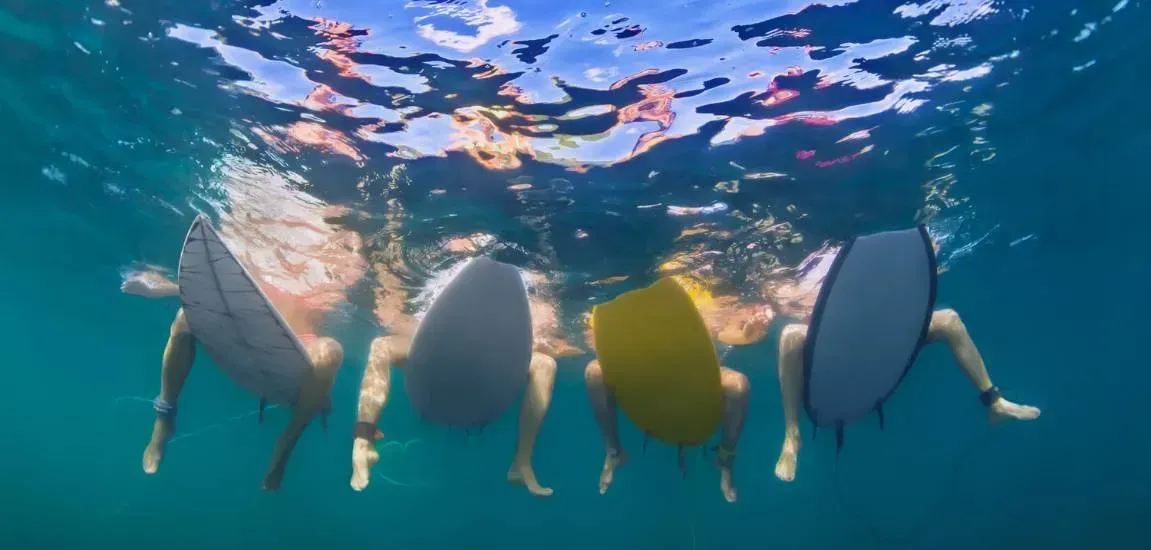
If you’re looking to take up surfing , there are surf schools across the world that can provide training and rent equipment, and teach you everything you need to know. However, where are the best surf spots that are accessible to you, and where can you go once your level improves? Let’s dive in and find out.
What are the different levels of surfing?
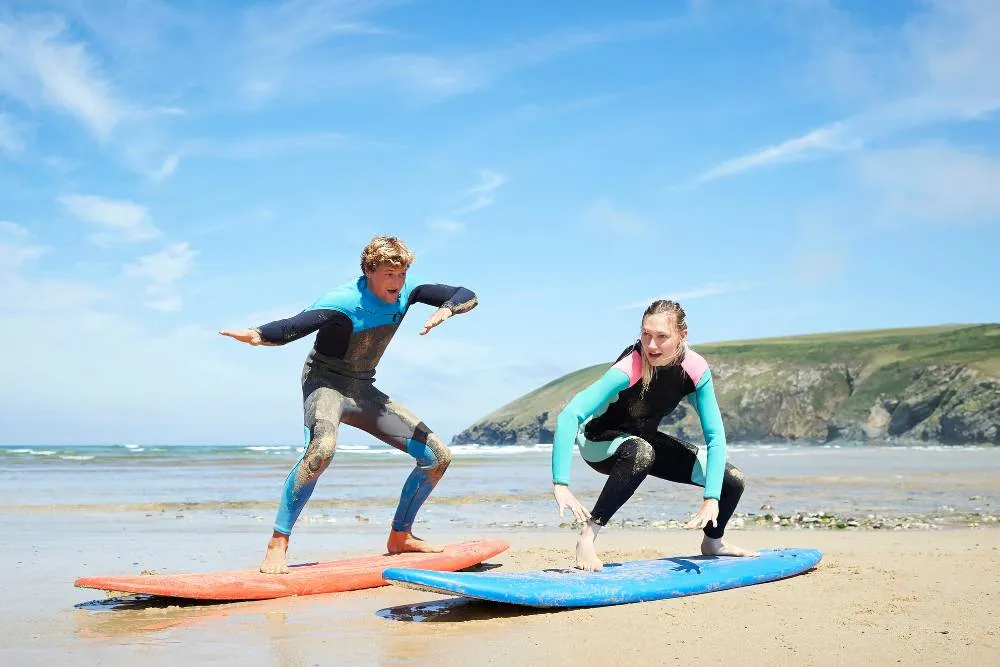 You need to consider your level before deciding where to go and surf — Getty Images There are four levels of surfing: beginner, intermediate, advanced, and competition. Before you find the best spots, you’ll need to find your level; that way, any surf school you consider joining knows which group to place you in.
Beginner
This is for people new to the sport. Your instruction begins on the beach, learning ‘pop-up’ (i.e. how to go from a lying to a standing position), before going out into small waves that have already broken. This way you can practice position, balance and other basics without ever feeling (literally or metaphorically) out of your depth.
Intermediate
Paddling on the foam and catching waves before they break are taught here. You’ll also learn how to take off, accelerate, turn, use currents, as well as get to know about “Surf Code” etiquette, such as who has priority on a certain wave, surf ethics, and relationships with local surfers.
Advanced
Here, you’ll learn how to apply your surf style to more advanced maneuvers, and how to combine speed, fluidity, coordination and control to improve your surfing. You’ll also be able to make judgments about how, why and when to perform certain moves.
Competition
At this highest level, all surf lessons concern the proper performance of maneuvers in the most critical part of the wave, coupled with the power and speed necessary to perform more complicated moves. It’s also where psychological aspects come in — you’re helped to break down any mental barriers stopping you from achieving the absolute maximum from your surfing.
Where should a beginner surf?
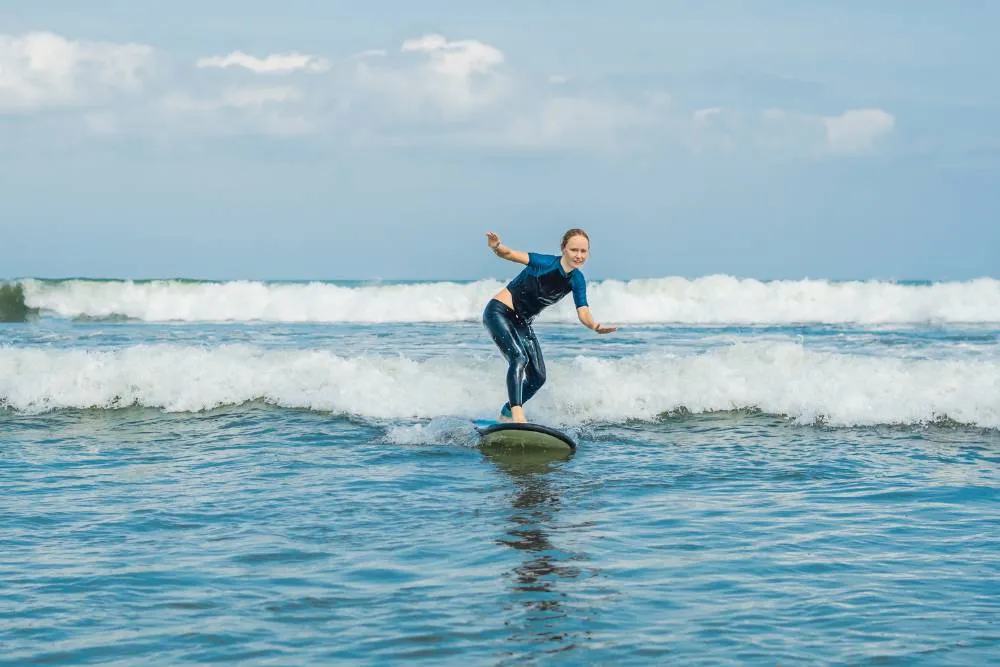 If you’re a beginner, combine surfing with a vacation you want to take anyway, rather than commit to the sport entirely — Getty Images
Depending on where you are in the world, you might want to try somewhere ‘local’ (or as local as you can get) before spending a fortune on a lengthy surf trip to the other side of the world. That being said, there are some destinations that offer great value for money and give you the trip of a lifetime on top of your surf schooling. We’ll look at some destinations later, but places like Morocco, Portugal , Bali , California, Sri Lanka and Spain will give you the right combination of the above factors, with the added bonus of the water in many of these places being warm as well.
How do I find good surf spots?
If you’re a beginner, ideally you’re looking for a sand-bottom beach with a gentle slope downwards towards the shoreline. This will create waves that break slowly, gently and predictably, and anything up to two feet high is pretty much perfect. For higher levels, reef breaks (waves that break over a coral or rock seabed) are what to look for: less forgiving, but give you the classic rolling wave you see in surf videos, making a successful ride the most satisfying. Again, we’ll look at some destinations in the sections below.
Where are the best surf spots in the world?
Beginner
California, US
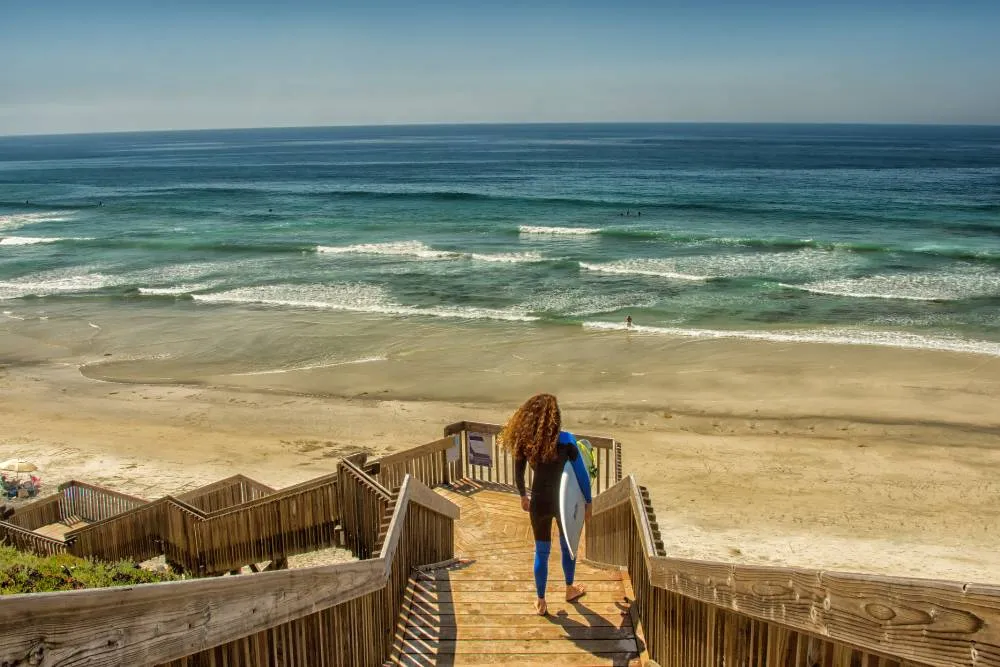 California is the quintessential US surf destination — Getty Images The classic US surf destination, the variety of beaches and almost-year-round sun means that not only will you find excellent surf schools, you’ll be able to immerse yourself in the surfing way of life. Learn, practice, improve, then chill on the beach, talk to the locals and get well-versed in the sport from some of its earliest adopters.
Morocco
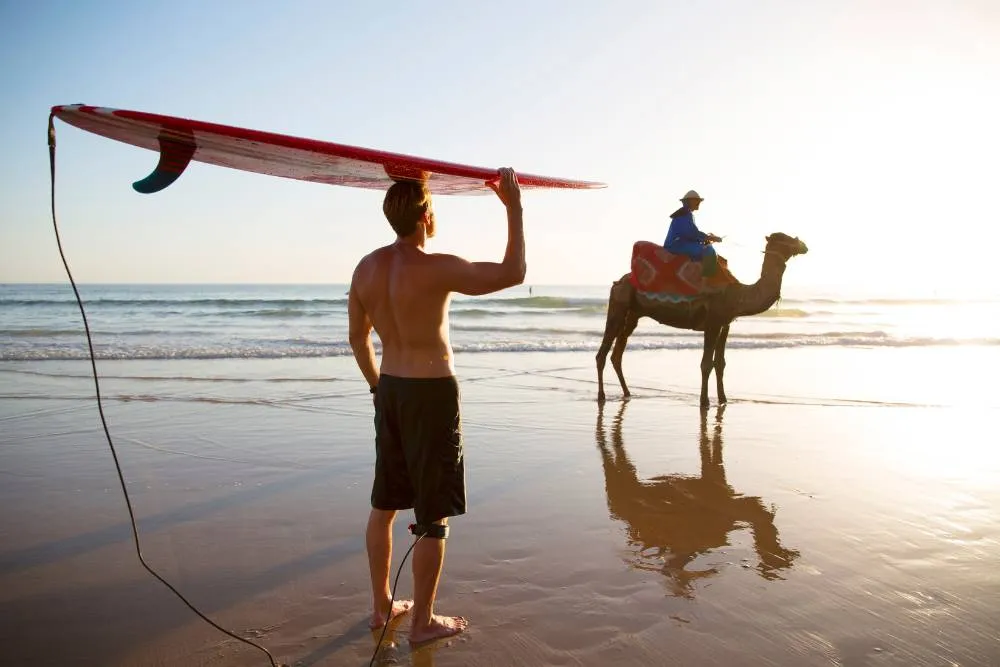 Taghazout is a small fishing town on the Moroccan coastline that’s been popular with surfers for decades — Getty Images Taghazout has been the center of the Moroccan surfing world since the 1970s, with European enthusiasts drawn by the relaxed
lifestyle, cheap places to stay, and 300 days of sunshine per year. There are loads of surf schools here now, and a variety of wave conditions, so if you improve quickly, you won’t have far to go to find the next challenge.
Taghazout is a small fishing town on the Moroccan coastline that’s been popular with surfers for decades — Getty Images Taghazout has been the center of the Moroccan surfing world since the 1970s, with European enthusiasts drawn by the relaxed
lifestyle, cheap places to stay, and 300 days of sunshine per year. There are loads of surf schools here now, and a variety of wave conditions, so if you improve quickly, you won’t have far to go to find the next challenge.
Sri Lanka
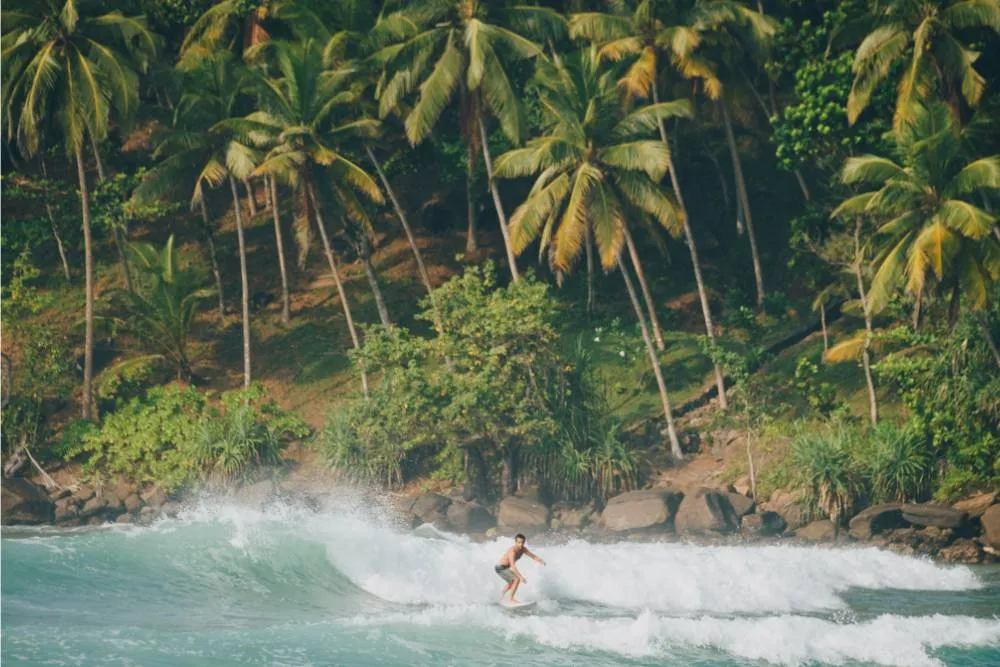 The best beginner beaches in Sri Lanka are in Matara District — Getty Images
 Budget Guides
Surf Nicaragua! The complete, essential guide to budget surfing trips
All you need to know before going to surf in Nicaragua: costs, the best beaches, the best time to go, surf camps, and more
Read the guide
Budget Guides
Surf Nicaragua! The complete, essential guide to budget surfing trips
All you need to know before going to surf in Nicaragua: costs, the best beaches, the best time to go, surf camps, and more
Read the guideA beautiful and diverse country, there are two areas of Sri Lanka that are top surfing spots. Arugam Bay, on the east coast, is one of the top 10 surfing destinations in the world and the only spot on the island that hosts competition surfing. Beginners, however, might want to head south to Matara District where you’ll find wide, sandy beaches with long, slow waves, meaning a good ride without being too challenging.
Intermediate
Maldives
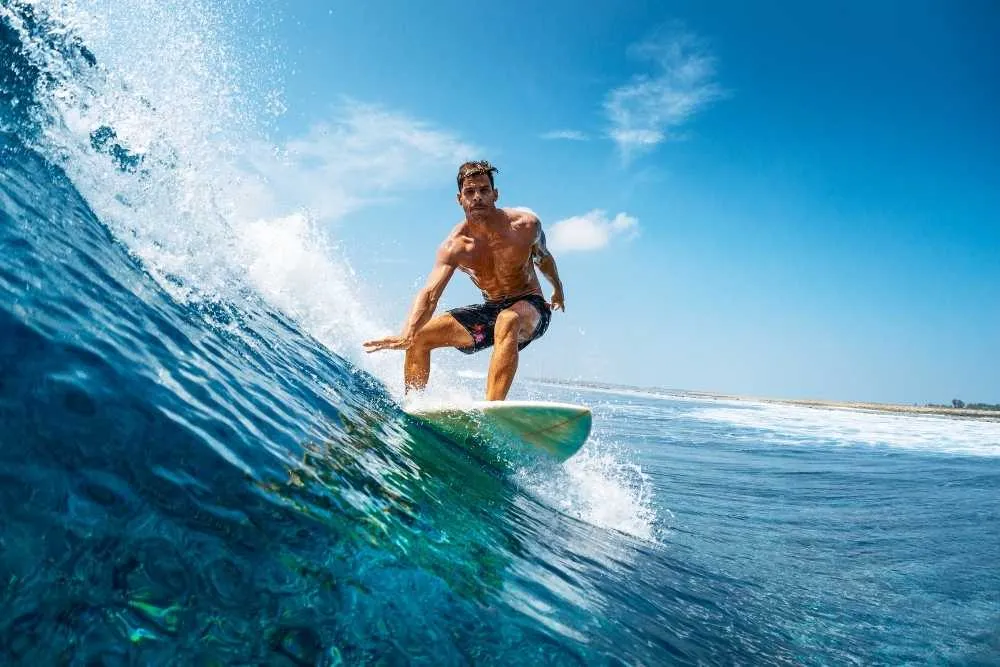 Surfer on the Jailbreaks reef break in the Maldives — Shutterstock
The Maldives are a chain of 26 coral atolls stretching for miles through the Indian Ocean. The fact that you’re basically on coral already means you’ll get fantastic waves wherever you find yourself — crystal-clear seas and waves of around six to seven feet are perfect conditions for any intermediate surfer.
Portugal
Portugal ’s long Atlantic coast means that whether you’re looking for a sheltered bay or a vast stretch of sand battered by wind and waves, you’ve got it somewhere. Big cities, small villages, busy beaches or spots to practice by yourself: places like Lisbon , Nazaré, Porto, Lagos, Ericeira and more mean you’ll find not only the perfect beach, but also the perfect place to stay.
Australia
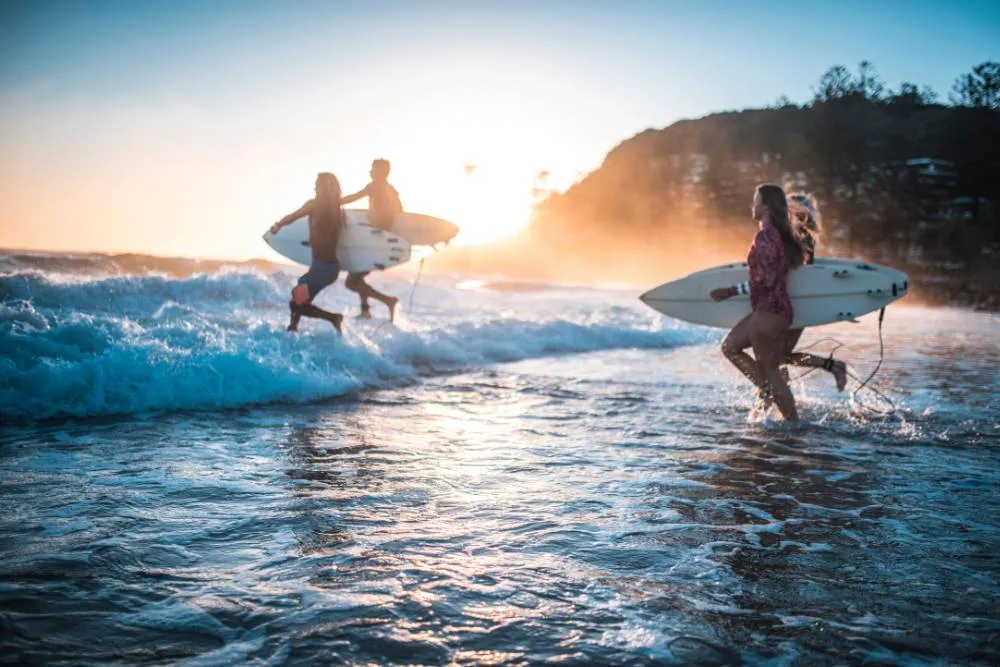 Australia is the destination for when you really start getting into surfing — Getty Images
Like California, Australia is almost stereotypically surf-happy. Even the names — Bondi Beach, Byron Bay and the like — suggest sunny days in the surf and evenings on the beach. It does mean that a lot of the most popular destinations can get busy (and it’s also not as cheap an option as some other destinations listed here), but you can’t call yourself a surfer and not give Australia a go.
Advanced
Costa Rica
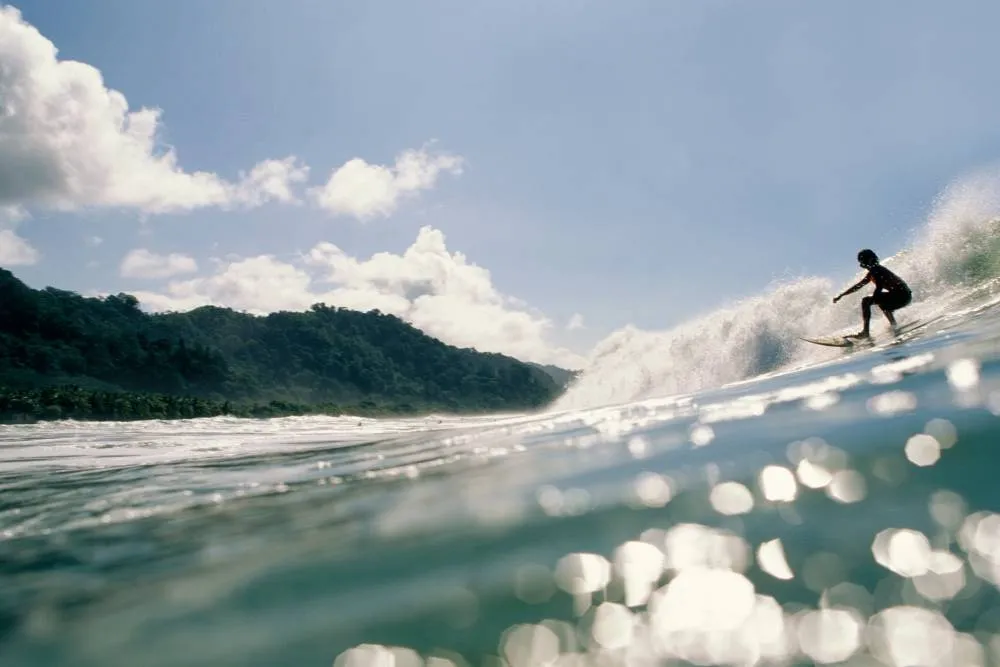 There are plenty of reasons to visit Costa Rica, and it being one of the best surfing spots in the world is one of them — Getty Images This Central American
country is quickly becoming one of the top destinations for surfing in the world, with a combination of waves and a laid-back vibe from the locals making it warm and welcoming. The Pacific coast is good for beginners and intermediate surfers with its consistency and predictability, but the Caribbean coast produces powerful reef breaks, especially between October and April, so for a more advanced challenge, that’s where you’ll be headed.
There are plenty of reasons to visit Costa Rica, and it being one of the best surfing spots in the world is one of them — Getty Images This Central American
country is quickly becoming one of the top destinations for surfing in the world, with a combination of waves and a laid-back vibe from the locals making it warm and welcoming. The Pacific coast is good for beginners and intermediate surfers with its consistency and predictability, but the Caribbean coast produces powerful reef breaks, especially between October and April, so for a more advanced challenge, that’s where you’ll be headed.
Japan
An unexpected destination perhaps, but the coastline of Chiba Prefecture offers some genuinely great and challenging surf conditions. Around two hours from Tokyo , you’re far enough away to get the village vibe, and between August and October, you can surf with the locals who wait for the waves that come with the typhoon season. If ‘waves’ and ‘typhoon season’ don’t tell you that this is not for the faint-hearted, I can’t help you.
Oahu, Hawaii, US
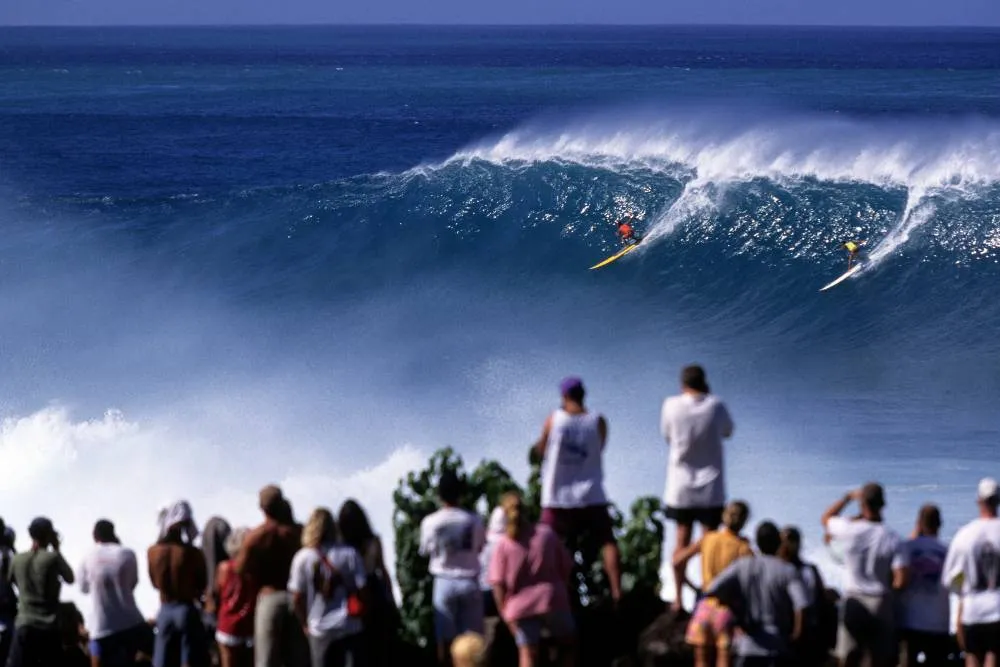 Oahu is the place to be for pro surfers — Getty Images
We finish with the classic, the biggie, the mecca of surf spots: Oahu’s North Shore is home to some of the biggest waves and toughest surfing competitions on the planet. The North Shore is where you need to be in winter, while in summer it’s the South Shore. Whenever you’re there, you’ll get amazing swells plus palm-lined beaches, soft, warm sand, and lush forests to explore when you’re done with the waves. Do you want more travel articles? Visit Kiwi.com Stories .