






Seeing the Canadian Rockies is special because of their majestic, jagged scale. Unlike ‘rounder’ mountains, these are geologically young and brutally sharp, carved by massive glaciers that left behind impossibly vibrant, turquoise lakes. It remains a pristine wilderness with wild grizzlies and elk. The itinerary is doable because it is only 80 miles (129 km) from Calgary to Banff along the Trans-Canada Highway. Book your Parks Canada shuttles for Lake Louise and Moraine Lake as early as you can.
Day 1: Touch Down & Explore Calgary
You will kick off your trip by landing at Calgary International Airport. Calgary serves as the ultimate gateway to the Rockies. Spend your first day soaking up the city’s vibrant, modern downtown atmosphere.
Scenic River Walk
Stretch your travel legs with a stroll along the Bow River pathway system down to Prince’s Island Park.
Peace Bridge
Walk across the iconic, bright-red Peace Bridge and don’t miss the stunning, wood-and-glass curves of the Central Library, a must-see architectural masterpiece.
Inglewood
The historic neighborhood of Inglewood is Calgary’s oldest community, having evolved into a trendy hub for independent shopping, local craft breweries, and bohemian culture.
Local Dining
Head to the Beltline or Kensington neighborhoods for an incredible meal to fuel up for the mountain days ahead.
Day 2: The Transition to Canmore
The Trans-Canada Highway
Hit the Trans-Canada Highway (Highway 1) west for a scenic 90-minute drive past towering limestone massifs. Canmore is a beautiful, laid-back alpine town that sits right on the border of Banff National Park and offers a highly authentic mountain community vibe.
Riverside Trails
Wander along the Policeman’s Creek Boardwalk right from downtown for clear, reflective views of the famous Three Sisters peaks.
Historic Crossings
Visit the Canmore Engine Bridge, a striking piece of railway history spanning the turquoise Bow River.
Craft Culture
Spend your evening popping into locally owned boutiques on 8th Street and checking out Canmore’s thriving local microbreweries.
Day 3: Chasing Canmore’s Turquoise Waters
Dedicate this day to exploring the dramatic terrain surrounding Canmore before you officially enter the national park gates.
Grassi Lakes Trail
The Grassi Lakes Trail is one of the most rewarding short hikes in the entire Bow Valley, taking you up the mountainside just outside of town. The trail leads to two stunning, shallow lakes with a unique t gemstone hue that shifts between emerald green and deep blue.
Petroglyphs
Rock walls near the top feature ancient Indigenous pictographs if you keep your eyes peeled.
Quarry Lake Park
Quarry Lake Park sits on the south side of the valley and provides an open area to relax away from the denser tourist crowds. It has a rocky beach and crystal-clear water fed by an underground mountain spring and offers panoramic views of the famous Three Sisters peaks.
Canmore Cave Tours
For a completely unexpected mountain experience, booking an expedition with Canmore Cave Tours takes you underneath the Rockies into the depths of Grotto Mountain.
The Location
Explores Rat’s Nest Cave, a wild, undeveloped cave system that maintains a consistent 5°C temperature year-round.
No Handrails
Unlike commercialized tourist caves, you will be wearing overalls, helmets, and headlamps, navigating natural rock slides and squeezing through tight spaces.
Day 4: Entering Banff & Reaching the Peak
Drive 20 minutes further west past the park gates into the bustling, beautifully planned mountain townsite of Banff. After checking into your basecamp, head straight to Sulphur Mountain to get your bearings from above.
Banff Gondola
The Banff Gondola takes you up the steep slopes of Sulphur Mountain, delivering you to a massive multi-level observation deck without the grueling uphill hike. It is a fantastic option to get your bearings and view the sweeping valley.
The Boardwalk
Features a 1-km mountaintop boardwalk trail leading to the historic Sanson’s Peak meteorological station.
Amenities
The summit complex includes interactive biological exhibits, a multi-sensory theater, and several high-end dining spots with floor-to-ceiling windows.
Mount Norquay
Mount Norquay sits on the opposite side of the valley and offers a completely different mountain perspective.
Via Ferrata
Features a guided, assisted climbing experience where you navigate suspended bridges and ladder rungs anchored right into the sheer rock face.
The Chairlift
You can ride an open-air vintage sightseeing chairlift up to the historic Cliffhouse Bistro for a casual meal suspended over the townsite
Lake Minnewanka Cruise
A Lake Minnewanka Cruise is a relaxing way to experience Banff’s largest glacial-fed lake, located just a short 15-minute drive outside the main town.
Soak and Unwind
Head to the historic Banff Upper Hot Springs to soak in mineral-rich, warm waters with mountain views.
Day 5: Deep Canyons & Glacial Lakes
Use this day to trace the dramatic waterways carved into the limestone surrounding Banff townsite.
Johnston Canyon: Catwalks and Waterfalls
Drive to the famous Johnston Canyon early in the morning to beat the tour buses. An engineered network of cantilevered catwalks leads you deep through the canyon cliffs, bringing you face-to-face with roaring lower and upper waterfalls.
The Minnewanka Loop
Spend your afternoon driving the scenic loop northeast of town. Stop at the massive, glacier-fed Lake Minnewanka for a lakeside hike or the scenic 1-hour boat cruise, then stop at Two Jack Lake on the way back.
Day 6: The Ultimate Alpine Bucket List
Drive 45 minutes northwest of Banff along the Bow Valley Parkway (Highway 1A) or Highway 1 to see the crown jewels of the Canadian Rockies.
Lake Louise: The Fairytale Lake
Arrive at Lake Louise to admire its striking, opaque turquoise water set against the backdrop of the massive Victoria Glacier.
Historic Tea House Hike
Lace up your boots for the steady uphill hike to the Lake Agnes Tea House, where you can enjoy a warm cup of tea and fresh scones next to an alpine tarn.
Tip for Visiting Lake Louise
Attempting to drive a car to the lakeshore in the summer is highly discouraged, as the lot consistently fills up well before sunrise. Your safest, most stress-free bet is to pre-book a Parks Canada Shuttle or take the Roam Public Transit system.
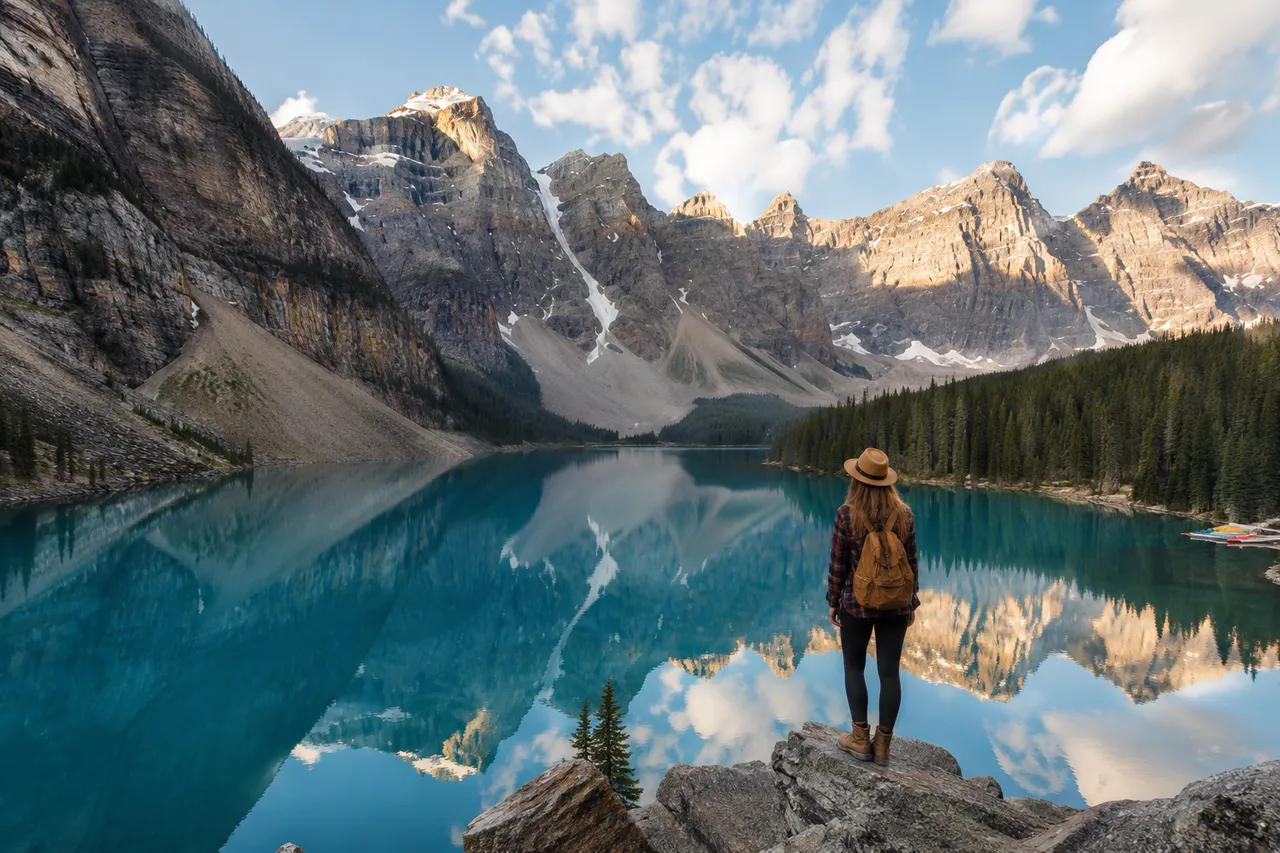
Stand in the Valley of the Ten Peaks at Moraine Lake
Moraine Lake requires separate planning because personal vehicles are banned on the access road. You must book a Parks Canada shuttle or commercial bus in advance, but the payoff is an unforgettable view.
The Rockpile Trail
A very easy 10-minute walk up a natural rock dam leads to the iconic “Twenty Dollar View” (once featured on the Canadian $20 bill) looking over brilliant turquoise water framed by ten massive jagged peaks.
Canoeing
Renting a canoe here is often favored over Lake Louise because the perspective from the water looking up at the sheer vertical rock faces of the Ten Peaks is intensely dramatic.
Take the Lake Louise Sightseeing Gondola
Located at the Lake Louise Ski Resort, the sightseeing gondola lifts you up the slopes of Mount Whitehorn. The open-air chairlifts (or enclosed gondolas) cruise directly over prime grizzly bear habitat. It is widely considered one of the safest and most reliable spots in the park to glimpse wild grizzlies.
Whitehorn Bistro
Located at the top of the lift, this restaurant offers a massive outdoor patio where you can eat gourmet alpine food while looking directly across the valley at Lake Louise and the Victoria Glacier from afar.
The Lake Louise Railway Station
Down in the valley-floor village, you can skip the corporate resort vibe and have lunch or dinner at the historic Lake Louise Station Restaurant. You can dine in the beautifully preserved station or enjoy a meal directly inside a vintage 1925 Canadian Pacific railway dining car parked permanently on the tracks.
Yoho National Park
Because Lake Louise is right on the continental divide, driving just 20 to 30 minutes west takes you straight into British Columbia and Yoho National Park, which offers massive geographical scale with a fraction of the Banff crowds.
Takakkaw Falls
Takakkaw Falls is one of the highest waterfalls in Canada. A paved path from the parking lot brings you right to the base, where you will be misted by a thunderous 302-meter glacial drop.
Emerald Lake & Natural Bridge
Gorgeous Emerald Lake perfectly lives up to its name. On the drive in, you can stop at the Natural Bridge, an ancient rock formation where the Kicking Horse River has carved a tunnel through solid limestone rock.
Day 7: Mountain Sunrise to City Lights
On your final day, make the most of your remaining time in the mountains before your return flight. Grab a hot coffee from a local bakery and watch the morning sun turn the peaks pink. Do some last-minute gift shopping along Bear Street and Banff Avenue for authentic Canadian crafts.
The Journey Back
Take the 90-minute drive back down Highway 1 directly to Calgary International Airport to catch your evening flight home.
Important to Know
Master the New Moraine Lake & Lake Louise Rules
The Moraine Lake Ban
Personal vehicles are completely banned on Moraine Lake Road. The only way to see it is by booking a Parks Canada shuttle, public transit, or a private commercial tour bus. Book your shuttles for Lake Louise and Moraine Lake well in advance [see below].
The 48-Hour Ticket Window
Parks Canada sells 40% of the tickets on April 15 at 8:00 a.m. MDT. This window books up the bulk of the summer season, especially weekends and peak summer holidays. It releases the remaining 60% on a rolling basis at 8:00 a.m. MDT two days before your desired departure date (e.g., if you want to visit on a Thursday, you must be online ready to click “reserve” on Tuesday morning at 7:58 a.m.).
Don’t Sleep on Your Park Pass
To visit a national park, you must have a valid National Park Pass displayed on your vehicle dashboard. Buy your pass online beforehand, print it out, and drive right through the express lanes. (Note: Parks Canada occasionally runs free-admission promotions for specific summer dates, so check their official site before buying).
Pack for All Four Seasons in One Day
Mountain weather changes rapidly, especially if you change elevations. You might start your morning at 8:00 a.m. at Moraine Lake in chilly 4°C (39°F) weather, and by 2:00 p.m. be walking around Banff Avenue in 26°C (79°F) heat.
Always pack a warm fleece or down jacket, a completely windproof/waterproof rain shell, a beanie (toque), and lightweight gloves—even in July. If you take a lift like the Banff Gondola, the temperature at the peak will be drastically colder than the valley floor.
The Best Time to Visit
The absolute best time to go is from late June to mid-September. Depending on your travel style, the perfect 7-day window falls into three distinct brackets:
The Sweet Spot: Late June to Early July
If your priority is seeing the world-famous turquoise water, this is your target window. Glacier-fed lakes like Moraine Lake and Lake Louise are completely thawed by late June and showing off their most vibrant blue color.
Endless Daylight
Around the summer solstice, you get daylight until 10:00 p.m. This allows you to pack in dawn hikes and evening paddles without rushing.
But . . .
June is historically the rainiest month, though it usually clears quickly.
The Golden Window: September (Post-Labor Day)
If you want crisper hiking weather, fewer crowds, and gorgeous scenery, go right after the kids go back to school. From mid-to-late September, the subalpine larch trees turn a fiery gold. It is possibly the most beautiful time of the year to hike.
Smoother Logistics
The summer rush clears out, making it significantly easier to secure parking at major trailheads and book last-minute shuttles.
But . . .
High-altitude nights plummet below freezing, and early-season snowstorms can occasionally dust the high mountain passes.
High Summer: July and August
This is offers the most reliable, warm weather, but it requires the most compromise.
Perfect Trails
Every single high-altitude hiking pass, backcountry route, and summer roads is guaranteed to be completely free of snow.
But . . .
It is incredibly crowded and expensive. You have to book your accommodations, park passes, and shuttles months in advance. Additionally, wildfire smoke can occasionally roll in during August, obscuring those iconic mountain views.
Planning a 7-Day Canadian Rockies Trip? Read These Essential FAQs Before You Go
Is a short, 7-day visit to the Canadian Rockies worth it?
Yes. While it is the minimum recommended time to experience the region, a 7-day window is sufficient to see the crown jewels of the Alberta mountains without feeling rushed if you plan strategically. A week allows you to experience some of the most spectacular alpine scenery in North America, but you should follow a focused route to maximize your time and avoid spending too much of your vacation in transit. Flying into Calgary International Airport helps, as it is only about a 90-minute drive from the park gates.
How do I make this timeline work best?
Because your time is limited, you cannot afford to waste a morning stuck in traffic or turned away from full parking lots. Book your Parks Canada shuttles for Lake Louise and Moraine Lake well in advance. Stick to the primary sightseeing corridors rather than attempting deeper backcountry adventures. Also, factor weather into your plans. Mountain weather is highly unpredictable, and a day or two of heavy rain or poor visibility can significantly affect your experience.
When is the best time to go?
The best time to visit is from late June through mid-September. In late June and early July, the famous turquoise lakes have thawed and daylight hours are at their longest, allowing more sightseeing and outdoor activities. Summer generally offers the best weather, but it is also the busiest and most expensive season. September brings fewer crowds and makes parking and shuttle reservations easier, although nighttime temperatures become much colder. Avoid visiting in May or October, when weather conditions can be less favorable and many experiences may be limited.
Can I take my car everywhere?
No. Personal vehicles are prohibited at Moraine Lake, and driving to Lake Louise during peak summer months is discouraged because parking often fills before sunrise. The best option is to reserve a Parks Canada shuttle as early as possible. Parks Canada typically releases 40% of shuttle tickets on April 15 at 8:00 a.m. MDT and the remaining 60% on a rolling basis at 8:00 a.m. MDT two days before the desired travel date. For example, if you plan to visit on a Thursday, be ready to reserve your shuttle on Tuesday morning.
What should I pack?
Pack for all four seasons. Weather conditions in the mountains can change dramatically throughout the day, especially when changing elevations. You may start the morning in temperatures around 4°C (39°F) and experience 26°C (79°F) by afternoon. Always bring a warm fleece or down jacket, a fully waterproof and windproof rain shell, a beanie (toque), and lightweight gloves, even during July. Temperatures at mountain summits can be significantly colder than in the valleys. Comfortable walking shoes are essential, and hikers should bring supportive mid- or high-cut hiking boots.
Popular routes on Kiwi.com
- Cheap flights from London to Turkey
- Cheap flights from London to Barcelona
- Cheap flights from London to Japan
- Cheap flights from London to New York
- Cheap flights from New York to Paris
- Cheap flights to Spain
- Cheap flights to Italy
- Cheap flights to the United States
- Cheap flights to the United Kingdom
- Last minute flights
People Also Read

How to Travel Patagonia: A First-Timer's Guide to Chile & Argentina's Wild South
Where to stay in Palma de Mallorca: best areas for beaches, culture and nightlife