






Here at Kiwi.com
, travel is simply what we do, and we’re passionate about making it accessible
to all. Getting people from A to B affordably is our thing, so that more and more people can see the parts of the world they’ve always dreamed of seeing. The majority of the tickets that Kiwi.com offers are for cheap flights
. After all, airplanes are the quickest, most efficient mode of long-haul transport; it’d be a struggle (or a lot of fun, depending on how you look at it) to see the world without them. But the catch is that the thought of traveling on an airplane
provokes anxiety, to some extent, in an estimated 40% of people. On top of this, around 6% are affected by aviophobia — the clinical fear of flying. 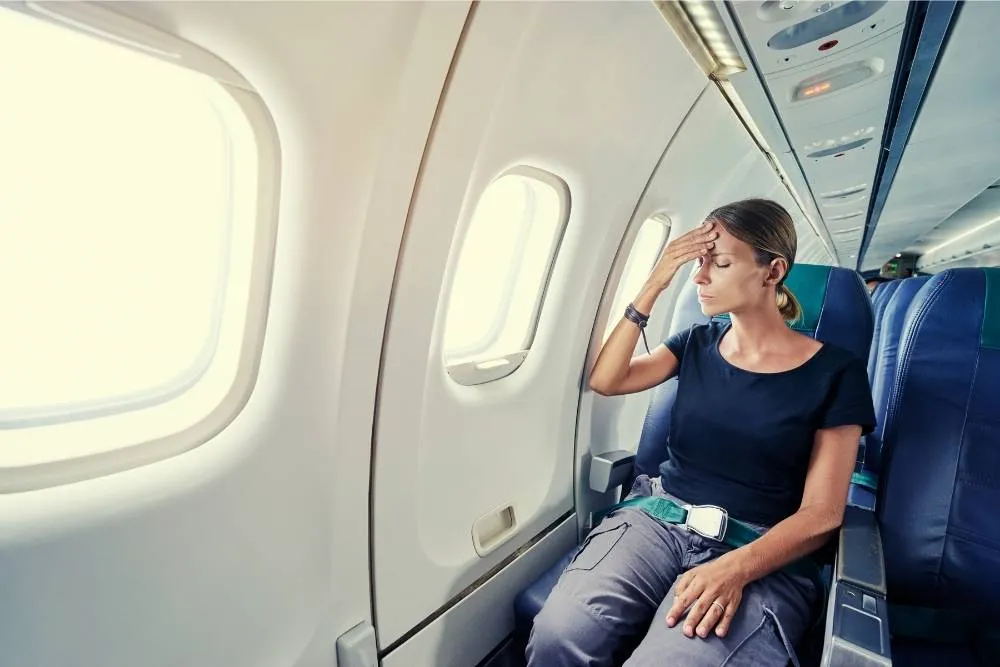 Nearly half of us are unnerved in some way by the prospect of traveling on an airplane — Shutterstock According to Kata Mraz, psychologist and head of the GCP Europe clinic, the scariest thing about flying is often the relinquishing of control. “The moment when the plane door closes, you can’t just leave the situation. Closely related to this is the fact that if someone starts to experience the unpleasant symptoms of aviophobia, they have no choice but to deal with them on board the aircraft. Several hours of being in the air, coping with the fear, could feel like a lifetime for them,” she says. Indeed, like all phobias, aviophobia is an irrational fear. In other words, the thoughts and feelings that aviophobics experience cannot be alleviated with the simple knowledge that statistically, an airplane is the safest major mode of transportation. We recently commissioned a survey in parts of Central Europe to find out more about the prevalence of the fear of flying, as well as about any tips or tricks
that our respondents had for combatting their airplane anxiety. From the survey, we learned that 47% of females and 43% of males were seeking ways to cope with the stresses of air travel. Perhaps surprisingly, Generation Z (people aged roughly between 12 and 26 at the moment) was the demographic cohort that the fear affected the most, with 53% of respondents saying that they experience anxiety when they fly. And most interestingly, this rate declined with each generation; when it came to the Baby Boomers, the same proportion was a mere 27%. Whatever your age, a fear of flying shouldn’t get the better of you and your opportunities to see new things, gain fresh experiences, and create lasting memories
. Read on to discover
the five definitive tips for coping with a fear of flying that we gathered from our survey results.
Nearly half of us are unnerved in some way by the prospect of traveling on an airplane — Shutterstock According to Kata Mraz, psychologist and head of the GCP Europe clinic, the scariest thing about flying is often the relinquishing of control. “The moment when the plane door closes, you can’t just leave the situation. Closely related to this is the fact that if someone starts to experience the unpleasant symptoms of aviophobia, they have no choice but to deal with them on board the aircraft. Several hours of being in the air, coping with the fear, could feel like a lifetime for them,” she says. Indeed, like all phobias, aviophobia is an irrational fear. In other words, the thoughts and feelings that aviophobics experience cannot be alleviated with the simple knowledge that statistically, an airplane is the safest major mode of transportation. We recently commissioned a survey in parts of Central Europe to find out more about the prevalence of the fear of flying, as well as about any tips or tricks
that our respondents had for combatting their airplane anxiety. From the survey, we learned that 47% of females and 43% of males were seeking ways to cope with the stresses of air travel. Perhaps surprisingly, Generation Z (people aged roughly between 12 and 26 at the moment) was the demographic cohort that the fear affected the most, with 53% of respondents saying that they experience anxiety when they fly. And most interestingly, this rate declined with each generation; when it came to the Baby Boomers, the same proportion was a mere 27%. Whatever your age, a fear of flying shouldn’t get the better of you and your opportunities to see new things, gain fresh experiences, and create lasting memories
. Read on to discover
the five definitive tips for coping with a fear of flying that we gathered from our survey results.
1: Get to the airport early
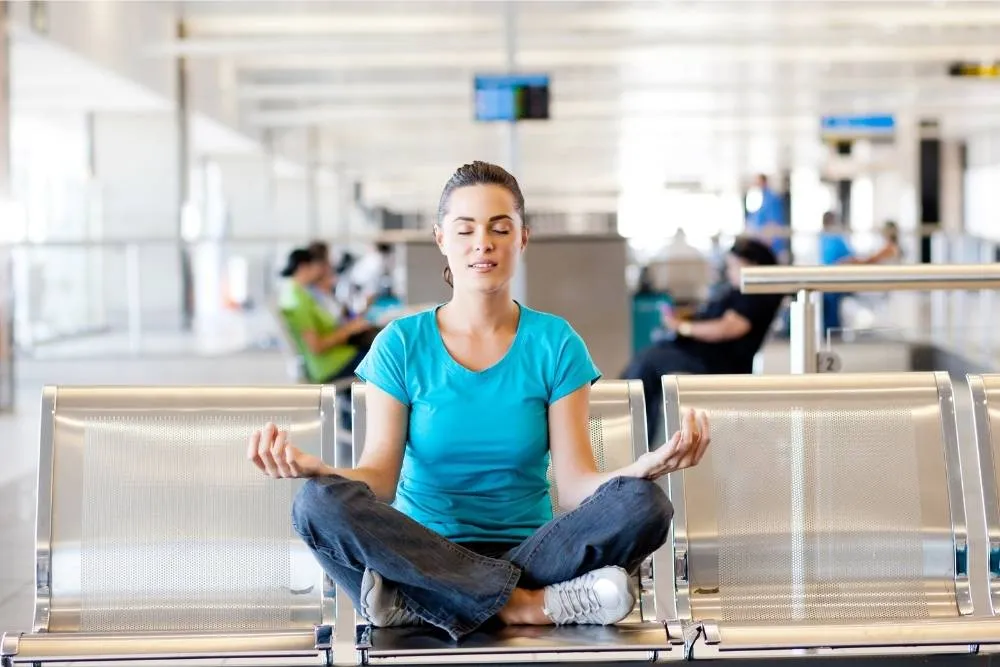 It stands to reason that turning up well in advance of your flight means less rushing around, and in turn, less stress — Shutterstock Many people that we surveyed expressed that their anxiety wasn’t provoked by being on the aircraft in particular, but rather by the whole convoluted process that one needs to go through to travel somewhere, often abroad, by airplane. Remembering all of your travel documents, navigating an airport
terminal, and making sure you’re standing in the correct line of people at the correct time are all just some of the little things that you need to do to make it to the plane, and it’s not surprising that a lot of us get overwhelmed. Overwhelmment easily triggers stress, and so arriving at the airport in good time to go through the pre-departure process at a more leisurely pace is bound to help keep your worries at bay. Being “early” for a flight
means arriving at the terminal at least three hours before departure time if you have baggage to check in, and at least two hours beforehand if you’re traveling with cabin baggage only.
It stands to reason that turning up well in advance of your flight means less rushing around, and in turn, less stress — Shutterstock Many people that we surveyed expressed that their anxiety wasn’t provoked by being on the aircraft in particular, but rather by the whole convoluted process that one needs to go through to travel somewhere, often abroad, by airplane. Remembering all of your travel documents, navigating an airport
terminal, and making sure you’re standing in the correct line of people at the correct time are all just some of the little things that you need to do to make it to the plane, and it’s not surprising that a lot of us get overwhelmed. Overwhelmment easily triggers stress, and so arriving at the airport in good time to go through the pre-departure process at a more leisurely pace is bound to help keep your worries at bay. Being “early” for a flight
means arriving at the terminal at least three hours before departure time if you have baggage to check in, and at least two hours beforehand if you’re traveling with cabin baggage only.
2: Sit on the wing
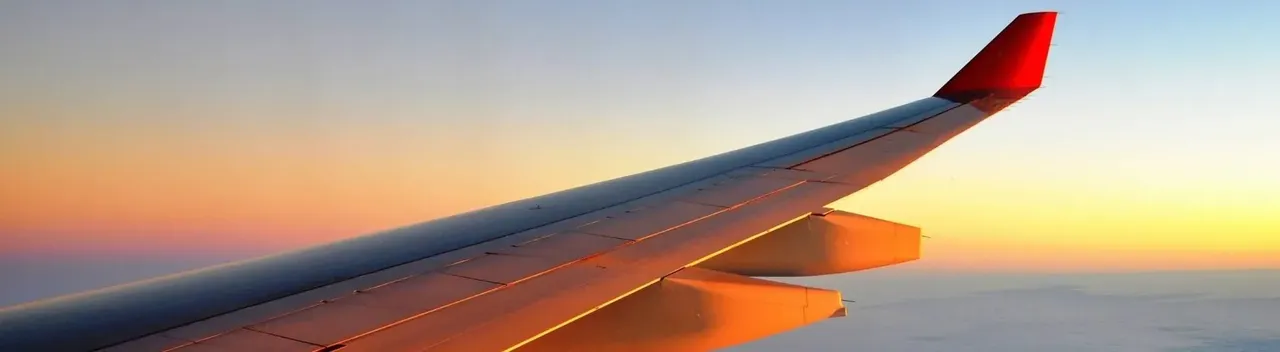
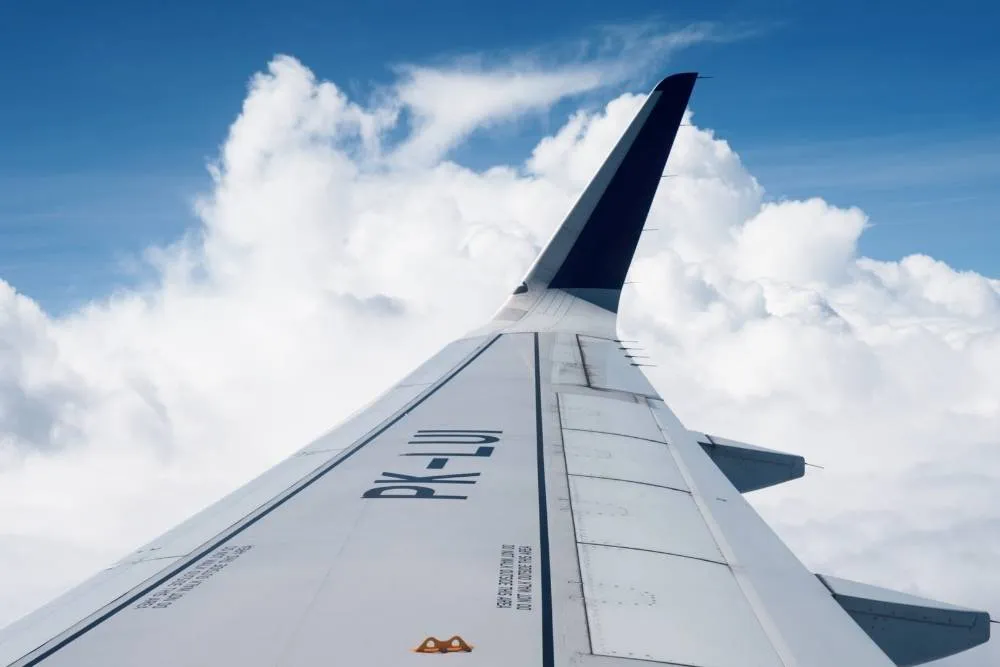 The middle of the plane is the ideal place to be if you have a fear of flying — Shutterstock Okay, not literally on the wing, just to make that crystal clear. But in a seat that’s more-or-less in the middle of the aircraft — where you can see the wing up close if you look out of the window — is supposedly the best place to be if you’re a nervous flier. The reasoning for this is twofold. One: if you are sitting by the window, your view of the sky and the ground far below is most obstructed. And two: if the airplane encounters any turbulence, the center is where you’ll feel the gentlest bumps.
3: Dull your senses
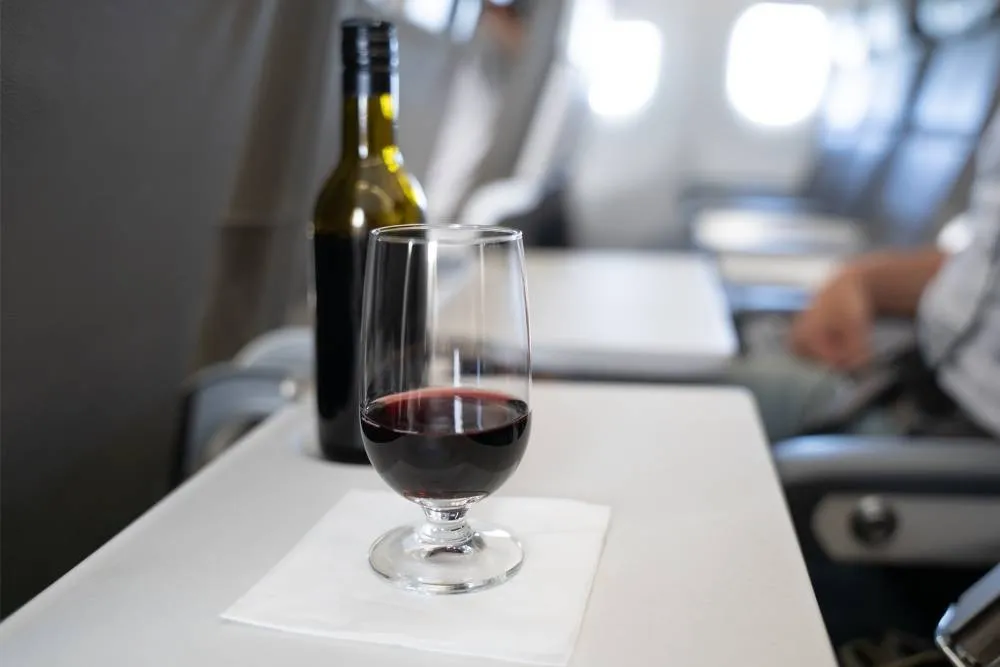 Many of our respondents said that drinking a small glass of wine helps them to feel less anxious on a flight — Shutterstock Approximately 16% of those we surveyed admitted to drinking a small quantity of alcohol (wine was the common beverage of choice) to relax
themselves before a flight. Around 10% cited other sedatives as a means to distract themselves from their anxiety. Now, this is obviously a tried-and-tested method of coping with a fear of flying, though we’ll neither condone nor condemn it…! Do bear in mind, however, that depressants also come with the side effect of an impaired ability to concentrate, react and be fully awake, which may well persist after your flight.
Many of our respondents said that drinking a small glass of wine helps them to feel less anxious on a flight — Shutterstock Approximately 16% of those we surveyed admitted to drinking a small quantity of alcohol (wine was the common beverage of choice) to relax
themselves before a flight. Around 10% cited other sedatives as a means to distract themselves from their anxiety. Now, this is obviously a tried-and-tested method of coping with a fear of flying, though we’ll neither condone nor condemn it…! Do bear in mind, however, that depressants also come with the side effect of an impaired ability to concentrate, react and be fully awake, which may well persist after your flight.
 Travel hacks
How to travel on a budget in 5 simple ways
Traveling on a budget? Amid the rise of inflation, more of us are looking for cheap travel tips and hacks. Here are five of the simplest ones
Read the guide
Travel hacks
How to travel on a budget in 5 simple ways
Traveling on a budget? Amid the rise of inflation, more of us are looking for cheap travel tips and hacks. Here are five of the simplest ones
Read the guide4: Distract yourself
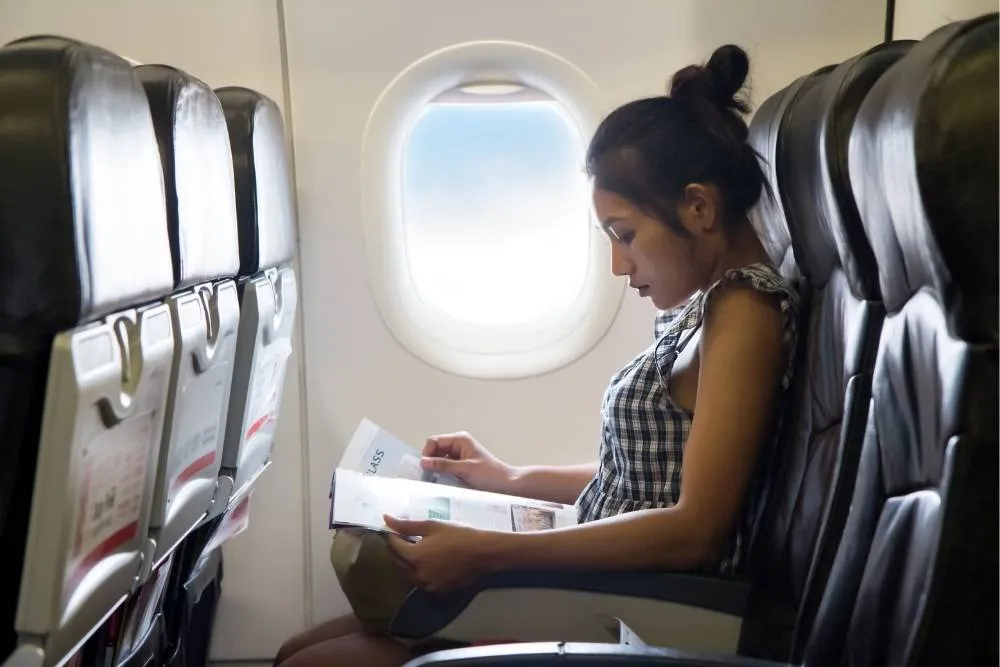 Bring something along that’ll soothe you, such as a book or magazine to read — Shutterstock Whether it’s having a film to watch, music
to listen to, a book
to read, or a therapeutic relaxation app to use, about half of our aviophobic respondents said that they’ll try several things to distract themselves during a flight. It might be beneficial to bring along some home comforts that’ll make you feel more soothed, such as a soft blanket or even photographs of your loved ones. One of the best ways to distract yourself from the situation is by sleeping, though it’s not always easy if you’re sitting upright. Consider getting a travel neck pillow to rest that frantic head of yours more snugly.
Bring something along that’ll soothe you, such as a book or magazine to read — Shutterstock Whether it’s having a film to watch, music
to listen to, a book
to read, or a therapeutic relaxation app to use, about half of our aviophobic respondents said that they’ll try several things to distract themselves during a flight. It might be beneficial to bring along some home comforts that’ll make you feel more soothed, such as a soft blanket or even photographs of your loved ones. One of the best ways to distract yourself from the situation is by sleeping, though it’s not always easy if you’re sitting upright. Consider getting a travel neck pillow to rest that frantic head of yours more snugly.
5: Don’t stop flying
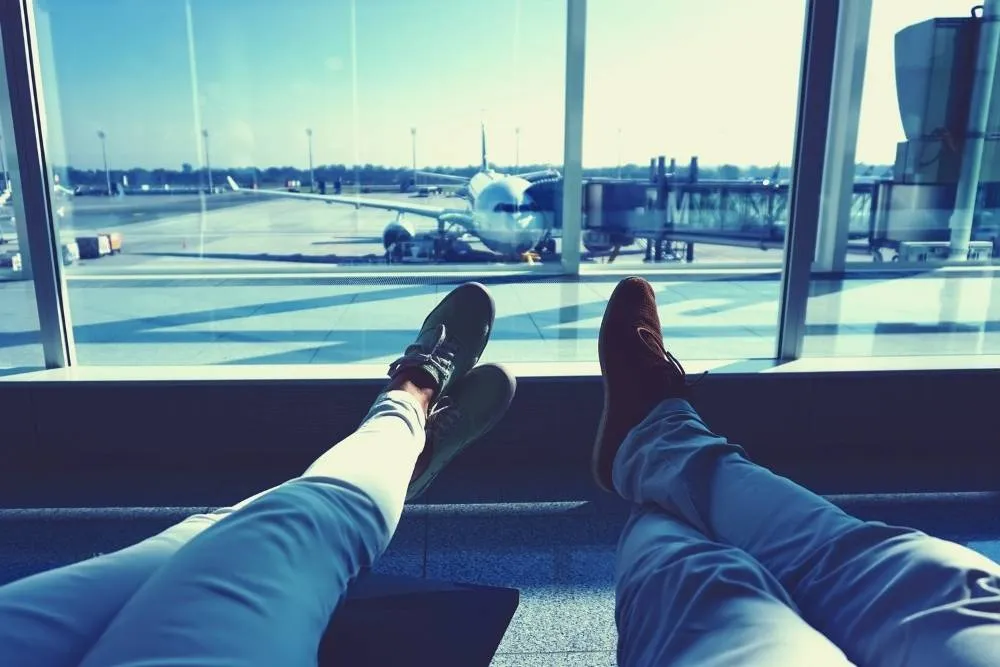 As with anything, the repeated experience of flying will make you feel more at ease over time — Shutterstock
Most research on the fear of flying concludes that the majority of sufferers are people who do so rarely, or even who haven’t been on an airplane before in their lives. The correlation is therefore pretty obvious — as with most things, with repeated exposure, it gets easier to deal with; meanwhile, the longer you leave it, the more difficult the prospect of flying becomes. Finally, be mindful of the fact that mild nervousness in advance of a trip is completely normal, so don’t despair if you never completely get over your fear of flying — just take it one boarding pass at a time. Do you want more travel articles? Visit Kiwi.com Stories .