

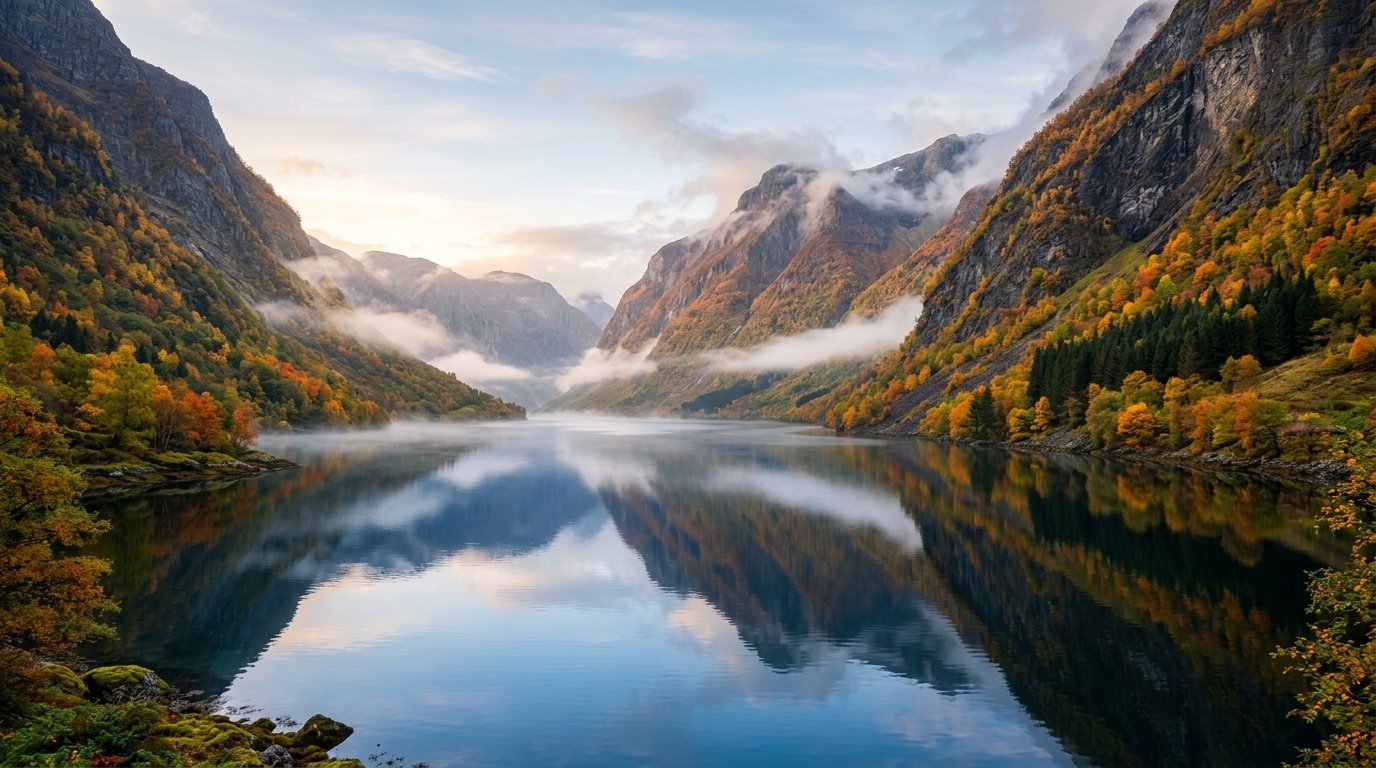
Scandinavia ’s perfect fall shoulder season is a fleeting, highly rewarding window that lasts roughly six to seven weeks, stretching from late August through mid-October. Summer crowds depart, prices drop significantly, and the region experiences comfortable weather alongside vibrant autumn foliage. This unique seasonal definition relies on a specific combination of practical, environmental, and cultural factors that do not exist during peak tourism months.
The weather in Scandinavia’s perfect shoulder season is not always perfect. It can change rapidly from crisp, sunny mornings to wet, wind-swept afternoons. There is an average of about 15 rainy days across the region. So pack a versatile wardrobe based on the three-layer system, with a windproof and waterproof outer layer, a middle layer of a lightweight fleece or down jacket, and wool long-sleeve tops and leggings. Also take along comfortable, broken-in trail sneakers or light hiking boots, as well as light gloves.
Key takeaways
The window runs late August to mid-October. The perfect fall shoulder season lasts roughly six to seven weeks in the south; the Arctic North window closes by late September.
Hotel prices drop 30 to 50 percent. Premium hotel rates in major hubs like Stockholm can plummet by 30–50% compared to peak summer prices.
Pack the three-layer system. A windproof and waterproof outer layer, a middle layer of a lightweight fleece or down jacket, and wool long-sleeve tops and leggings.
Auroras return in late September. The night skies become dark enough to witness the year's first official displays of the Northern Lights.
Expect about 15 rainy days. There is an average of about 15 rainy days across the region during the shoulder season.
Find flights for this trip

The “perfect” window by region
Because this vast northern region transitions rapidly from summer into a dark, freezing winter, the exact duration of the “perfect” window depends heavily on your specific latitude. (But see “How climate change is affecting the shoulder season,” below.)
The Arctic North (68°N and above)
The perfect window: from late August to late September, approximately 4 weeks.
The reality: in places like Tromsø , Abisko, and Finnish Lapland, the famous peak fall colors (ruska) hit early, usually by the second week of September. By early October, winter conditions set in rapidly across northern Norway, dropping temperatures below freezing, stripping the trees bare, and shutting down mountain pass roads.
Central and southern Scandinavia
The perfect window: September to mid-October, approximately 6 weeks.
The reality: in Oslo, Stockholm, and Copenhagen, the sweet spot holds much longer. September offers a delightful “late-summer vibe” with crisp, sunny days and golden foliage. The autumn colors peak across the south during the first two weeks of October.
When does the “perfect” season end?
The window officially closes by late October. November is widely considered the true off-season to skip across Scandinavia; the spectacular autumn colors disappear, daylight drops to just a few hours a day, and the weather turns into a cold, wet, gray drizzle before the proper winter snow arrives.
Why early fall is the ideal window
Fall serves as the ultimate “sweet spot” shoulder season across Scandinavia, delivering an ideal balance of dwindling tourist crowds, plunging accommodation rates, and vibrant autumn foliage. As the summer family rush clears out, the region shifts into a calmer, more reflective pace—making it highly prized for slow road trips, photography, and outdoor exploration before the harsh winter sets in.
- Significant savings — Premium hotel rates in major hubs like Stockholm can plummet by 30–50% compared to peak summer prices.
- Crowd-free sightseeing — You can explore signature sites, historic neighborhoods, and cultural attractions without navigating overwhelming tour groups or waiting in massive lines.
- The best of both worlds — Early autumn brings crisp, comfortable daytime temperatures—typically ranging from 12°C to 18°C (54°F to 64°F) in the south. This provides plenty of comfortable daylight hours for scenic travel and city walking.
- The return of the auroras — By late September, the midnight sun completely fades out in the far north. The night skies become dark enough to witness the year’s first official displays of the Northern Lights.
Regional conditions and what to expect
Because Scandinavia spans such a massive latitudinal range, the transition into autumn moves at very different speeds depending on where you visit:
| Region | Average Day / Night Temps | Key September Highlights |
|---|---|---|
| Denmark (Copenhagen) | Around 17°C / 10°C (63°F / 50°F) | Cozy cafe culture (hygge), harvest markets, and pleasant city cycling. |
| Sweden (Stockholm) | Around 15°C / 9°C (59°F / 48°F) | Calm waterfront promenades and golden fall foliage throughout the urban parks. |
| Southern Norway (Oslo / Bergen) | Around 14°C to 16°C (57°F to 61°F) | Peak autumn colors along the iconic Flåm Railway and Bergen Line routes. |
| Arctic North (Tromsø / Lapland) | Around 11°C / 6°C (51°F / 42°F) | Deep valley colors, dustings of snow on mountain peaks, and early Aurora viewing. |
How climate change is affecting the shoulder season
Climate change is structurally expanding the length, geographic predictability, and visitor volume of Scandinavia’s shoulder season. Historically a fleeting 6-week transitional phase, the shoulder season is stretching outward due to a mixture of altered meteorological patterns and rapidly shifting global travel behaviors.
Temporal extension: shifting from weeks to months
The traditional summer window is pushing significantly deeper into autumn. Warming trends in the Northern Hemisphere have increased the average length of summer-like conditions.
- The October stretch — September is behaving more like a traditional August, offering milder, warmer days. At the same time, the “perfect shoulder weather” window that once closed abruptly by late September now frequently pushes deep into mid-to-late October in places like Stockholm and Copenhagen.
- Winter delayed — The snow season across southern Fennoscandia (the Scandinavian Peninsula, Finland , the Kola Peninsula, and Karelia) is starting noticeably later in the year. This delays the onset of the dreary, dark November off-season, buying travelers more comfortable outdoor exploration time.
The “coolcation” trend reshaping demand
Climate change isn’t just warming Scandinavia; it is making Southern Europe increasingly hospitable to extreme heatwaves, wildfires, and drought during the traditional peak months. As a result, according to reports by the European Travel Commission, a growing number of travelers are actively avoiding peak summer in the Mediterranean due to climate anxiety and stifling temperatures.
This has created the “coolcation” phenomenon. Tourists who previously spent summers down south are shifting their travel itineraries to Northern Europe. This massive wave of travelers has naturally spilled over into the spring and autumn shoulder months, making the “quiet shoulder season” considerably busier and more vital to the region’s economy.
Changing environmental trade-offs
While the shoulder season is warmer and longer, climate change introduces a layer of volatile and intense weather disruptions:
- Heavier downpours — Studies from the Norwegian Meteorological Institute indicate that while Scandinavia is seeing fewer overall rainy days during its transitional seasons, the rain that does arrive is characterized by much heavier, more intense downpours.
- Disrupted fall colors — Rising temperatures are causing shifts in plant phenology. In the far north, the timing of the beloved ruska (the peak autumn foliage window) is becoming harder to target as trees hold onto their green leaves longer into the year before changing rapidly.
The best Scandinavian shoulder season regions
The four best specific regions across Scandinavia each offer a distinct highlight during the brief September shoulder season:
Fjord Norway (Bergen and the Flåm Railway)
The vibe: majestic waterfalls, mist-shrouded peaks, and deep blue waters.
Why September is perfect: the summer cruise ship crowds thin out, leaving the narrow docks of Bergen and the iconic Flåm Railway quiet and peaceful. Waterfalls are still rushing from late-summer rains, and the steep mountain walls are painted in bright autumn colors.
The Stockholm Archipelago and High Coast (Sweden)
The vibe: serene island hopping, calm Baltic waters, and dramatic coastal hiking.
Why September is perfect: summer boating crowds vanish, leaving the 30,000 islands of the Stockholm Archipelago perfectly still. Further north, the High Coast (Höga Kusten) offers crisp, mosquito-free hiking along Sweden’s most dramatic cliffs with views of the vibrant fall canopy.
The South Fyn Archipelago (Denmark)
The vibe: storybook fairy-tale villages, rolling hills, and cozy coastal bike paths.
Why September is perfect: Denmark shines in late summer and early autumn. The South Fyn (or Funen) Archipelago and its historic towns feature thatched-roof cottages and local farm stands bursting with the autumn harvest. Temperatures are mild enough for pleasant coastal cycling and evening seaside walks.
Finnish Lapland and Rovaniemi (the North)
The vibe: blazing valleys (ruska) and dark, aurora-filled night skies.
Why September is perfect: if you want an early taste of winter without the sub-zero bite, Arctic Lapland around Rovaniemi is ideal. The ground vegetation turns a deep crimson and gold and, because the midnight sun has faded, it is also a great time to see the Northern Lights reflected in open, unfrozen lakes.
Direct region comparison
| Region | Primary Appeal | Recommended Pace | Ideal Travel Style |
|---|---|---|---|
| Fjord Norway | Dramatic mountain scenery | Slow & steady | Fjord cruises & scenic trains |
| Swedish Coast | Coastal hiking & serenity | Active | Rental car & island ferries |
| South Fyn (Denmark) | Harvesting food & culture | Relaxed | Biking & cozy inn stays |
| Finnish Lapland | Northern Lights & foliage | Fast-moving | Cabin stays & nature walks |
Important shoulder season trade-offs
While the perks are massive, traveling during a shoulder season means navigating a few logistical realities.
- Unpredictable weather — The weather can flip rapidly. Crisp, sunlit mornings can easily give way to damp, wind-swept afternoons. It averages about 15 days of rainfall across the region.
- Early closures and reduced timetables — Outside of the summer peak, smaller fjord towns, rural restaurants, and specific ferry services drastically scale back their operations or close entirely for the season. Always check regional transit schedules before booking remote stays.
Packing layers is mandatory: the three-layer system
To pack successfully for Scandinavia’s September shoulder season, you must prepare for rapid, unpredictable changes in weather. You can easily experience crisp sunshine, sudden downpours, and chilly coastal winds all in a single afternoon.
A windproof and waterproof wardrobe
You will need a versatile wardrobe to handle the shifting elements. Focus on windproof and waterproof outer layers, thermal base items, and reliable, sturdy footwear for wet pavements or muddy trails. The absolute golden rule for this window is smart layering with high-quality, lightweight fabrics rather than packing heavy, bulky winter coats.
The three-layer system keeps you comfortable by letting you shed or add clothing as temperatures fluctuate throughout the day:
- Base layer (moisture-wicking) — Pack merino wool or synthetic long-sleeve tops and leggings. Merino wool is highly recommended because it regulates body temperature, dries quickly, and naturally resists odors over multi-day trips. Avoid cotton, which traps sweat and chills your body.
- Mid layer (insulation) — Pack a lightweight fleece or a packable down jacket (down or synthetic puffers). This layer traps your body heat. A packable puffer is perfect because it compresses tightly into your daypack when the afternoon warms up.
- Outer layer (weather protection) — A premium waterproof and windproof shell jacket with a hood (such as Gore-Tex). Do not rely on a basic water-resistant windbreaker; Scandinavian autumn rain can be heavy and wind-driven.
Footwear and extremities
Because shoulder-season exploration involves a lot of walking on wet pavements, cobblestones, or muddy nature trails, your feet must stay dry.
- Waterproof walking shoes or boots — Bring comfortable, broken-in leather or Gore-Tex trail sneakers or light hiking boots with excellent traction.
- Wool socks — Pack several pairs of medium-weight merino wool socks to prevent blisters and keep your toes warm in damp conditions.
- Beanie and light gloves — A thin wool beanie and a pair of lightweight, touchscreen-compatible gloves are essential, especially for breezy evening ferry rides or late-night Northern Lights hunting.
Essential gear and accessories
- Waterproof daypack — A comfortable backpack (20–30 liters) to carry your extra layers, an umbrella, and electronics. If your pack isn’t waterproof, buy a cheap hi-vis rain cover for it.
- Compact travel umbrella — Essential for city walks in Copenhagen or Stockholm when a full rain jacket feels too stuffy.
- Reusable water bottle and thermos — Tap water across Scandinavia is among the cleanest and tastiest in the world. A small insulated travel thermos is also a lifesaver for keeping hot coffee or tea on hand during chilly rural drives.
- Eye mask — While daylight fades fast in September, northern regions still get a surprising amount of early-morning light that can disrupt your sleep if your accommodation lacks blackout curtains.
- Universal power adapter — Denmark, Sweden, Norway, and Finland primarily use Type C and F plugs.
Packing checklist for a 10-day trip
- 4-5 merino wool or technical base shirts
- 2 lightweight sweaters or fleeces
- 1 packable down puffer jacket
- 1 sturdy waterproof shell jacket
- 3-4 pairs of versatile pants (dark jeans for cities, water-resistant trekking pants for nature)
- 1 pair of waterproof walking/hiking shoes
- 1 pair of casual city sneakers (for dry days)
- 5 pairs of wool blend socks
- 1 beanie, scarf, and pair of light gloves
Frequently asked questions
When is Scandinavia’s perfect shoulder season and what makes it “perfect”?
Scandinavia’s perfect fall shoulder season lasts roughly six to seven weeks, stretching from late August through mid-October. Daytime temperatures range from 12°C to 18°C (54°F to 64°F), making outdoor activity pleasant. Cultural sites, hiking trails, and cafes operate at a relaxed pace with no queues or crowds. And prices are 30–50% lower than in July and August.
That sounds too good to be true. Is it really “perfect”?
Let’s call it “relatively perfect”. After summer, smaller fjord towns, rural restaurants, and some ferry services drastically scale back or close for the season. Always check regional transit schedules before booking remote stays. And the weather can change quickly, so you can expect occasional rain and windy conditions. That means packing a versatile wardrobe and, especially, layers with a windproof and waterproof outer layer.
Scandinavia is big. What are the best regions to visit during that period?
In Norway, visit Bergen and the Flåm Railway for waterfalls, mist-shrouded peaks, and deep blue waters. In Sweden, see the Stockholm Archipelago and High Coast for serene island hopping in calm Baltic waters and dramatic coastal hiking. In Denmark, check out the South Fyn (or Funen) Archipelago and its fairy-tale villages and coastal bike paths. Finally, Finnish Lapland and Rovaniemi offer gorgeous valleys and dark, aurora-filled night skies.
When is the absolute best time to visit the various regions?
For the Arctic North (68°N and above), go in late August to late September because the famous peak fall colors hit early, usually by the second week of September. By early October, winter conditions set in rapidly. For central and southern Scandinavia, the perfect window lasts from September to mid-October because of the crisp sunny days and the autumn foliage, which peaks in the first two weeks of October. Also, premium hotel rates in major hubs like Oslo , Stockholm, and Copenhagen can plummet by 30–50%. There are fewer tourists and in late September, the night skies become dark enough to witness the year’s first auroras.
Is climate change affecting the region?
Indeed. The traditional summer window is lasting deeper into autumn, with longer summer-like conditions. At the same time, the “perfect shoulder weather” window that once closed abruptly by late September now frequently pushes deep into mid-to-late October in places like Stockholm and Copenhagen. This has also expanded the length and visitor volume of Scandinavia’s shoulder season. And tourists who previously spent summers down south are shifting their travel itineraries to Northern Europe because of severe heat waves and wildfires around the Mediterranean. This has made the “quiet shoulder season” considerably busier.