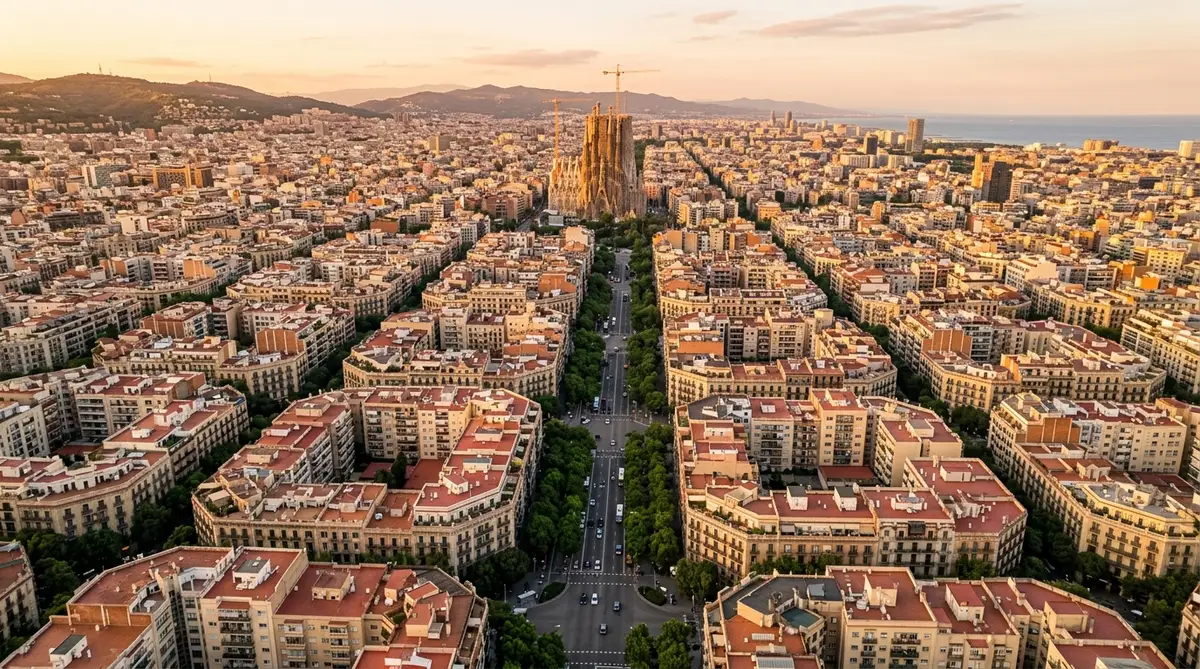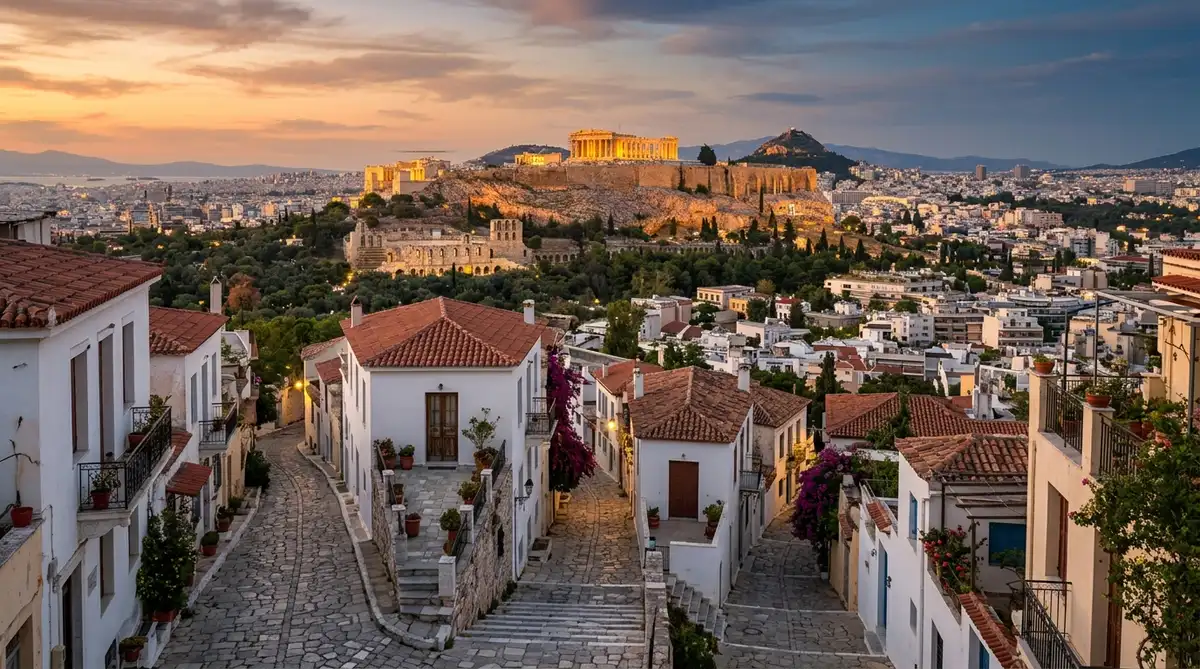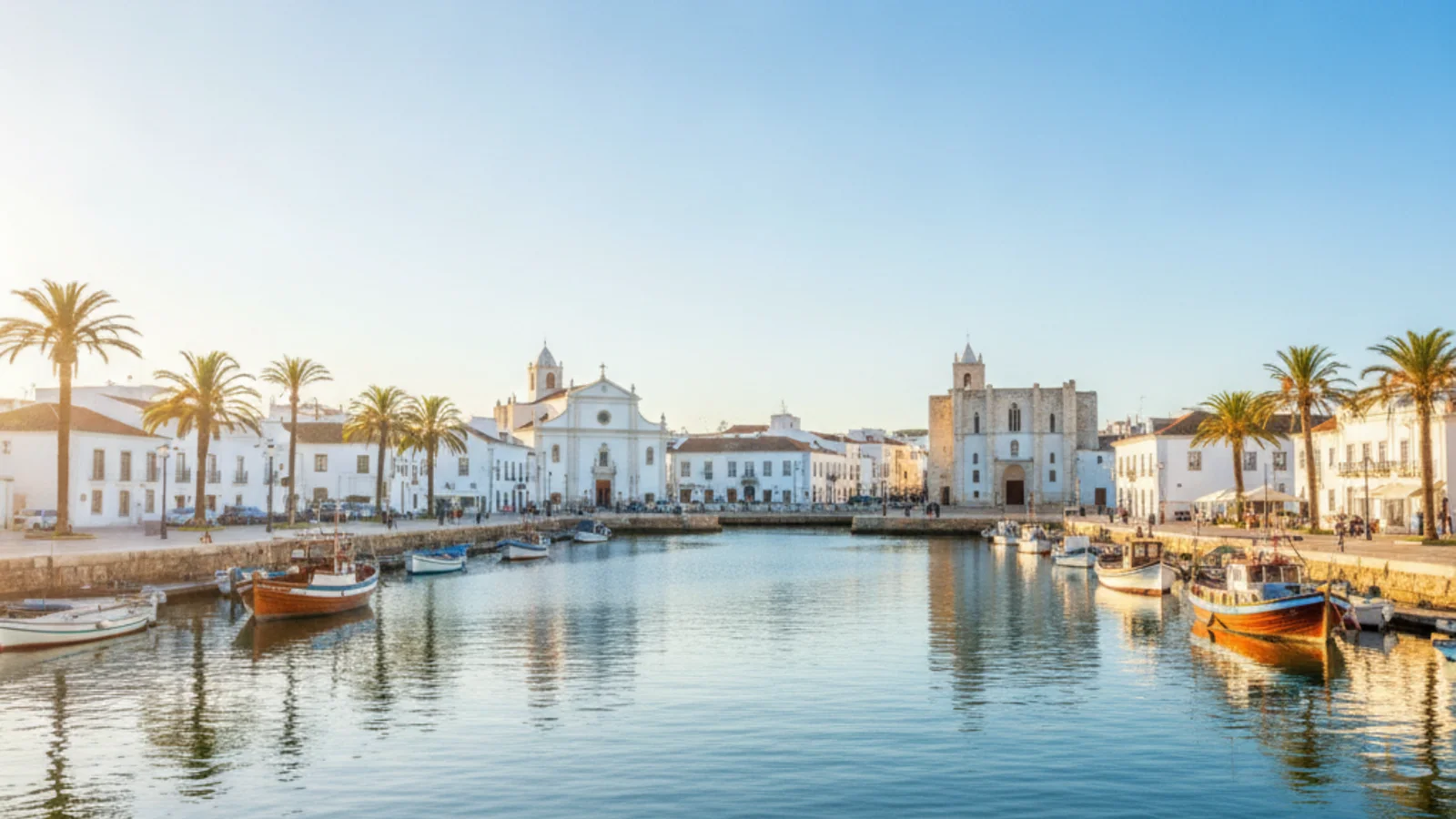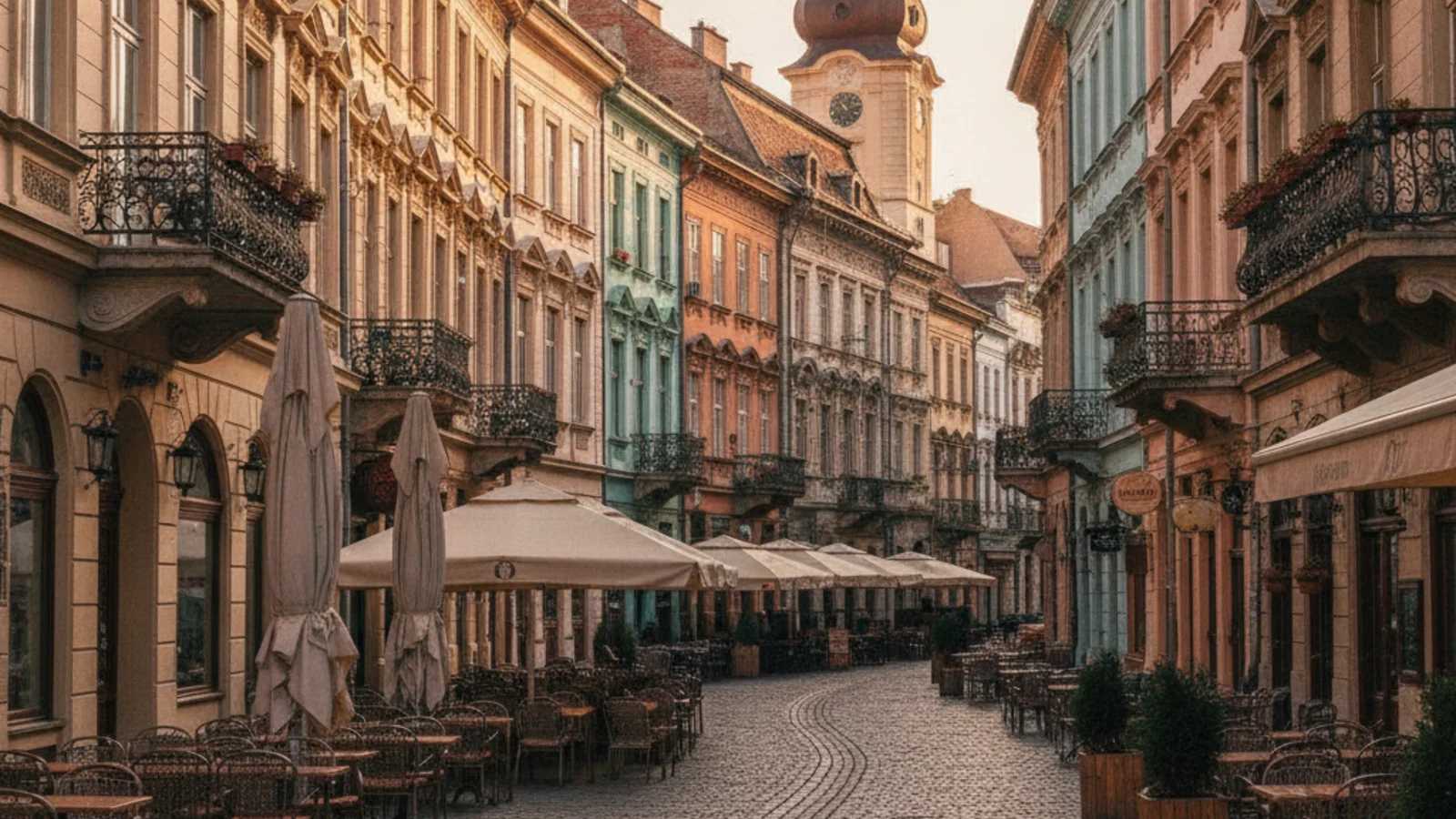

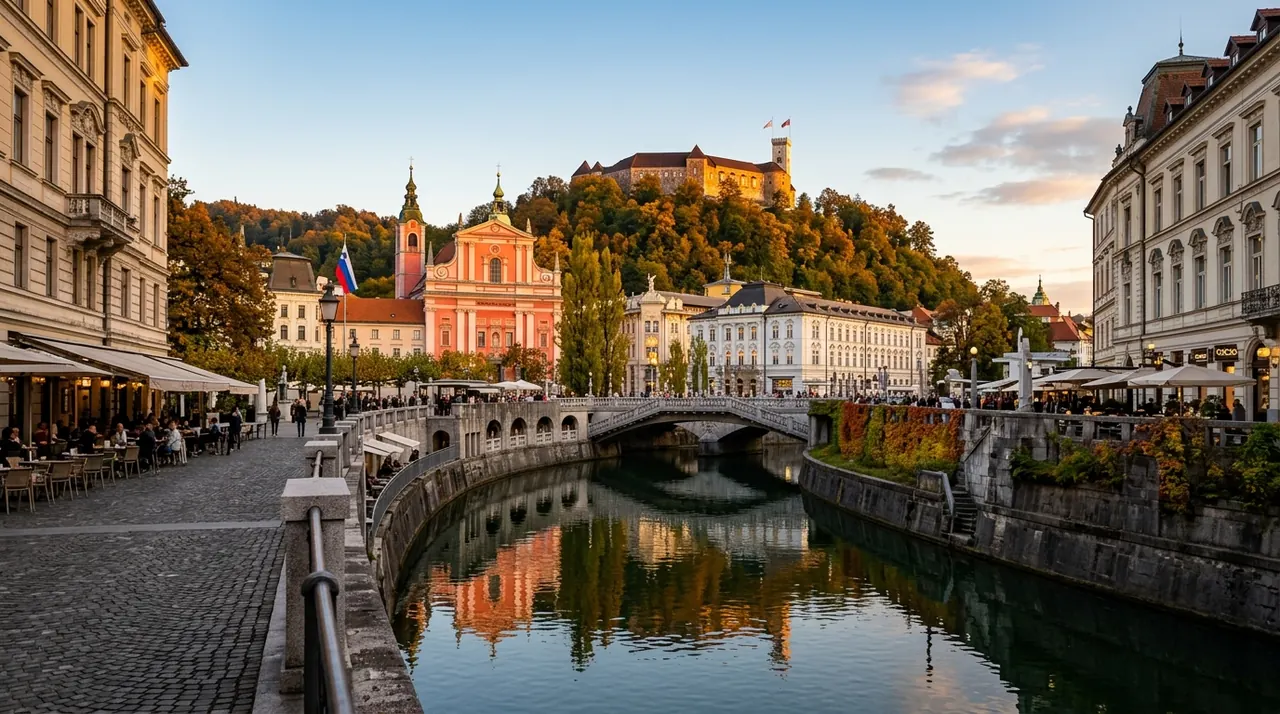
Ljubljana sits on the Ljubljanica River, with a castle on the hill and the Alps in the distance. The old town is car-free, one of the largest pedestrian zones in the EU. The cafes spill onto the cobblestone streets. Slovenia is one of Europe’s greenest countries, and its capital reflects that. There are trees and flowers everywhere, it is spotlessly clean, and the food scene mixes Slovenian, Italian, and Balkan influences. Two days here feels like a real break.
Day one: the essentials
Start at Prešeren Square, the heart of the city. The Franciscan Church is pink, originally painted red for the Franciscan order but faded to salmon over the centuries. The Triple Bridge, designed by architect Jože Plečnik, splits into three as it crosses the river. Plečnik is Ljubljana’s Gaudi, the architect who shaped the city to be liveable as well as beautiful. You will see his work everywhere: the bridges, the market, the library, the river embankments.
Take a photo with the dragons on Dragon Bridge. The dragon is the symbol of Ljubljana. Legend says Jason and his Argonauts fought a dragon here on their way to the Adriatic. You can spot dragons on flags, drain covers, benches, and souvenir shops throughout the city.
Walk up to Ljubljana Castle. The funicular from the market takes about a minute and costs €3.50 one-way. The view at dusk is the best: golden rooftops, the winding river, and the Kamniške Alps in the distance. If you want to go inside the castle museums, it is €16 including the funicular both ways. Give it 90 minutes.
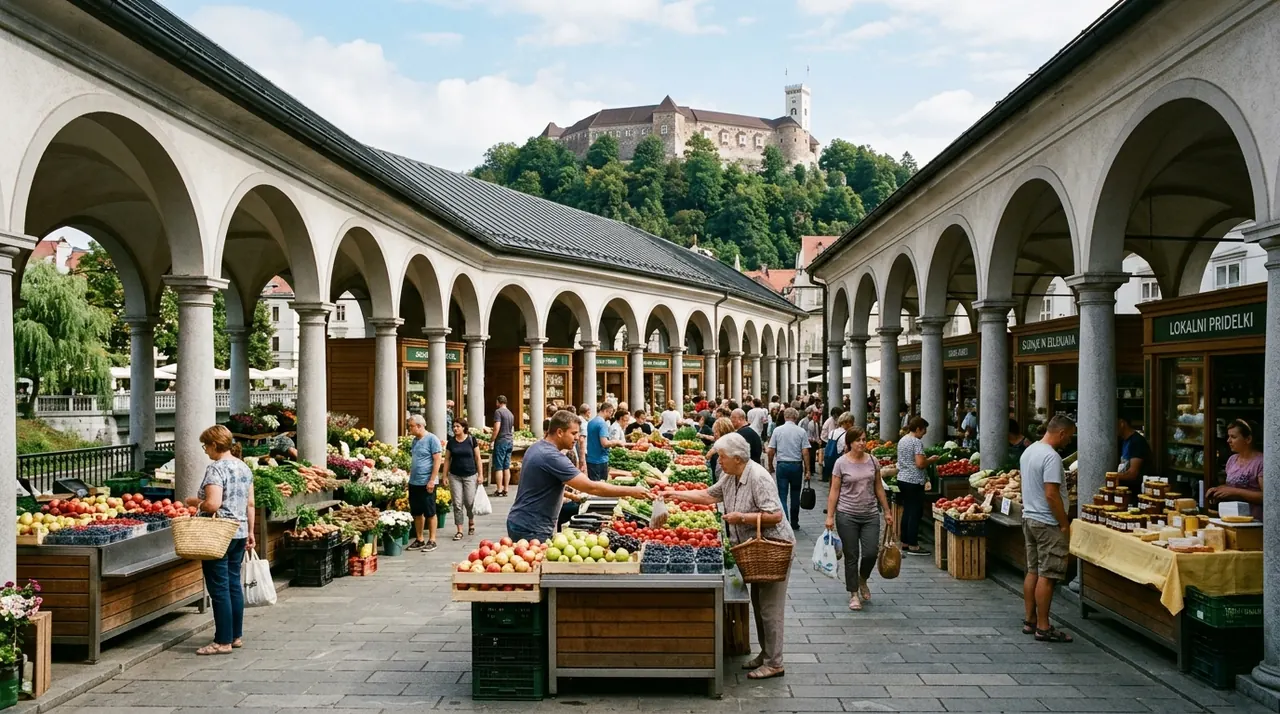
Come down to the Central Market, also designed by Plečnik. Open Monday to Saturday. The covered halls have pillars he was famous for. On Fridays from March to October, the market hosts Open Kitchen, where Ljubljana’s restaurants open pop-up stalls selling street-food versions of their dishes. It is the best food event in the city. A plate costs €5 to €10. There is a cow milk vending machine where you bring your own bottle.
In the afternoon, walk through Tivoli Park. The largest park in the city, with the Jakopič Promenade, a series of columns designed by Plečnik that often display art exhibitions. The International Centre of Graphic Art sits at the top. Free to enter. Look for the four cast-iron dogs at the bottom of the steps to the mansion. They have no tongues. The sculptor forgot to add them, and there is a local legend that he was so upset he took his own life. The legend is not true, but the dogs are still tongueless.
Evening: eat in the old town. Try orange wine, which Slovenia makes brilliantly and barely exports. A glass costs €3 to €5. For dinner, try štruklji at My Dumplings of Slovenia in the central market, a café dedicated to the traditional dumpling. Sweet fillings include cottage cheese with raisins and buckwheat with walnut. A portion costs €5 to €8. For a proper dinner, Gostilna Vida on a cobblestone side street does excellent vegan-friendly salads with crispy tempeh for around €13.
Day two: go deeper
Start with the free walking tour. It meets at 11am outside the pink church, year-round. Look for the person with the yellow umbrella. No booking needed. The tour takes 2 hours and covers the main sights with a local guide. Tip €10 at the end.
After the tour, visit Plečnik’s House, the museum in the architect’s former home. He built it for his mother and siblings, who never moved in. He never married, saying he was “already married to his architecture.” The house is full of his experimental designs. A guided tour costs €5.
Walk to Nebotičnik, the 13-floor Art Deco skyscraper built in 1933. The rooftop cafe has a wrap-around observation deck with the best view of the castle in the city. A cocktail costs €7 to €8. The castle view from the castle itself is great, but the castle is not in the photo. From Nebotičnik, it is.
Find Locksmith Street, Ključavničarska ulica, a narrow passageway you would easily miss. It has 700 bronze faces in a gully running down the middle, all pulling different expressions. Some cry, some scream, some laugh. The work of sculptor Jakov Brdar, inspired by the poet Rainer Maria Rilke. It leads to a water fountain and a caged skeleton. Surreal and worth 10 minutes.
In the afternoon, take a river cruise with Barka Ljubljanica, the only wooden boat on the river. €12 for 50 minutes. It loops from where the river splits at Špica back to the old town, going under all the bridges. If you show your free walking tour ticket, you get a free drink.
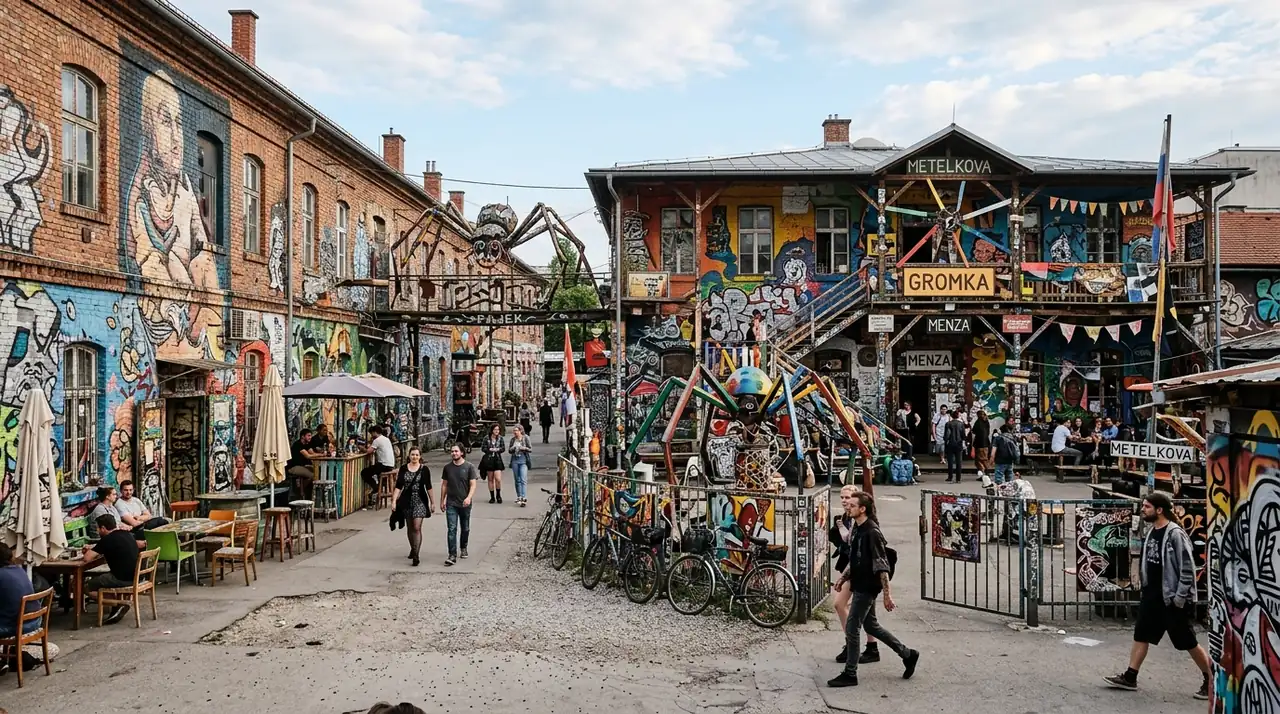
Visit Metelkova, the autonomous cultural quarter. A former Yugoslav army barracks, squatted in the 1990s and turned into a street-art and alternative-culture zone. Buildings covered in graffiti, small art galleries, bars, and clubs. Half an hour in the daytime is enough. Do not photograph people’s faces.
Evening: the riverside bars are the best in the city. Špica Café sits where the river splits in two, a sun trap in the afternoon and a local hangout in the evening. Ferdinand, on the corner opposite the Church of St Florian, does a different homemade iced tea every day and has a big outdoor chandelier that lights up at dusk. For craft beer, Pivnica Lajbah has the best local selection on tap. A beer costs €4 to €6.
What to skip
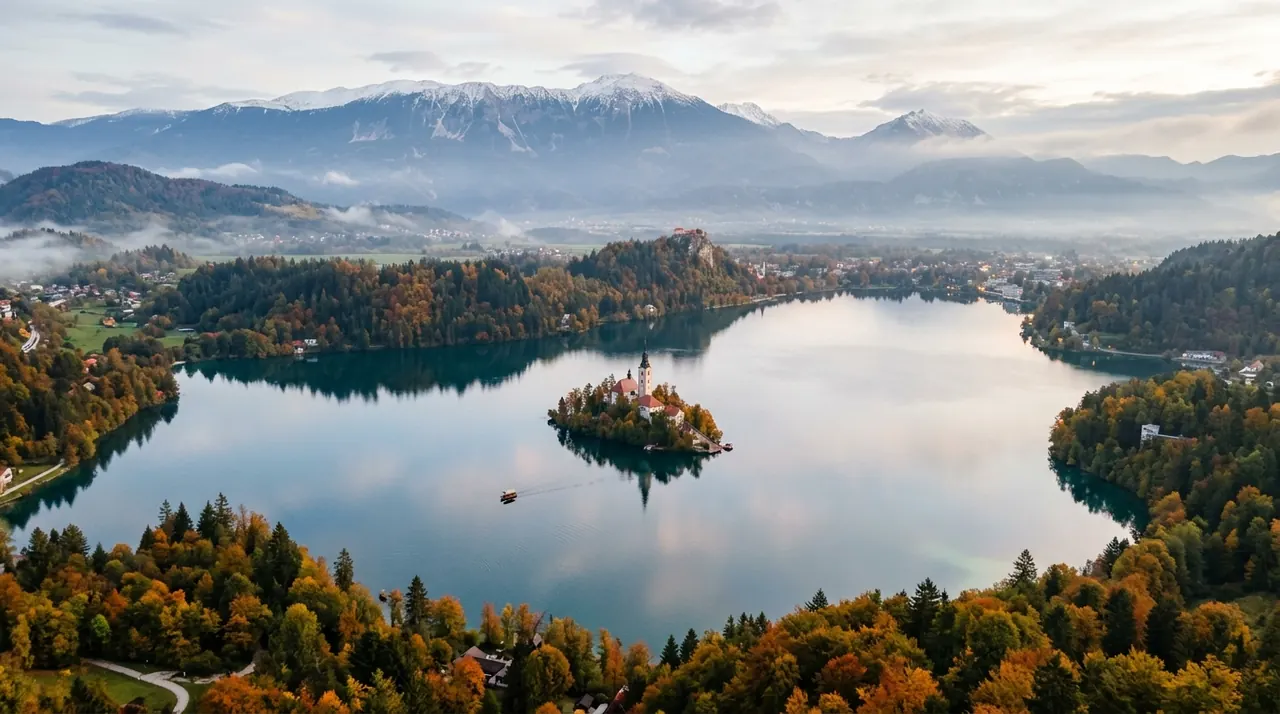
Skip Lake Bled unless you have a third day. Beautiful but a 40-minute bus ride each way, and the crowds in summer are heavy. If you go, go in October when it is quieter. The train to Lesce-Bled takes an hour, then a 20-minute bus to the lake. Skip the zoo. Skip the Railway Museum unless you love trains. €8 entry, one hour, steam locomotives.
Getting there and when to go
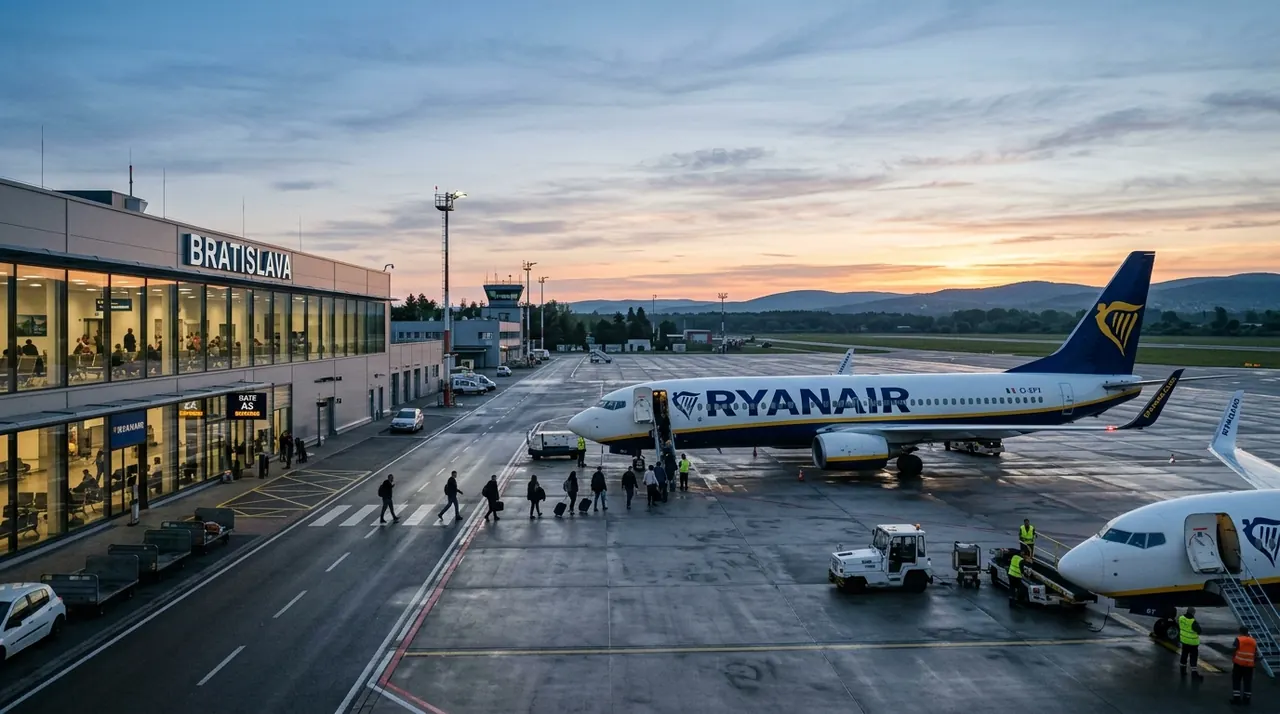
Ljubljana’s airport (LJU) is small and 27km from the city, a 30-minute bus ride. Direct flights run from London, Brussels, Paris, Frankfurt, Amsterdam, and several other European hubs, mostly on low-cost carriers. If your nearest airport has no direct route, the easiest fallback is to fly to Venice or Vienna and take the train or bus across, both under 4 hours. Search all flights to Ljubljana to compare options from your nearest airport. October is the best month: the bridge with red ivy is at its peak, the city is golden, and the weather is still warm enough to sit outside. May and June are also good. When you book a trip that combines separate flights, the Kiwi.com Guarantee covers your connection if one leg is delayed or cancelled.
Frequently asked questions
Is 3 days in Ljubljana enough?
Yes. Two days covers the castle, the old town, Metelkova, and Tivoli Park. Three days lets you add Lake Bled or Postojna Cave, the second-largest cave in the world, a 90-minute train ride away. Ljubljana is compact and walkable, so you will not feel rushed.
Is Ljubljana worth visiting?
Yes. One of the most underrated capitals in Europe. Small, green, walkable, and cheap. The food and wine scene punches above its weight. The old town is car-free and the cafes are excellent. Think of it as a Scandinavian-style city without the Scandinavian price tag.
What are the top things to do in Ljubljana?
Ljubljana Castle with funicular or walk, the Triple Bridge and Dragon Bridge, the Central Market especially Friday Open Kitchen, Plečnik’s House museum, Nebotičnik rooftop cafe, Metelkova cultural quarter, a river cruise on the Barka Ljubljanica, Tivoli Park, and the bronze faces on Locksmith Street.
Is Bled or Ljubljana better?
Stay in Ljubljana and day-trip to Bled. Ljubljana has restaurants, bars, museums, and nightlife. Bled has a lake, a church on an island, and a castle on a cliff. Bled is a half-day trip, not a base.
Popular routes on Kiwi.com
- Cheap flights from London to Turkey
- Cheap flights from London to Barcelona
- Cheap flights from London to Japan
- Cheap flights from London to New York
- Cheap flights from New York to Paris
- Cheap flights to Spain
- Cheap flights to Italy
- Cheap flights to the United States
- Cheap flights to the United Kingdom
- Last minute flights
People Also Read

How to Travel Patagonia: A First-Timer's Guide to Chile & Argentina's Wild South
Where to stay in Palma de Mallorca: best areas for beaches, culture and nightlife