


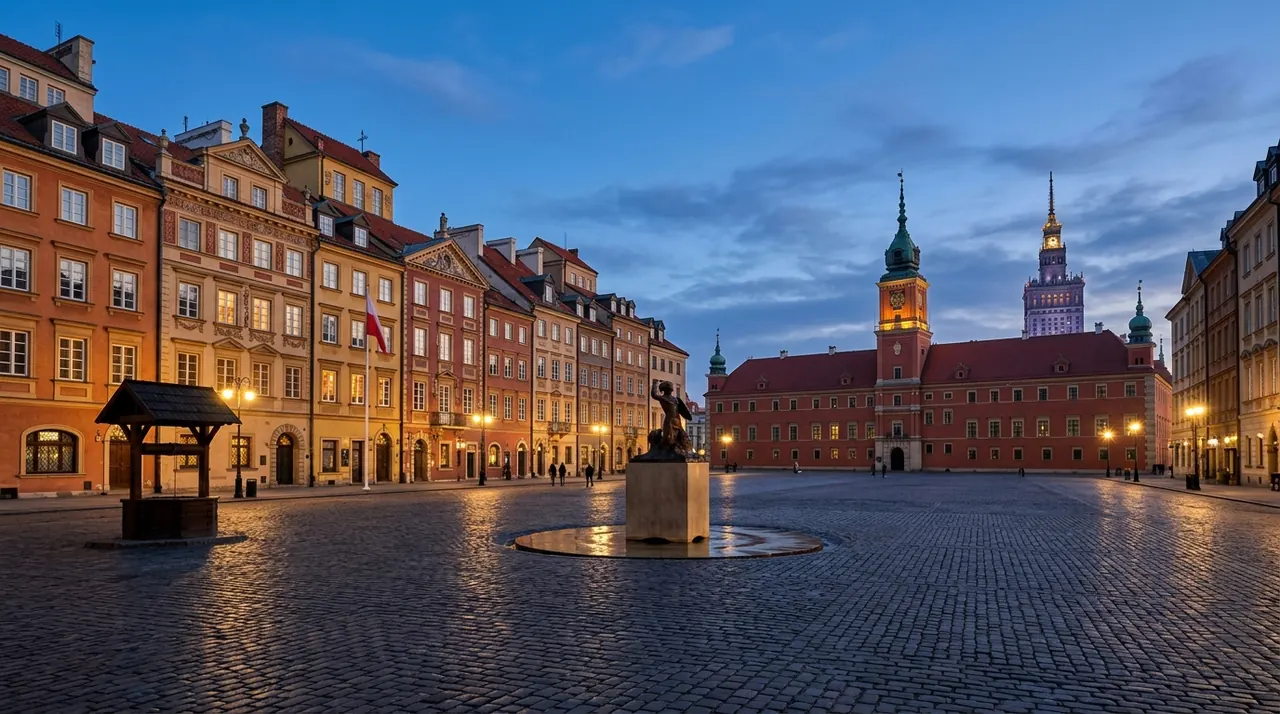
Warsaw is Europe’s cheapest capital. A beer costs €2. A meal costs €8. A hotel room in the centre starts at €35 per night. The city was 85% destroyed in 1944 and rebuilt brick by brick, so the old town looks medieval but is mostly reconstruction. That history is the point. Warsaw does not pretend to be Prague. It is louder, cheaper, and more interesting than its reputation.
Two days covers the centre, the museums, and a night across the river in Praga. Here is how to spend them.
Day one: the old town and the royal route
Start at the Old Town Market Square, a reconstructed medieval square painted in the colours the pre-war buildings wore. cafes, restaurants, and a mermaid statue sit in the middle. The mermaid is the symbol of Warsaw, and you will see her on drain covers, flags, and bakery logos across the city. The Royal Castle is on the square, rebuilt after the war with original fragments where they survived. Entry is €6. Give it 90 minutes.
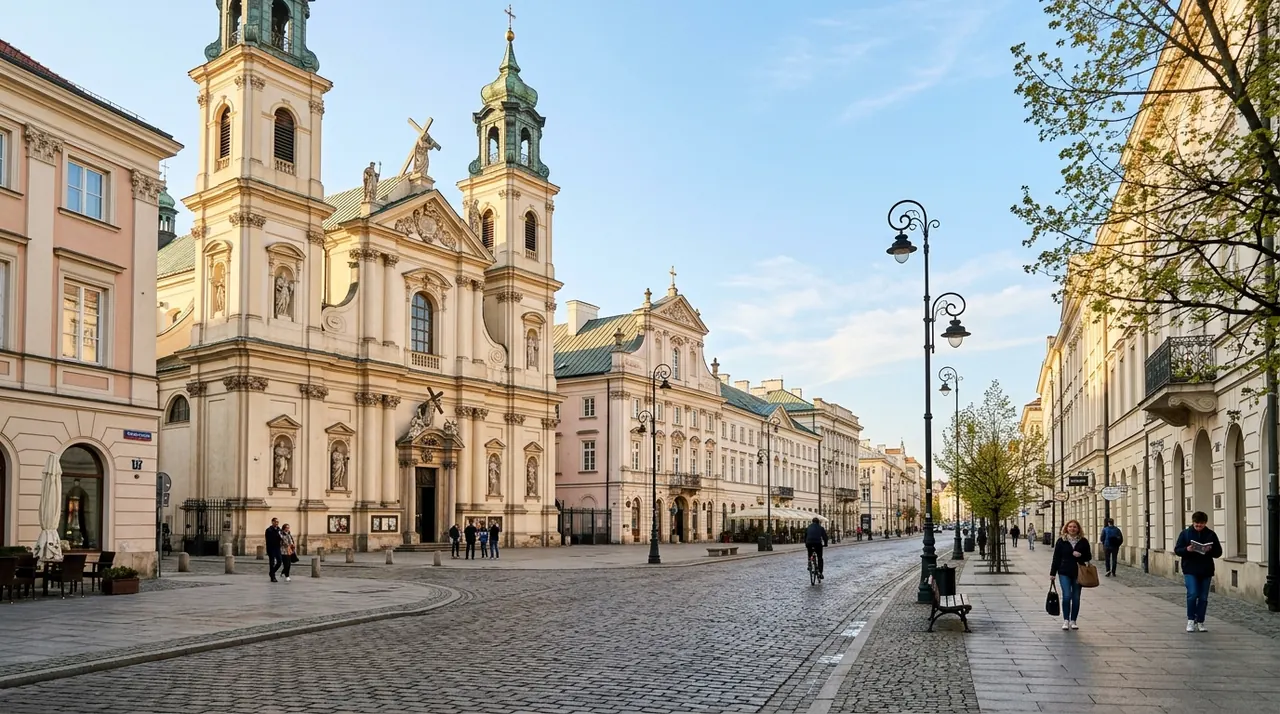
Walk the Royal Route, a chain of streets connecting the old town to Lazienki Park. The churches, the palaces, and the embassies line the route. The most striking is the Church of the Holy Cross, where Chopin’s heart is interred in a pillar. The route takes 30 minutes on foot and is at its best in the morning when the light hits the facades.
In the afternoon, visit the Warsaw Uprising Museum. It tells the story of the 1944 resistance, with a 3D cinema that recreates the destroyed city, a wall of sounds from the fighting, and a replica of a British supply drop. Entry is €6. Give it 2 hours. It is heavy, and the last room is a wall of names of the dead. Plan a drink or a walk afterwards, not another museum.
Evening: eat in the old town. Try zurek, a sour rye soup served in a bread bowl, or pierogi, dumplings filled with meat, cheese, or potatoes. Zapiecek is a chain of old-town restaurants that does reliable pierogi at tourist prices. A plate of 10 costs €7. For something better, walk 10 minutes to Prasowy, a milk bar that has served cheap Polish food since 1954. A meal with a beer costs under €12.
Day two: Lazienki and Praga
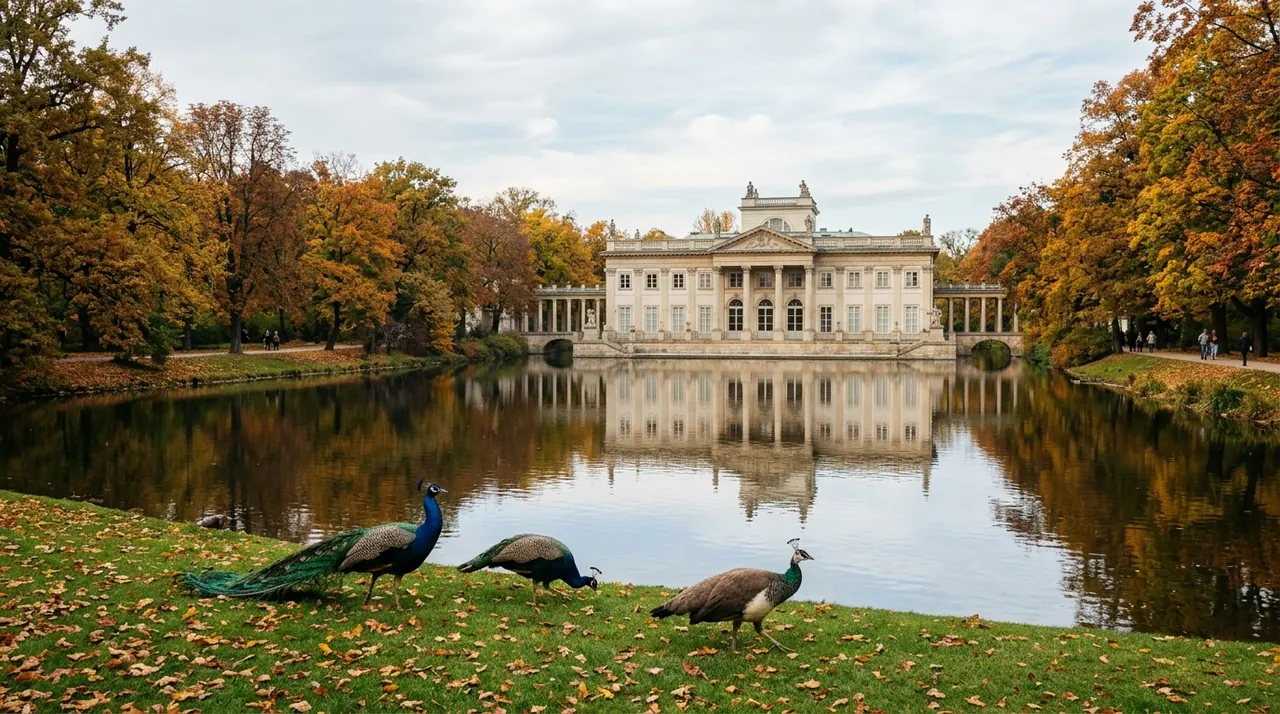
Take the bus to Lazienki Park, the largest park in Warsaw. The Palace on the Isle sits in the middle of a lake, and the gardens stretch behind it. Free to enter. The Chopin Monument is here, where free piano concerts take place every Sunday from May to September at noon. The peacocks wander the lawns. Give it 90 minutes.
In the afternoon, cross the river to Praga, the old working-class district that was neglected for decades and is now the arts and nightlife quarter. The Soho Factory, a cultural centre in a rebuilt industrial complex, has galleries and restaurants. The Prague Museum, a small museum of the district’s history, is worth 45 minutes. The riverside bars under the Poniatowski Bridge are the best spot for a sunset drink.
Evening: Praga is where Warsaw’s nightlife lives. Bars and clubs are cheaper than the old town. A cocktail costs €4 to €6. Try a Polish vodka, which is good and cheap. W Otwartych Garncach is a vodka bar with over 50 types on the menu. A shot costs €2 to €4. For live music, Hydrozagadka is a club in a basement that books local bands and is open until 3am on weekends.
What to skip
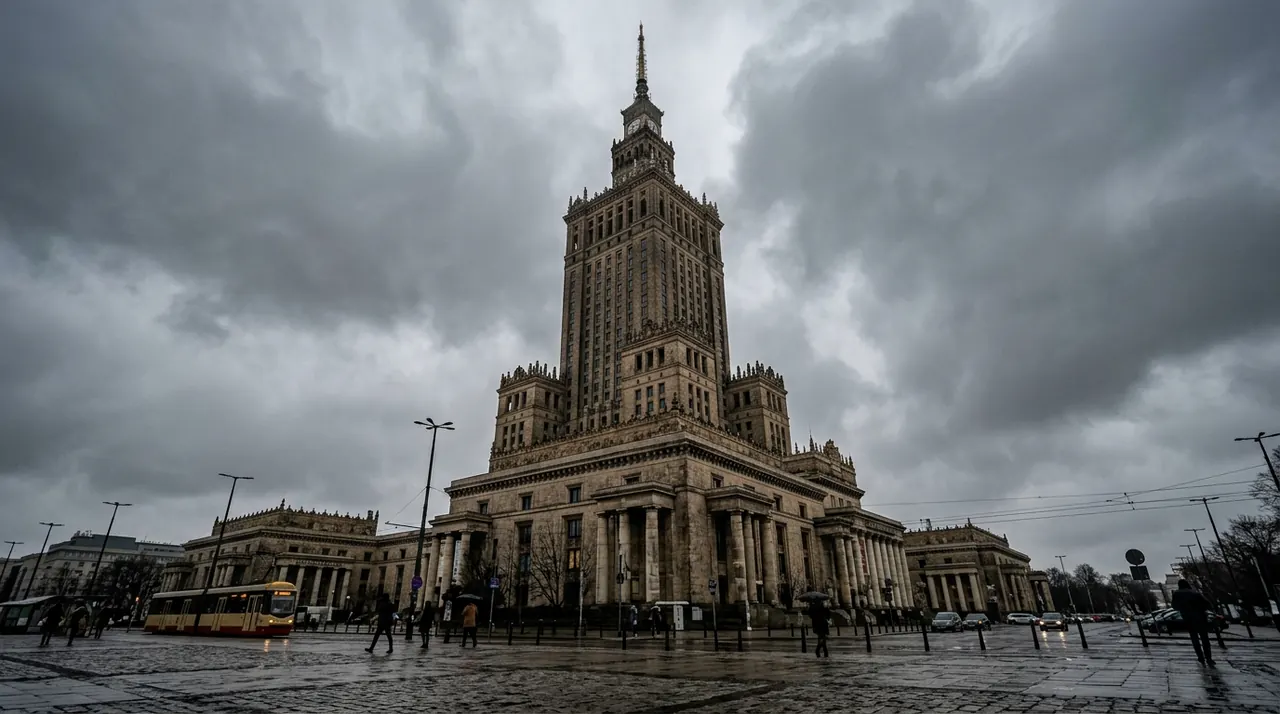
Skip the Palace of Culture and Science observation deck unless you are there on a clear day. The windows are small and the view is often in cloud. The building itself is worth seeing from the ground, a Stalin-era tower that the locals have a love-hate relationship with.
Skip the Copernicus Science Centre unless you have kids. It is good but takes 3 hours and is better suited to families.
Skip the Zoo. It has a history tied to the war, but the enclosures are dated and the experience is not worth the €18 entry.
Getting to Warsaw and when to go
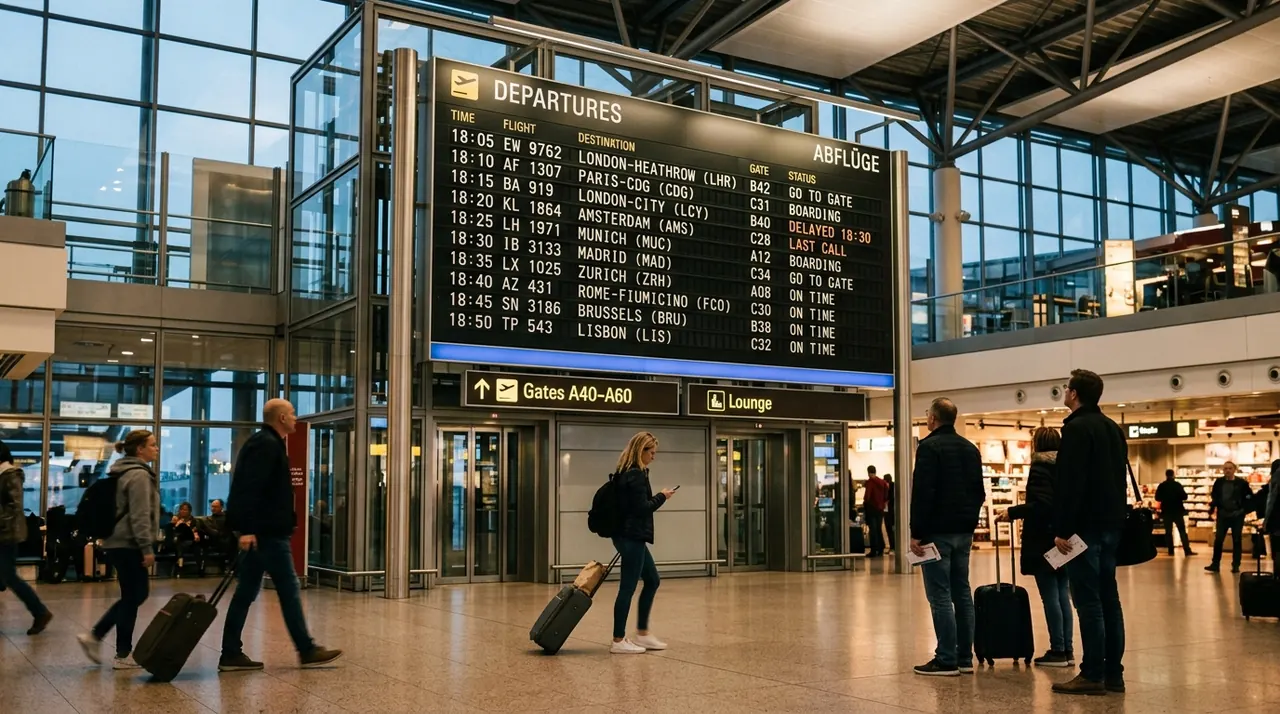
Warsaw’s Chopin Airport (WAW) is 20 minutes from the city centre by train. Direct flights run from most major European airports, including London, Paris, Berlin, Frankfurt, Amsterdam, Brussels, Rome, and Madrid. The Modlin airport (WMI), used by some low-cost carriers, is further out and reachable by a 40-minute bus. Search all flights to Warsaw to compare options from your nearest airport. When you book a trip that combines separate flights, the Kiwi.com Guarantee covers your connection if one leg is delayed or cancelled.
May, June, September, and early October are the best months. The weather is warm, the crowds are smaller than July and August, and the outdoor cafes are open. Winter is cold but cheap, and the Christmas market on the old town square is one of the best in Central Europe.
Frequently asked questions
Is Warsaw safe?
Yes. The centre is safe day and night. Poland has one of the lowest crime rates in Europe. Petty theft happens in crowded tourist areas, same as any capital. Praga at night is busy and well-lit, safer than its old reputation suggests.
How many days do you need in Warsaw?
Two days covers the old town, the Uprising Museum, and Lazienki Park. Add a third day for Praga and the nightlife, or a day trip to Zelazowa Wola, Chopin’s birthplace, 50 minutes by bus.
Is Warsaw cheap?
Yes. The cheapest capital in the EU by most measures. Meals cost €6 to €12. A beer costs €2 to €3. A hotel room starts at €35. The only premium is the weekend, when prices rise 20 to 30%.
When is the best time to visit Warsaw?
May, June, September, and early October. The weather is warm, the crowds are smaller than July and August, and the outdoor cafes are open. Winter is cold but cheap and the Christmas market is one of the best in Central Europe.
What should I eat in Warsaw?
Pierogi, bigos (hunter’s stew), zurek (sour rye soup), and apple cake. The food is heavy, meat-forward, and cheap. Polish vodka is good and costs less than a beer in London. A milk bar, a Soviet-era canteen that serves cheap Polish food, is the best value lunch in the city.
Popular routes on Kiwi.com
- Cheap flights from London to Turkey
- Cheap flights from London to Barcelona
- Cheap flights from London to Japan
- Cheap flights from London to New York
- Cheap flights from New York to Paris
- Cheap flights to Spain
- Cheap flights to Italy
- Cheap flights to the United States
- Cheap flights to the United Kingdom
- Last minute flights
People Also Read


How to Travel Patagonia: A First-Timer's Guide to Chile & Argentina's Wild South
Where to stay in Palma de Mallorca: best areas for beaches, culture and nightlife