







None of that is true anymore.
In this article
Today Tijuana is a city with more Michelin Guide mentions per taco stand than almost anywhere in North America. A craft beer scene that draws people across an international border just for the beer and prices that make San Diego look like a different planet.
Eat spectacularly for the cost of a mediocre lunch back home. That’s not a marketing line. That’s just the exchange rate doing its job.
Crossing In: Airport, Bridge, Or On Foot
Tijuana International Airport (TIJ) is the main gateway if you’re flying in directly and it’s a genuinely useful airport Mexican routes than San Diego’s airport just across the fence, often at a fraction of the price.
Take a taxi from the airport to the city centre for 200–300 MXN. It takes about 20 minutes. Uber and DiDi both operate from the airport too and usually cost the same (sometimes less).
There’s also a more interesting way in.
If you’re coming from San Diego, the Cross Border Xpress (CBX) is a pedestrian bridge that lets you walk directly from the terminal on the US side straight into the TIJ departures hall. It allows you to skip the land border entirely. It costs US$16–18 one-way. Not a budget option exactly, but if you’re already flying and short on time, it buys back hours you’d otherwise lose to the vehicle line at San Ysidro.
For everyone else, the day-trippers, the weekenders, anyone not flying in or out of TIJ itself, there’s a route that costs almost nothing at all. Take the San Diego Trolley Blue Line to San Ysidro (around US$2.50), walk five minutes to the PedEast pedestrian crossing, and you’re in Mexico. Entering takes under five minutes and costs nothing. From there, Zona Centro and Avenida Revolución are a flat 15–20 minute walk, or a short taxi hop for 60–80 MXN. Going south is the easy part.
Coming back north is where you budget your time, not your money. Waiting time at the pedestrian crossing back into the US swings from thirty minutes to over two hours depending on the day. Tuesday to Thursday, mid-morning, is consistently the calm window. Make sure you check the website before you walk back and build in slack if you’ve got a flight.
A City Built For Walking - Not Driving
Skip the rental. Zona Centro and Zona Río, the two neighborhoods that matter most to a first-time visitor, sit close enough together that a 20-minute walk covers most of what you came for.
Taxis are cheap but unmetered, which means you always must agree on the price before you get in. Uber or DiDi tend to be both cheaper and less stressful for that reason alone. Most in-city rides land under 100 MXN.
Locals mostly get around on colectivos, shared vans running fixed routes for a flat 12–15 MXN. You won’t need them for the tourist core, but they’re worth knowing about if you want to get somewhere off the standard loop without paying taxi prices.
An Arch, A Dome, And A Fence That Runs Into The Ocean
Avenida Revolución
Everyone starts here, and there’s a reason. “La Revu” is Tijuana’s central nervous system. Full of bars, restaurants, souvenir stalls, street art, zebra-striped donkeys posed for photos since the 1920s, and the Monumental Arch marking one end of it.
It’s touristy. It’s also genuinely the heart of the city.
Wander around and explore. It costs nothing.
Pasaje Rodríguez
One block off Revolución sits a narrow, half-forgotten 1920s arcade that Tijuana’s art scene quietly took over. Small galleries, independent shops, murals stacked on murals.
Five minutes off the main strip and it feels like an entirely different city.
The Concrete Sphere (CECUT)
You’ll spot Centro Cultural Tijuana from blocks away. It’s the enormous concrete sphere sitting in Zona Río, nicknamed la Bola (the ball) by everyone who’s ever tried to give directions to it.
The permanent courtyard exhibitions are free. Only the ticketed shows and the dome cinema cost anything. Which means you can get a legitimate cultural afternoon here without spending a peso.
Mercado Hidalgo
A working market, not a staged one. Twenty minutes on foot from downtown, in Zona Río, and full of the things a market should be full of: mountains of chiles, fruit stacked past the point of physics, cheese, bread, and food stalls doing a brisk trade in tamales.
Prices aren’t fixed. Bargain a little or just point and smile. Both work.
Parque Morelos
A proper city park with a lake, paddle boats, and a small zoo, filled on weekends with Tijuana families doing exactly what families do in parks everywhere. Free to enter, unhurried, and a useful reminder that most of this city has nothing to do with Avenida Revolución at all.
Playas de Tijuana, And The Fence That Ends In The Sea
Head west and the city hits the coast at Playas de Tijuana. A real beach neighborhood, unhurried, mostly local.
Follow it far enough south and you reach the spot where the US-Mexico border fence physically runs out into the Pacific Ocean. Friendship Park opens on weekends to the public on both sides, and families gather at the mesh to talk across it.
It’s strange. It’s a little sad. It’s also one of the most memorable free things you’ll do in the city, and not something you’ll find on a typical “top attractions” list.
What To Eat? Tacos That Will Make You Forget Every Other Taco You’ve Ever Had
Tacos El Franc
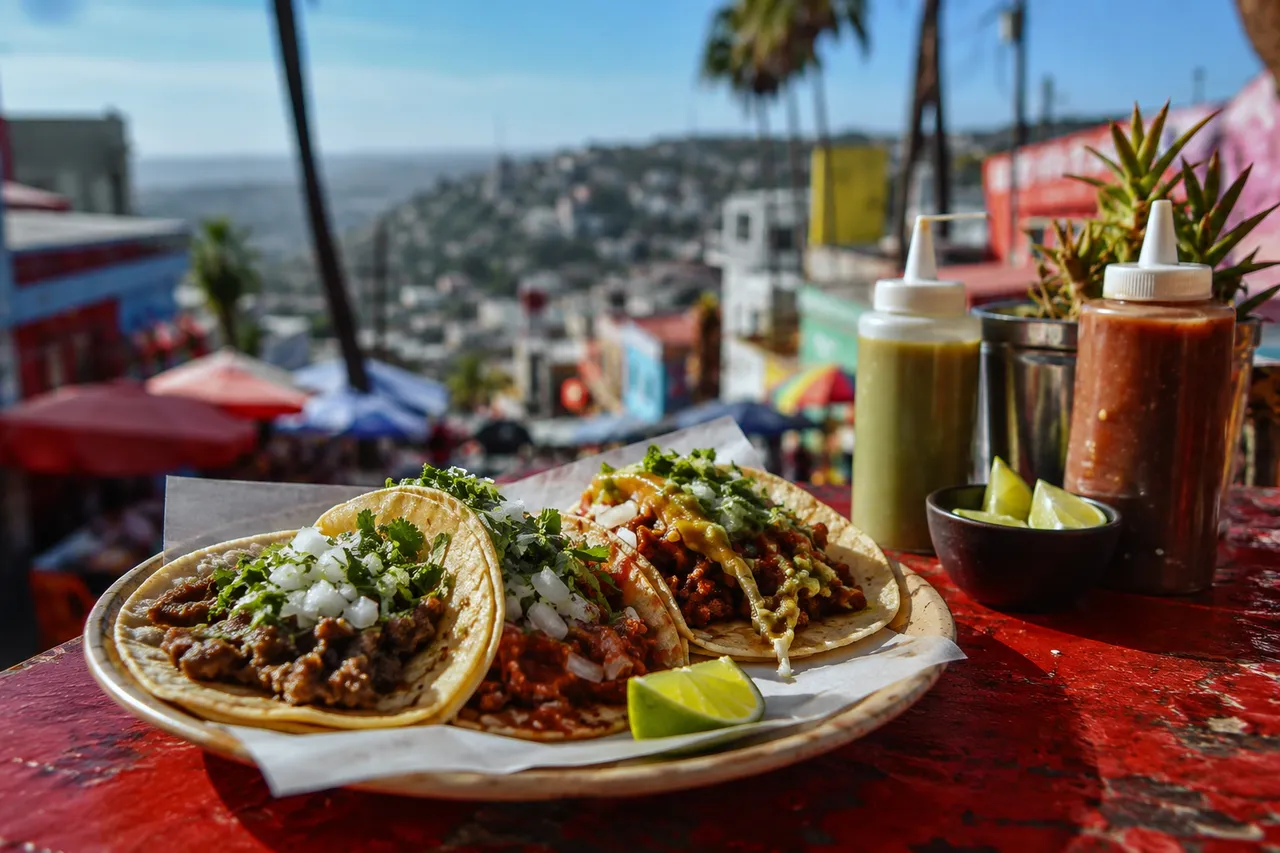
Ask anyone from Tijuana where to eat and this comes up within thirty seconds. A blue-walled corner taquería, no decor to speak of, a line out the door most weekend afternoons, and adobada tacos good enough to earn a Michelin Guide mention despite the plastic chairs. 30–50 MXN a taco. Order more than you think you need.
Mariscos Rubén
A street corner seafood truck in Zona Centro, run by the same family for over two decades, and the kind of place San Diego locals cross the border specifically to eat at. Sonoran-style seafood is the specialty here: marlin tacos, chile-and-butter shrimp, fresh-shucked clams, and cahuamanta, a rich manta ray soup that isn’t on menus much outside Baja. Nothing about the setup looks like fine dining. Tacos cost 35–60 MXN, tostadas a little more. It’s worth ordering more than one kind, because you won’t want to choose just one.
Caesar’s Restaurant
The Caesar salad was invented here in 1924 by Caesar Cardini. It’s a sit-down restaurant on Avenida Revolución, priced accordingly, so this is the one splurge on this list. But eating the dish that started a global salad empire, in the room it started in, is worth the peso difference once.
Telefónica Gastro Park
An open-air food truck park at Revolución and 2nd, more than thirty vendors deep, covering everything from tacos to sushi to burgers, with a genuinely good rotating craft beer selection alongside it. The easiest way to sample a wide slice of Tijuana’s food scene without committing to one restaurant. 100–300 MXN a person, depending on how many stalls you can’t resist.
Midnight Street Tacos
The best tacos in Tijuana are not on Revolución. They’re at the unmarked stands scattered through Zona Centro that come alive after 8pm and stay busy well past midnight. The rule locals go by: the longer the line at midnight, the better the taco.
30–50 MXN each, and you’ll eat better than at most restaurants charging triple.
Tijuana After Dark
Zona Centro doesn’t slow down when the sun goes down. If anything, it gets better.
Plaza Santa Cecilia, near the Monumental Arch, fills with live Norteño music most evenings, no cover, no cost beyond whatever you decide to drink. Calle Sexta and the streets around it turn into a proper bar crawl after 9pm, cheaper by far than anything comparable on the San Diego side of the fence.
If you want something calmer, the rooftop bars scattered through Zona Río catch the city lights without the crowd noise of Revolución. A mezcal there runs 80–150 MXN, which is roughly what you’d pay for a mediocre well drink back home.
A Few Ways To Not Overpay
Agree the taxi fare before you get in. Every time. Meters are rare and “we’ll figure it out” never favors the tourist.
Ask for the price in pesos, not dollars. Menus and stall vendors near Revolución sometimes quote in USD out of habit, but paying in pesos is almost always the better exchange rate.
Eat where the line is long and the menu is only in Spanish. It’s a better signal than any review site.
Carry small bills and coins. Mercado Hidalgo and the street stands run on cash, and nobody has change for a 500.
When To Go
- Spring (Mar–May) is the sweet spot. Mild, dry, everything is still green from the winter rains.
- Summer (Jun–Aug) stays warm without turning brutal, thanks to the coastal breeze, but weekend crowds crossing from San Diego peak here too.
- Autumn (Sep–Nov) brings warm days, cool evenings, and noticeably thinner border lines than summer.
- Winter (Dec–Feb) is mild by most standards, though evenings turn genuinely cold and this is Baja’s rainy season. Pack an extra layer.
How Expensive Is Tijuana?
At today’s rate, 1 MXN ≈ €0.05, so €1 buys you about 20 pesos.
- Coffee 35–50 MXN (€1.75–2.50)
- Craft beer 60–100 MXN (€3–5)
- Street tacos 30–50 MXN (€1.50–2.50)
- Casual meals 60–120 MXN (€3–6)
- Sit-down dinners 250–500 MXN (€12.50–25)
- Hostel dorm 350–500 MXN/night (€17.50–25)
- Budget hotel 700–1,000 MXN/night (€35–50)
Tijuana Is Full of Surprises
Tijuana isn’t trying to be Tulum, and it isn’t trying to shed its old reputation by pretending to be something calmer and more polished. It doesn’t need to.
What it actually offers is even better. A food and craft beer scene serious enough to pull day-trippers across an international border, a real art district hiding one block behind the souvenir shops, and a walkable centre where a market stall, a Michelin-recognized taquería, and a beach that ends at a border fence all sit within the same afternoon.
Most people still just pass through.
Which, as it turns out, is their loss and your opportunity.
Ready to see it for yourself? Search flights to San Diego or Tijuana on Kiwi.com and cross over into one of the most underrated food cities on the continent.