





After you find cheap flights with Kiwi, it’s important to know what you can and can’t pack in your carry-on. This guide outlines the simple rules to help you move through security without issues.
Quick Answer (TL;DR)
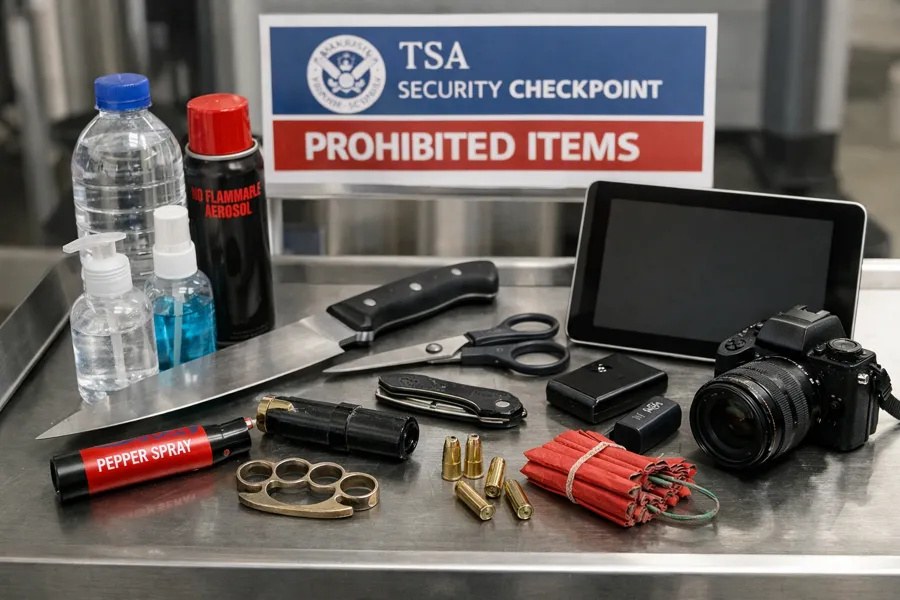
When packing a carry-on, it’s widely understood that flammable materials such as fuel paste, firearms, sharp objects like axes, and tools, including screwdrivers and hammers, are off-limits. As for food you can bring on board, solid items like crackers and nuts are permitted. However, liquid foods such as yogurt are subject to liquid restrictions and cannot exceed 100 ml when traveling from countries like the US.
Main Carry On Restrictions You Must Know
Traveling by air comes with its fair share of carry-on restrictions. Many items are banned or restricted for safety reasons, so it helps to understand the main groups that security officers focus on before your bag goes through the scanner.
Flammables (Including Portable Electronic Devices)
Anything that contains or produces flammable gas is generally not allowed in carry-on baggage, but there are some exceptions for things like safety matches. Airlines like Lufthansa clearly state that items such as cleaning agents, fuel paste, and materials that release flammable gas when exposed to water (like carbide) must stay out of the cabin.
Find flights for this trip

Since portable electronic devices with lithium-ion batteries can pose a fire risk, they should be carried in your carry-on rather than checked luggage. This is because any battery-related fire involving personal electronic devices can be detected and dealt with faster in the cabin than in the hold. For this reason, you should also bring any spare lithium batteries for other devices in your carry-on bags.
Firearms
Rules around firearms vary widely depending on where you booked your trip with Kiwi. In the EU, firearms and anything resembling a weapon are strictly prohibited in carry-on luggage. In the United States , the TSA allows firearms in checked baggage, but they must be unloaded, stored in a safety cover, and declared in advance. They’re never permitted in carry-on bags.
Sharp objects
Sharp items rules differ by country. The TSA allows some everyday items, like crochet hooks and knitting needles, but has a carry-on ban on items like box cutters. Nail clippers are also permitted in the US, but some airlines, such as Singapore Airlines , list them as restricted and ask passengers to pack them in their checked luggage instead.
Liquids, gels, and aerosols
Many countries, including the US and EU member states, follow the 100 ml liquid rule . This states that all liquids, gels, and aerosols must be put into a single clear, resealable bag during the screening process. Anything bigger will likely be confiscated.
Tools
Some small tools may be allowed in carry-on bags, depending on size and shape. The TSA generally permits tools under 7 inches, but it’s up to the security officer whether they allow them through. In contrast, the EU bans tools like blowtorches and bolt guns, as well as tools over 6 cm that contain blades.
Liquids That Do Not Meet the Rules
Many countries follow similar rules for liquids in carry-on luggage. In most cases, liquids must be packed in containers of no more than 100 ml, in accordance with regulations in countries such as the US, the UK, and across the EU. These containers need to be placed in a clear, resealable bag and removed separately at security for screening. Anything over the limit will usually be taken from you before you’re allowed to continue.
Among the best packing tips for avoiding security issues is sticking strictly to the 100ml liquid container limit. Security staff focus on the size of the container, not how much liquid is inside it. Even if a bottle can hold 150 ml but contains only 50 ml, they’ll still take it off you.
These strict regulations were introduced in response to security concerns following an attempted terrorist attack in 2006. Following this incident, tighter liquid restrictions were brought in worldwide to reduce the risk of similar situations happening again.
Sharp and Dangerous Items
Sharp and dangerous items are subject to many restrictions that passengers need to be aware of. Sharp objects can potentially be used to hurt others, so they’re often limited or prohibited to protect passengers. Remember, even if a sharp item is allowed, there are usually procedures you need to follow to take it on board. For example, the Transportation Security Administration (TSA) asks that sharp/dangerous items be wrapped safely so they won’t injure baggage handlers.
 Inspiration
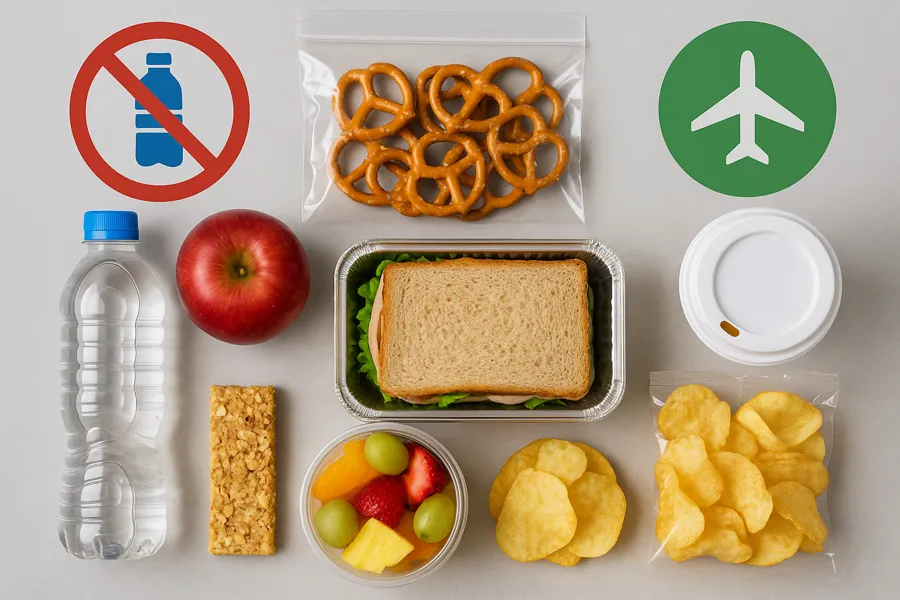
Airport Snack Smarts: What You Can (and Can’t) Bring Through Security
Learn the key differences between TSA security and airline food rules so you can pack snacks and meals that make it through checkpoints hassle-free.
Read the guide
Inspiration
Airport Snack Smarts: What You Can (and Can’t) Bring Through Security
Learn the key differences between TSA security and airline food rules so you can pack snacks and meals that make it through checkpoints hassle-free.
Read the guideHere are some of the prohibited items to know about before you depart.
Note: Every country has its own rules regarding sharp/dangerous items, so always do your own research beforehand.
- Axes
- Box cutters
- Hatchets
- Cleavers
- Knives
- Swords
- Ice picks
- Meat cleavers
- Saws
- Swiss army knives
- Razor blades
- Corkscrews
- Darts
Items You Cannot Bring for Safety Reasons
Passenger safety is the top priority for airlines. It’s something they take extremely seriously, not only to protect travelers, but also to comply with the laws and regulations of the countries they operate in. As a result, there are many items you cannot bring on board for safety reasons, whether in your carry-on or checked baggage. Below are some of the key categories to be aware of.
Flammable Items
Flammable items are considered high risk on aircraft because they can easily catch fire. This includes fuels such as petrol, gases like propane, and certain solid materials such as firelighters.
Explosive Items
Explosive items are strictly banned on all flights due to the severe danger they pose. Things such as dynamite, grenades, detonators, and similar materials are never allowed onboard.
High-Risk Items
Some items are classified as high risk and are banned across all flights. This includes household and industrial chemicals such as bleach, fertilisers, and pesticides, which can be corrosive and pose a risk to people and pets when flying with animals . Weapons like tasers, as well as substances such as pepper spray, are also prohibited because they can cause serious harm to passengers and crew.
Sports Equipment and Tools
People often want to travel with sports equipment for competitions or tools for work, but that doesn’t mean they can take them in the cabin. If you think your gear could pose a safety risk, it’s best to assume you’ll have to check it in.
Heavy or blunt objects such as bats, sticks, screwdrivers, nail guns, and hammers are not permitted in carry-on bags, as they could be used as weapons. The same applies to items like snooker cues, crossbows, and martial arts equipment such as knuckle-dusters, for which the UK government has travel rules stating they’re not allowed in carry-on luggage. However, you will usually be able to pack these items in checked bags, provided they meet airline and local regulations.
Frequently Asked Questions (FAQs)
Can I bring food in my carry on?
Yes, certain foods can be brought in your carry on, including solid items such as nuts, crackers, granola bars, and bread. Non-solid foods like hummus, yogurt, or spreads must follow the 100 ml liquid rule. These items must be stored in containers no larger than 100 ml and fit within your liquids bag.
Are medicines allowed in a carry on?
Medications are allowed in your carry on, including both prescription and over-the-counter medicines. Prescription medications can usually exceed the 100 ml limit when medically necessary. It is recommended to keep medications in their original packaging and remove them from your bag during security screening if requested.
Can I travel with liquids larger than 100ml?
In most airports, including those in the United States, liquids in carry on bags are limited to 100 ml per container. Larger quantities should be packed in checked luggage. Some airports in certain countries, such as Birmingham in the UK, have relaxed these rules and allow passengers to carry larger liquid volumes, but regulations vary by airport and country.
Can I bring pets or small animals in my carry on?
Many airlines allow pets or small animals to travel in the cabin as carry on items. Airlines such as American Airlines and Delta permit dogs and cats in approved carriers that fit under the seat. Airline policies and destination regulations vary, so it is important to review pet travel requirements before your trip.