







But there are disadvantages too, primarily because airlines often enforce strict 7kg-10kg (15-22lb) carry-on weight limits. So you will likely wear the same 2-3 outfits for the duration, wash socks and underwear in a bathroom sink every 2-3 nights, and have little or no room for souvenirs. As you are limited to 100ml (3.4oz) bottles, you will run out of sunscreen or shampoo mid-trip. Always wear your heaviest jacket and largest shoes on the plane to keep your bag within weight limits.
In this article
Key Advantages of Traveling Carry-on Only
Significant Cost Savings
You can avoid expensive checked baggage fees, which many airlines now charge per flight. This is especially beneficial if your 30-day itinerary involves multiple connecting or regional flights.
Time Efficiency
You save time at both ends of your journey by skipping check-in counters and avoiding the wait at baggage carousels. This allows for a “grab and go” experience, getting you to your destination or taxi faster.
Increased Mobility and Flexibility
A single small bag makes it much easier to navigate public transportation like buses and trains, where storage space is often limited. It also allows you to walk to nearby accommodation rather than relying on taxis.
Find flights for this trip

Elimination of Lost Luggage Risk
Since your bag never leaves your sight, there is zero risk of the airline losing, delaying, or damaging your belongings. This provides immense peace of mind during long-term travel.
Reduced Physical Strain
Carrying a lighter load (typically 7-10kg) reduces back and shoulder pain compared to dragging oversized, heavy suitcases for a month.
Simplified Decision Making
Packing fewer items forces you to choose versatile clothing that mixes and matches easily, making it faster and easier to get dressed each morning.
Last-Minute Flexibility
Having your luggage with you makes it easier to change flights, fly standby, or handle unexpected itinerary changes without worrying about where your checked bag is.
Disadvantages of Traveling Carry-on Only
While traveling with only a carry-on for 30 days is efficient, it introduces specific logistical challenges and personal sacrifices that can impact your comfort and flexibility.
Mandatory Laundry Management
You cannot pack 30 unique outfits. You must spend precious vacation time at laundromats or performing sink laundry approximately every 5-7 days.
Strict Liquid Restrictions
You are limited to containers of 100ml (3.4oz) or less that fit into a single quart-sized bag. This is often insufficient for a month-long supply of specific contact lens solutions, high-SPF sunscreens, or preferred skincare brands.
Minimalist Fashion Limits
You will likely wear the same 2-3 outfits in almost all your trip photos. It is difficult to pack appropriate attire for varying occasions, such as a formal dinner, a cruise or heavy winter hiking.
Limited Souvenir Capacity
Because your bag starts nearly full, there is no room to bring home larger gifts, local clothing, or unique artifacts.
Physical Fatigue
If using a travel backpack, you must carry 7-10kg (15-22lbs) on your back during long walks through airports, train stations, or between hotels, which can lead to back strain and, on hot days, to exhaustion and sweating.
Uncertainty of Overhead Space
Even if you follow all rules, crowded flights or small regional planes may still force you to gate-check your bag.
Equipment Trade-offs
Specialized gear like tripods, professional cameras, or bulky sports equipment usually won’t fit, forcing you to rely on inferior alternatives or rent gear locally.
Long-Term Impact (30 Days)
Over a month, the “gritty” nature of one-bag travel—constantly re-wearing slightly worn clothes or dealing with damp items that didn’t dry overnight—can lead to frustration, discomfort and travel burnout.
How to Pack for Carry-on Only Travel for 30 days
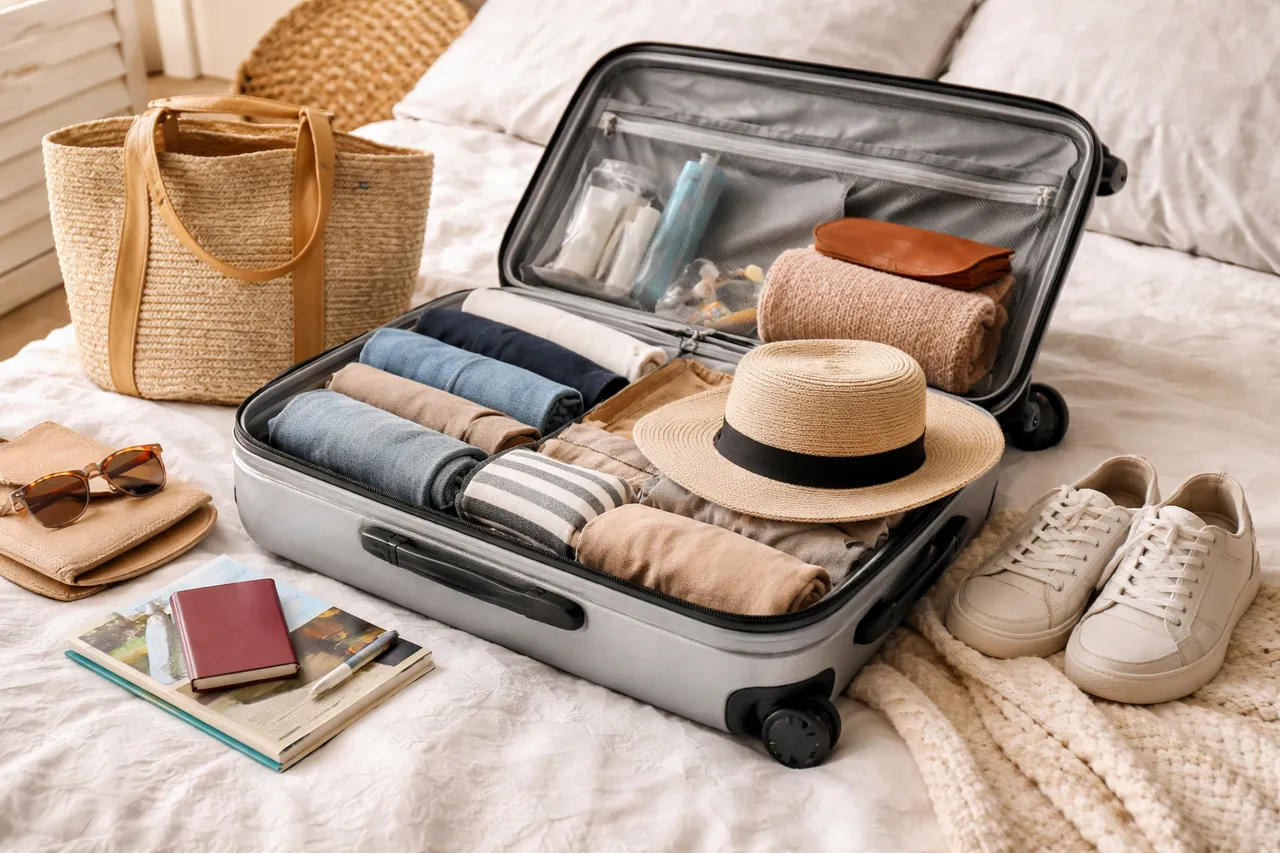
The goal is to build a “capsule wardrobe” where every item coordinates with at least two or three others.
Strategic Considerations
Laundry is Essential
To make 30 days work in a carry-on-only situation, you must plan to do laundry approximately once a week. To save time and uncertainty, many long-term travelers book accommodations with washing machines.
Packing for a Week, Not a Month
The most successful long-term carry-on travelers pack enough for about 7 days and simply rotate those items
Sample 30-Day Packing List
Here is a versatile baseline for a month-long trip using a minimalist approach:
Clothing & Shoes
- 5-6 Tops: A mix of basic tees, one long-sleeve layer, and one “nice” button-down or blouse for evenings.
- 3-4 Bottoms: One pair of jeans (wear these on the plane to save space), one pair of lightweight trousers, and one or two pairs of shorts or a skirt.
- 2 Outer Layers: One lightweight, packable puffer or fleece for warmth and one waterproof rain shell.
- 3 Pairs of Shoes: One pair of everyday walking sneakers, one slightly dressier pair (flats or loafers), and one pair of sandals or flip-flops.
- Undergarments: 7-10 pairs of underwear and 5-7 pairs of socks.
- 1 Swimsuit: Useful for beaches, pools, or unexpected spa visits.
Travel Essentials
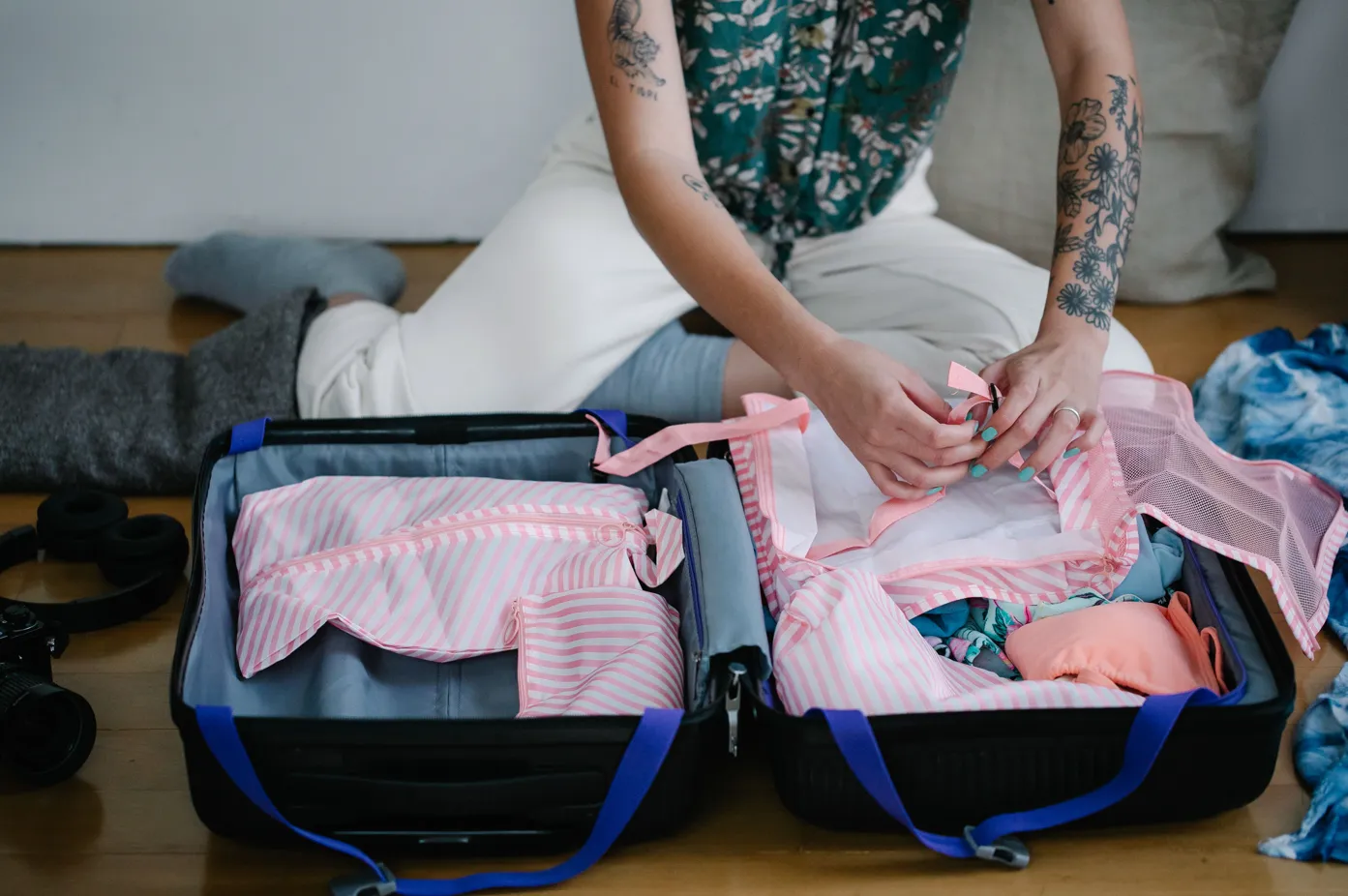
- Packing Cubes: These are critical for organizing your 30-day life into a small bag and making it easy to find items without unpacking everything.
- Toiletry Kit: Use solid versions of shampoo, conditioner, and soap to save space and avoid liquid restrictions.
- Laundry Kit: A small sink-stopper and travel-sized detergent (or laundry sheets) for quick hand-washes in your hotel sink.
Expert Packing Strategies
The 5-4-3-2-1 Rule
5 tops, 4 bottoms, 3 pairs of shoes, 2 layers, and 1 accessory.
Merino Wool
Choose merino wool fabrics for shirts and socks; they are odor-resistant and can be worn multiple times between washes.
Wear Your Bulkiest Items
Always wear your heaviest jacket and largest shoes on the plane to keep your bag light and within weight limits
Most Common Mistakes When Packing for Carry-on Only Travel
The most common mistakes when packing carry-on only for a 30-day trip often stem from the “just in case” mindset, which quickly exceeds the strict weight and space limits of cabin luggage.
Packing “Just in Case” Items
The biggest error is packing for hypothetical scenarios (e.g., a formal dinner that might not happen) rather than the daily reality of your trip. If you find yourself saying “I might need this,” leave it behind; you can usually buy it at your destination if a true need arises.
Ignoring Weight Limits
Many travelers focus only on dimensions and forget that international and budget airlines often enforce strict 7kg-10kg (15-22lb) weight limits. Even if your bag fits in the sizer, it may be forced into the hold if it is too heavy.
Failing to Use a Capsule Wardrobe
Packing individual, mismatched outfits instead of a cohesive capsule wardrobe leads to overpacking. Every top should coordinate with every bottom to maximize outfit combinations.
Packing Bulky Fabrics
Bringing heavy items like multiple pairs of jeans or thick cotton hoodies wastes valuable space. Experts recommend merino wool or technical fabrics that are lightweight, odor-resistant, and dry quickly after a sink-wash.
Mismanaging Toiletries and Electronics
Toiletries
Carrying full-size bottles instead of decanting into travel containers or switching to solid bars (shampoo, soap) significantly increases weight and liquid-bag clutter.
Electronics
Bringing specialized gadgets like large cameras or laptops “just because” adds unnecessary bulk; most travelers can manage with just a phone and maybe an e-reader.
Starting with a Full Bag
Leaving home with a completely stuffed bag leaves no room for souvenirs or local finds. It also makes repacking at each new destination a stressful and time-consuming task.
Backpack or Rolling Suitcase?
The Travel Backpack
- Best for: Multicity trips, cobblestone streets, stairs, and public transport.
- Pros: Hands-free mobility; easier to “squish” into tight overhead bins; fits better on buses and trains.
- Cons: You carry all the weight on your shoulders/back; can cause sweating; requires careful packing to keep weight balanced.
The Rolling Suitcase (Spinner)
- Best for: Airport-to-hotel transitions via taxi/Uber and flat city surfaces.
- Pros: Zero weight on your back; organized like a “closet” when open; easier to navigate through long airport terminals.
- Cons: Useless on stairs, sand, or rough European pavement; wheels and handles take up valuable packing volume.
The “Hybrid” Solution
If you can’t decide, look for wheeled backpacks. They offer the convenience of wheels for the airport and hideaway straps for when you hit stairs or uneven terrain.
What Is It Actually Like to Travel Carry-on for 30 Days?
If you commit to a single carry-on for a month, your daily and weekly “maintenance” rituals change significantly. You trade the physical burden of heavy bags for the logistical burden of frequent upkeep. Your 30-day routine would look something like this:
1. Weekly “Laundry Days”
This is the biggest shift. With a checked bag, you might pack 14+ outfits and only wash once. With a carry-on, you are effectively packing for 7 days and washing every week.
The Chore
You will spend 2-3 hours every week at a local laundromat or coordinating a “wash and fold” service with your hostel/hotel.
The “Sink Wash”
You’ll likely find yourself washing socks and underwear in a bathroom sink every 2-3 nights to make it to your next big laundry day.
2. The “Packing Puzzle” Every Move
Because space is so tight, you can’t just “throw things in” when moving between cities.
Precision Packing
Every time you change locations, you have to meticulously re-roll clothes or compress packing cubes.
The Weight Check
If you buy even one souvenir (like a heavy book or a bottle of wine), you’ll have to perform “luggage surgery” to make it fit or decide what to throw away to stay under weight limits.
3. Aggressive Toiletry Management
You will spend more time “hunting and gathering” hygiene products.
Refill Runs
Since you are limited to 100ml (3.4oz) bottles, you will run out of toothpaste, sunscreen, or shampoo mid-trip. You’ll need to visit local pharmacies or supermarkets to restock frequently.
Liquid Tetris
Every time you go through airport security, you have to pull out that one clear bag, ensuring everything still fits perfectly.
4. Strategic “Plane Outfits”
To save space in the bag, you will often have to wear your bulkiest items (heavy boots, jeans, and a coat) through the airport—even if it’s 30°C (86°F) outside—just to keep your bag within weight limits and make packing easier.
5. Post-Trip “Wardrobe Fatigue”
By day 20, you will likely be tired of your 5-6 shirts/tops. You’ll spend more time “styling” the same items differently (layering, rolling sleeves) to feel like you aren’t wearing a uniform every single day.
Urgent Carry-On Travel FAQs You Need Before Your 30-Day Trip
What are the benefits of traveling carry-on only?
You save money by avoiding expensive checked baggage fees and you save time by skipping check-in counters and avoiding the wait at baggage carousels. It’s much easier to navigate public transportation like buses and trains, there’s no risk of the airline losing or delaying your bags, and it’s easier to change flights, fly standby, or handle unexpected itinerary changes.
What are the drawbacks of traveling carry-on only?
You can’t pack many outfits, which means that you’ll spend a lot of time doing laundry at laundromats or in your sink and wear the same clothes for the duration of the trip. You’re limited to liquid containers of 100ml (3.4oz) or less that fit into a single quart-sized bag, which means you’ll be forced to buy lots of refills. You can’t bring home large or many souvenirs or pack bulky gear like tripods. On a long trip, these sacrifices could lead to frustration and travel burnout. Try to book accommodation with laundry facilities.
What’s the best way to pack for a long carry-on only trip?
Build a “capsule wardrobe” where every item coordinates with at least two or three others. Pack enough for about 7 days and simply rotate those items. Choose merino wool fabrics for shirts and socks. A sensible strategy is 5 tops, 4 bottoms, 3 pairs of shoes, 2 layers, and 1 accessory. And always wear your bulkiest jacket and largest shoes on the plane to leave room in the bag.
What are some common mistakes I should avoid?
Packing to meet size limitations but forgetting the strict weight limits (7kg-10kg, 15-22lbs). Packing individual, mismatched outfits instead of a cohesive capsule wardrobe, which leads to overpacking. Bringing too many heavy and/or bulky items like multiple pairs of jeans or thick cotton hoodies. Carrying full-size bottles instead of travel containers or switching to solid bars (shampoo, soap). Bringing specialized gadgets like large cameras or laptops and leaving home with a completely stuffed bag, which leaves no room for even small souvenirs.
What is the best carry-on bag to use for a long trip?
A travel backpack is best for multicity trips, cobblestone streets, stairs, and public transport, while a suitcase with wheels is better for airport-to-hotel transitions via taxi or rideshare and flat city surfaces. With the backpack, you carry all the weight on your shoulders and back and you need to pack carefully to keep weight balanced. The rolling suitcase is difficult on stairs, in sand, or on cobbled European pavement and its wheels and handles take up valuable packing volume. A wheeled backpack can be a flexible solution because it offers the convenience of wheels for the airport and hideaway straps for uneven terrain.