

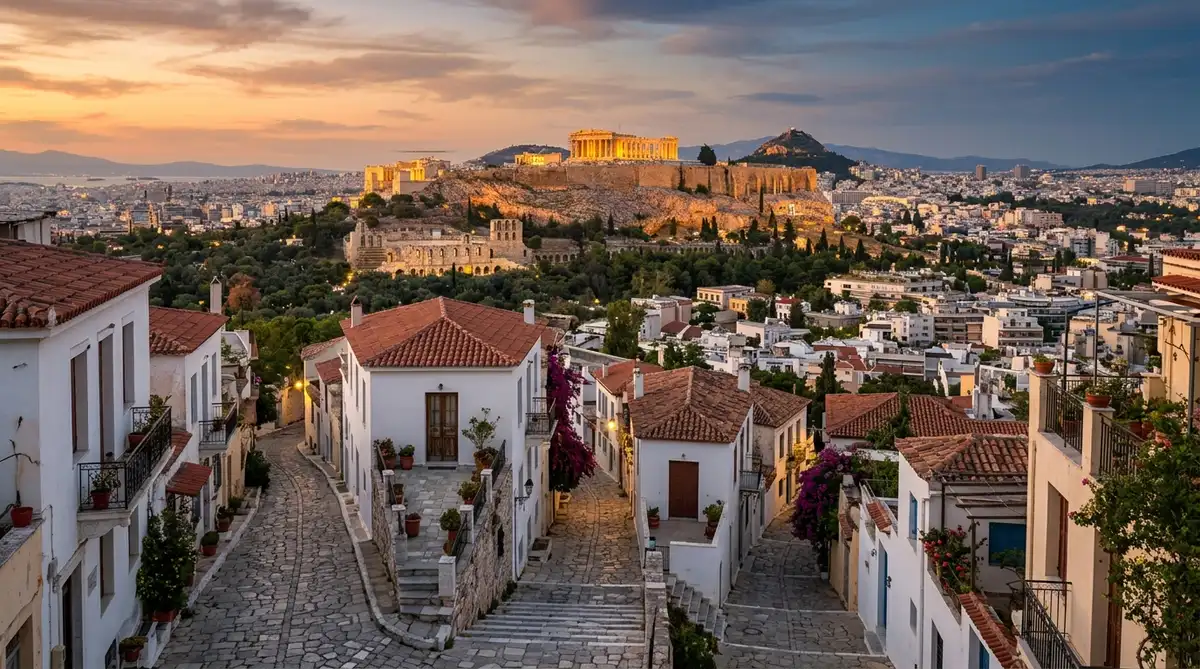
Athens centre is a flat triangle between the Acropolis, Syntagma Square, and Monastiraki. You can walk across the whole thing in 30 minutes. The problem is not distance. The problem is that the neighbourhoods inside that triangle feel like completely different cities, and the one you pick decides whether your trip is calm or chaotic.
The flights to Athens are cheap from most UK airports, which makes the hotel choice matter even more. You saved on the flight. Do not spend the savings on the wrong street.
The quick answer
If you have no time to read the rest:
- First visit: Plaka. Under the Acropolis, pedestrian streets, tavernas on every corner.
- Calmer, local feel: Koukaki. South of the Acropolis, residential, great cafés, 10 minutes from the museum.
- Nightlife and energy: Monastiraki and Psyrri. Rooftop bars, markets, loud until late.
- Transit and short stays: Syntagma. The airport metro stops here, practical, no atmosphere.
- Budget and alternative: Exarcheia. Cheap, edgy, street art, the real Athens that locals live in.
Plaka: under the Acropolis, for first-timers
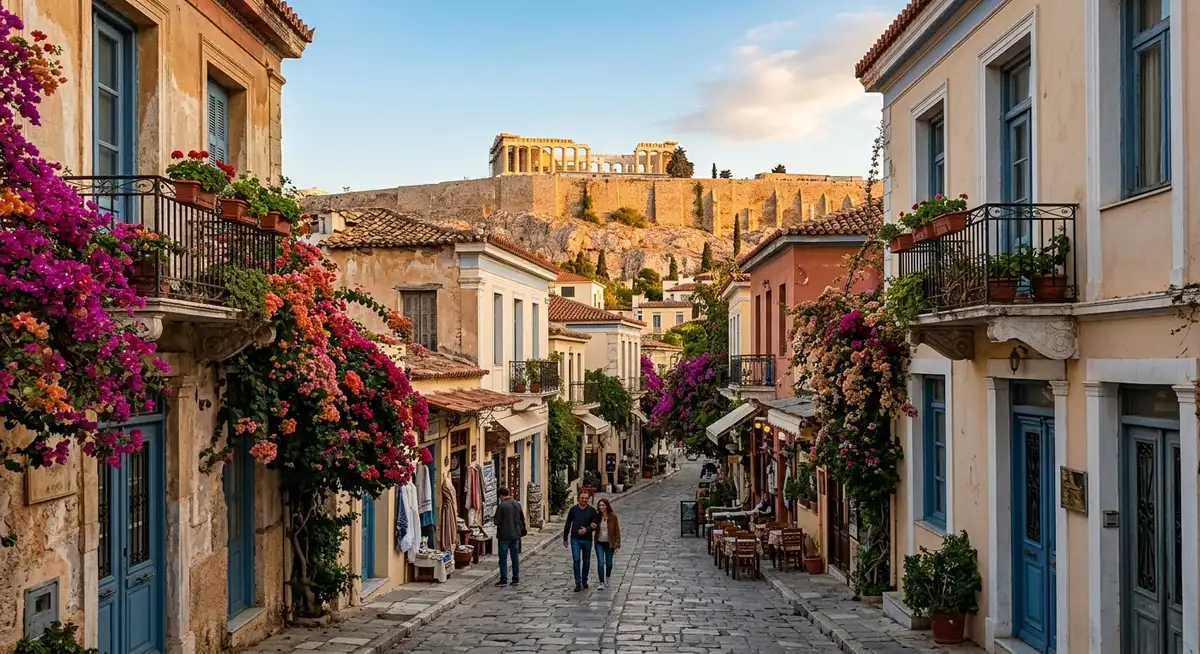
Plaka sits directly beneath the Acropolis, in the oldest continuously inhabited part of the city. Cobblestone streets, neoclassical houses with bougainvillea on the balconies, and tavernas with outdoor tables on narrow alleys. If this is your first visit to Athens, stay here. You will walk to the Acropolis entrance in 10 minutes.
The two main streets, Adrianou and Kidathineon, are lined with restaurants and souvenir shops. The food is tourist-priced but decent. Walk one street back from either of them and prices drop, crowds thin, and the tavernas serve real Greek food to actual Athenians. Anafiotika, the cluster of Cycladic-style houses at the top of Plaka, feels like a Greek island village dropped into the capital. White walls, blue doors, cats on the steps.
Prices here are the highest in the city. A decent mid-range hotel starts at €100 per night in season. The trade-off is location: everything you came to see is within walking distance.
Suits: first-time visitors, history lovers, anyone who wants to walk to the Acropolis. The downside: expensive and crowded. Tour groups fill the streets by 10am. Restaurants on the main drags are overpriced. Sleep one street back from the tourist flow.
Search flights to Athens and book Plaka early. The best small hotels here fill by May for summer.
Koukaki: the calm residential pick
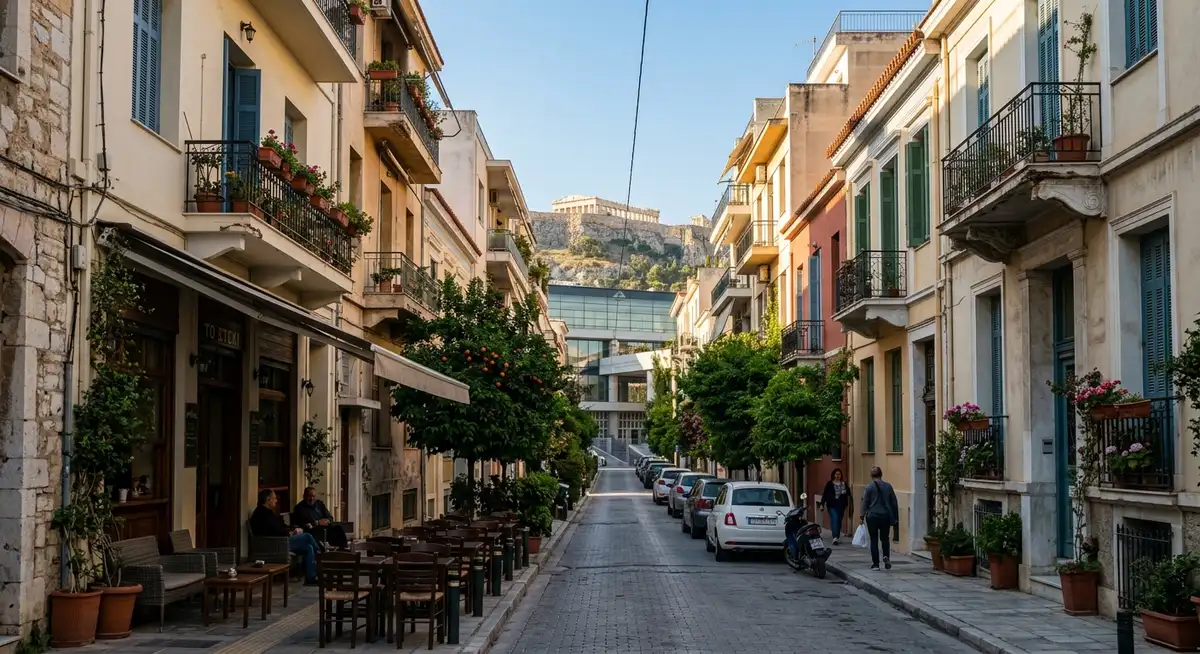
Koukaki sits directly south of the Acropolis, a 10-minute walk from the Acropolis Museum and 15 from Plaka. The streets are residential, lined with apartment blocks and local businesses rather than tourist shops. This is where Athenians actually live, and the atmosphere reflects that: quieter, cheaper, and more authentic than the neighbourhoods to the north.
The cafés here serve Greek coffee and spanakopira to regulars, not tourists. A coffee costs €3, not €6. The bakery on Koukaki Street sells tyropita for €1.80. The Acropolis Museum is at the northern edge, and the Fix metro station connects you to the centre in 5 minutes. For runners, the path up to the Acropolis from the south entrance starts here, and the morning light on the Parthenon from this side is the best in the city.
Rates here are moderate. A good hotel or apartment starts at €75 per night. You get more space and a better night’s sleep than in Plaka, at a lower price.
Suits: second-time visitors, families, anyone who wants calm and value. Worth knowing: slightly further from the northern sights (Monastiraki, Psyrri). The walk to the centre is 15 minutes, or 5 on the metro. This area goes quiet after 10pm, which is either a relief or a disappointment depending on your trip.
When you book a trip that combines separate flights to reach Athens, the Kiwi.com Guarantee covers your connection if one leg is delayed or cancelled.
Monastiraki and Psyrri: nightlife, markets, and noise
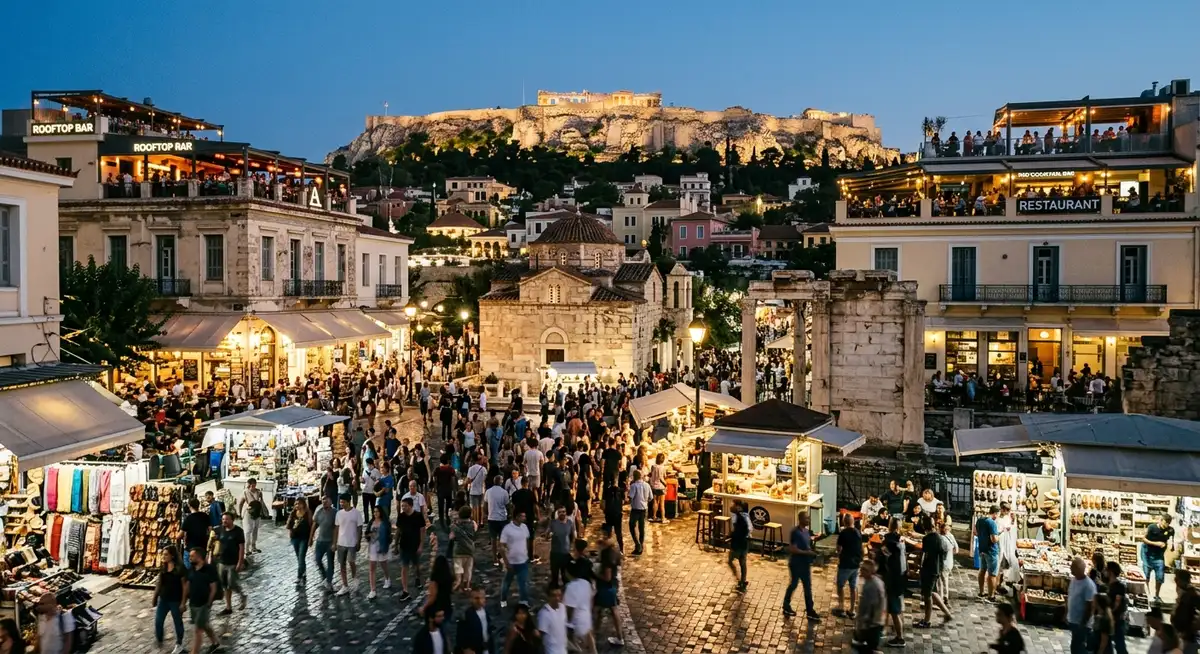
Monastiraki is the market square at the centre of Athens, where the flea market, the metro hub, and the tourist crowds all converge. Psyrri is the neighbourhood directly west of it, once a leather-working district, now the city’s nightlife centre. If your trip is about rooftop bars and late dinners, stay here.
Monastiraki Square is the most photographed spot in Athens, with the Acropolis framed above the rooftops and the Tzistarakis Mosque on the corner. The flea market runs along Ifaistou Street, selling everything from antiques to knock-off sunglasses. Psyrri’s streets are lined with bars, mezze restaurants, and live music venues. A glass of ouzo and a plate of grilled octopus costs €18 in a good Psyrri taverna, and the music does not stop until 2am.
Noise is the problem here. Monastiraki is loud from dawn (delivery vans) until late (bars and street performers). Psyrri is worse on weekends. Hotel rooms facing the square are sleepless. Ask for an interior room, bring earplugs, and accept that you chose the lively neighbourhood on purpose.
Suits: nightlife seekers, solo travellers, anyone who wants to stumble home from a bar. What to watch: loud, day and night. Hotel quality is uneven. Tourist density brings pickpockets around the metro station. Keep your bag closed.
Syntagma: practical, not atmospheric
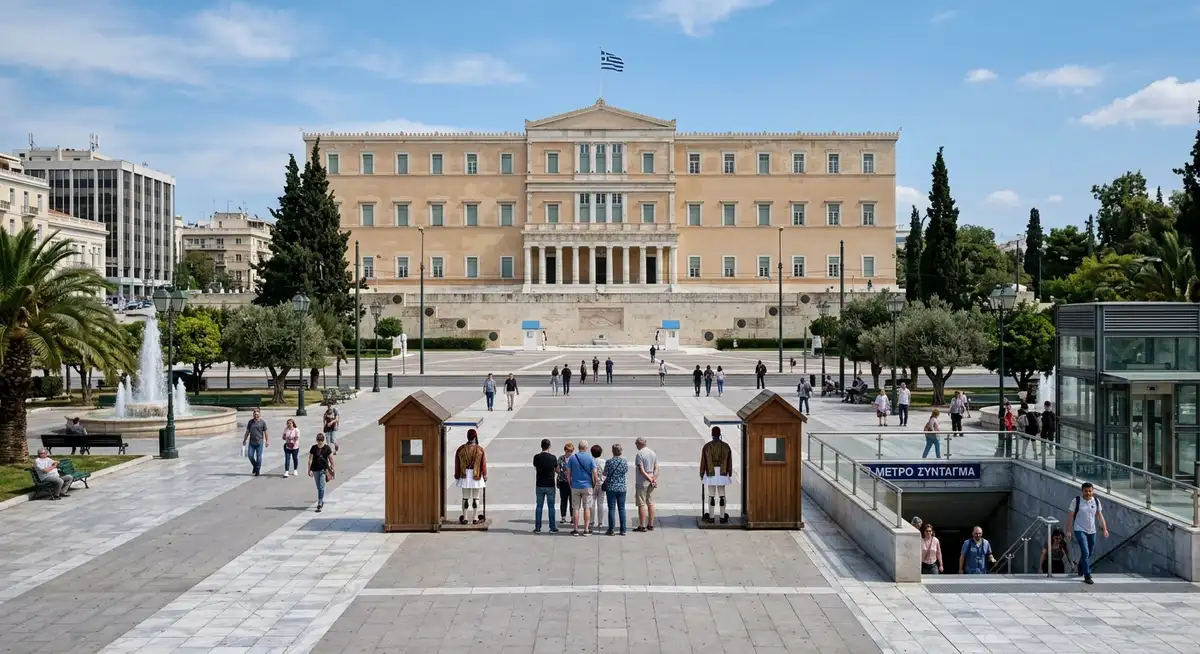
Syntagma is the main square of Athens, home to the Greek Parliament and the starting point for the airport metro line. If you have an early flight, a late arrival, or only one night in the city, stay here. The express metro from the airport takes 40 minutes and drops you at the door.
The square itself is functional rather than charming. The Evzones presidential guard changes every hour on the hour in front of the Tomb of the Unknown Soldier, which is worth watching once. Ermou Street, the pedestrian shopping road, runs west from the square toward Monastiraki. The National Gardens stretch south from here, a green escape from the concrete.
Rooms here are moderate to high. A business hotel starts at €90 per night. The hotels here cater to transit passengers and business travellers, not tourists. You will find chain hotels with reliable WiFi and breakfast buffets, not boutique guesthouses with character.
Suits: short stays, transit passengers, anyone with an early or late flight. The downside: the least atmospheric area on this list. No tavernas, no cobblestone streets, no village feel. A place to sleep, not a place to experience Athens.
Exarcheia: budget, alternative, and real
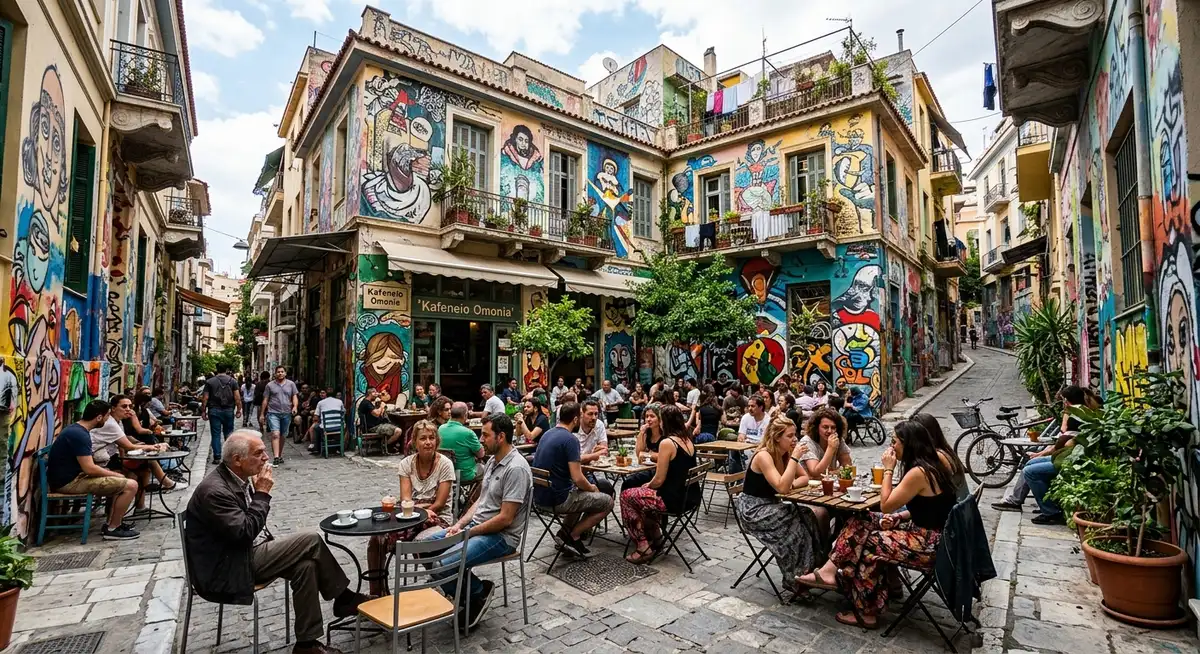
Exarcheia sits north of the centre, between the National Archaeological Museum and the Athens University campus. For decades the anarchist and student quarter, it is now the best budget neighbourhood in Athens, full of street art, cheap bars, and restaurants that serve food to students rather than tourists.
Murals and political graffiti cover the walls. Exarcheia Square fills every evening with locals drinking beer and playing chess. The restaurants are cheap and good: a souvlaki costs €3.50, a full meal with wine costs €15. The National Archaeological Museum, one of the best in the world, is a 10-minute walk away. Entry is €15 in the summer, €5 in the winter.
The reputation is the issue. Exarcheia has had issues with riots and police clashes, though these have decreased significantly. The neighbourhood is safe during the day and early evening. Late at night, the side streets can feel sketchy. Use common sense, walk on the lit main streets, and you will be fine. Most visitors who stay here love it.
Suits: budget travellers, backpackers, anyone who wants the alternative Athens. Worth knowing: the reputation is real enough that you should be street-smart at night. The metro does not run directly through Exarcheia: the nearest stations are Omonia and Victoria, both 10 minutes on foot. Hotels are guesthouses and hostels, not full-service hotels.
Where to avoid
Omonia Square was for years the red-light district and drug-dealing hub. The city has cleaned it up significantly, but the area still feels rough at night, and the hotels are poor value. Walk through it during the day if you must. Sleep elsewhere.
Avoid the area around Karaiskaki Square for the same reasons. Budget hotels, noisy streets, and a general feeling that you could do better for the same money in Koukaki or Exarcheia.
Skip Piraeus unless you are catching a ferry to the islands. The port is 30 minutes from the centre by metro, and the neighbourhood is a transit hub, not a place to experience Athens. Stay central and take the metro to the port on departure day.
Getting there and when to go
Athens airport (ATH) is 35km from the centre. Metro line 3 runs direct to Syntagma in 40 minutes and costs €9. Bus X95 runs to Syntagma 24 hours a day and costs €5.50. A taxi costs €38 during the day, €54 at night, flat rate. Search flights to Athens to compare options from your nearest airport.
April, May, October, and early November are the best months. Warm, sunny, and the crowds at the Acropolis are manageable. June and September are also good but hotter. Avoid July and August unless you love 40-degree heat and queues. The Acropolis opens at 8am: go early or go after 5pm in summer.
When you book a trip that combines separate flights to reach Athens, the Kiwi.com Guarantee covers your connection if one leg is delayed or cancelled.
Frequently asked questions
Which area of Athens is best to stay in?
Plaka for first-time visitors, Koukaki for a calmer residential feel, Monastiraki and Psyrri for nightlife, Syntagma for transit convenience, and Exarcheia for budget and alternative culture.
Where to avoid staying in Athens?
Omonia Square and the area around Karaiskaki Square, especially at night. The hotels are poor value and the streets feel rough after dark. Also avoid Piraeus unless you are catching a ferry.
Is 4 days in Athens too long?
No. Two days covers the Acropolis, the Ancient Agora, and one museum. Three or four days lets you add day trips to Cape Sounion, Delphi, or a beach on the Apollo Coast. Athens rewards a slower pace, especially in spring and autumn.
Which area in Athens is considered the safest to stay in?
Plaka and Koukaki are the safest neighbourhoods for visitors. Both are well-lit, well-policed, and busy until late. Syntagma is also safe, being the political centre. Exarcheia is safe during the day but requires street smarts at night.
Where should I stay in Athens for the first time?
Plaka. Walking distance to the Acropolis, the Ancient Agora, and the main museums. Pedestrian streets, tavernas, and a village atmosphere in the middle of the city. Pay more, sleep less, walk everywhere. The convenience is worth the price for a first visit.
Is Plaka expensive?
Yes, by Athens standards. A hotel room starts at €100 per night in season, and the restaurants on the main streets charge tourist prices. Walk one street back for cheaper food, and book early for better hotel rates. The location premium is real but worth it for a short first visit.
What is the cheapest area to stay in Athens?
Exarcheia. A guesthouse or hostel bed starts at €30 to €40 per night, and the restaurants serve full meals for €15. The neighbourhood is alternative and student-heavy, with street art and cheap bars. Safe during the day, but walk on the main streets at night.
Popular routes on Kiwi.com
- Cheap flights from London to Turkey
- Cheap flights from London to Barcelona
- Cheap flights from London to Japan
- Cheap flights from London to New York
- Cheap flights from New York to Paris
- Cheap flights to Spain
- Cheap flights to Italy
- Cheap flights to the United States
- Cheap flights to the United Kingdom
- Last minute flights
People Also Read

Where to stay in Palma de Mallorca: best areas for beaches, culture and nightlife
Where to stay in Barcelona: best neighbourhoods for every traveller (and where to avoid)