




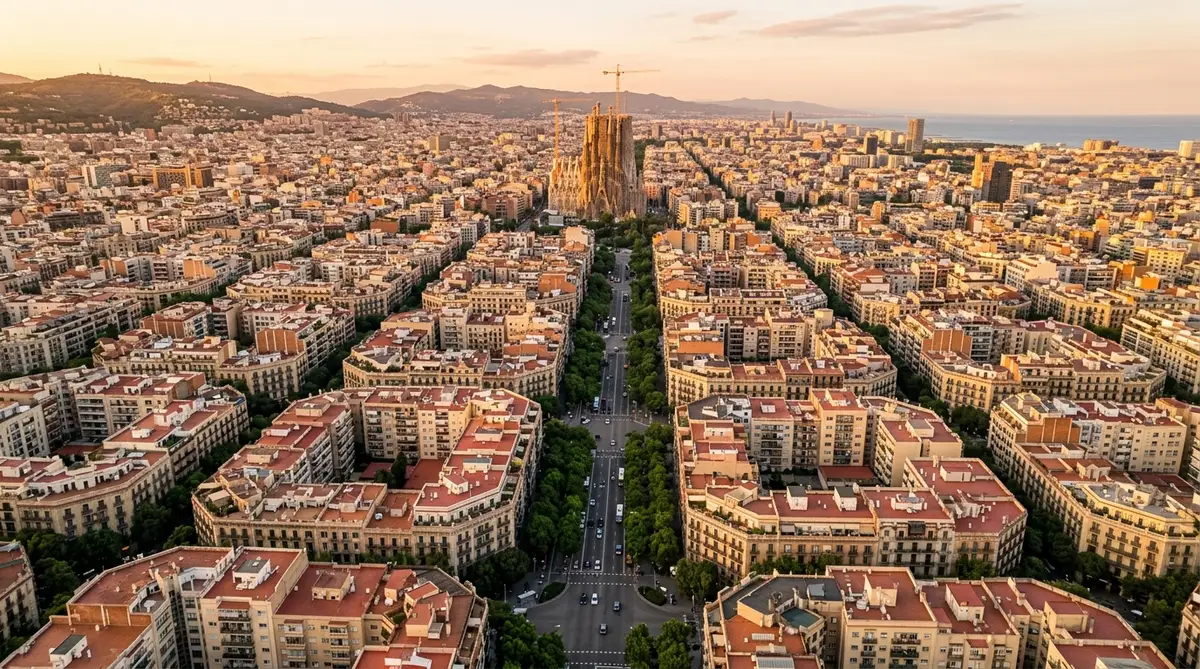
Barcelona has 73 neighbourhoods. You only need to choose among six of them, and getting it wrong is the difference between a great trip and a miserable one. Stay on La Rambla and you will be woken by rolling suitcases at 6am. Stay in Gràcia and you will eat dinner on a plaza with locals until midnight. Same city, completely different visit.
The flights to Barcelona are cheap from most UK airports, which is why this choice matters more than usual. You saved money getting there. Do not waste it on the wrong postcode.
The quick answer
If you have no time to read the rest:
- First visit: Eixample. Central, walkable, safe, every Gaudí building within 20 minutes on foot.
- Food and nightlife: El Born. Bars open late, pintxos on every corner, walking distance to the beach.
- Local life, quiet streets: Gràcia. Village feel, plaza culture, the best restaurants in the city.
- Budget: Poble Sec. Cheap eats, 15 minutes from the centre by metro, no tourist crowds.
- Beach: Barceloneta. Sand and sea on your doorstep, but only one decent hotel and the beach is packed in summer.
- Families: Sarrià-Sant Gervasi. Green, calm, apartment-style hotels, 20 minutes from the centre.
Eixample: the safe pick for first-timers
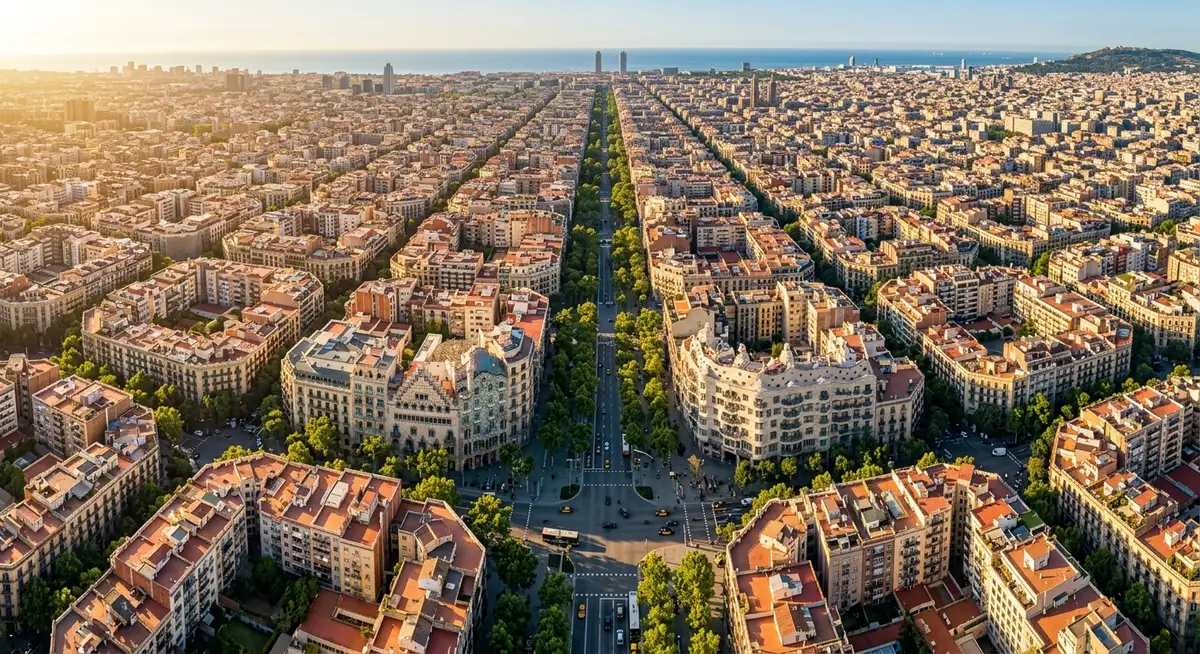
Eixample is the modern grid that connects the old city to the hills. Wide boulevards, tree-lined streets, and Gaudí’s two most famous buildings: Casa Batlló and Casa Milà on Passeig de Gràcia. Most first-time visitors should stay here, and most do not regret the choice.
The neighbourhood runs on a perfect grid designed in the 1850s, which means you will almost never get lost. The blocks are octagonal, cut off at the corners, so every intersection has a small plaza. The metro connects everywhere: Diagonal and Passeig de Gràcia stations link three lines.
Hotel prices here are the highest in the city outside the Gothic Quarter. A decent mid-range hotel starts at €120 per night in season. The trade-off is that you can walk to the Sagrada Família in 20 minutes, to the Gothic Quarter in 10, and to Gràcia in 15. You pay for the location, and the location is worth it.
Suits: first-time visitors, couples, anyone who wants to walk everywhere. The downside: highest hotel prices in the city outside the Gothic Quarter. A decent mid-range hotel starts at €120 per night in season. The restaurant scene is good but not the best in the city. For dinner, walk up to Gràcia.
Search flights to Barcelona and book early for Eixample. The best hotels here fill by April for summer trips.
El Born: where the night actually happens
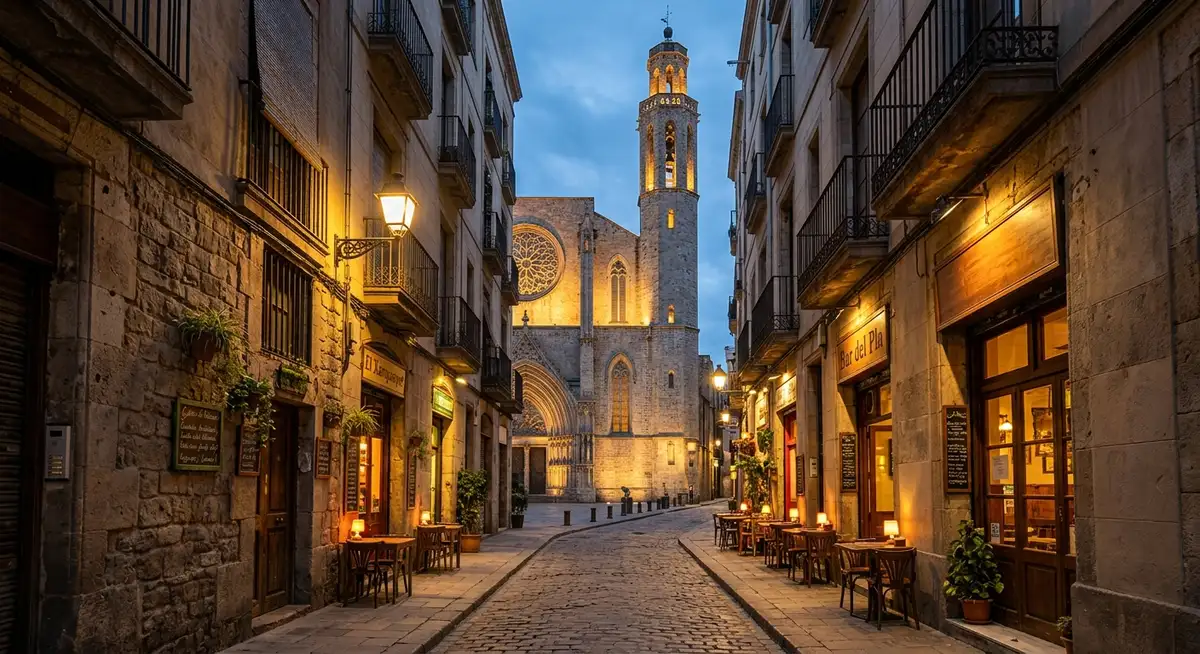
El Born is the eastern corner of the old city, tucked between the Gothic Quarter and Parc de la Ciutadella. Narrow medieval streets, the stunning Basilica of Santa Maria del Mar, and more bars per square metre than anywhere else in Barcelona. If your trip is about food and late nights, stay here.
The Passeig del Born is the main drag, a tree-lined promenade with cafés, cocktail bars, and the Picasso Museum at one end. The side streets are where the real eating happens: pintxos bars, vermuterías serving Catalan vermouth on tap, and small restaurants that do not take reservations. Show up at 8pm or wait until 10pm, when locals eat.
El Born feels more authentic than the Gothic Quarter. Local businesses still operate here, and the overtourism that hollowed out the streets to the west has not fully taken hold. But that is changing. The night scene is loud, and if your hotel faces a plaza, expect to hear it until 2am on weekends.
Suits: couples, food travellers, nightlife seekers, anyone who wants to walk home from dinner. What to watch: noisy until late, and hotel options are limited and expensive. A good hotel here starts at €130. Light sleepers should ask for an interior room.
Gràcia: the village that Barcelona swallowed
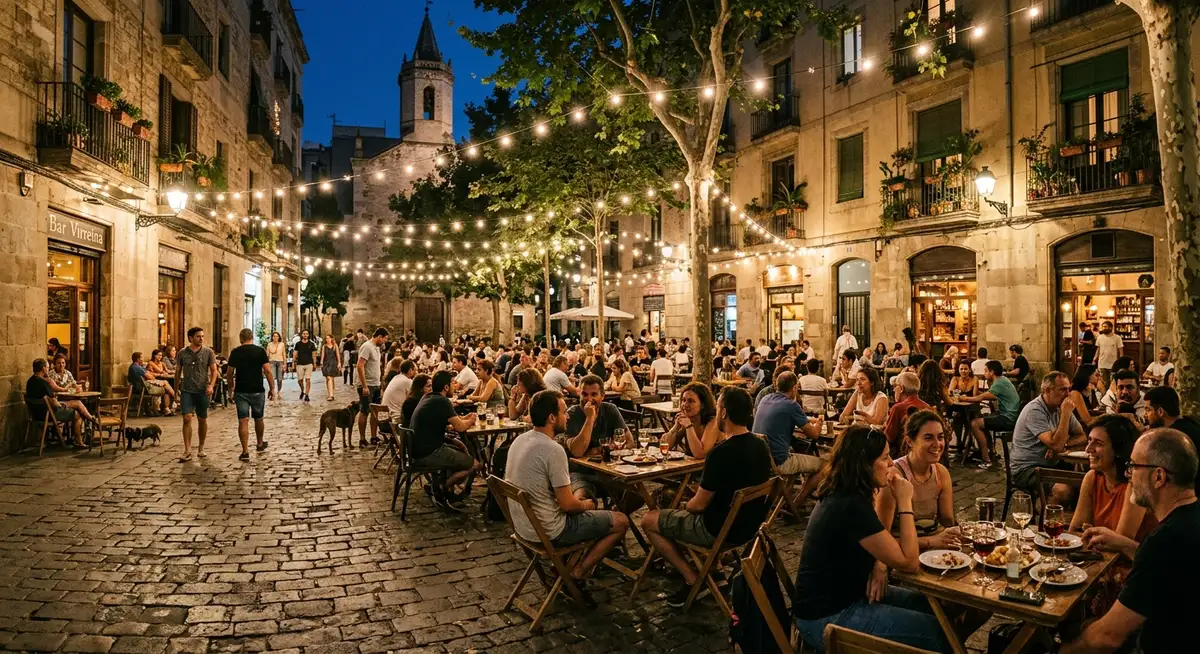
Gràcia was a separate village until 1897, and still feels like one. Cobblestone streets, small plazas with cafés and trees, and a community that actually lives here. Locals send their friends here when they visit Barcelona. The food scene is also the best in the city.
The main plazas, Plaça del Sol and Plaça de la Vila de Gràcia, fill every evening with people drinking beer and vermouth at outdoor tables. The restaurants are family-run, cheaper than Eixample, and better than El Born. Catalan, Italian, Japanese, Mexican, vegetarian: Gràcia has all of it, and none of it is aimed at tourists. A dinner with wine costs €20 to €30 per person.
Transit is the catch. Gràcia sits 25 minutes on foot from the Gothic Quarter and 30 from the beach. Metro connections are decent: Fontana and Diagonal stations link lines L3 and L5, which cover the centre. Expect to ride the metro more here than anywhere else on this list.
Suits: second-time visitors, food travellers, anyone who wants quiet streets and local life. Worth knowing: not walkable to the old city or the beach. Budget 20 to 30 minutes by metro for each trip to the centre. Hotel options are thin: a handful of guesthouses and aparthotels, and they book out early.
When you book a trip that combines separate flights to get to Barcelona, the Kiwi.com Guarantee covers your connection if one leg is delayed or cancelled.
Poble Sec: the budget pick that locals actually live in
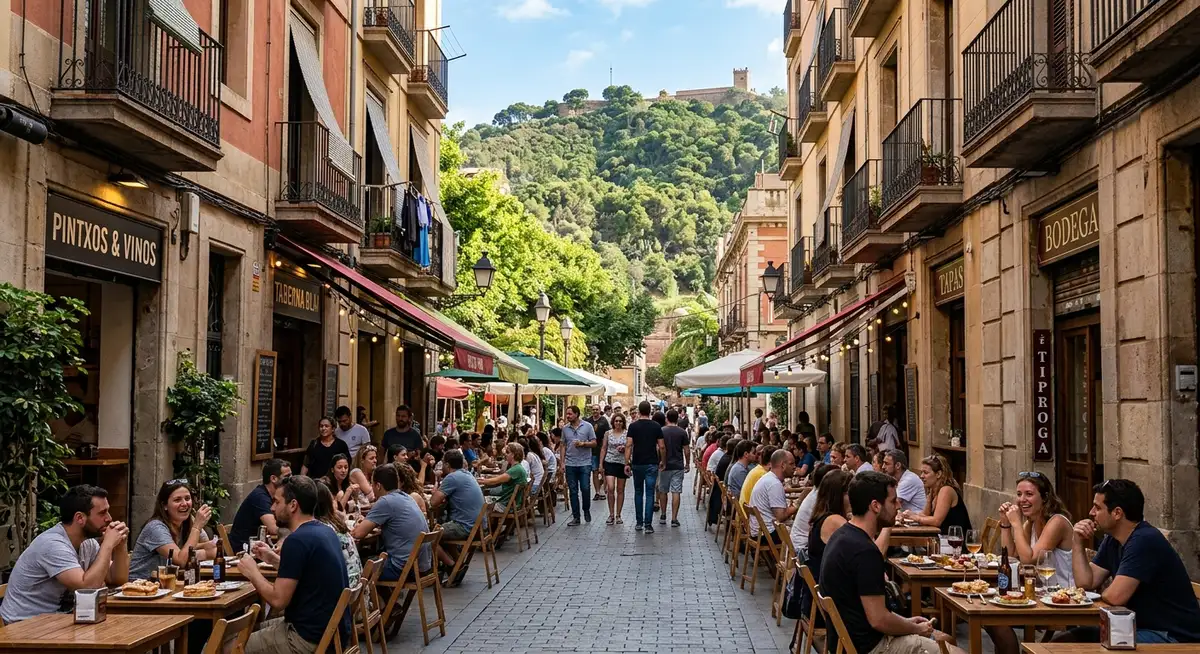
Poble Sec sits on the slope of Montjuïc, directly south of Eixample. Fifteen minutes by metro from Plaça de Catalunya, and half the price. Young Barcelona lives here, making the best budget neighbourhood in the city.
Carrer de Blai is the main street, pedestrianised and lined with pintxos bars. A skewer of tortilla costs €1.80. A beer costs €2. The bars fill at 7pm with workers on their way home. The food is Basque-style, not Catalan, but nobody complains. Above the neighbourhood, Montjuïc offers parks, the Magic Fountain, and the Joan Miró Foundation, all free or cheap to enter.
Hotels here are few but affordable. A clean guesthouse starts at €70 per night. Luxury is not on offer, but value is. The neighbourhood is safe, residential, and genuinely local. No souvenir shops, no tour groups.
Suits: budget travellers, solo travellers, anyone who wants to eat well for €20. The downside: uphill from the centre, and the walk home from a late night in El Born is a 25-minute climb. Metro lines L2 and L3 at Paral·lel are fast, but stop running around midnight on weekdays.
Barceloneta: beach on your doorstep, crowds on your beach
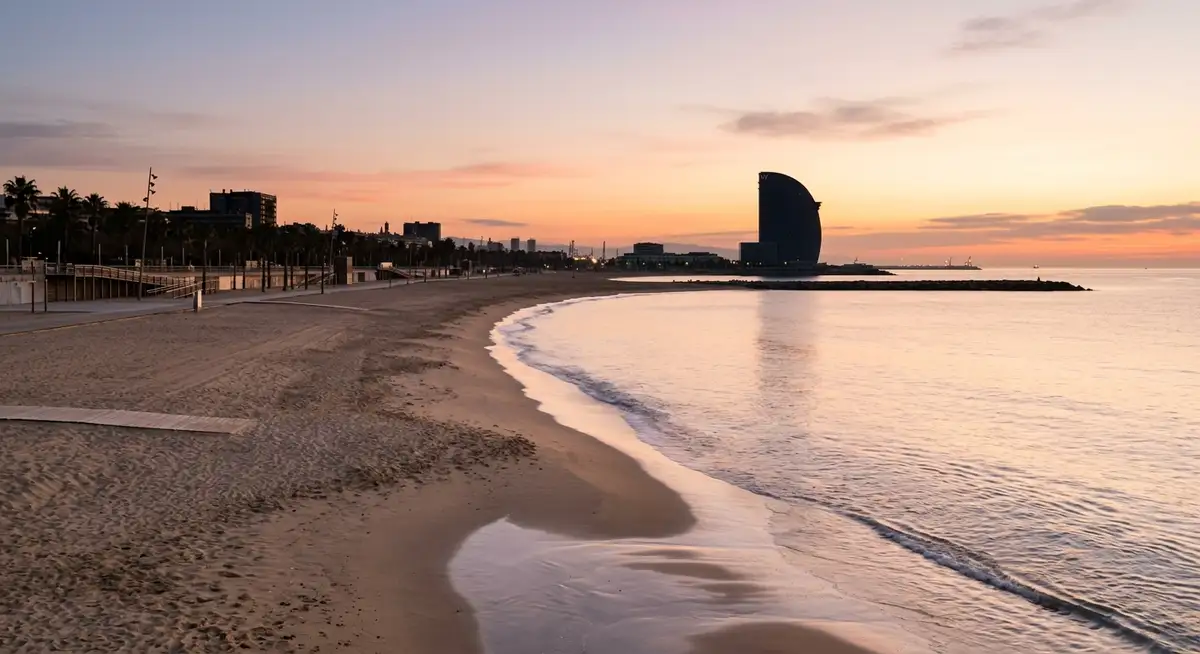
Barceloneta is the man-made peninsula that juts into the Mediterranean. If your trip is about the beach, this is the only neighbourhood that puts sand outside your door. The old fisherman’s quarter still has character: narrow streets, a covered market, and some of the best seafood restaurants in the city.
The beach itself is broad and sandy, but it is the busiest in Barcelona. In July and August, you will be towel-to-towel with thousands of others, and the sand is hot enough to burn your feet by noon. Go before 9am or after 5pm. The water is clean enough to swim, and the promenade is good for running.
The problem is hotels. There are almost none. The W Hotel sits at the tip of the peninsula, the only proper hotel on the beach. Rates start at €250 per night in season. The rest of Barceloneta is apartments, and short-term rentals are heavily restricted in Barcelona. Options are thin and your wallet will feel all of them.
Suits: beach travellers, families with kids who want sand and sea, summer visitors. What to watch: almost no hotels, and the ones that exist are overpriced. The beach is packed in summer and the neighbourhood is far from the metro. Most visitors are better off staying elsewhere and day-tripping here.
Sarrià-Sant Gervasi: for families who want calm
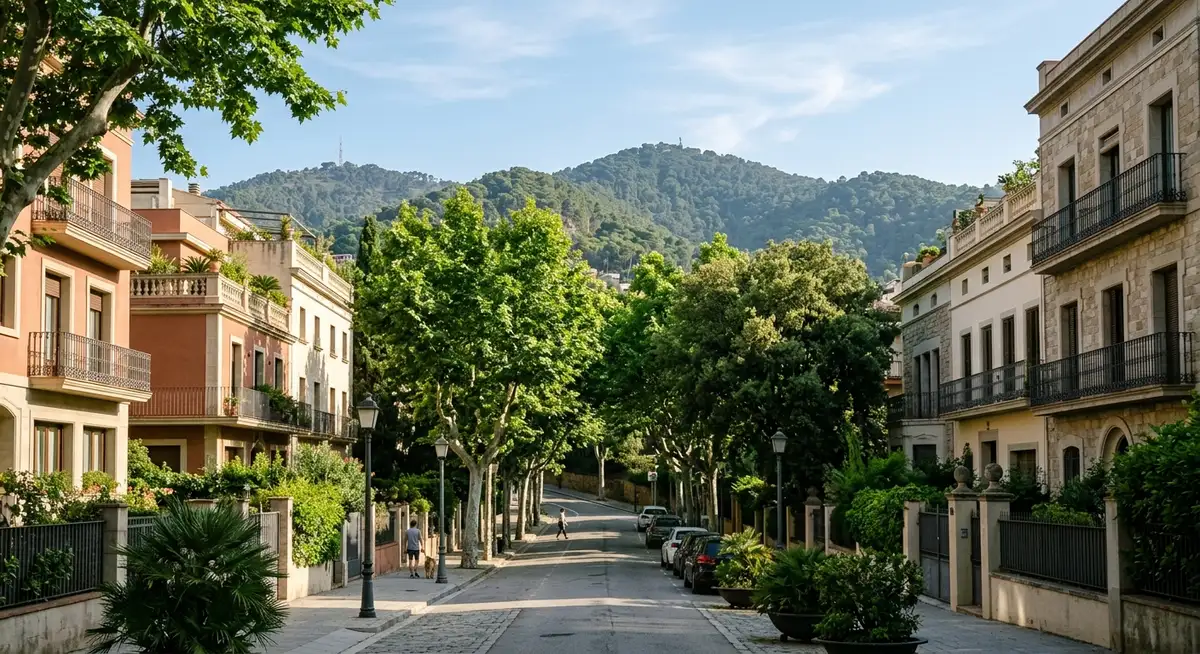
Sarrià-Sant Gervasi is the green, residential neighbourhood above Eixample, at the foot of the Collserola hills. The quietest area on this list, the safest, and the best choice for families who want space, parks, and a calm base away from the party streets.
The streets are wide and tree-lined. The buildings are lower than central Barcelona. There are parks, playgrounds, and international schools, which tells you who lives here. The restaurants are Catalan and traditional, less experimental than Gràcia but excellent for a long family lunch. Apartment-style hotels are the main accommodation type, which suits families who need a kitchen and separate bedrooms.
The trade-off is distance. Twenty to 25 minutes by metro from the Gothic Quarter, 30 from the beach. Line L6 (FGC) runs from Sarrià station to Plaça de Catalunya in 12 minutes. Fast, but less frequent than the main metro lines. Plan your days around the timetable.
Suits: families, long-stay visitors, anyone who wants quiet and space over nightlife. Worth knowing: far from the action. Eating in El Born at 10pm and stumbling home is not an option from here. The restaurant scene is limited and traditional.
Where to avoid
The Gothic Quarter (Barri Gòtic) is the most famous old-city neighbourhood, and the one most visitors regret. The streets are beautiful, but also wall-to-wall tourists, and the businesses have all adapted to that. Restaurants on La Rambla are overpriced and bad. Pickpocketing is a real problem in the narrow alleys, especially around the cathedral. For the old-city feel, stay in El Born instead. Quieter, more authentic, and the food is better.
Avoid La Rambla itself for sleeping. The street is loud, the hotels are mediocre, and you will be woken by bin lorries and drunk tourists. Walk it once during the day, eat nowhere on it, and sleep somewhere else.
Avoid the far north and far south of the city (Nou Barris, Sant Martí beyond Poblenou) unless you have a specific reason. They are residential, far from the centre, and offer nothing a short-stay visitor needs.
Getting there and when to go
Barcelona’s airport (BCN) is 14km from the centre, a 25-minute train ride on the L9 Sud metro line. Direct flights run from London, Manchester, Edinburgh, Bristol, and most UK airports. Search flights to Barcelona to compare options from your nearest airport. The train costs €5 and runs every 30 minutes. A taxi costs €35 to €40 to the centre.
May, June, and September are the best months. Warm enough for the beach, not so hot that the city is unbearable, and the crowds are thinner than July and August. October is also good, with cooler weather and fewer tourists, though some beach clubs close.
When you book a trip that combines separate flights to reach Barcelona, the Kiwi.com Guarantee covers your connection if one leg is delayed or cancelled.
Frequently asked questions
Which area in Barcelona is the best to stay?
It depends on your trip. First-time visitors should stay in Eixample for the central location and walkability. Food and nightlife travellers should pick El Born. Anyone who wants quiet, local life should choose Gràcia. Budget travellers should head to Poble Sec.
Where to avoid staying in Barcelona?
Avoid the Gothic Quarter for sleeping, especially near La Rambla. Crowded, noisy, and the restaurants are aimed at tourists. Also avoid the far northern and southern residential districts unless you have a specific reason to be there.
Where is the best area to stay in Barcelona for a first-time visit?
Eixample. Central, safe, walkable, and close to every major sight. The Gaudí buildings are on your doorstep, the metro connects everywhere, and the streets are wide enough to navigate easily. Expect to pay more, but the convenience is worth the money for a short visit.
Should I stay in the Gothic Quarter or Eixample?
Eixample, unless your trip is specifically about nightlife. The Gothic Quarter is beautiful to walk through during the day, but it is crowded, loud at night, and the hotel quality is lower for the price. Eixample gives you a better night’s sleep and the same walkability.
Where should I stay in Barcelona with a family?
Sarrià-Sant Gervasi. Quiet, green, safe, with apartment-style hotels offering kitchens and separate bedrooms. The parks and playgrounds are good, and the FGC train reaches the centre in 12 minutes. For families who want the beach, Barceloneta is the alternative, but hotel options are very limited.
Is Barceloneta a good place to stay?
Only if the beach is your main reason for visiting. The sand and sea are right there, and the seafood restaurants are excellent. But the beach is packed in summer, hotels are scarce and expensive, and the neighbourhood is far from the metro. Most visitors are better off staying elsewhere and day-tripping to the beach.
What is the cheapest area to stay in Barcelona?
Poble Sec. A clean guesthouse starts at around €70 per night, and the pintxos bars on Carrer de Blai serve food for under €2 a plate. Fifteen minutes by metro from the centre and genuinely local, with no tourist markup.
Popular routes on Kiwi.com
- Cheap flights from London to Turkey
- Cheap flights from London to Barcelona
- Cheap flights from London to Japan
- Cheap flights from London to New York
- Cheap flights from New York to Paris
- Cheap flights to Spain
- Cheap flights to Italy
- Cheap flights to the United States
- Cheap flights to the United Kingdom
- Last minute flights
People Also Read


Where to stay in Palma de Mallorca: best areas for beaches, culture and nightlife
Where to stay in Athens: best areas for first-time visitors and history lovers