






There are so many things that can go wrong when you mix airport codes up, from having to fork out extra cash to missing your flight entirely. So you do not fall into the trap, we are here to show you why airport codes matter.
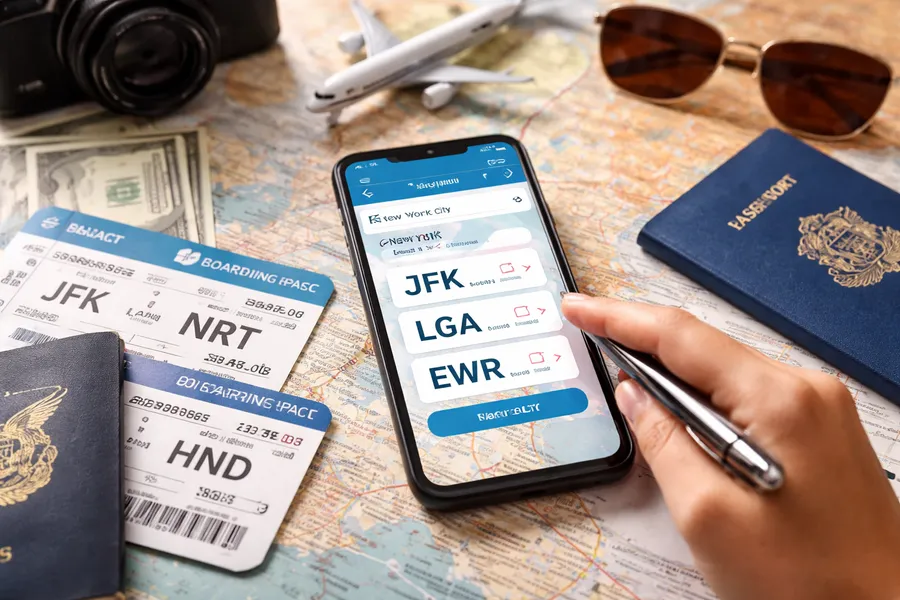
Airport codes play a key role in flight bookings, as passengers can confuse them when booking flights to multi-airport cities. For example, New York’s John F. Kennedy International Airport (JFK) , LaGuardia Airport (LGA) , and Newark Liberty International Airport (EWR) are all listed under New York. However, these airports are located in very different places and serve different purposes. Inter-airport transfers can cause even bigger problems. A connection that requires traveling from JFK to EWR, for instance, can result in missed flights if passengers are unaware of the airport change. To avoid these issues, travelers should take additional steps, such as searching for flights by specific destination airport codes rather than relying on city-name searches.
Confusing Airports: JFK vs LGA vs EWR, HND vs NRT
Let’s start by showing you a real-world example using airport codes. We will look at New York’s three major airports and Tokyo’s two main international gateways.
At first glance, these airports appear to serve the same cities. In reality, their distances from the city centers, transport options, and typical airline usage vary significantly.
New York
John F. Kennedy International Airport (JFK)
Distance from Manhattan: approximately 25 km Travel time: 45 minutes to 1 hour, depending on traffic
LaGuardia Airport (LGA)
Distance from Manhattan: approximately 13 km Travel time: 30 to 45 minutes
Newark Liberty International Airport (EWR)
Distance from Manhattan: approximately 26 km Travel time: 45 minutes to 1 hour
Tokyo
Tokyo Haneda Airport (HND)
Distance from central Tokyo: approximately 18 km Travel time: 30 to 40 minutes
Tokyo Narita International Airport (NRT)
Distance from central Tokyo: approximately 60 km Travel time: 1 to 1.5 hours
What is immediately noticeable is that, in both cities, one airport is significantly closer to the city center than the others. Because all of these airports are listed under the same city names, they appear in flight search results regardless of distance. Airlines and booking platforms take advantage of this grouping to present cheaper fares that may involve airports farther from the city or less convenient arrival points.
Multi-Airport Cities and Mistaken Bookings
You need to pay particular attention to airport codes when flying to multi-airport cities, as it is where most of the risk lies. A multi-airport city is one with more than one airport. Some well-known examples include New York, Tokyo, Milan , and Los Angeles.
The main reason cities have multiple airports is to handle high passenger volumes, but some airports are also used for specific purposes. In New York, LaGuardia is primarily used for domestic flights, while JFK handles most long-haul international traffic. Newark Liberty, although technically located in New Jersey, still appears in New York flight searches.
The issues travelers often face with multi-airport cities usually come down to how they search for flights. Most OTAs, including Kiwi, allow you to expand your search to cover an entire city rather than selecting a specific airport. While useful, this means results may include flights to all airports in that city rather than just one. Someone flying to New York might expect to land at JFK but instead book a flight arriving at Newark without realizing the difference.
Multi-airport cities are a major cause of booking mistakes, which can be costly. Picture yourself landing at the wrong airport and having to spend more money and time than expected just to reach your accommodation. It is not a great way to start a trip.
Inter-Airport Transfers (for Example, JFK to EWR)
Inter-airport transfers can be a major problem on tight layovers. These connections require you to change airports within the same city to catch your next flight.
Imagine landing at John F. Kennedy International Airport (JFK) but needing to travel to Newark Liberty International Airport (EWR) for the second leg of your journey. First, you would need to pass through immigration and customs, which may not even be possible if you do not have a visa to enter the United States. If you can clear this step, you then need to collect your baggage and travel to Newark Liberty International Airport, which is around a 45-minute drive away without traffic.
While the lower price of itineraries involving inter-airport transfers may sound appealing, they add a significant amount of time and stress and often cause more problems than they solve.
Codeshare Flights and Hidden Airport Shifts
Frequent fliers have likely encountered a codeshare flight at least once. Codeshare arrangements occur when two or more airlines sell tickets for the same route, even though the flight is operated by only one airline.
For example, an airline might sell a ticket for a route that is operated by another carrier. If the operating airline later changes the schedule or even the departure airport, the ticket-selling airline may not update the information immediately. This can result in passengers arriving at the wrong airport and missing their flight.
Because airport codes are easy to overlook, travelers may not realize that an airport change has occurred until it is too late. Always double-check the operating airline and the airport codes listed in your booking details.
Avoiding Errors When Using Kiwi or Meta Search Platforms
It is easy to make mistakes with airport codes when using a flight search site like Kiwi or a metasearch platform. These websites offer a wide range of flight options to give travelers flexibility, but this can be confusing for anyone unfamiliar with features such as self-transfer itineraries.
Self-transfer itineraries are where many travelers slip up. When you search by city rather than a specific airport, the system may automatically allow transfers between different airports within the same city. While this can reduce the ticket price, failing to notice an airport change can lead to missed connections and added expenses.
Understanding how these systems work allows you to book flights with greater confidence and avoid unpleasant surprises.
Tips for Searching Correctly by Region
Research the Airports in the Region Before Booking
Before starting your flight search, research how many airports serve your destination. Learn where they are located, how long transfers take, and what transport options are available. Reviewing the airport codes together reduces confusion later.
Always Search Using Airport Codes
Searching by airport code rather than city name helps you target the airport that best fits your plans. For example, travelers arriving in Tokyo late at night often prefer Haneda (HND) because it is closer to the city than Narita (NRT).
Use the Airport Name if You Do Not Know the Code
If you are unsure of the airport code, search using the full airport name. Most booking platforms allow you to select the exact airport, such as Los Angeles International Airport (LAX) instead of nearby alternatives like Ontario International Airport (ONT).
FAQs
What is the difference between IATA and ICAO airport codes?
IATA airport codes are three-letter codes used by passengers on boarding passes and flight information screens. ICAO codes are four-letter codes used for flight operations and air traffic control. Travelers should focus on IATA codes, as these are the ones used during booking.
Are airport codes universal?
Yes, airport codes are standardized by the International Air Transport Association. All major international airports have IATA codes, which appear in booking confirmations, boarding passes, and flight displays.
What happens if I book a flight to the wrong airport?
If you book a flight to the wrong airport, the responsibility usually falls on the passenger. Changing or canceling the ticket may involve fees or additional costs. This is why checking airport codes before purchasing tickets is essential.
Why do some airport codes not match the city name?
Airport codes are sometimes based on historical names or people rather than the city itself. For example, John F. Kennedy International Airport uses the code JFK, which reflects the former U.S. president rather than the city name. Never assume an airport code directly matches the city name.
Popular routes on Kiwi.com
- Cheap flights from London to Barcelona
- Cheap flights from London to New York
- Cheap flights from London to Asturias
- Cheap flights from London to Pattaya
- Cheap flights from London
- Cheap flights to Spain
- Cheap flights to Italy
- Cheap flights to Thailand
- Cheap flights to the United States
- Cheap flights to the United Kingdom
- Cheap flights from London Luton Airport
- Last minute flights
People Also Read




How to Travel Patagonia: A First-Timer's Guide to Chile & Argentina's Wild South