





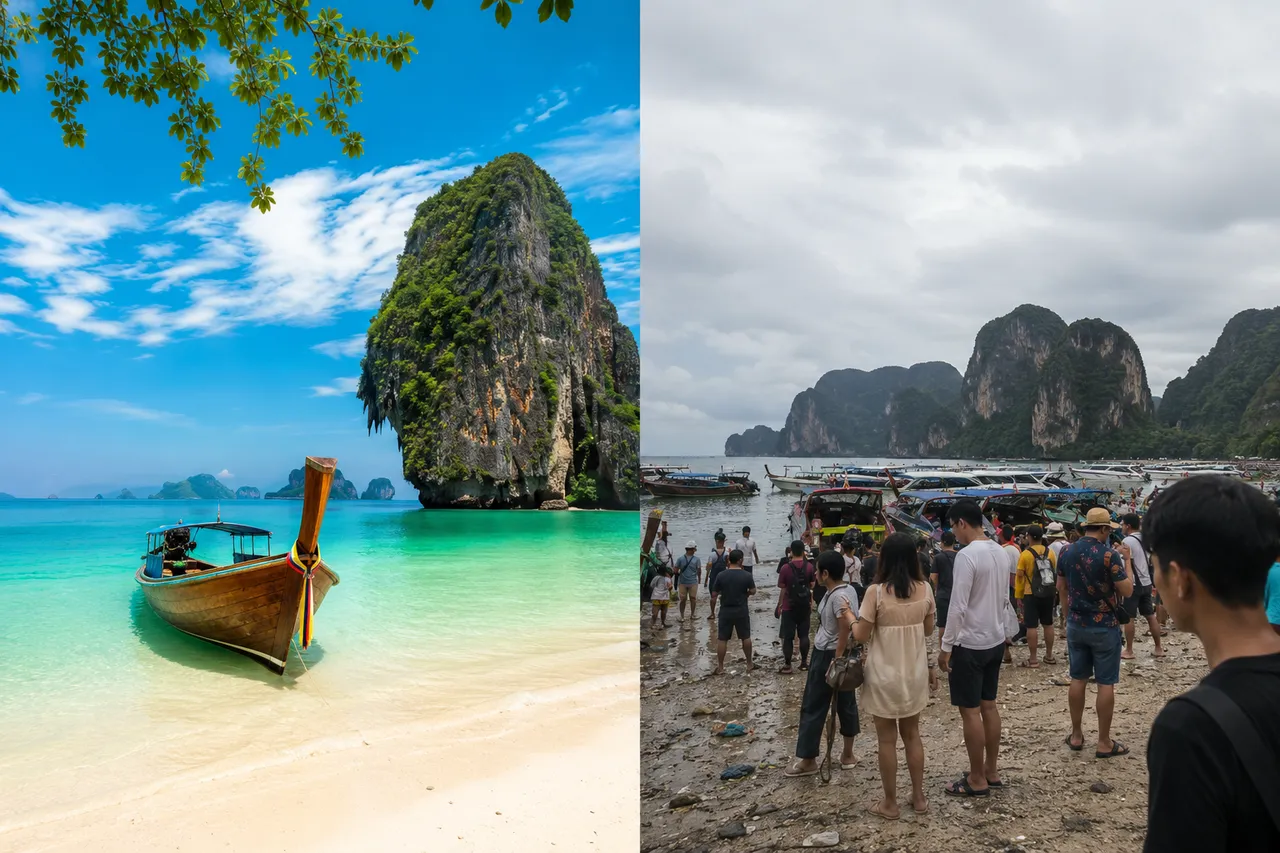
Social-media users are often disappointed when they find that their travel experiences do not match the ‘perfect’ travel photos they had seen online and believed to be authentic. This can lead to anxiety and can ruin a highly anticipated holiday. Only 5% of travelers can reliably tell AI-faked location photos from real ones. Scammers exploit this by designing convincing but bogus booking websites and property listings to steal thousands from tourists. So, look for unedited, raw media, such as street-view footage, and avoid top-10 viral lists in favor of spontaneous exploration.
In this article
Introduction: Key Reasons This Gap Exists
| Factor | What it does | Why it matters |
|---|---|---|
| Curated highlights | People post best moments only; editing and filters amplify them. | Creates a skewed baseline for what a trip “should” look like. |
| Expectation inflation | Repeated exposure to perfect images raises expectations for experiences, service, and scenery. | Higher expectations make ordinary setbacks feel like failures. |
| Omitted context | Photos hide logistics, costs, crowds, bad weather, and effort behind the scenes. | Viewers compare a single frame to an entire, messy reality. |
| Comparison mindset | Scrolling encourages social comparison and status signaling. | Comparison reduces satisfaction with one’s own trip, even if it was objectively enjoyable. |
| Commercialization and staging | Influencers and tourism businesses stage shots and experiences for shareability. | Experiences become designed for photos rather than genuine enjoyment. |
| Memory vs. feed | People remember whole experiences; feeds freeze moments and emphasize novelty. | The feed rewards spectacle, not the quieter parts that build lasting satisfaction. |
Why People Post Altered and Idealized Travel Photos
People post idealized, heavily edited travel photos because those images serve social, psychological, and even economic functions. In short, they’re not trying to document reality — they’re trying to communicate identity.
Core motivations
Identity Construction
Travel photos are a form of self-presentation. People curate an aspirational version of themselves: adventurous, cultured, attractive, successful. The photo becomes a symbolic statement rather than a record of a moment.
Social Comparison Pressure
Platforms reward “perfect” images with likes, comments, and visibility. Users learn that polished content performs better. This creates a feedback loop where the ideal becomes the norm.
Find flights for this trip

Escapism and Narrative Control
Travel is often messy because of fatigue, crowds, bad weather and genuine disappointment. Editing allows people to craft the version of the trip they wish they’d had. It’s a way of rewriting reality into a more coherent, aesthetically pleasing story.
Emotional Self-Regulation
Posting beautiful images can help people feel better about the cost, effort, or stress of travel. The photo becomes a psychological “receipt” that the trip was worthwhile.
Social Validation
Likes and comments provide microdoses of affirmation. Idealized photos maximize the chance of receiving that validation.
Platform-Driven Incentives
Algorithmic Bias Toward Visually Striking Content
Instagram, TikTok, and similar platforms push high-saturation, high-contrast, symmetrical images. Users adapt their behavior to what the algorithm rewards.
Aesthetic Norms and Trends
Once a certain look becomes popular — teal oceans, pastel sunsets, ultra-wide landscapes — people imitate it to fit in. It’s not deception; it’s conformity to a a popular vision.
Influencer Culture Spillover
Even non-influencers mimic influencer aesthetics. The boundary between personal sharing and commercial-style branding has blurred.
Cultural Factors
Travel as a Status Symbol
In many societies, travel signals disposable income, freedom, and cosmopolitanism. Photos become proof of participation in a much-admired lifestyle.
Globalization of aesthetics
The same editing styles circulate worldwide, creating a shared visual grammar of “what travel should look like.”
The Effect of Edited Images
Media-Induced Travel Anxiety: A Study
In a scientific paper published in Tourism Management in October 2025, titled “When social media exposure backfires on travel: The role of social media–induced travel anxiety,” the authors note that in the US travel photos processed with filters have become “the norm of social media such as Instagram,” and one’s personal travel updates are no longer based on real experiences, but are chosen and presented in such a way as to be liked by online consumers.
The authors go on to say that in China many social media users are disappointed and actually feel cheated when they find that their travel experiences did not match the impressive travel photos they had seen online and believed to be authentic. The issue of photographic misrepresentation is global, the authors say, and is part of an online misrepresentation that includes fabricating an image of a ‘perfect life’ that does not exist. This has led to feelings of travel and life anxiety by users, often after browsing social media depictions of these idealized experiences, especially by travel bloggers.
Psychological Letdown & Anxiety
Faked photos and digital misrepresentations fundamentally degrade the travel experience by triggering acute psychological letdown, financial vulnerabilities, and behavioral stress. When travelers encounter a stark divide between curated screens and actual physical locations, it impacts their trips across several key dimensions.
Severe Post-Arrival Dissatisfaction
Arriving at a destination expecting to see heavily modified or AI-generated scenes induces immediate disappointment, regardless of how objectively beautiful the area actually is – because your vision has been corrupted by the online images.
Social Media–Induced Comparisons
Witnessing hyper-idealized setups online forces travelers into high-pressure social comparisons, raising stress and worry over whether their own trips look “cool” enough.
The “Hollow” Sensation
Experiencing artificial, forced cultural stagings or hyper-curated environments can make an entire trip feel empty and inauthentic rather than genuinely historic or immersive.
Financial & Safety Risks
Vulnerability to Travel Scams
Only 5% of travelers can reliably tell AI-faked location photos from real ones. Scammers exploit this by designing convincing, completely fake booking websites and property listings to steal thousands from unsuspecting tourists.
Reservation Hijacking
Cybercriminals break into legitimate booking accounts to coordinate fake digital assistants, sending AI-personalized payment demands directly inside official messaging streams.
Hidden Physical Hazards
Polished influencer videos frequently delete localized safety hazards, prompting travelers to blindly book routes or visit terrains prone to overcrowding, structural degradation, or extreme weather.
Compulsive & Altered Behaviors
The “Circular Deception” Cycle
Driven by a fear of missing out and a desire for social status, disappointed travelers frequently choose to crop out the crowds, filter the pollution, and post their own deceptions, perpetuating the false loop for future tourists.
Photo-Centric Tunnel Vision
Travelers increasingly obsess over capturing flawless, unblemished digital artifacts rather than organically participating in the dynamic, real-time environment around them.
Logistical Chaos & Bottlenecks
Global landmarks become flooded with excessive tourist traffic, often generating multi-hour, single-file lines on slippery rocks or narrow historic corridors just to replicate a viral angle that doesn’t actually exist in nature.
How This Plays Out on Real Trips
Small Problems Loom Larger
When you expect perfection, a delayed flight, a crowded viewpoint, or a mediocre meal feels catastrophic rather than routine.
You Chase Photo Opportunities
Trying to replicate a viral shot can turn a trip into a checklist, reducing spontaneity and the being-there experience.
Memory Distortion
If you evaluate a trip by how “Instagrammable” it was, you may undervalue meaningful but less photogenic moments. In other words, you are experiencing the trip through the “eyes” of Instagram and those who created the ideal image, and you may be missing out on pleasures that would have appealed to you if you had encountered them with an open mind.
Practical Ways to Close the Gap
Limit Exposure Before and During Travel
Reduce scrolling of travel feeds in the lead-up to a trip, or while you’re traveling, to avoid inflating expectations.
Set Your Own Goals
Define what would make the trip meaningful for you (rest, connection, learning) rather than aiming for perfect photos.
Document Differently
Take candid photos, make short voice notes, or keep a private journal to capture context and feelings, not just staged images.
Plan for Friction
Expect and accept small setbacks; build buffer time and flexible plans so hiccups don’t derail the whole trip. Embrace imperfection – because nothing is perfect.
Be Present
Schedule phone-free windows to experience moments without framing them for an audience. Look at things through your own eyes, as if you were seeing your destination for the first time, which is actually what is happening.
In Short
Instagram and similar platforms reward and amplify the exceptional, not the ordinary. When you measure a whole trip against a stream of curated highlights, disappointment is likely. Reframing goals, reducing comparison, and valuing context over spectacle make travel more satisfying.
How to Protect Yourself from Travel Scams and Misrepresentations
To protect yourself from travel scams and misrepresentation, you can use specialized, free verification tools to audit images, hotel listings, and flight data before booking.
Visual Verification Tools
Google Lens
Upload a destination photo to check its original source, locate the exact coordinates, and view unedited user photos of the same spot.
TinEye
Use this reverse-image search engine to find the oldest online version of a property photo, to know whether a host stole and substituted images from a luxury hotel.
FotoForensics
Analyze JPEG metadata and error level analysis (ELA) to quickly spot if a travel photo has been digitally altered or heavily photoshopped.
Booking & Website Security Tools
ScamAdviser
Paste any unfamiliar booking or rental URL into this search engine to instantly check its trust rating, domain age, and scam risk.
VirusTotal
Scan links from suspicious travel deal emails to check if the site hosts malware, phishing scripts, or reservation hijacking forms.
Wayback Machine
Look up a rental website’s historical archives on the Internet Archive to ensure the business has a legitimate, multi-year operating history.
Local & Operational Reality Checks
Google Street View
Drop the virtual pegman directly outside your hotel address to verify the neighborhood’s safety, construction noise, and actual proximity to attractions.
TripAdvisor User Photos
Filter reviews by “Traveler photos” rather than “Management photos” to see raw, unfiltered images of rooms, pools, and amenities.
FlightAware
Input a flight number to track real-time performance history, to learn if a cheap flight is prone to chronic delays or cancellations.
Travel Photo Scams: What You Need to Know Before You Book
Why do people post idealized, manipulated travel photos on social media?
There are many reasons, but primarily people do it to make themselves and their lives look better to other social media users. Platforms can reward “perfect” images with likes, comments, and visibility, while polished content often performs better. Instagram, TikTok, and similar platforms can encourage high-saturation, high-contrast, symmetrical images, so users adapt to what gets attention. This creates a feedback loop where idealized and sometimes fake travel content can start to feel normal.
What is the effect of enhanced travel photos on future travelers?
Social media users can feel disappointed or even cheated when their real travel experience does not match the enhanced photos they saw online. Digital manipulation and AI-generated imagery can create unrealistic expectations, leading to letdown, financial vulnerability, and stress. Travelers may arrive expecting the heavily modified scenes shown online and overlook how beautiful the destination actually is. The gap between expectation and reality can make an otherwise enjoyable trip feel disappointing.
How can I avoid falling into the Instagram gap trap?
Reduce your exposure to travel feeds before and during a trip. Take candid photos, make short voice notes, or keep a private journal so you can focus on your actual experience. Look at destinations through your own eyes rather than through an idealized social media version, and expect some imperfection because no destination or trip is perfect. Realistic expectations, less comparison, and valuing context over spectacle can make travel more satisfying. Avoid heavily enhancing your own travel photos, as doing so can contribute to unrealistic expectations for future travelers.
Can idealized travel images be used in scams?
Yes. Convincing fake or manipulated images can be used alongside fraudulent booking websites, property listings, and other travel scams. Scammers can use realistic-looking imagery to make fake accommodations or destinations appear legitimate. Cybercriminals may also compromise legitimate booking accounts and use convincing digital messages or AI-generated communications to request payments. Always verify a property, booking website, and payment request before sending money.
How can I protect myself from travel photo and booking scams?
Use image and website verification tools before booking when something looks suspicious. Google Lens, TinEye, FotoForensics, and ScamAdviser can help investigate images or websites. Google Street View can help you check a property’s surroundings, neighborhood, construction, and proximity to attractions. You can also look for traveler-uploaded photos and independent reviews rather than relying only on professionally supplied property images. Taking a few minutes to verify what you see online can help prevent an expensive travel scam.