
Bologna is known as La Grassa, “The Fat One,” because in a country of culinary wonders, it is regarded as its gastronomic capital. It is the birthplace of iconic dishes and products such as tagliatelle al ragù (aka spaghetti Bolognese), fresh egg pastas like tortellini, and mortadella, the undisputed queen of Italian salumi.
In this article
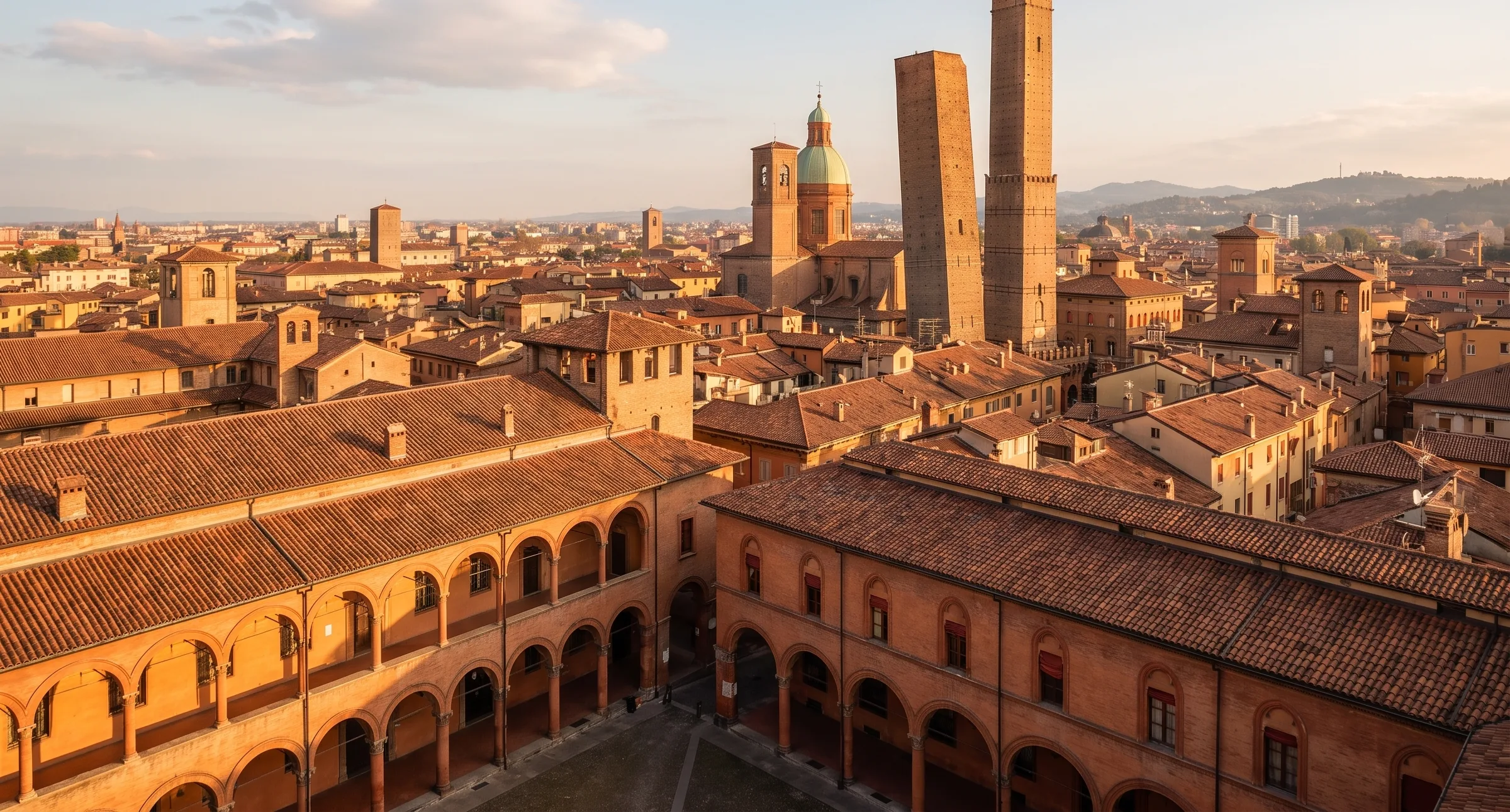
The city is also called La Dotta, “The Learned,” because it is home to the oldest university in the West, established in 1088, and it is called La Rossa, “The Red,” for its ubiquitous red-clay terracotta rooftops, warm reddish-orange brick architecture and progressive political leanings.
Flights to Bologna land you in one of the most affordable and walkable cities in Italy — a pleasant change from Rome , Florence , or Venice prices. Happily, many of the city’s best-known sites cost nothing to see.
Key takeaways
Take Bus 81 or 91 from the airport, not the monorail. The walk to the Birra stop on Via Triumvirato takes 10–12 minutes, but the €2.30 bus saves you more than €10 per person versus the €12.80 Marconi Express.
Most of Bologna's iconic sights are free. The Basilica di San Petronio, the Santo Stefano church complex, and the over 40 kilometers of UNESCO-listed covered arcades all cost nothing.
A City Pass cuts bus trips to €1.90. A single bus ticket costs €2.30, but the €19.00 City Pass gives you 10 trips — and you can share one card with a friend by validating it once per person.
Eat at the markets to dodge the coperto. The Mercato di Mezzo and Mercato delle Erbe food counters serve full meals for €5–€15 per person, with no €2.00–€3.50 per-person cover charge.
The signature dishes cost €8–€12. Tagliatelle al ragù and tortellini in brodo run €8.00–€12.00 at student-district osterias like Osteria dell'Orsa.
A reasonable daily budget is €55–€85. That covers spring-season hostel or budget-hotel accommodation, market and osteria meals, bus tickets, and a paid tower or museum visit.
Key takeaways
- Take the public bus 81 or 91 from the airport. It’s slower than the monorail, but it will save you more than €10 per person.
- Most of Bologna’s iconic sights, like the Basilica di San Petronio and the Santo Stefano Church complex, are free to visit.
- Also free are the over 40 kilometers of medieval covered arcades that will protect you from sun and rain as you walk through the city.
- A single bus trip costs €2.30. But with the City Pass, you get 10 trips for only €19.00 and you can share a card with a friend. That makes it very budget-friendly.
- Bologna offers wonderful food at budget prices, especially at its historic covered markets, the Mercato di Mezzo and the Mercato delle Erbe, and in the student-heavy University District around Piazza Verdi.
- Two of the city’s signature dishes, tagliatelle al ragù and tortellini in brodo, cost around €8 to €12.
Monorail or Monocost?
There are two ways to get from the Bologna Guglielmo Marconi Airport (BLQ) into the city: the budget way or the fast way. The fast way (7 minutes) is to take the Marconi Express, the monorail linking the airport to the central train station. It costs €12.80 one-way, which is pricey.
The budget way is to walk about 10–12 minutes out of the airport terminal to the Birra bus stop, located not far away on Via Triumvirato. Catch local Bus 81 or 91 heading toward Bologna Stazione Centrale. A single urban city bus ticket costs just €2.30. The catch? The walk to the stop requires navigating roadside pavements, and the bus journey takes about 25–30 minutes depending on city traffic.
Find flights for this trip
Bologna Is a Great Walking City
If you like walking, you’ll love Bologna. The Centro Storico, or historical center, is relatively small and compact. That means you can comfortably see the main sights on foot in a day without needing public transit.
The city features over 40 kilometers of medieval covered porticoes, or arcades, that protect you from rain or hot sun while you walk. And the city center generally has little traffic. You can even walk all the way up the world’s longest portico from the edge of town to the Sanctuary of the Madonna di San Luca.
If You’re Tired or in a Hurry
A bus ticket costs just €2.30, if you pay by card on the green ticket machine on the bus. But if you pay cash on the red machine, the price increases to €2.50. A single ticket is valid for 75 minutes across the city network, allowing you to switch buses as needed within that timeframe.
The local transit company, TPER, offers two multi-trip options that reduce the cost of a single bus ride compared to buying individual tickets. The most popular option is the City Pass. It costs €19.00 for a card loaded with 10 trips. Note that you can share a single 10-trip card with a travel companion simply by validating the card on the bus reader once for every person traveling.
If you plan on riding the bus a lot in a single day, the 24-Hour Pass costs €9.00 for unlimited bus trips in a 24-hour period. It becomes cheaper than single tickets if you take 4 or more bus trips in a day.
Day Trips
You want to go on a day trip? You’re in the right place. One of Bologna’s greatest travel advantages is its position as Italy’s premier rail hub, allowing you to reach an incredible variety of exciting destinations in under an hour.
It’s 20 minutes to Modena (great food and Ferrari), 30 minutes to Ferrara (the “Renaissance bicycle city”), 50 minutes to beautiful Parma (birthplace of Parmigiano-Reggiano and Prosciutto di Parma), and 1 hour to historic Ravenna (ancient Byzantine mosaics, Dante’s grave). Roundtrip tickets to these destinations cost around €8–€18. If you fall for the wider region, Emilia-Romagna rewards a much longer stay.
The Best Sights In Bologna Are Free
Bologna’s finest architecture is completely free to enjoy. And because the historic core is so compact, you can easily visit these sights in a single day (or two if you like to linger).
Piazza Maggiore & Piazza del Nettuno
This massive central square is a great place to sit on the central stone platform (il Crescentone) and people-watch. Right next to it stands the majestic Neptune’s Fountain and the bronze statue of the Roman god of the sea, affectionately called Il Gigante (“the giant”) by locals.
Basilica di San Petronio
This is the world’s largest brick Gothic church. Entry to the main nave is entirely free. Once inside, make sure to find the incredible Cassini Meridian Line, the longest sundial track in the world, built into the church floor.
The Porticoes
The entire city is framed by over 40 kilometers of medieval covered arcades, which have been named a UNESCO World Heritage Site. Strolling beneath these architectural marvels costs nothing and shields you from both rain and afternoon heat.
The Quadrilatero Markets
This labyrinth of medieval lanes lies just off the Piazza Maggiore. While the artisanal mortadella, hand-rolled tortellini, and cheeses cost money, wandering through this sensory-rich market is free and offers a wonderful glimpse into the city’s food culture.
Complex of Santo Stefano (The Seven Churches)
Santo Stefano is a maze-like religious sanctuary. Over the centuries, multiple chapels, crypts, and quiet cloisters were fused together to replicate the Holy Sepulcher of Jerusalem. Entry is free.
The Portico di San Luca
If you want an unforgettable view, you can walk the entire 3.8-kilometer covered path that leads from the city’s edge all the way up the Colle della Guardia. This is the world’s longest continuous portico, composed of 666 historic arches. Entry to the church at the summit is free.
If You Really Want to Pay
There are some historical structures and tower views that charge an entry fee.
- The Clock Tower (Torre dell’Orologio) & Palazzo d’Accursio: Located on Piazza Maggiore, this ticket grants you access to the beautiful council halls of the town hall and the interior of the historic clock tower. Around €8.
- San Petronio Panoramic Terrace: While entering the main floor of the Basilica is free, taking the elevator at the rear of the church to the 54-meter-high panoramic terrace costs around €5.
- Torre Prendiparte (Prendiparte Tower): This 12th-century structure is one of the premier medieval towers you can climb. A ticket costs €5 to €10.
- Archiginnasio Palace & Anatomical Theatre: This spectacular 16th-century building was once the main seat of the University of Bologna. While walking into the courtyard to see the thousands of painted student coats-of-arms is free, you must pay around €3 to enter the Anatomical Theatre.
Please note that the beautiful Two Towers (Le Due Torri), the Asinelli and the Garisenda, are both closed to the public due to structural safety concerns. But you can still admire them from the street — for free!
 Inspiration
Slow Travel Italy: How to Spend a Full Month Without Moving Hotels
Discover how to embrace slow travel in Italy by spending a full month in one destination, enjoying authentic local life, relaxed sightseeing, and meaningful experiences.
Read the guide
Inspiration
Slow Travel Italy: How to Spend a Full Month Without Moving Hotels
Discover how to embrace slow travel in Italy by spending a full month in one destination, enjoying authentic local life, relaxed sightseeing, and meaningful experiences.
Read the guideMangia, Mangia, Mangia!
You don’t need to spend a fortune to eat wonderfully well here. The city’s thriving university culture means there is an abundance of casual, high-quality, and budget-friendly spots.
The Essential Dishes to Try
- Tagliatelle al Ragù: Forget “Spaghetti Bolognese” (which doesn’t exist in Italy). The authentic version pairs a slow-cooked, rich meat sauce (ragù) exclusively with wide, fresh egg noodles (tagliatelle).
- Tortellini in Brodo: Tiny, hand-folded pockets of pasta traditionally stuffed with a mix of pork loin, prosciutto, mortadella, and Parmigiano-Reggiano, served in a clear, intense capon or beef broth.
- Tortelloni burro e salvia: The larger cousin of tortellini, usually stuffed with fresh ricotta cheese and spinach, tossed simply in melted butter and sage.
- Mortadella: Bologna’s signature cured pork sausage, studded with pork fat cubes and black pepper. Try it sliced thin on its own, served as a creamy mousse, or stuffed inside freshly baked bread.
Where to Eat Good Budget Meals
- Osteria dell’Orsa: This student-friendly osteria is located on Via Mentana, right in the university district. Their tagliatelle al ragù and tortellini in brodo are delicious and cost only €9.50–€12.
- Pasta Fresca Naldi: Located on the vibrant Via del Pratello, this tiny takeaway spot is run by local sfogline (pasta makers). You can watch them roll and shape the pasta behind the counter. Grab a box of fresh gramigna or tortellini and enjoy top-tier food for €10.00–€13.00.
- Ragū: This modern street-food restaurant specializes in its namesake sauce. Located on Via Goito, Ragū serves rich meat sauces over fresh pasta or stuffed into hearty to-go sandwiches (€8–€10).
- Ramaciotto: An unpretentious little pasta shop on Viale XII Giugno that is perfect for a quick, cheap lunch. Their tagliatelle al ragù or mortadella-stuffed tortellini are phenomenal comfort food at rock-bottom prices (€8.00–€11.00).
Beware of the Coperto
The word coperto literally translates to “covered.” It dates to the Middle Ages, when travelers brought their own food to inns and were charged for taking up space. Today, it covers the cost of setting the table, washing the linens, using the cutlery/plates, and includes the bread brought to the table. In Bologna, expect to pay €2.00–€3.50 per person.
Eating at the Markets
Bologna’s historic covered markets are some of the best places in the city to find excellent, high-quality meals on a budget. They feature lively food halls, specialized counters, and street-food stalls where you can eat very well for €5 to €15 per person. Plus, eating at the market counters or communal tables eliminates the need to pay the dreaded coperto.
Mercato delle Erbe (Via Ugo Bassi, 25)
This is Bologna’s largest covered market and locals shop here. But the central and side wings have been transformed into a vibrant food court with communal seating.
- Sfarinà inside Mercato delle Erbe: Located in the central nave, this spot is highly praised for traditional Romagnola flatbreads (€8 to €12).
- delle Erbe: By day, it functions as a fishmonger’s stall, but at lunch it opens a counter serving fresh, affordable seafood dishes. Delicious fish tapas go for around €5.
- Mozzabella Mercato delle Erbe: This stall specializes in gourmet pizza by the slice and deep-fried street food. About €9.
Mercato di Mezzo (Via Clavature, 12)
Located just steps from Piazza Maggiore, this multi-level market hall is tourist-friendly. You grab food from specialist counters and sit at shared tables in the center.
- Fresh Pasta Stalls: Multiple counters pull fresh tortellini and tagliatelle straight from the flour board. You can grab a steaming bowl of tagliatelle al ragù for around €10 to €12.
- Artisanal Platters: Vendors like L’Antica Bottega Bologna let you order customizable taglieri (charcuterie boards) piled high with premium mortadella, aged Parmigiano-Reggiano, and warm gnocco (pillows of leavened dough that are deep-fried until puffed and golden). €28.00 for two people.
Timing Your Visit
Mercato delle Erbe is best visited for lunch. Mercato di Mezzo stays open until 10 p.m., to midnight on weekends.
The Best Time to Visit Bologna
The best time to travel to Bologna is during the shoulder seasons of spring (April to June) and autumn (September to October).
Spring offers comfortable temperatures for walking through the porticoes and enjoying the city’s legendary food scene and outdoor terraces. Plus, it brings fresh seasonal ingredients like wild asparagus and artichokes to restaurant menus. But hotels/hostels cost more.
Summer is less crowded because most of the students have gone. That’s why August is the cheapest month of the summer for last-minute hotel rates, averaging around €78 per night, compared to around €118 peak during food-and-convention months like October. Also, during the two weeks surrounding the August 15 holiday (Ferragosto), up to half of the city’s traditional eateries and shops are closed so owners can go to the coast.
Autumn temperatures mirror those in spring. This is truffle and wine harvest season in the surrounding Emilia-Romagna countryside, so there will be lots of festivals.
But there are also lots of trade fairs. Before booking, always check the Bologna Fiere calendar. Massive events like Cersaie (late September) or the Bologna Children’s Book Fair (spring) can cause hotel prices to triple overnight.
Winter is the cheapest time to go and the least crowded. So, if you don’t mind the cold (2°C–10°C), Bologna is a great city to warm up in an osteria.
What Bologna Actually Costs
Approximate prices in euros.
| Item | Price |
|---|---|
| Coffee (espresso at the bar) | €1.20–€1.50; cappuccino €1.80–€2.20 |
| Beer | €3.00–€6.00 |
| Lunch | €10.00–€15.00; grab-and-go piadina or mortadella panino €5.00–€8.00 |
| Sit-down dinner | €20.00–€45.00 per person |
| Hostel dorm bed | €35–€75 per night; off-season can drop to around €25 |
| 3-star hotel / private B&B (double room) | €110–€160; higher during major Bologna Fiere trade fairs |
| Daily budget total (spring, spent reasonably) | €55 to €85 |
Copy the code to embed this table on your site.
Sitting at a table for your coffee can trigger the coperto and double the price, so drink it at the bar like a local.
What Makes Bologna Special
Unlike Florence or Venice, which can sometimes feel like open-air museums preserved strictly for tourists, Bologna feels like a living, breathing, working city.
The city is home to over 80,000 students. This infuses the ancient, arcaded streets with a high-energy nightlife, indie bookstores, street art, and a bustling café culture.
If you haven’t yet guessed, food is a religion here. The vibe in the markets is sensory and social. People do not just eat; they gather over platters of mortadella, hand-rolled tortellini, and glasses of Pignoletto wine to talk for hours.
Because the historic center is shielded by the porticoes, the daily rhythm is slow and pedestrian-friendly. People stroll (fare una passeggiata), chat in the piazzas, and linger outside bars long into the evening.
Want to turn Bologna into a base for a full month of slow travel through Italy ? Its rail hub status makes it the perfect one-hotel base . It’s always a great time to visit — whether you leave tomorrow or at Christmas, check Kiwi.com for the best budget flights .